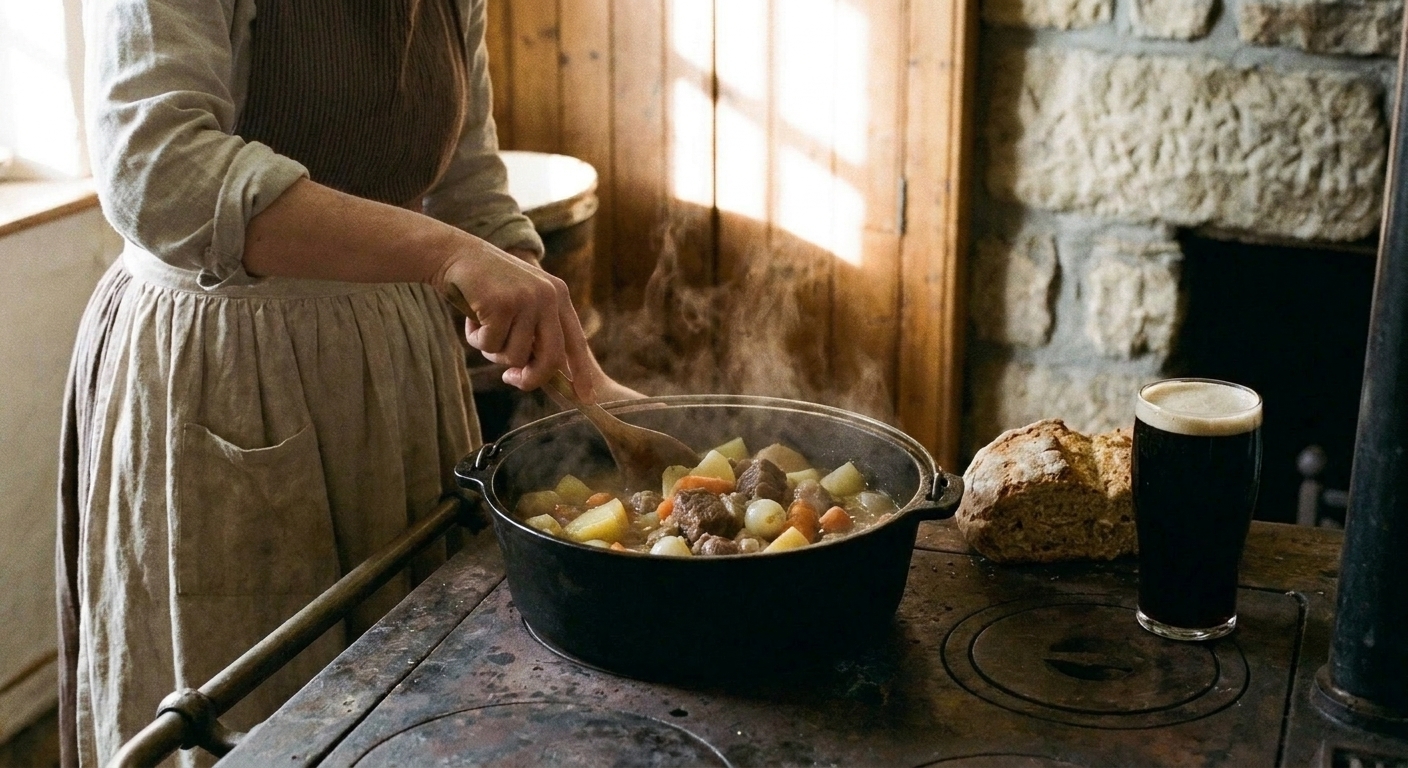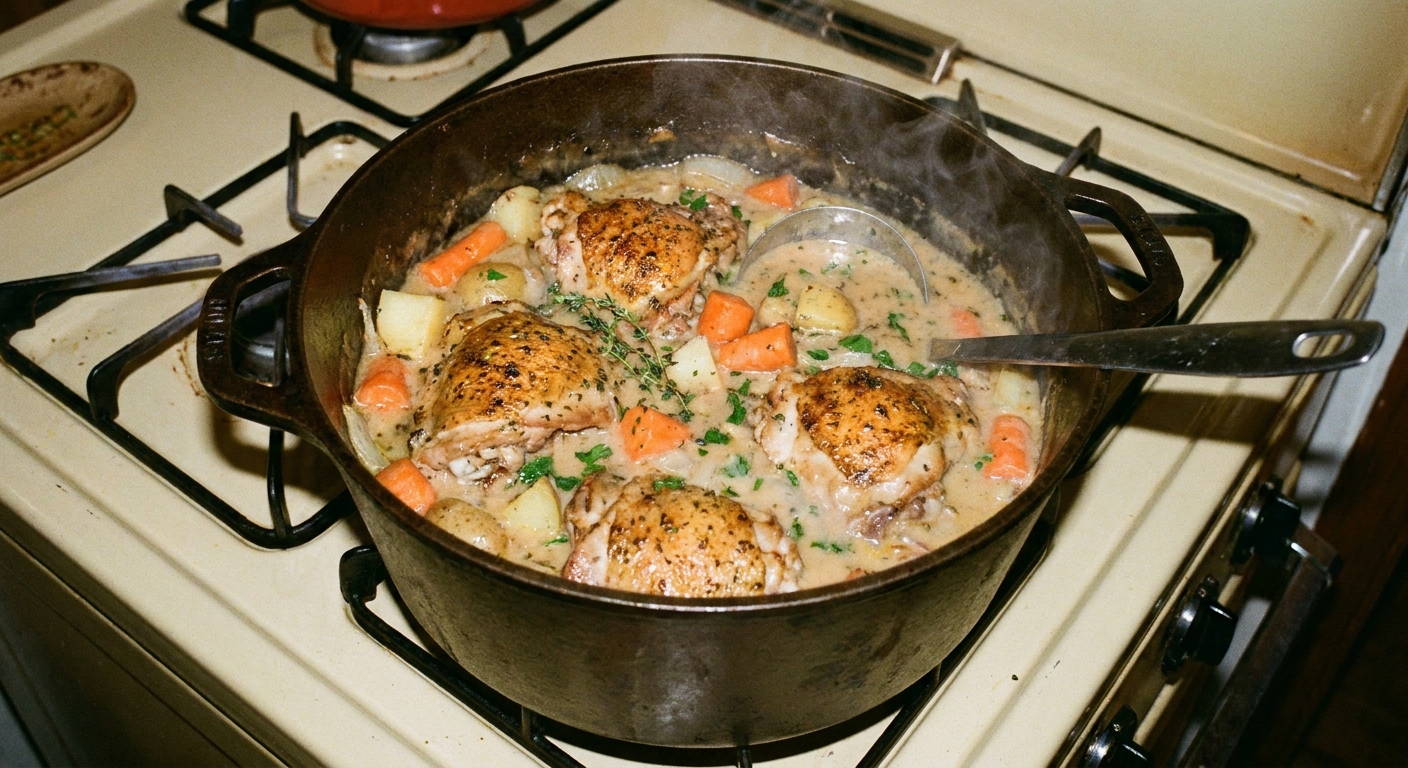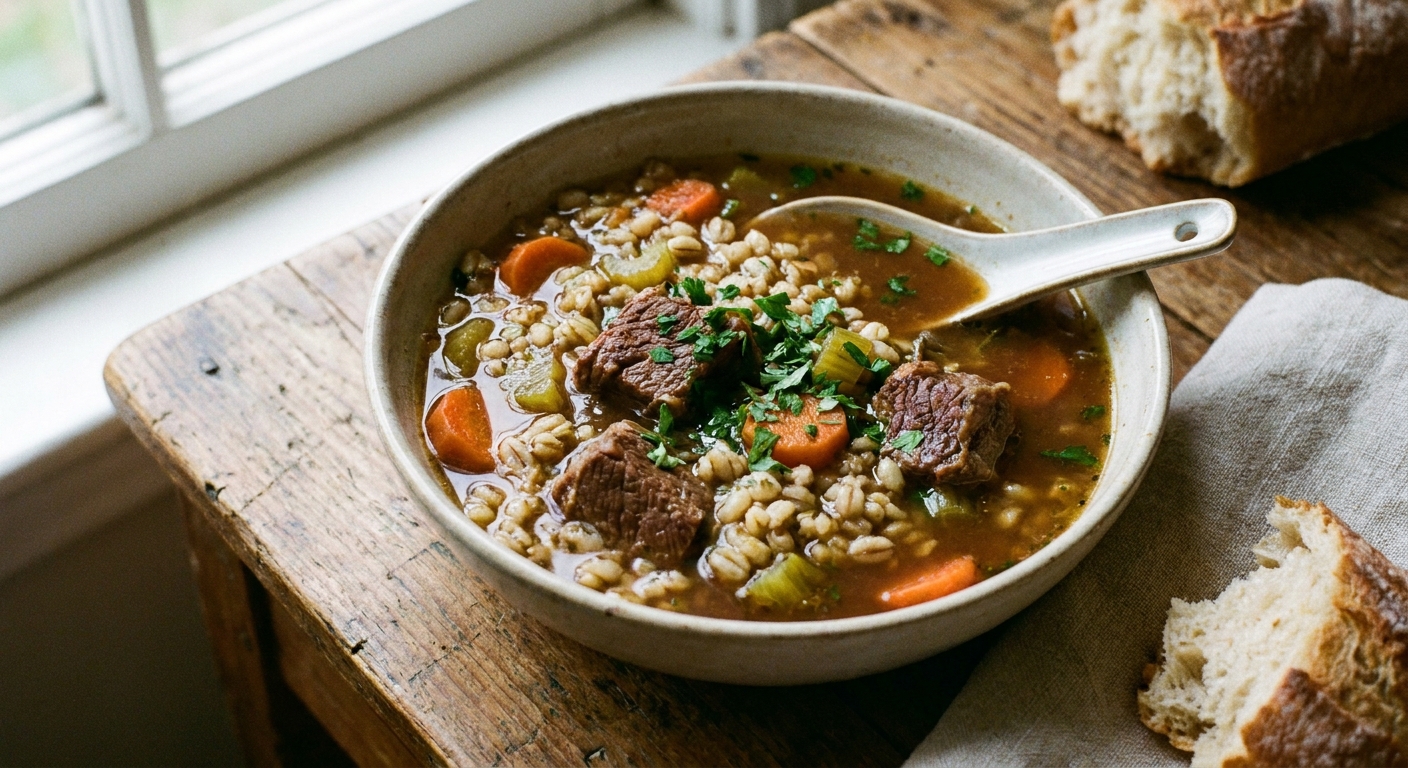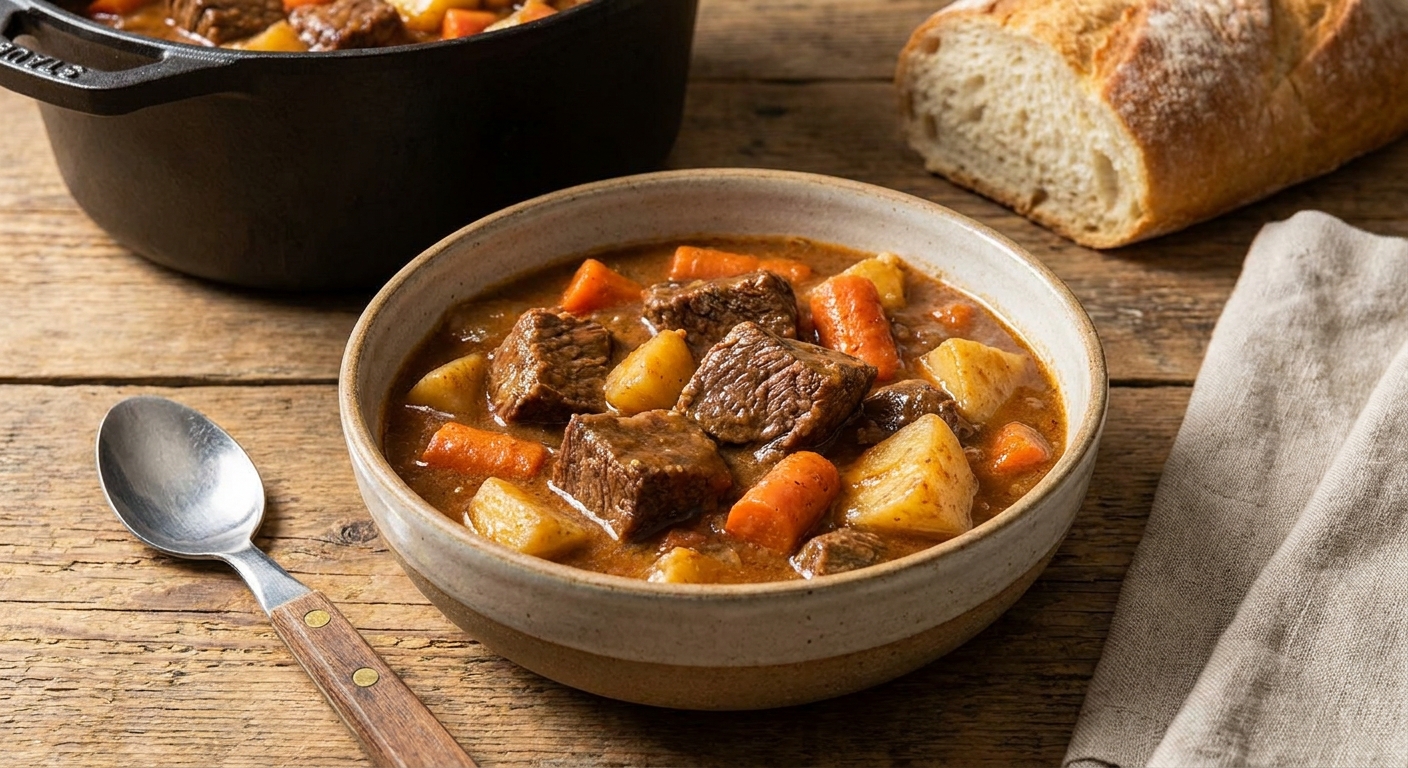
A rigorously tested Dutch oven beef stew with browned chuck roast, tender vegetables that hold their shape, and a rich, thick gravy. Step-by-step times plus ...
Recipe Homely
November 15, 2026
How to Make Irish Lamb Stew

Sarah Jenkins
Sarah Jenkins is a passionate home cook and the voice behind Recipe Homely, dedicated to making everyday meals stress-free and delicious. With over a decade of experience feeding a busy family, she specializes in rigorously tested, approachable recipes for dinners, desserts, and everything in between. When she isn't developing new dishes, Sarah can be found browsing local farmers' markets or baking with her two children.
When my life got busy, I learned to love dinners that feel like a deep breath. Irish lamb stew is exactly that kind of meal: humble ingredients, gentle simmering, and a bowl that tastes like you did something heroic, even if all you really did was chop a few things and let the pot do the work.
And just so we are crystal clear from the start, this is not beef stew. If you are aiming for the classic, lamb-based Irish stew and you use beef chuck with the long, gravy-heavy approach that often goes with beef, you are going to end up with something delicious, but different. Irish lamb stew is lighter, simpler, and built around the flavor of lamb and potatoes, not a thick beef gravy.
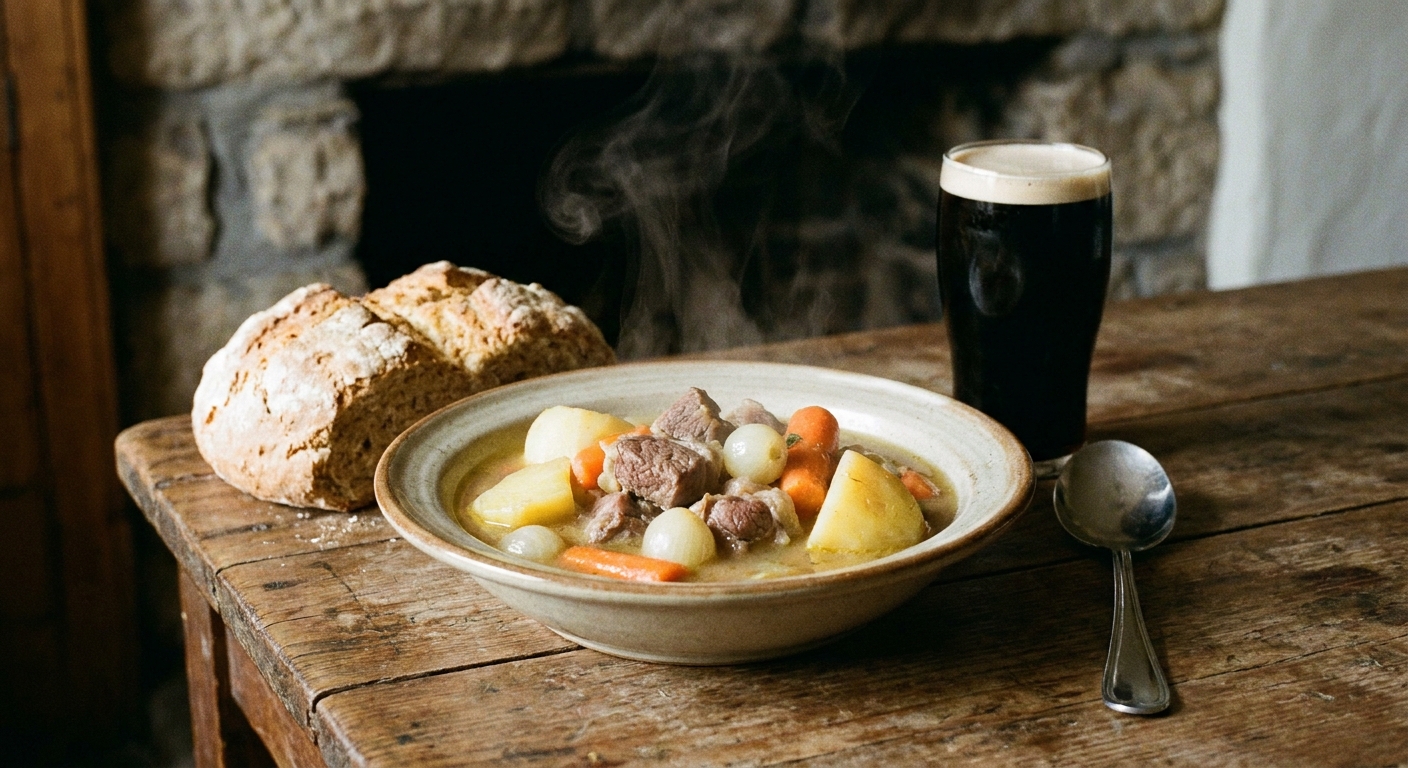
At a Glance
- Serves: 6
- Total time: about 2 to 2 1/2 hours
- Equipment: 5 to 7-quart Dutch oven or heavy pot with a lid
What Makes It Irish
Traditional Irish stew is known for being straightforward and ingredient-driven. You will see plenty of modern variations, but the classic spirit is this:
- Lamb (often shoulder or neck, and historically mutton in many homes)
- Potatoes (some stay chunky, some gently thicken the broth)
- Onions
- Water or light stock, plus salt and pepper
- Sometimes carrots (common now, not always in older versions)
- Often parsley or thyme
The texture should be brothy and comforting, lightly thickened by potatoes. If you are after a dark, glossy gravy, you are making a different style of stew.
Best Lamb for Stew
I test recipes in a very average-sized kitchen, with very real weeknights, so I will tell you what is reliable at the grocery store and what actually turns tender in the pot.
Use these cuts
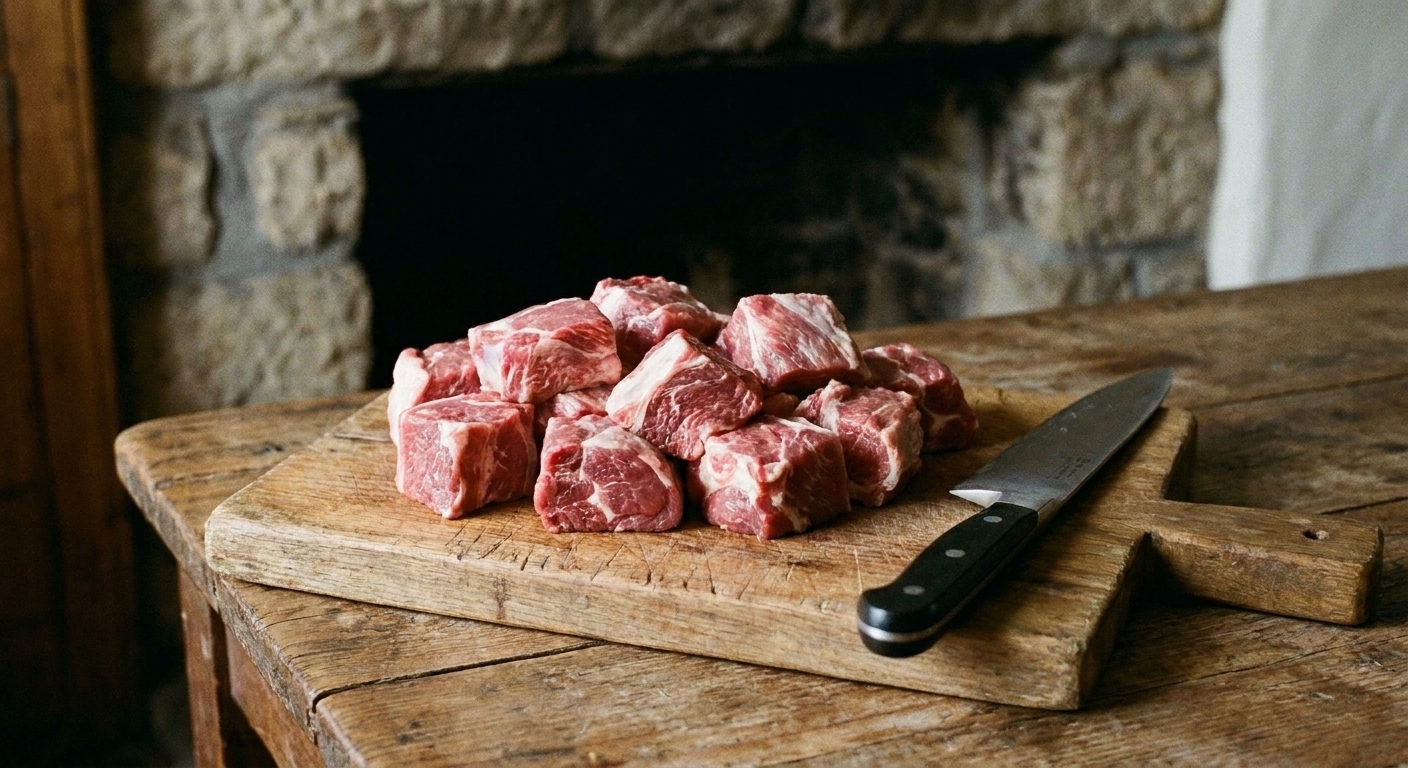
- Lamb shoulder: My top pick. Marbled enough to turn buttery with a simmer, without drying out.
- Lamb neck: Deep flavor and collagen. Often sold as neck slices. Excellent for stew.
- Lamb shanks (optional): Flavorful, but they take a bit more babysitting and are less “chunky stew” and more “braise in broth.”
Skip these for this style
- Beef chuck: Great for beef stew, but not the lamb-forward flavor you want here.
- Very lean lamb leg cubes: They can turn dry and stringy before the stew is fully settled.
Quick trim tip: Trim off any thick outer fat cap or tough silverskin before cubing. A little fat is good. Big, chewy pieces will float on top and make the broth feel heavier than it needs to.
Should You Brown the Lamb
This is the question I get most, and the honest answer is: you can go either way, depending on what you want.
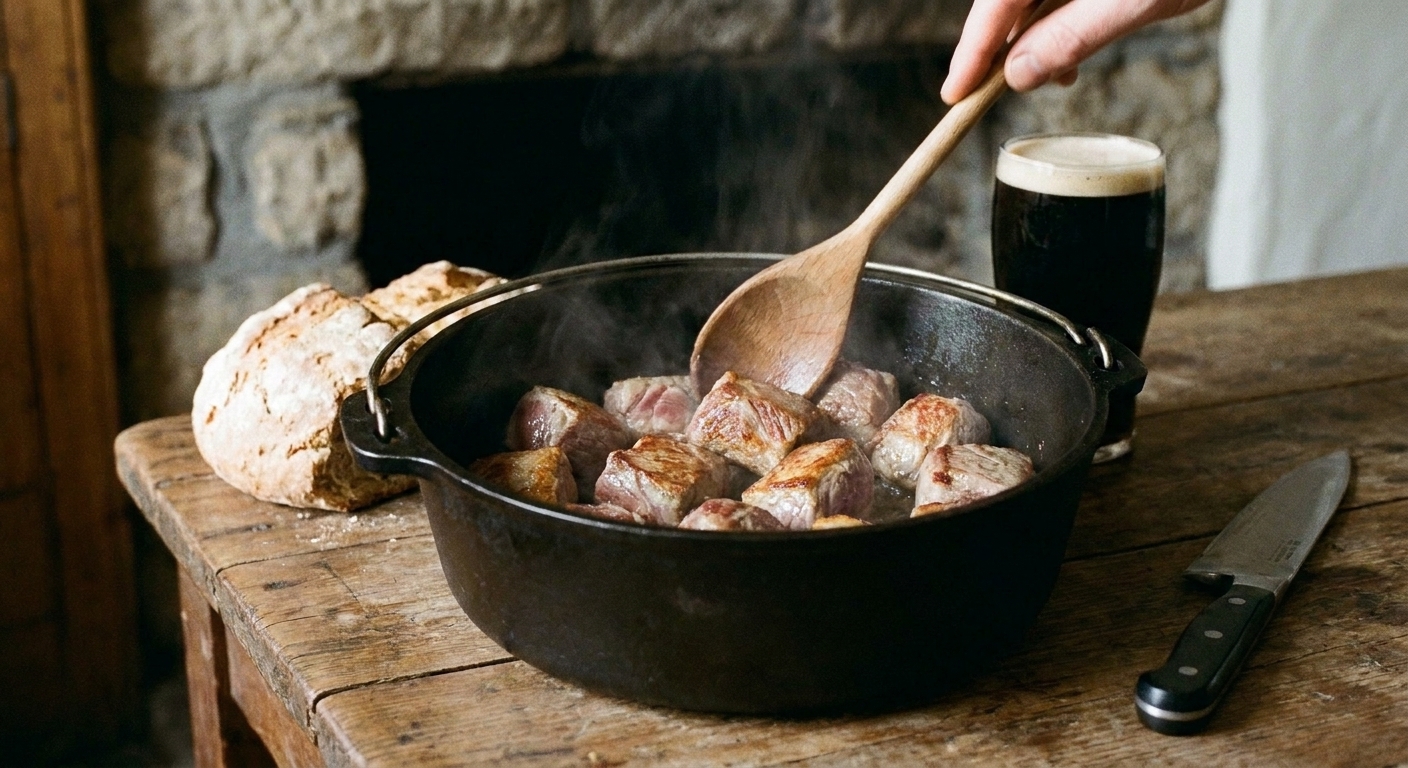
Option 1: Brown the lamb (my weeknight preference)
Browning adds a deeper, roasted flavor and gives the broth more complexity. It also helps the lamb hold together in nice chunks. If I have 10 extra minutes, I do it.
Option 2: Do not brown (older-style and common)
Many older-style recipes simply simmer the lamb, onions, and potatoes. The result is paler and cleaner tasting, and it still absolutely counts as Irish stew.
My rule: If you are craving extra depth, brown. If you want the simplest, most classic feel, skip it.
Ingredients
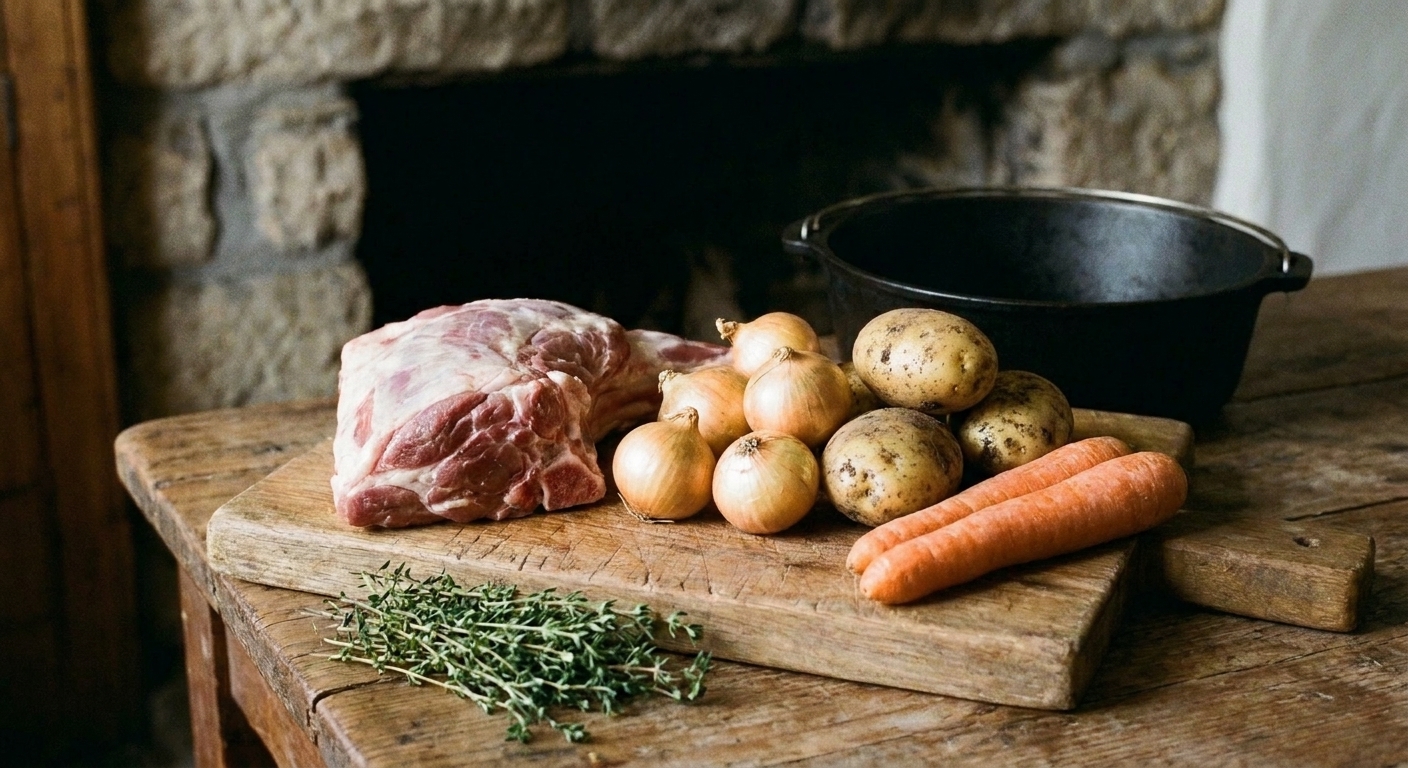
- 2 1/2 to 3 pounds lamb shoulder or lamb neck, cut into 1 1/2-inch chunks
- 1 to 2 tablespoons neutral oil (only if browning)
- 2 large onions, sliced into thick half-moons
- 2 to 3 cloves garlic, optional, minced (not always traditional, but I like it)
- 2 to 3 teaspoons kosher salt (start with less, adjust at the end)
- 1 teaspoon black pepper
- 4 to 5 cups water or light stock (chicken stock works well)
- 2 pounds potatoes (Yukon Gold or floury potatoes like Russet)
- 2 to 3 carrots, cut into big chunks (optional)
- 2 to 3 sprigs fresh thyme or 1/2 teaspoon dried thyme
- 1 bay leaf, optional
- 1 to 2 tablespoons flour, optional, for a slightly thicker broth
- Fresh parsley, to finish
Potato note: Yukon Golds hold together nicely while still releasing some starch for gentle thickening. Russets break down more, which can be great if you want a naturally thicker stew. I often do a mix when I have both.
Flour note: Flour is not required and is not the “point” of this stew. If you like the classic, clean broth, skip it and let potatoes do the thickening. I only use a small amount when I want a cozier body.
Potato Cuts That Hold
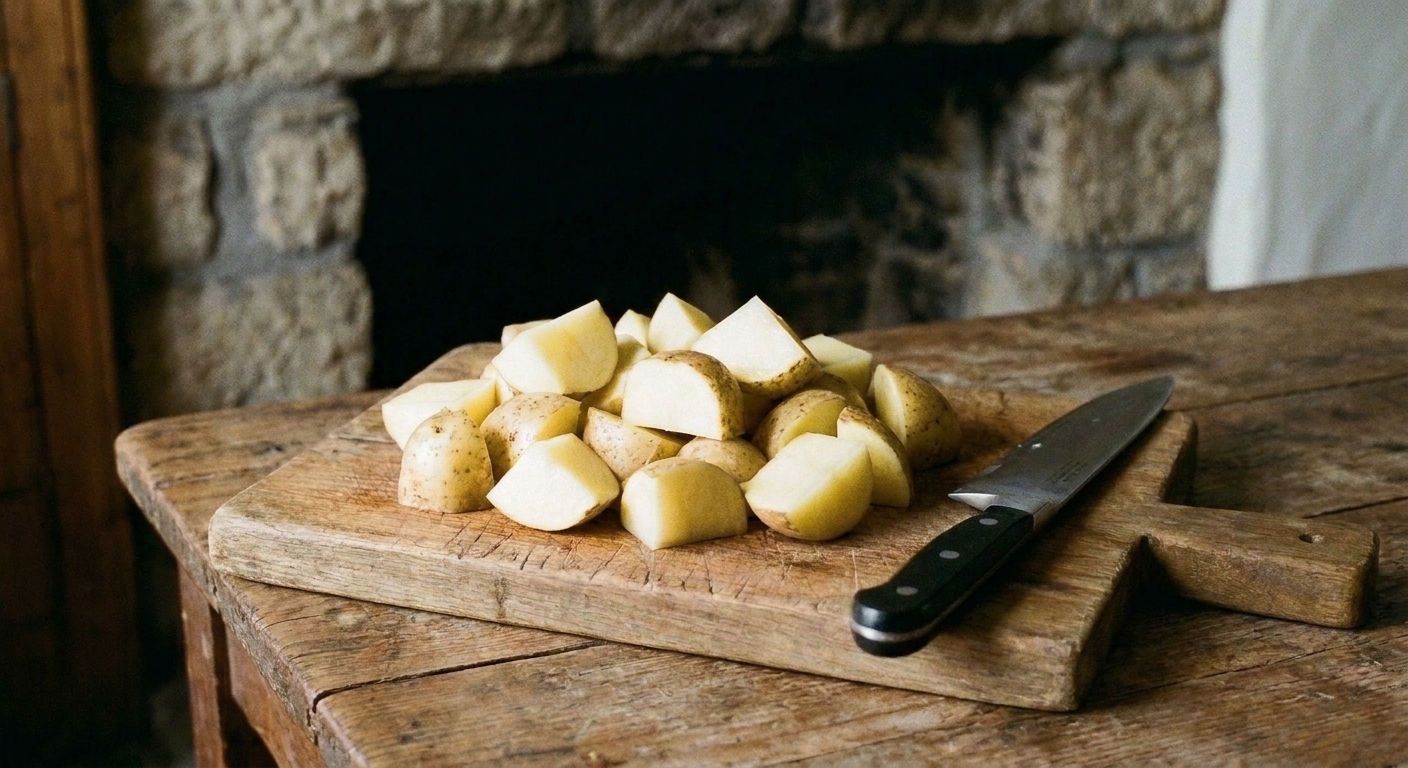
Potatoes are doing two jobs here: some pieces should stay intact, and some starch should thicken the broth. The cut matters a lot.
- Cut potatoes large: Aim for 1 3/4 to 2-inch chunks. Small cubes will melt away.
- Choose the right potato: Waxy to medium starch (like Yukon Gold) will hold shape better than all Russet.
- Add them at the right time: I add them after the lamb has had a head start.
- Keep it at a gentle simmer: A hard boil will batter the potatoes into mush.
Busy-mom shortcut: if you have one potato that is getting a little soft while you cut, toss it in anyway and let it be your “thickener” potato.
Step by Step
This method is for a Dutch oven on the stovetop, but you can adapt it to a heavy soup pot.
1) Prep the lamb
Pat the lamb dry. Trim any thick outer fat or tough bits, then cut into 1 1/2-inch chunks. Season with about 1 1/2 teaspoons salt and the pepper.
2) Brown (optional, but great for flavor)
Heat oil in a Dutch oven over medium-high heat. Brown lamb in batches so you do not crowd the pot, 3 to 5 minutes per batch. Transfer browned lamb to a plate.
3) Cook the onions
Lower heat to medium. Add the onions with a pinch of salt. Cook 6 to 8 minutes, stirring, until softened and lightly golden. Add garlic (if using) for 30 seconds.
4) Build the stew
Return lamb to the pot. Add thyme and bay leaf (if using). Add 4 cups water or stock to start. Scrape the bottom to release any browned bits.
If you want a slightly thicker broth, sprinkle in 1 to 2 tablespoons flour and stir well before the liquid fully heats. This is optional and should stay subtle.
5) Simmer gently until the lamb is nearly tender
Bring to a gentle simmer, then cover and reduce heat to low. Simmer 60 to 75 minutes, stirring occasionally, until the lamb is starting to yield when you press it with a fork.
Skim if you want a cleaner broth: In the first 15 minutes, you may see foam or extra fat rise to the top. I skim a bit off when I want the broth lighter.
6) Add potatoes (and carrots, if using)
Add potatoes (and carrots) to the pot. Add more liquid if needed so the vegetables are just barely submerged. Return to a gentle simmer.
7) Finish simmering
Cover and simmer 30 to 40 minutes, until potatoes are tender but still holding their shape and the lamb is truly spoon-tender. If the lamb is still chewy, keep simmering and check every 10 minutes. Cuts vary, and tenderness is the real finish line.
Important: Potatoes usually turn to mush because they were cut too small, added too early, or boiled too hard. Time plays a role, but a gentle simmer and good timing matter more.
8) Taste and finish
Remove thyme stems and bay leaf. Taste and adjust salt. Sprinkle with chopped parsley. Let the stew sit 10 minutes before serving. It thickens slightly as it rests, and the flavors settle in.
Broth Texture Tips
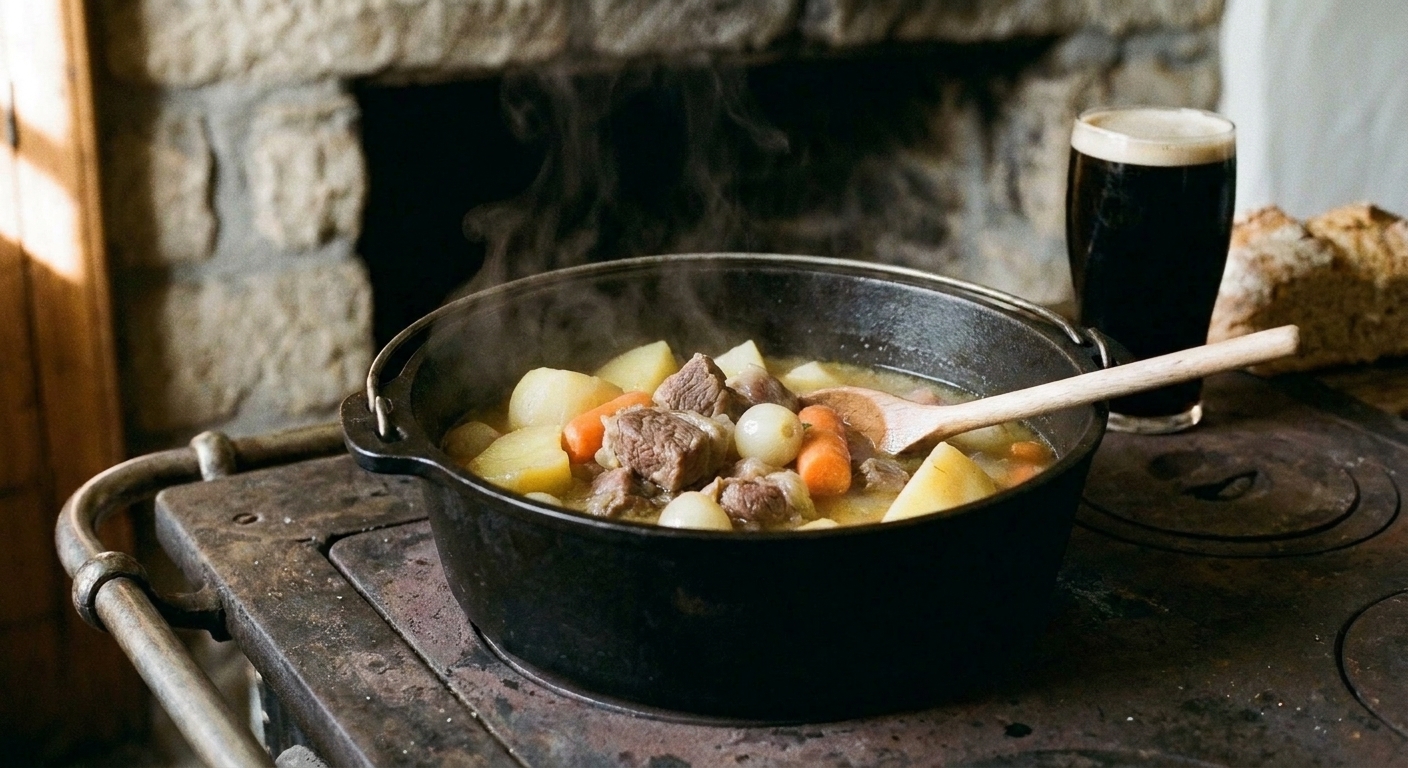
Irish lamb stew should not eat like beef gravy. Here are the best ways to keep it traditional, while still giving it a cozy body:
- Let potatoes do the work: A few potato edges will naturally break down and thicken the liquid.
- Use a tiny bit of flour: 1 to 2 tablespoons is plenty for a whole pot, and only if you want it.
- Avoid heavy slurry thickening: Cornstarch makes the broth glossy and sauce-like, which reads like a different stew.
- Simmer uncovered at the end: If your broth feels too thin, uncover for 10 minutes to reduce.
Common Mistakes
- Boiling hard: Keep it to a gentle simmer so the lamb stays tender and the potatoes stay intact.
- Adding potatoes too early: Give the lamb a head start, then add potatoes.
- Over-thickening: If it looks like brown gravy, you have drifted away from the traditional style.
- Calling it the same dish: Beef stew is wonderful, but if you want the classic lamb version, start with lamb.
Serving Ideas
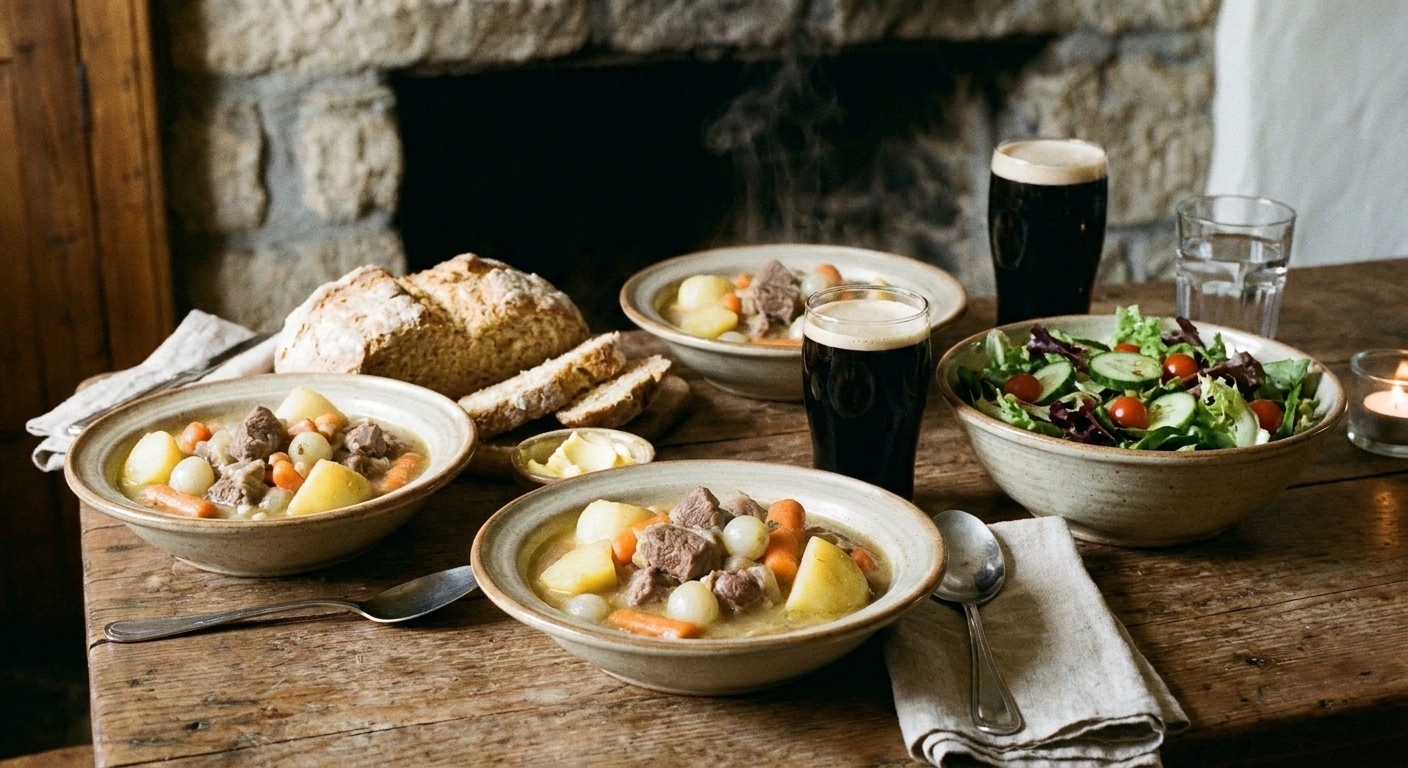
In my house, this stew is a full meal on its own, but I love a simple side for scooping.
- Crusty bread or buttered soda bread
- Steamed cabbage or buttered peas
- A bright salad with a sharp vinaigrette
Storage and Reheating
Refrigerate
Store in an airtight container for up to 4 days. The flavor gets even better the next day.
Freeze
Freeze up to 3 months. Potatoes can soften after freezing, but the stew is still very good. If you know you are freezing, slightly undercook the potatoes.
Reheat
Reheat gently on the stovetop over medium-low, adding a splash of water or stock as needed. Avoid boiling hard, which can break the potatoes apart.
FAQ
Can I make it in a slow cooker?
You can, but the texture is a little different. If you do, brown the lamb first if possible, then cook on low 7 to 8 hours. Add potatoes for the last 2 to 3 hours so they do not turn to mash.
Should I use stock or water?
Water is very traditional and lets the lamb shine. A light chicken stock adds a little body. I often do a mix if I have homemade stock on hand.
How do I know the lamb is done?
It should be spoon-tender, meaning you can break a piece with a spoon, but it still holds together in chunks. If it is chewy, it needs more time.
Why does my stew taste flat?
Usually it needs more salt or a bit more simmer time. Finish with fresh parsley for lift, and do not be shy about tasting and adjusting at the end.
Busy Kitchen Tips
- Prep ahead: Chop onions and potatoes earlier in the day (store potatoes in water in the fridge).
- Batch brown quickly: Two quick batches beats one crowded batch that steams instead of browns.
- One-pot rhythm: Brown (optional), soften onions, simmer lamb, add potatoes, finish. If you follow that order, this stew is wonderfully forgiving.
If you make this, I hope it gives you what it gives me: a calmer evening, warm bowls on the table, and that little moment where everyone is too busy eating to complain.