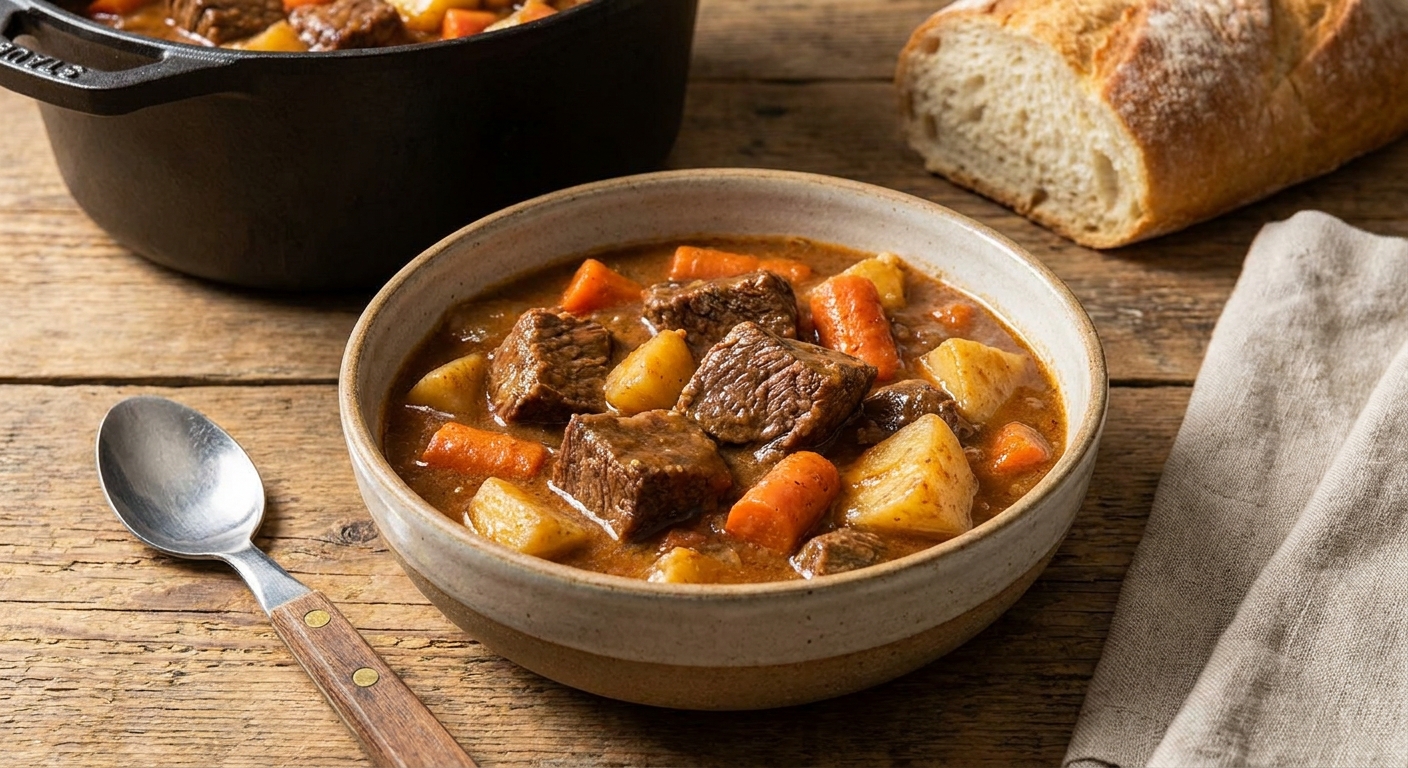
A rigorously tested Dutch oven beef stew with browned chuck roast, tender vegetables that hold their shape, and a rich, thick gravy. Step-by-step times plus ...
Recipe Homely
November 15, 2026
How to Make Beef Barley Soup

Sarah Jenkins
Sarah Jenkins is a passionate home cook and the voice behind Recipe Homely, dedicated to making everyday meals stress-free and delicious. With over a decade of experience feeding a busy family, she specializes in rigorously tested, approachable recipes for dinners, desserts, and everything in between. When she isn't developing new dishes, Sarah can be found browsing local farmers' markets or baking with her two children.
When I was growing up, beef soup meant a big pot simmering on my grandmother’s stove all afternoon, and someone was always sneaking “taste tests” with a spoon. Now that I’m the one trying to get dinner on the table by 6 PM, I still want that same cozy, slow-simmered flavor, but I need it to be reliable.
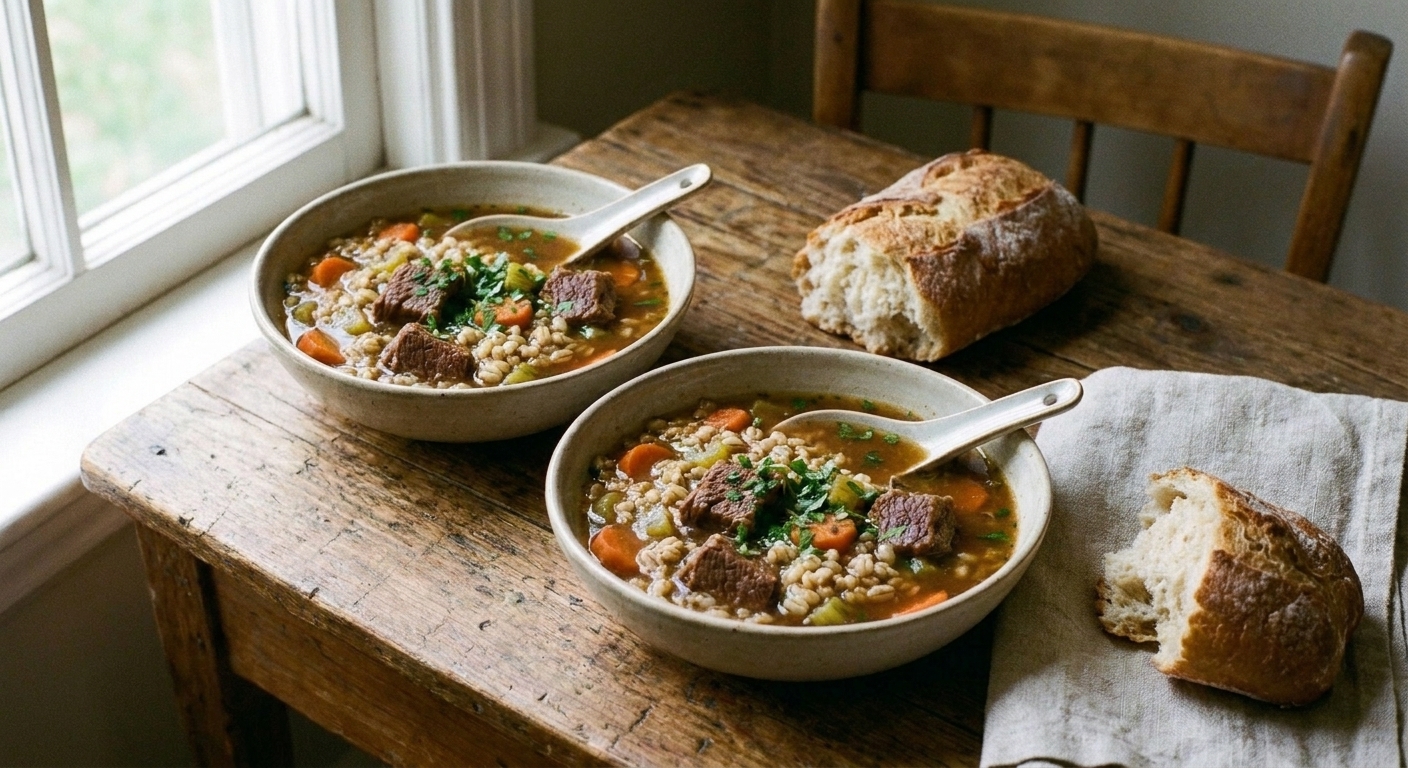
This beef barley soup is exactly that. It is spoonable and brothy, not thick like a gravy-based stew. The key is (1) starting with enough broth, (2) using the right amount of pearled barley, and (3) adding the barley at the right time so it does not drink your pot dry.
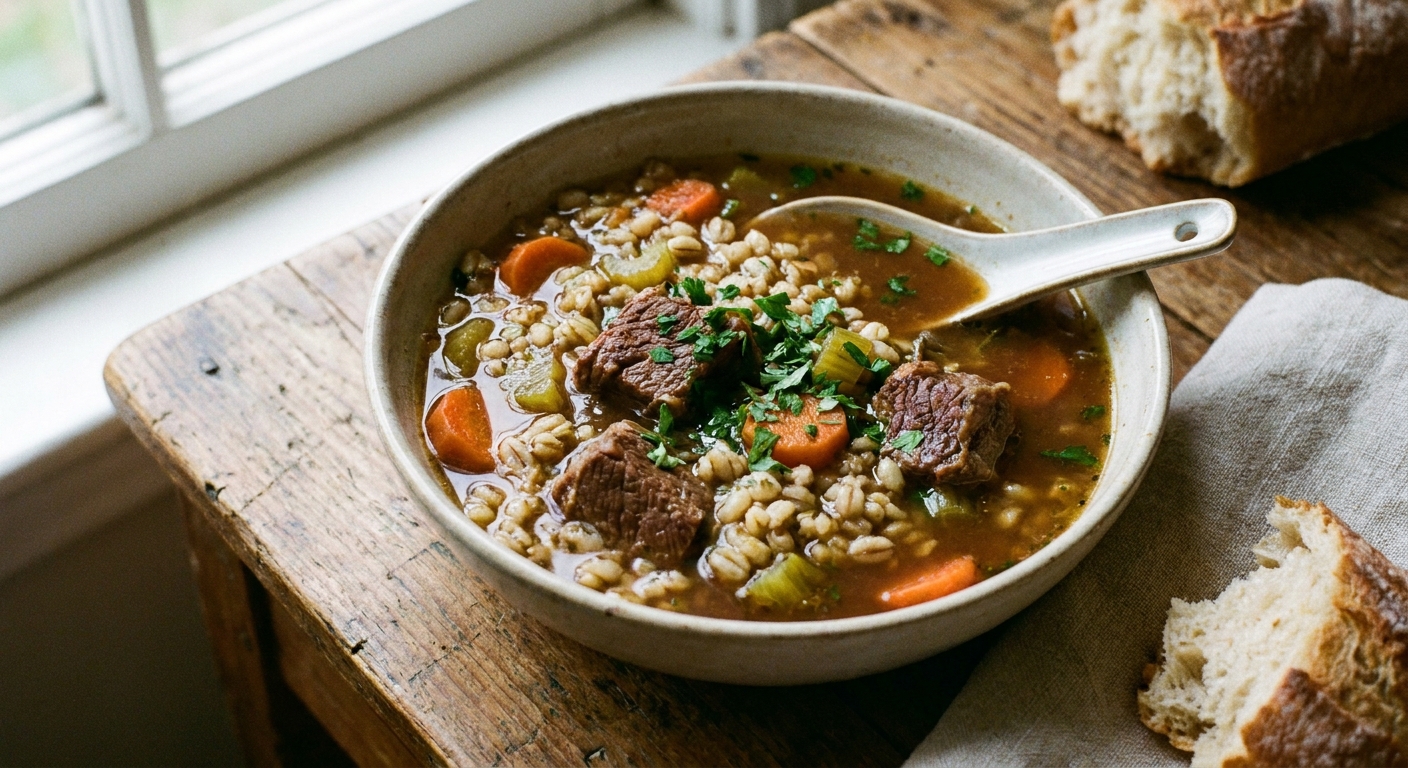
At a glance
- Servings: 6 to 8
- Total time: about 2 hours 10 minutes to 2 hours 40 minutes
- Active time: about 25 to 35 minutes
What keeps this soup brothy
Barley is wonderful, but it is also thirsty. If it simmers too long, it keeps absorbing liquid and nudges your soup toward stew territory.
- Broth level: For 1 1/2 to 2 pounds of beef, start with 10 to 12 cups total liquid. I use 8 cups beef broth plus 2 to 4 cups water, depending on how brothy I want it. Water also helps keep the soup from getting overly salty as it reduces.
- How much barley: Use 1/2 cup pearled barley. It gives you barley in every spoonful without turning the pot thick and starchy. (If you love a heavier bowl, 3/4 cup is delicious, just plan on adding more liquid later.)
- When to add barley: Add barley only after the beef is tender, then simmer until the barley is chewy-tender. Start checking around 25 minutes. Most pots land in the 30 to 40 minute range.
- Vegetable cuts: Cut vegetables into small, soup-friendly pieces (thin carrots, diced celery, diced onion) so they soften without creating that chunky stew feel.
Ingredients
This is a very pantry-friendly soup. If you cook for picky eaters like I do, keep the veggie cuts small and consistent. It makes the bowl feel cozy, not overwhelming.
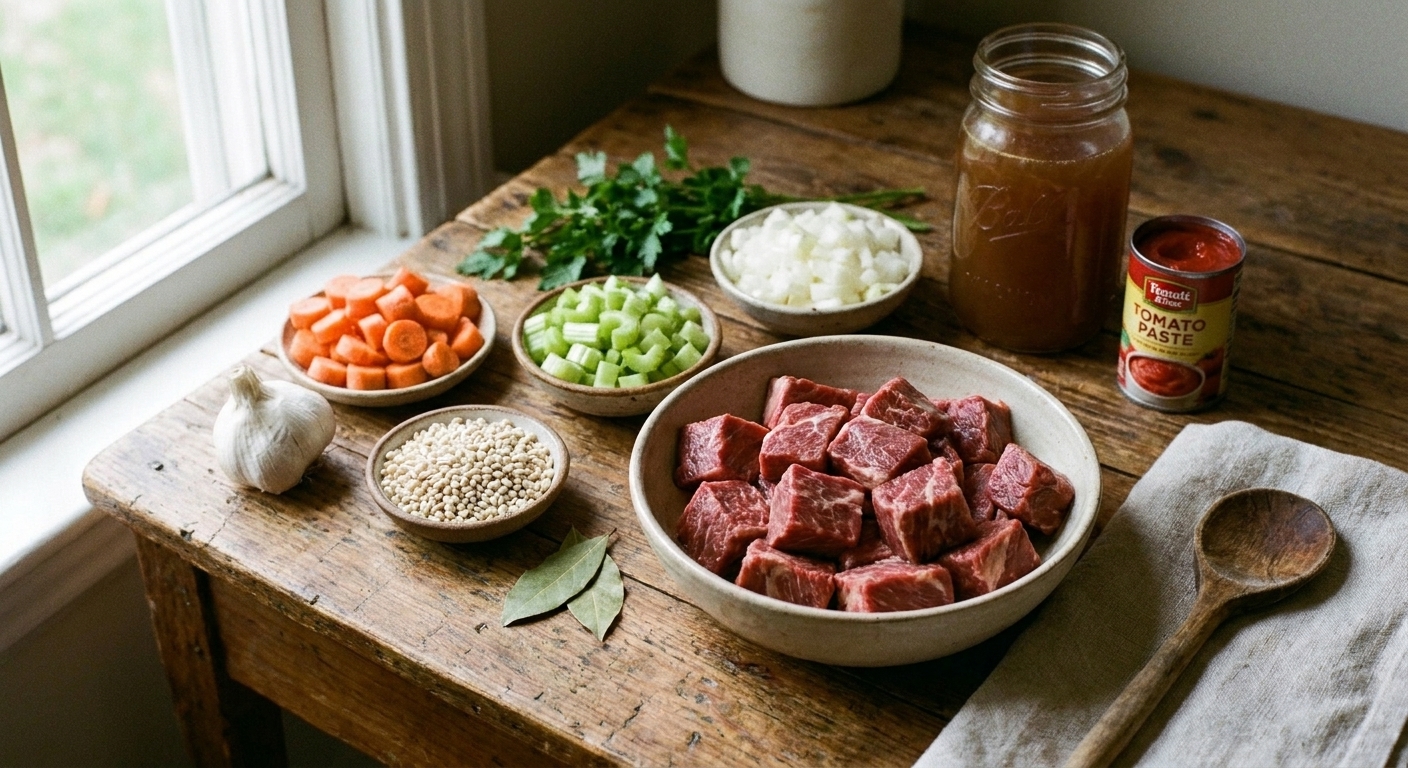
- 2 tablespoons olive oil
- 1 1/2 to 2 pounds beef chuck, cut into 3/4-inch cubes (trim big fat pieces)
- 1 1/4 teaspoons kosher salt, divided (plus more to taste)
- 1/2 teaspoon black pepper
- 1 onion, diced small (about 1 1/2 cups)
- 2 celery ribs, diced small (about 1 cup)
- 2 large carrots, sliced into thin half-moons (about 1 1/2 cups)
- 3 garlic cloves, minced
- 2 tablespoons tomato paste
- 1 teaspoon dried thyme (or 1 tablespoon fresh)
- 2 bay leaves
- 8 cups low-sodium beef broth (see note)
- 2 to 4 cups water (start with 2, add more if needed)
- 1/2 cup pearled barley, rinsed
- 1 tablespoon Worcestershire sauce (optional but really rounds out the beef flavor)
- 1 to 2 tablespoons chopped parsley (optional for serving)
Note: Use pearled barley here. Quick barley cooks faster and can turn soft quickly. Hulled barley takes longer and stays more firm.
Broth note: If you use regular (salted) broth instead of low-sodium, go lighter on salt at the start and adjust at the end.
How to make beef barley soup
1) Brown the beef
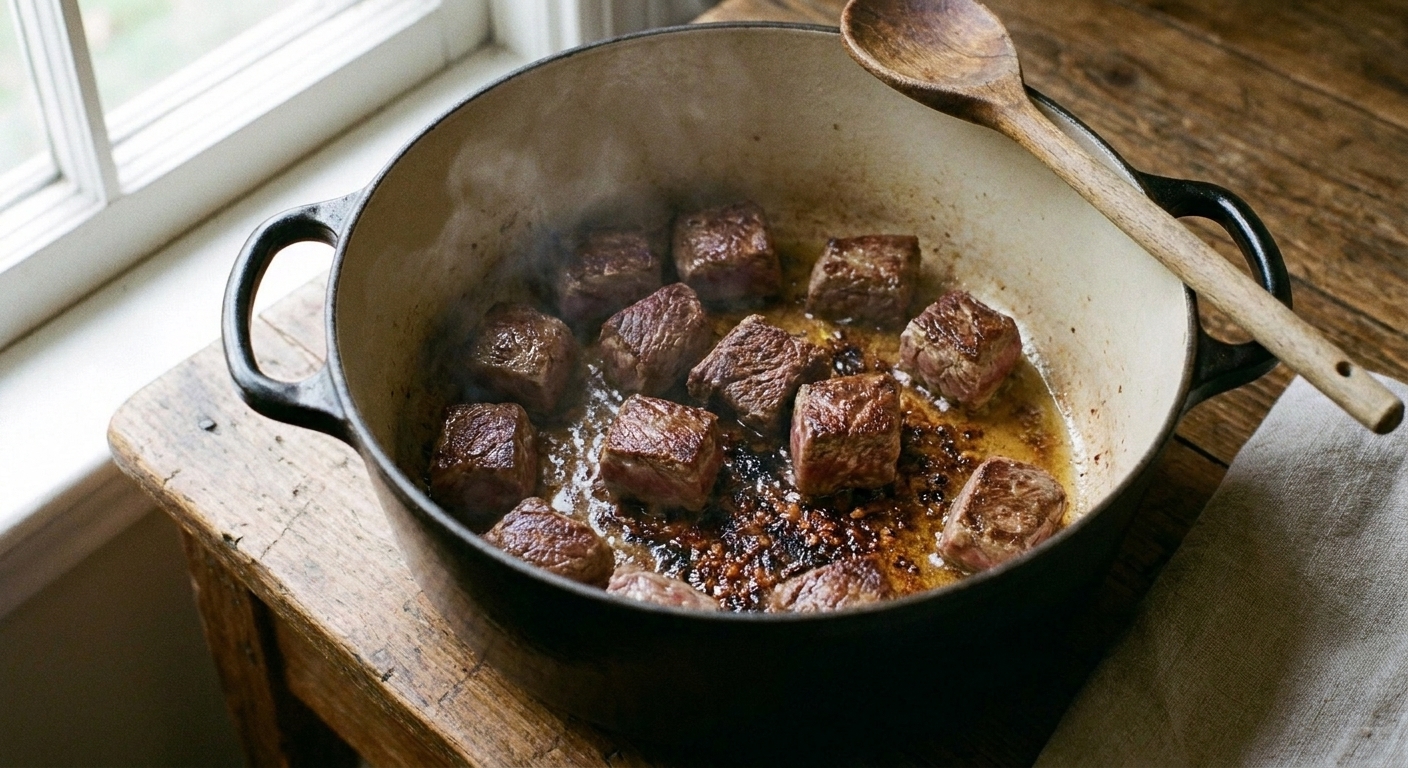
Pat the beef dry (this helps it brown instead of steam). Heat olive oil in a Dutch oven or heavy soup pot over medium-high heat.
Season beef with about 1 teaspoon salt and pepper (save the remaining salt for finishing). Brown in batches so the pot is not crowded, 3 to 4 minutes per side. Transfer browned beef to a plate.
2) Soften the vegetables
Reduce heat to medium. Add onion, celery, and carrots. Cook 6 to 8 minutes, stirring, until the onion looks soft and glossy. Add garlic and cook 30 seconds.
3) Build the broth (not stew-thick)
Stir in tomato paste and thyme and cook for 1 minute to take the raw edge off. Pour in a splash of broth and scrape up any browned bits from the bottom of the pot. Those bits are your flavor base.
Add the remaining broth, 2 cups water, bay leaves, and the browned beef (plus any juices). Bring to a gentle boil, then reduce to a steady simmer.
4) Simmer until the beef is tender
Cover partially and simmer for 60 to 90 minutes, stirring occasionally, until the beef is fork-tender.
If the surface looks a little greasy (chuck can do that), skim off a spoonful of fat or blot with a paper towel. It keeps the broth tasting clean and beefy instead of heavy.
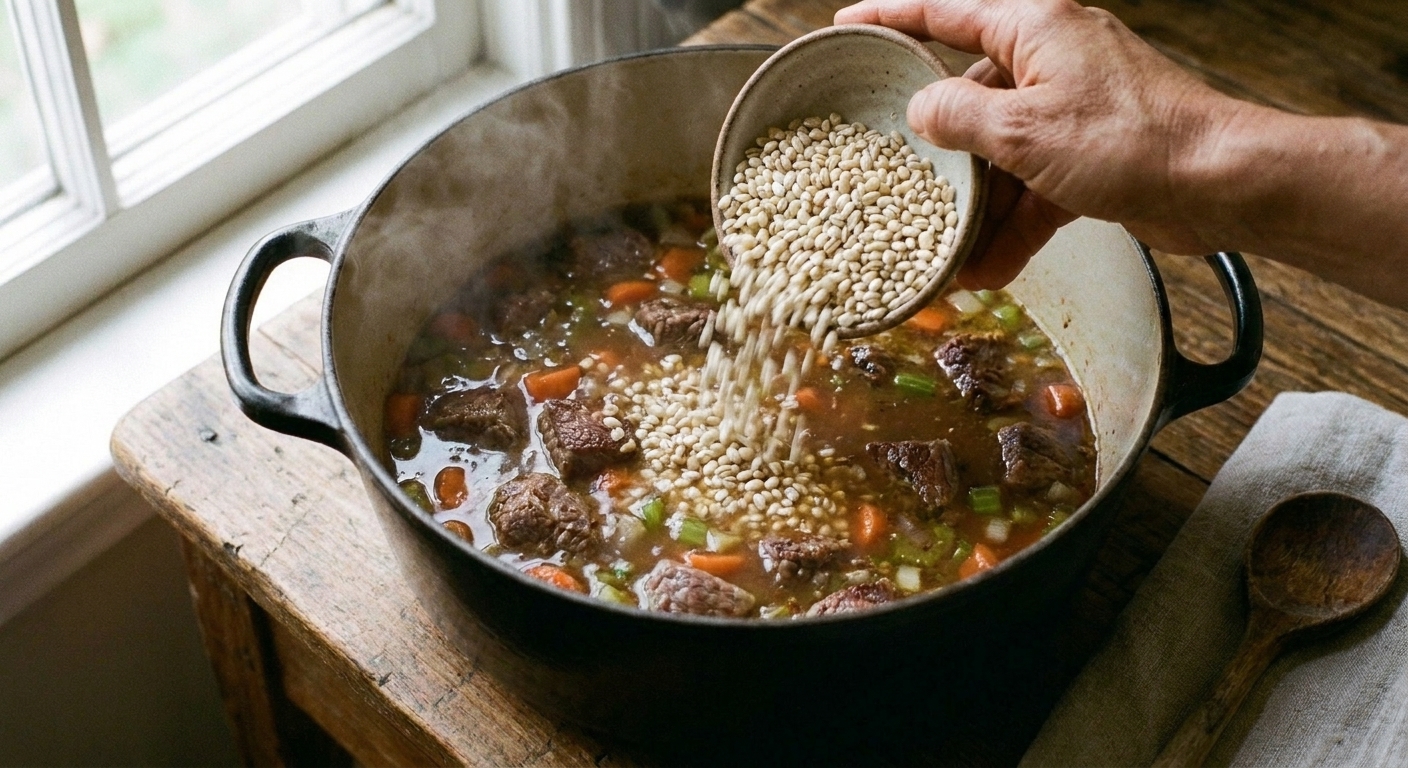
5) Add the barley near the end
Rinse the 1/2 cup pearled barley under cold water. I do this to rinse off surface starch so the broth stays clearer and less thick.
Add barley only once the beef is tender. Simmer uncovered (or partially covered) until the barley is chewy-tender, about 30 to 40 minutes. Start checking around 25 minutes and go by texture.
6) Finish and adjust the broth level
Stir in Worcestershire sauce if using. Remove bay leaves. Taste and add the remaining salt as needed.
If the soup thickened more than you want, add 1/2 to 2 cups hot water or extra broth until it is as brothy as you like. (Barley brands vary, and some just soak up more.)
Serve hot with parsley on top.
Vegetable cuts for soup
The fastest way to accidentally drift into “stew” is big chunky vegetables and too much starch. Here is what works best for a broth-forward bowl:
- Onion: small dice so it nearly melts into the broth
- Celery: small dice for even spoonfuls
- Carrots: thin half-moons (about 1/8 to 1/4 inch thick) so they soften without needing extra simmer time
If you want to add mushrooms, slice them and sauté them with the onions for a more soup-like texture.
Make-ahead and storage
Beef barley soup is fantastic the next day, but barley continues to absorb liquid in the fridge.
- Refrigerate: Cool, then store in an airtight container for up to 4 days.
- Reheat: Warm gently on the stove and add extra broth or water, a splash at a time, until it is soupy again.
- Freeze (most brothy option): Freeze the soup before adding the barley. Then cook barley fresh when you reheat. If you freeze it fully finished, it is still tasty, but it will be thicker after thawing.
Easy swaps and add-ins
- No chuck roast? Stew meat works, but chuck is the most reliable for tenderness.
- Want a little brightness? Add 1 to 2 teaspoons red wine vinegar or a squeeze of lemon right before serving.
- More herby flavor: Add a sprig of rosemary while simmering, then remove before serving.
- Need it gluten-free? Barley contains gluten. Swap barley for rinsed brown rice, but add it earlier and expect a different texture.
Note about my potato beef stew
If you have made my potato beef stew on Recipe Homely, this soup will feel different on purpose. That stew uses a much lower broth-to-solid ratio and is meant to be thick and gravy-like. Beef barley soup is built to stay brothy, so you can actually sip the bowl between bites.
FAQ
How do I stop barley from soaking up all the broth?
Use 1/2 cup pearled barley for a full pot and add it near the end, once the beef is already tender. For leftovers, plan to add extra broth or water when reheating.
Can I cook the barley separately?
Yes, and it is a great option if you love very brothy soup for days. Simmer barley in salted water until tender, drain, and add to each bowl when serving.
What if my soup tastes a little flat?
Try (1) a pinch more salt, (2) Worcestershire sauce, or (3) a small splash of vinegar or lemon at the end. That tiny bit of acidity wakes up the whole pot.
Is this better in a Dutch oven or slow cooker?
I prefer a Dutch oven because browning and simmering happen in one pot, and you can control the simmer easily. If you use a slow cooker, brown the beef first, then cook on low until tender. For the brothiest, most reliable results, cook the barley separately and add it to bowls when serving. If you want to cook barley in the slow cooker, add it near the end and plan on 60 to 90 minutes on high or 90 to 120 minutes on low, checking for doneness and adding more liquid if needed.