A realistic Sunday meal prep routine for busy families: what to prep, how to store it safely, and five quick dinner formulas so weeknights feel calm again.
Recipe Homely
October 18, 2026
Last updated October 18, 2026
Dinner for Two Arrival Times (No Drying Out)

Sarah Jenkins
Sarah Jenkins is a passionate home cook and the voice behind Recipe Homely, dedicated to making everyday meals stress-free and delicious. With over a decade of experience feeding a busy family, she specializes in rigorously tested, approachable recipes for dinners, desserts, and everything in between. When she isn't developing new dishes, Sarah can be found browsing local farmers' markets or baking with her two children.
Some nights, dinner is not a single moment. It is one person starving at 5:45, and the other walking in at 8:10. If you have ever tried to “just keep it warm,” you already know the ending: dry chicken, limp veggies, and rice that turns into one large sad clump.
Here is the good news: you can absolutely cook one dinner that tastes good at two different arrival times. The trick is not holding everything hot for hours. The trick is separating what should wait, cooling it promptly, and reheating once with a little moisture, then finishing any crisp parts right before serving.
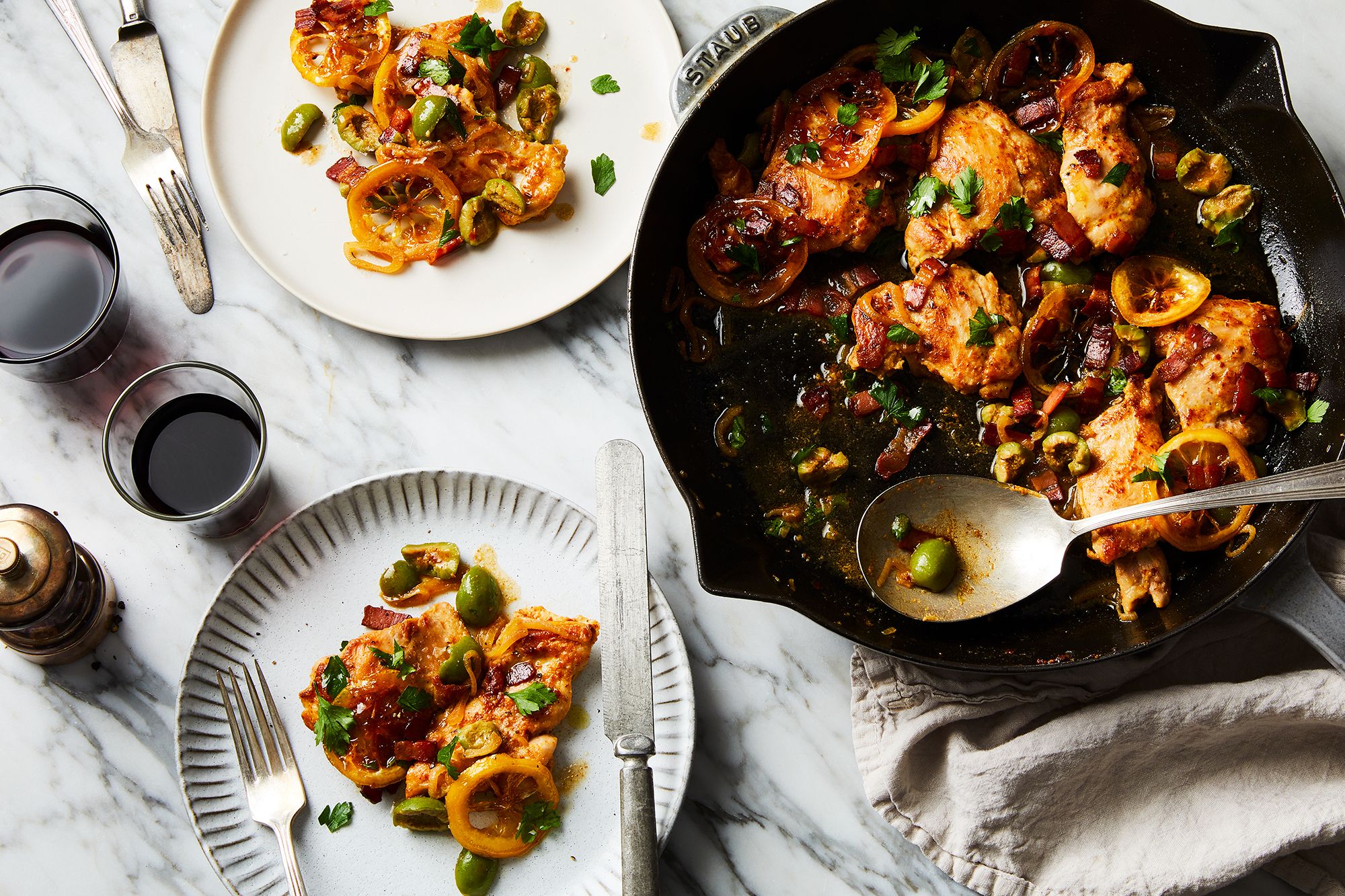
The core rule: skip long warm-holding
In my kitchen, the biggest quality jump happens when you stop treating the oven as a parking lot. Long warm-holding dries food out and can keep it in the temperature range where bacteria can grow quickly.
- Quality: gentle heat for a long time keeps cooking the food. That means stringy meat, mushy vegetables, and sauce that breaks.
- Food safety: U.S. food-safety guidance commonly describes the “danger zone” as between 40°F and 140°F. As a practical rule, perishable food should not sit in that range for more than 2 hours total, or 1 hour if the ambient temperature is above 90°F.
Instead, plan for two rounds of serving: an early plate and a later plate that is cooled quickly and reheated once.
The 5-step plan for two meal times
1) Pick a meal you can split
You do not need meal prep. You just need a dinner with parts that can be separated without ruining it. My go-to structures:
- Protein + sauce + starch + vegetable: chicken thighs with pan sauce, rice, green beans.
- Bowl-style meals: taco bowls, grain bowls, noodle bowls where toppings stay separate.
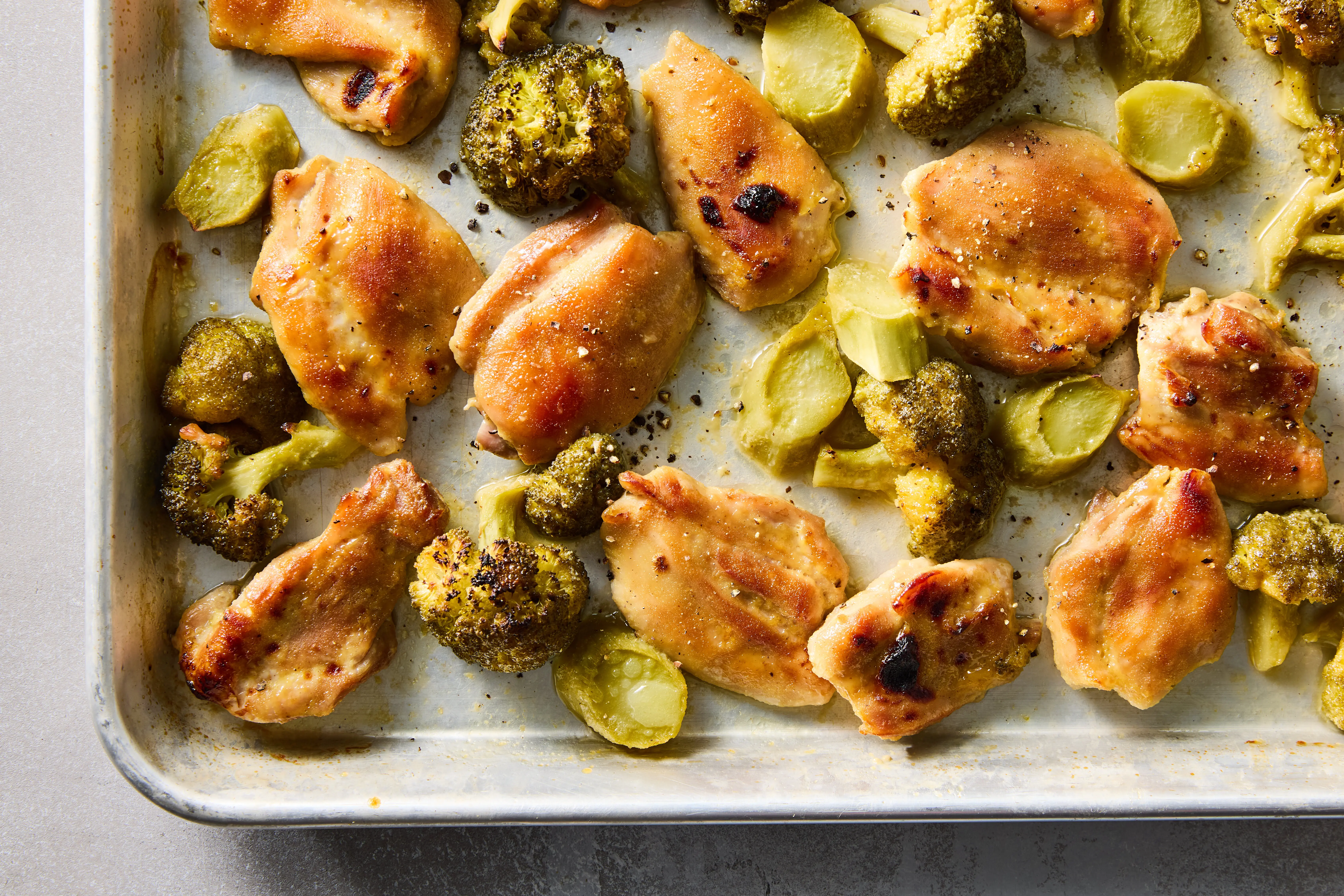
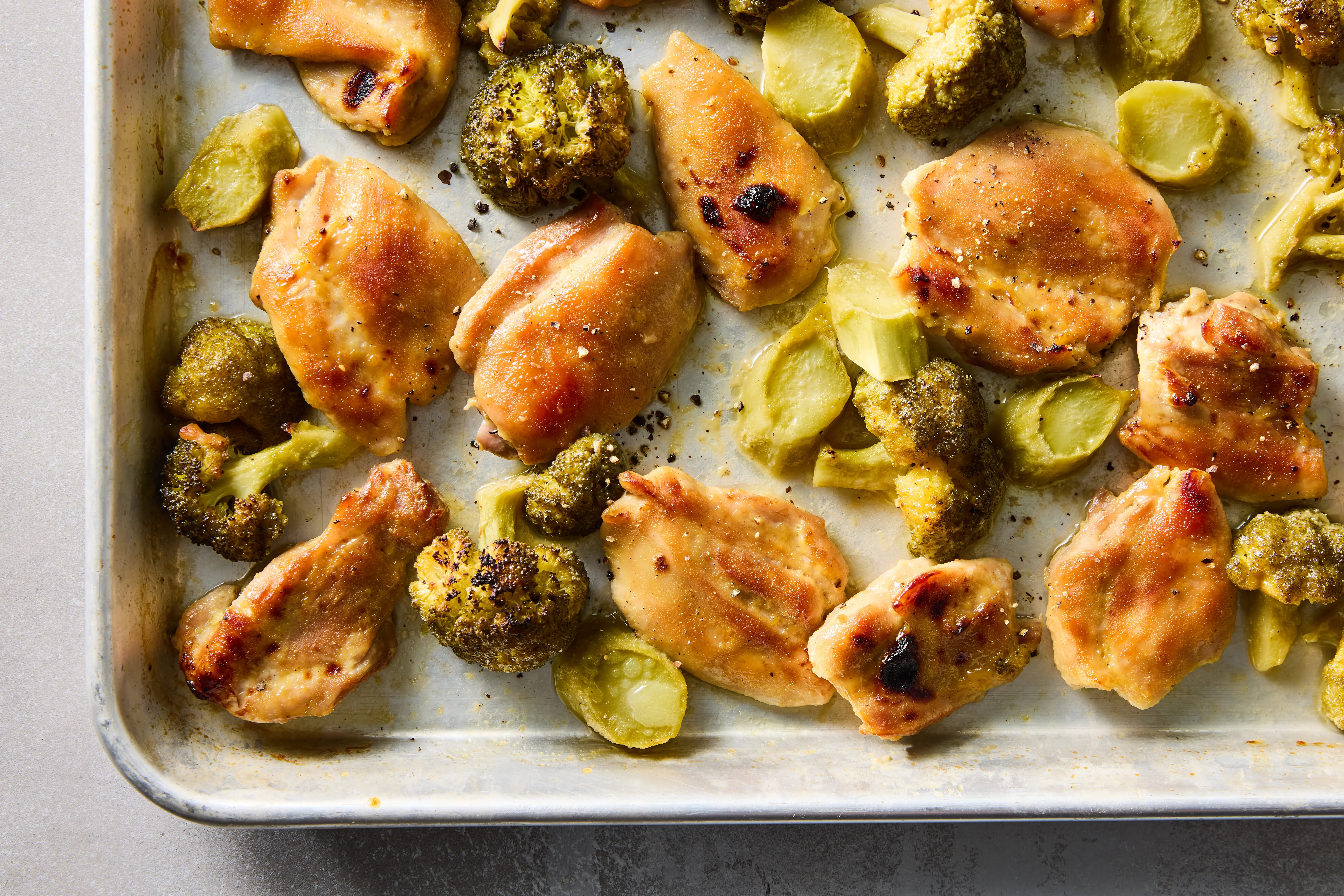
- Sheet pan meals: roast components on separate zones so you can pull one portion early.
If your meal is very delicate (a perfect medium-rare steak, soufflé, super-crispy breaded cutlets), you can still do it, but you will lean more on “finish on demand” later in the article.
2) Cook smart for the later portion
This is the part most online advice skips. If you know a portion will be reheated, aim for “almost perfect” rather than “edge of overdone.”
Important: food still needs to be cooked safely the first time. For poultry in particular, cook to a safe internal temperature. The “pull it a touch early” idea is about texture and carryover heat, not serving undercooked chicken.
- Chicken breast: stop at juicy and just-done, not dry and stringy. Reheating will push it further.
- Pasta: cook 1 minute shy of al dente if you will reheat in sauce.
- Vegetables: stop when they are tender but still have a little bite.
3) Serve the early plate first
Get the first dinner on the table while everything is at its best. Then, before you fully settle in, do a quick pivot to set up the later portion.
4) Portion and chill the later serving right away
As soon as person #1 is served, portion the later serving into a shallow container. Shallow is important because it cools faster and more evenly.
If there is sauce, spoon a little over the protein now. Sauce is your built-in moisture blanket.
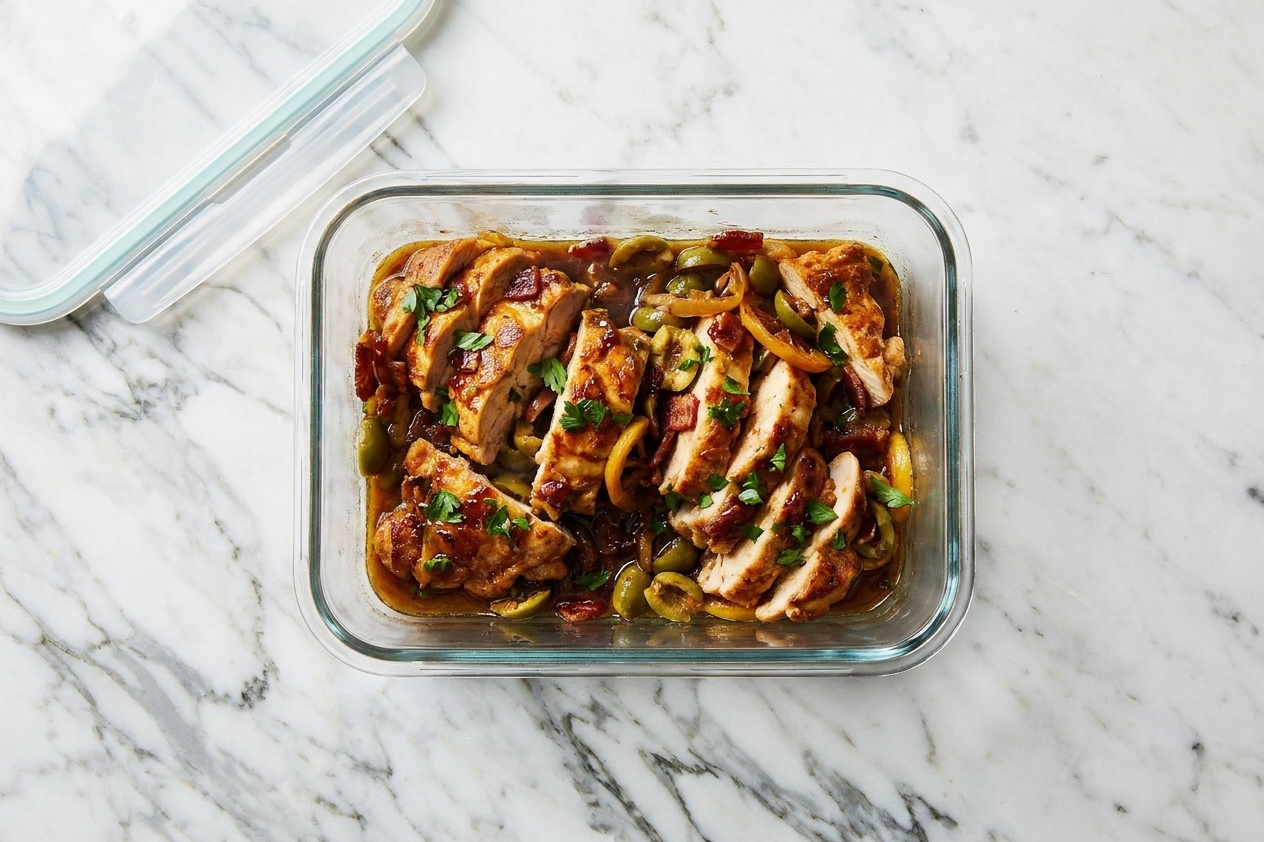
Cooling and storing, safely
Cool promptly, then refrigerate
Here is my simple, realistic home-kitchen method:
- Transfer the later portion to a shallow container.
- Let it sit on the counter just long enough to stop steaming hard (think 10 to 20 minutes, not an hour).
- If it is a small, shallow portion, you can refrigerate it uncovered briefly (about 10 to 15 minutes) to speed cooling, then cover tightly. Skip this step for big hot pots or deep containers, and do not leave the fridge door hanging open.
If your kitchen is warm or you are dealing with a bigger amount of food, use one of these speed-cooling tricks:
- Ice bath: set the container in a larger bowl of ice water for 10 minutes, stirring once if it is soup or sauce.
- Spread it out: lay sliced meat or rice in a thin layer instead of a mound.
Note on rice: rice is a common troublemaker when it sits warm too long. Portion it out, cool it quickly, and get it into the fridge.
Keep crisp things separate
Anything that is supposed to be crisp will turn soggy in the fridge. That is not you failing. That is physics.
- Croutons, tortilla strips, toasted breadcrumbs
- Fried or breaded cutlets
- Roasted potatoes (they can be saved, but they need a re-crisp strategy)
- Fresh salads and herbs
Store those items separately at room temp if they are dry (breadcrumbs) or in the fridge if they are perishable (salad greens). Then finish or re-crisp right before the late plate.
Reheat once, with moisture
The goal for the late dinner is: heat through, not “keep cooking.” If you are reheating leftovers for safety, a good rule is to reheat to 165°F or until steaming hot throughout. A thermometer makes this easy, especially with chicken.
Here are my most reliable reheating methods for different foods, with the little moisture trick that makes everything taste newly cooked.
Protein (chicken, pork, meatballs, fish)
- Best all-around: reheat gently in a covered skillet with a splash of broth or water. Low heat, lid on, 5 to 10 minutes depending on thickness.
- Microwave that actually works: slice first, lay in a single layer, add a teaspoon or two of water or sauce, cover loosely, and use 50 to 70% power in short bursts.
Tip from my picky eaters: if you have gravy, salsa, curry, marinara, or pan sauce, reheat the protein in the sauce. Sauces protect texture and hide “reheated” flavor.
Rice and grains (the dryness culprit)
Rice dries because the starch retrogrades in the fridge. The fix is water and steam.
- Put rice in a microwave-safe bowl.
- Sprinkle 1 to 2 tablespoons water over it.
- Cover (plate or vented lid) and microwave until hot, fluffing once.
On the stovetop, add a splash of water, cover, and warm on low, stirring once or twice.
Pasta and noodles
- If it is sauced: warm in a covered skillet with a spoonful of water or extra sauce, tossing until glossy again.
- If it is plain: quick dunk in simmering water for 20 to 40 seconds, then toss with warm sauce.
Roasted vegetables
Two options depending on what you care about most:
- Best texture: reheat on a sheet pan at 425°F for 6 to 10 minutes, spread out so they roast, not steam.
- Fastest: skillet with a tiny splash of water, lid on for 2 minutes, then lid off to drive off moisture.
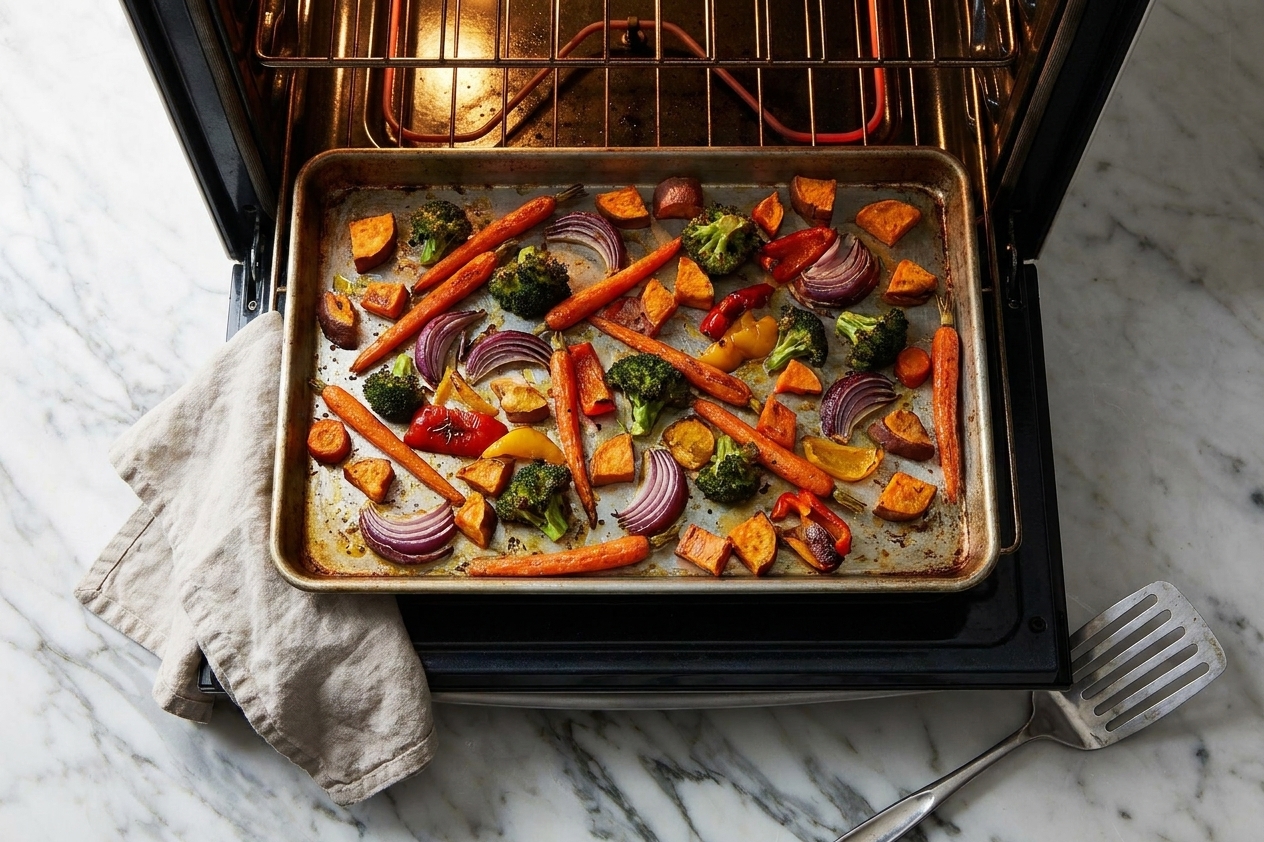
Finish the crisp parts right before eating
This is the part that makes the second dinner feel like a real dinner, not leftovers.
How to bring back crisp fast
- Oven or toaster oven: 400°F to 450°F, food spaced out, 5 to 12 minutes.
- Air fryer: 350°F to 400°F, 3 to 8 minutes, shake once.
- Skillet: a thin slick of oil for potatoes or cutlets, medium heat, flip once.
Skip: microwaving anything breaded or fried if crispness matters. It will go soft.
Fresh finishers make it taste new
If I am serving the same meal twice, I always add one fresh element for the late plate:
- lemon wedge or a squeeze of lime
- fresh herbs
- a dollop of yogurt or sour cream
- quick salad (even just cucumbers with salt and vinegar)
That tiny reset does a lot for the “this was made for you” feeling.
Three dinners and how to split them
Pan-seared chicken with rice and green beans
- Cook: sear chicken, make a quick pan sauce.
- Serve early: plate one chicken portion with rice and beans.
- For later: slice the second chicken portion, spoon pan sauce over, store rice separately, chill promptly.
- Reheat later: chicken in sauce in covered skillet on low, rice with water in microwave, beans in skillet for 2 minutes. Heat until steaming hot, and use 165°F as a safety target for chicken if you are unsure.
Tacos or taco bowls
- Cook: taco meat, beans, rice.
- Serve early: build tacos or bowls.
- For later: store meat with a spoonful of salsa, keep tortillas and crunchy toppings separate.
- Reheat later: meat covered in microwave at 70% power, tortillas warmed in a dry skillet, add fresh toppings at the end.
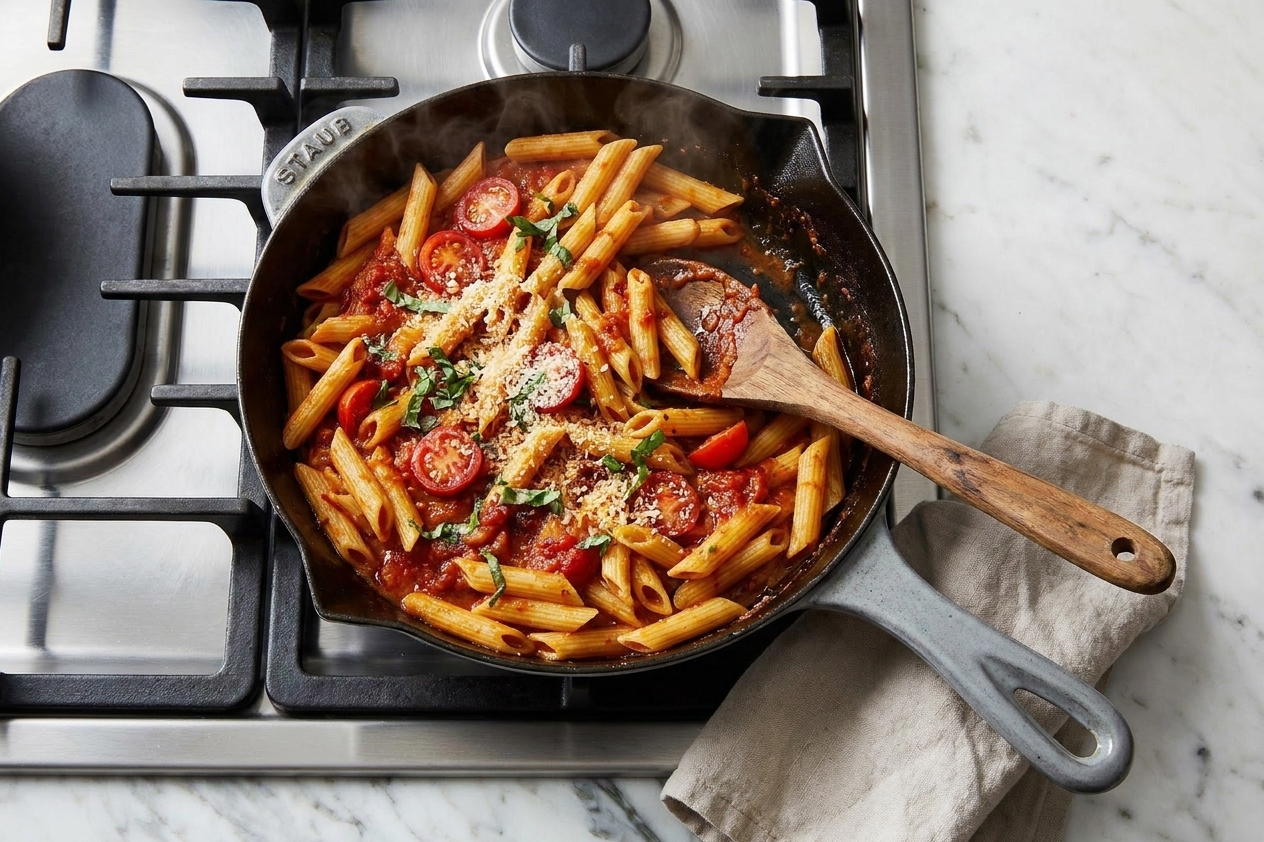
Pasta with marinara and salad
- Cook: pasta slightly under al dente, toss with marinara.
- Serve early: plate and eat.
- For later: store pasta in sauce (not plain), salad undressed in a separate container.
- Reheat later: warm pasta in covered skillet with a splash of water, toss until saucy again, dress salad right before serving.
Warm-hold vs reheat: what is safer?
I get this question constantly because it feels so convenient to set the oven to 200°F and call it a day. Here is the practical distinction:
- Warm-holding means keeping cooked food hot for an extended time before eating. This can dry food out and can be risky if the food is not held above 140°F the whole time. Home ovens and “warm” settings are notoriously inconsistent.
- Reheating means cooling the portion promptly, refrigerating it, then heating it back up once right before eating.
If you do need to warm-hold briefly (say 20 to 30 minutes), do it like a restaurant would: cover the food, add moisture when appropriate, and keep it truly hot. For longer gaps of hours, cooling and reheating is the better plan for both texture and safety.
And if your “late plate” becomes a next-day lunch instead, follow normal leftover rules. Refrigerate promptly and use within a few days.
My quick checklist
- Pick a meal with components you can separate.
- Cook safely, and aim for juicy-not-overdone on the portion that will be reheated.
- Portion the later serving right after plating the early dinner.
- Cool in a shallow container and refrigerate promptly.
- Store crisp things separately.
- Reheat once, covered, with a splash of water, broth, or sauce.
- Reheat to 165°F when in doubt, especially for poultry, or until steaming hot throughout.
- Re-crisp in oven, air fryer, or skillet, then add a fresh finisher.
FAQ
Can I keep the second portion in a low oven?
For a short window, sometimes. For a gap of hours, I do not recommend it. You will dry the food out, and you may not reliably keep it out of the danger zone. Refrigerate promptly, then reheat right before serving.
What foods reheat best for the late eater?
Saucy foods: chili, curry, braises, meatballs in marinara, pulled pork, and soups. They stay moist and forgiving.
What foods are hardest to serve twice?
Anything built on crispness or a specific internal temp: breaded cutlets, fries, delicate fish, medium-rare steak. For these, cook the second portion less, then finish quickly later (air fryer, hot skillet, or broiler).
How do I stop reheated chicken from getting rubbery?
Slice it, reheat it gently, and add moisture. Covered skillet plus a splash of broth is the most reliable method in my kitchen. Microwave is fine if you use lower power and short bursts. If you are unsure, heat until steaming hot or to 165°F.