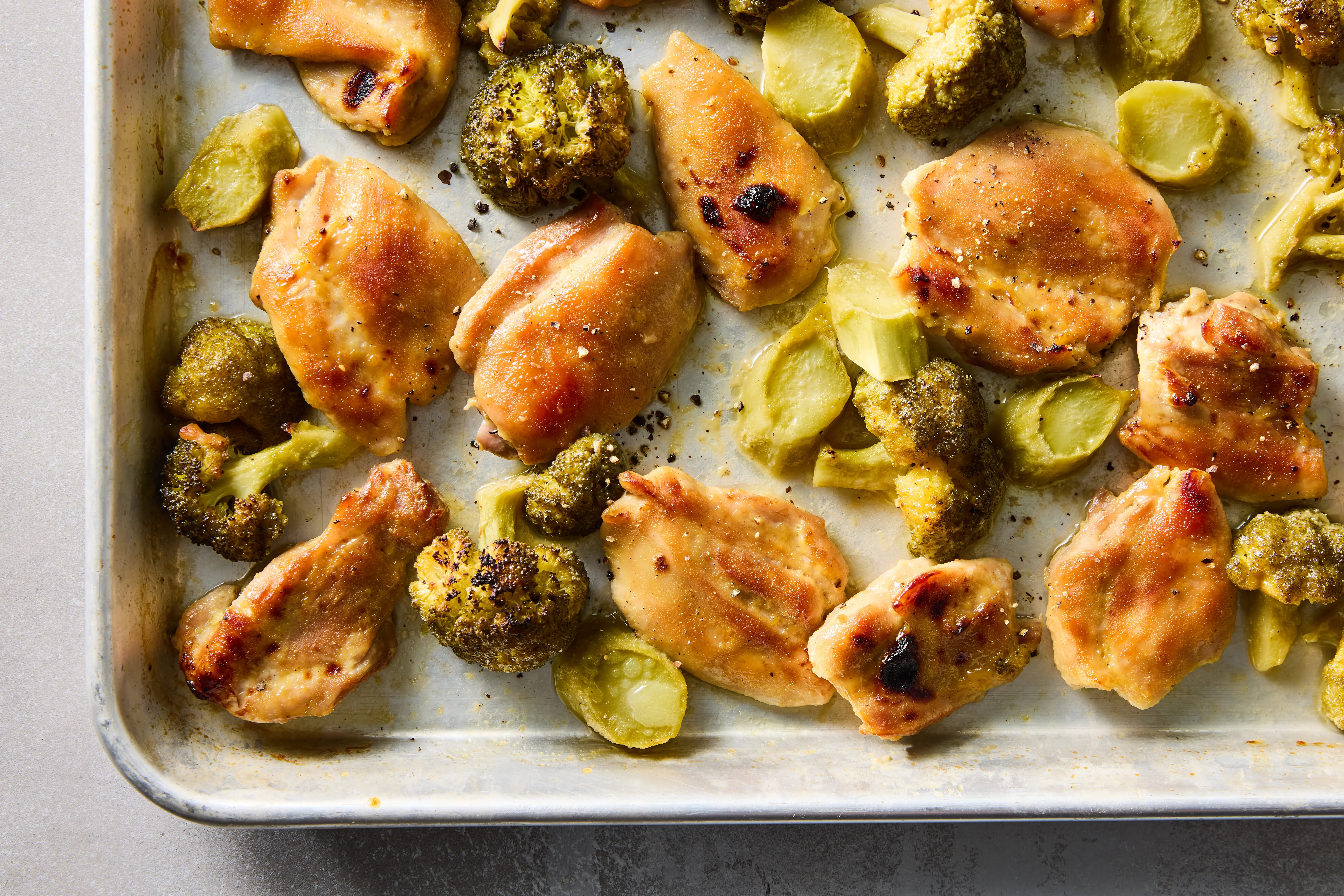
A tested, busy-parent-friendly formula for sheet pan dinners that cook evenly every time, plus timing charts, seasoning ideas, and mix-and-match meal combos.
Recipe Homely
October 17, 2026
Last updated October 17, 2026
How to Roast Vegetables Perfectly

Sarah Jenkins
Sarah Jenkins is a passionate home cook and the voice behind Recipe Homely, dedicated to making everyday meals stress-free and delicious. With over a decade of experience feeding a busy family, she specializes in rigorously tested, approachable recipes for dinners, desserts, and everything in between. When she isn't developing new dishes, Sarah can be found browsing local farmers' markets or baking with her two children.
Roasted vegetables are my weeknight safety net. If I can get a pan of broccoli or carrots deeply browned and a little crisp around the edges, dinner feels instantly “done” even if the rest is a fridge clean-out situation.
But if you have ever pulled a tray of vegetables from the oven and found them pale, wet, or strangely steamed, you are not alone. The fix is not fancy. It is temperature, oil, spacing, and a few small habits that make a big difference.
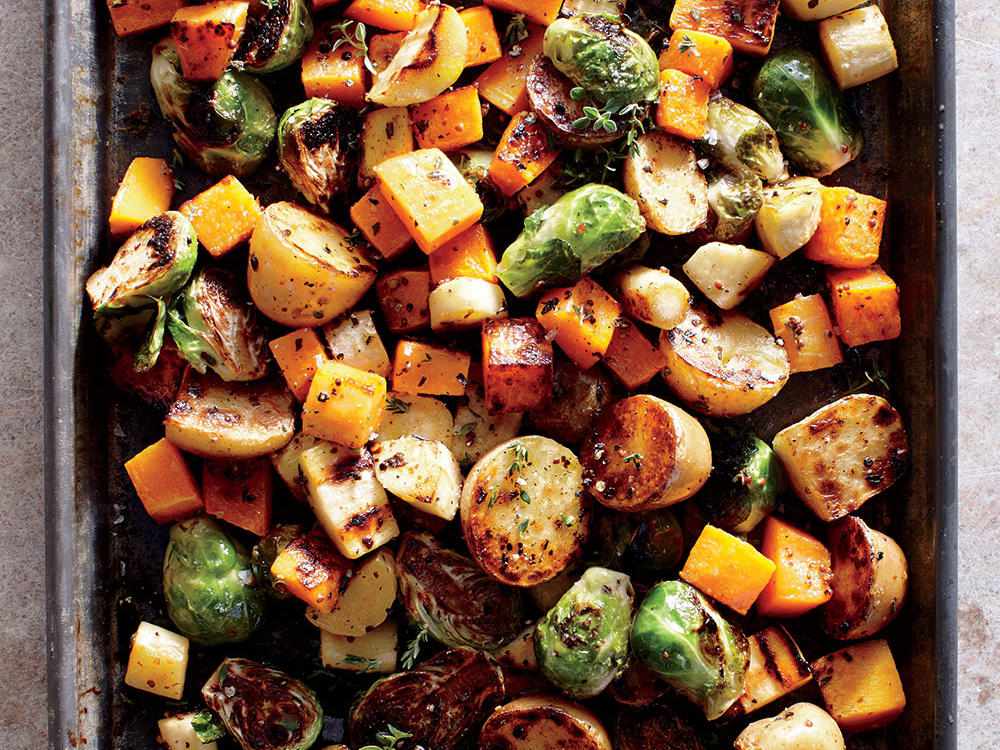
The two rules for crisp edges
If you remember nothing else, remember these:
- Hot oven: Roasting needs high heat to evaporate surface moisture fast and trigger browning.
- Space: Crowding traps steam. Steam is the enemy of crisp edges.
Everything else, oil amount, seasoning, cut size, and pan choice, supports those two rules.
Best roasting temperatures
Here is the temperature cheat sheet I use on busy weeknights.
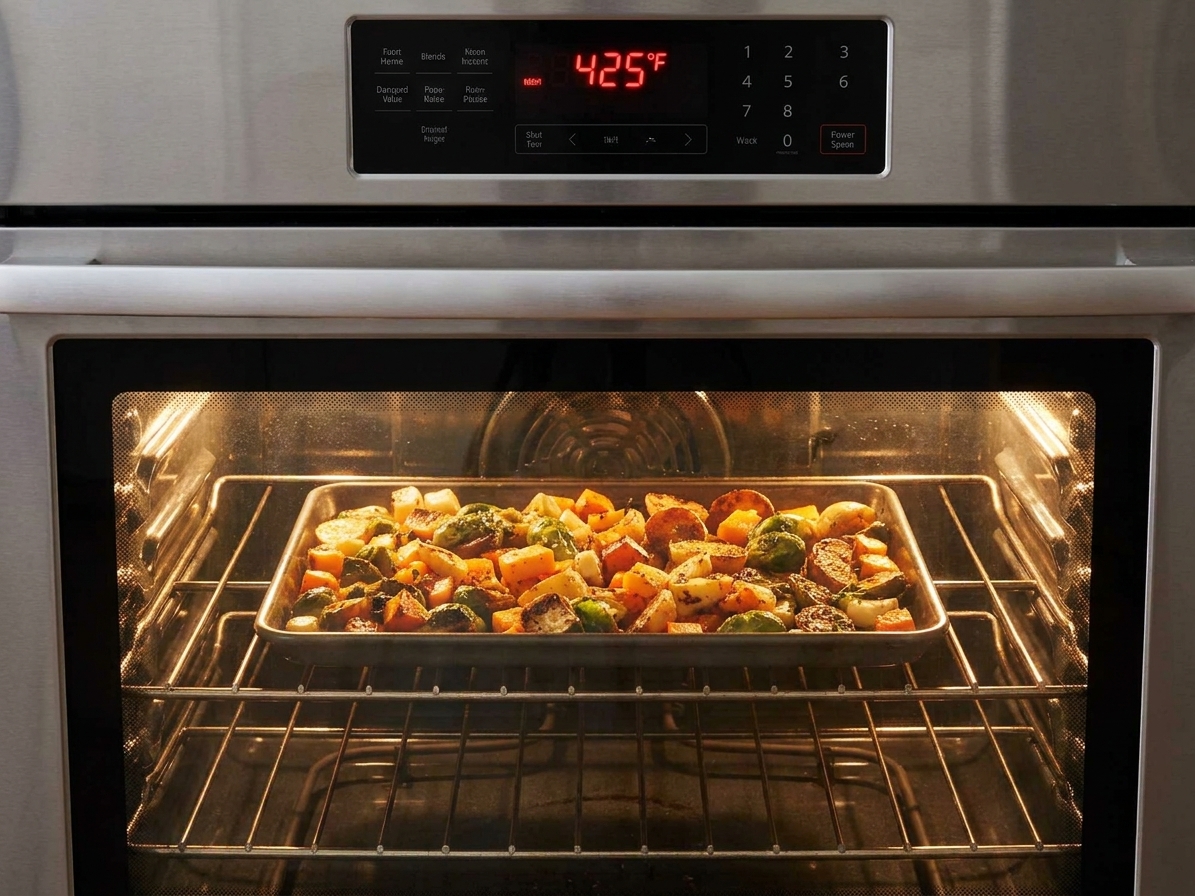
425°F: the everyday sweet spot
Use for: broccoli, cauliflower, Brussels sprouts, carrots, potatoes, sweet potatoes, green beans, zucchini, bell peppers, onions.
Why it works: Hot enough to brown well without burning before the centers turn tender.
450°F: extra crisp, fast
Use for: broccoli florets, Brussels sprouts halves, cauliflower florets, thin asparagus, fajita-style peppers and onions, frozen vegetables (more on that below).
Watch for: sugary glazes and delicate seasonings can scorch. Add sweet sauces near the end.
400°F: for dense cuts or hot ovens
Use for: larger chunks of carrots or beets, whole cloves of garlic, mixed trays where some items brown too quickly at higher heat.
Tip: You can still get great browning at 400°F, but you must space well and give it time.
375°F and below: specific goals
Lower temps are better for drying out watery veggies slowly, roasting tomatoes for a jammy texture, or when you are cooking something else and need the vegetables to ride along. You will get tenderness, but crisp edges are harder.
Rack position: middle by default
I roast on the middle rack for even heat. If you want more bottom browning for potatoes, move the pan to the lower third for the last 10 to 15 minutes. If the tops are getting too dark, move up a rack.
The oil guide
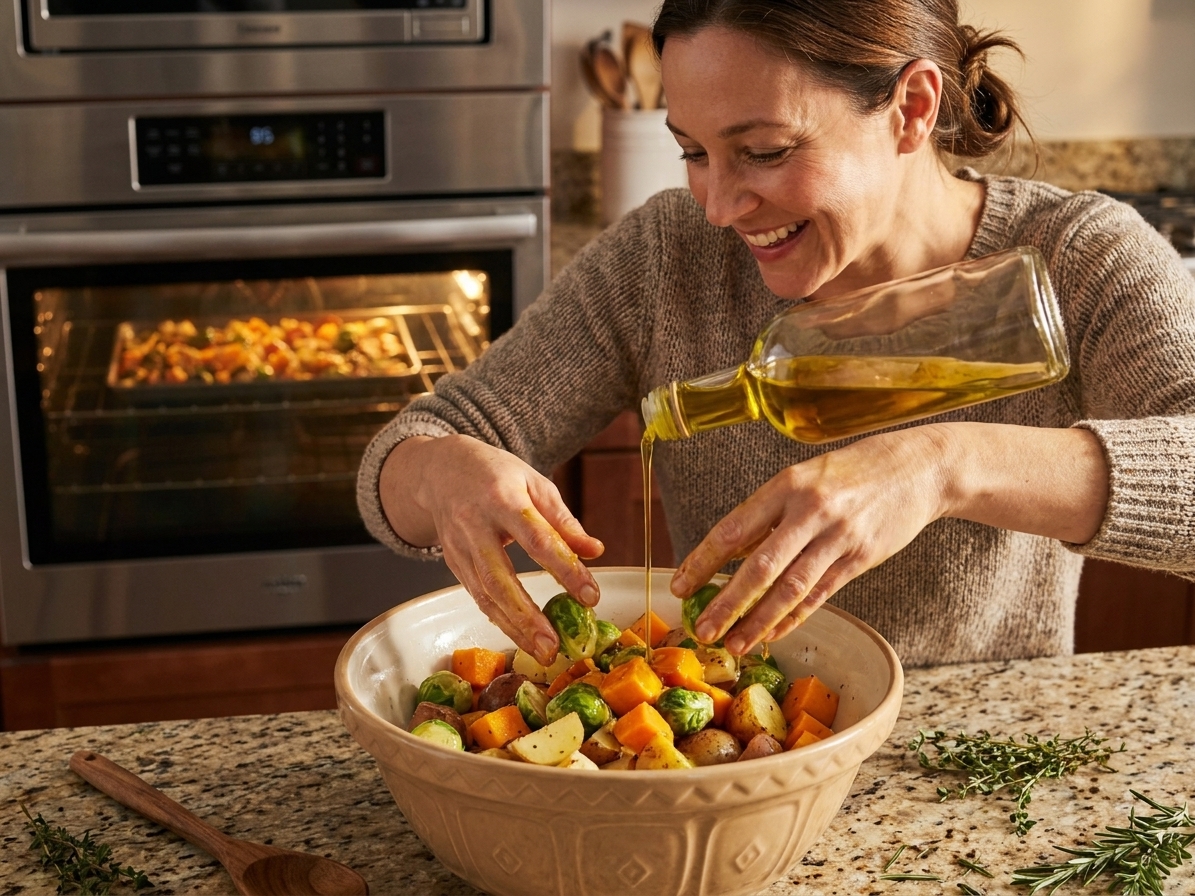
Too little oil can leave vegetables dry and patchy. Too much oil can make them greasy and keep the edges from drying and crisping. Oil needs vary with cut size and surface area, so think of these as starting points you can adjust:
- About 1 tablespoon oil per 1 pound vegetables for most hearty vegetables (broccoli, cauliflower, carrots, Brussels sprouts, potatoes).
- About 2 teaspoons oil per 1 pound vegetables for softer vegetables (zucchini, mushrooms, bell peppers, onions) that can get oily fast.
- About 1 1/2 tablespoons oil per 1 pound vegetables for starchy cubes (potatoes, sweet potatoes) when you want maximum crisping.
Quick adjustment cue: after tossing, the pieces should look lightly glossy, not dry and not dripping. If they look dry, add 1 to 2 teaspoons more oil and toss again. If oil is pooling on the pan, blot a little with a paper towel or add a bit more veg and spread out.
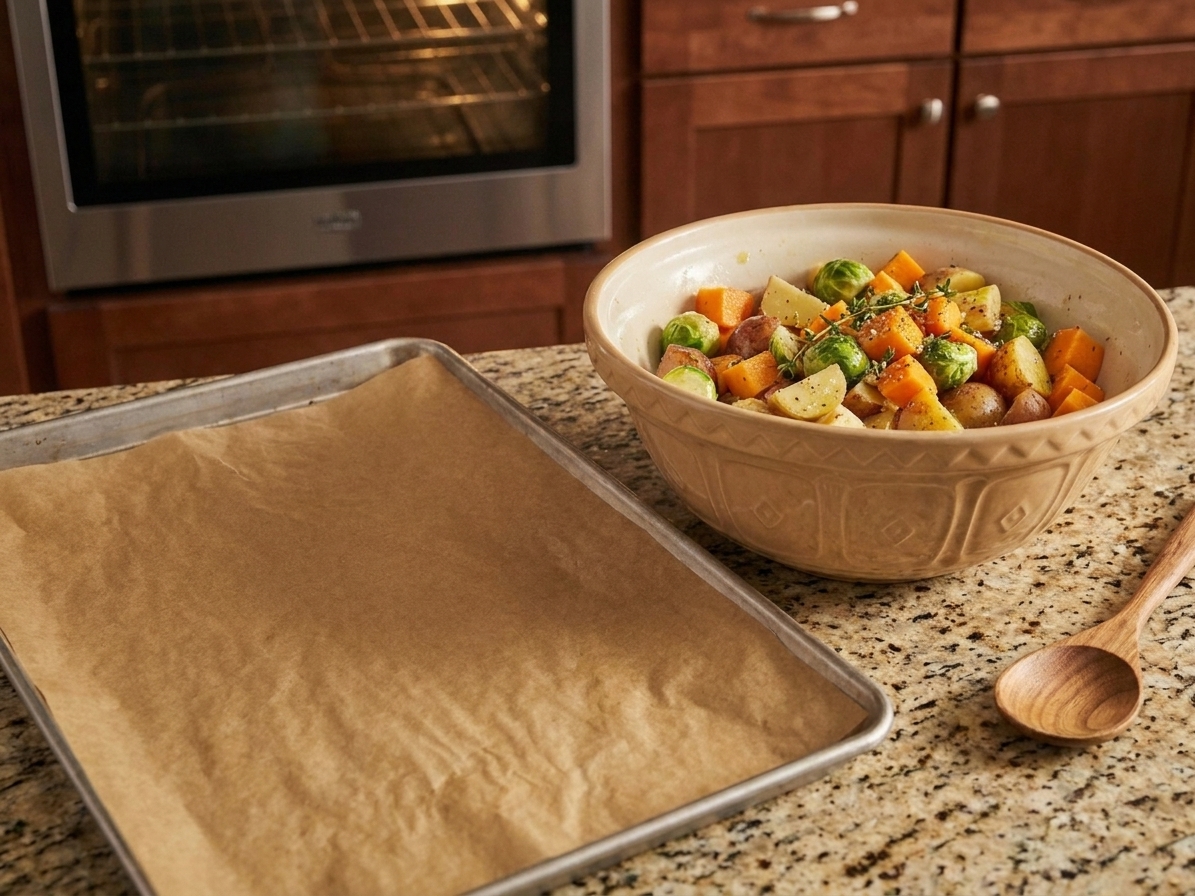
My method: toss vegetables with oil in a large bowl first, then spread on the pan. Pouring oil directly onto the sheet pan often leads to uneven coating and random greasy spots.
Best oils for roasting
- Olive oil: everyday favorite for flavor, works great at 425°F.
- Avocado oil: very neutral and great at higher heat.
- Grapeseed or canola: neutral, budget-friendly, browns nicely.
- Ghee: amazing flavor, especially for carrots, cauliflower, and sweet potatoes.
Skip: regular butter on the sheet pan at the start. It tends to brown too fast and can burn before the vegetables are done. If you want butter flavor, add a small pat in the last 5 minutes, or finish with melted butter after roasting.
Cut size and cook time
Roasting is easiest when everything on the pan finishes at the same time. Aim for consistent size, even if the shapes differ.
- Broccoli and cauliflower: medium florets with flat sides, 18 to 25 minutes at 425°F.
- Brussels sprouts: halved, 20 to 28 minutes at 425°F.
- Carrots: 1/2-inch coins or batons, 20 to 30 minutes at 425°F.
- Potatoes and sweet potatoes: 3/4-inch cubes, 25 to 40 minutes at 425°F.
- Green beans: trimmed, 14 to 18 minutes at 425°F.
- Zucchini: thick half-moons or spears, 12 to 18 minutes at 425°F.
- Bell peppers and onions: thick strips, 18 to 25 minutes at 425°F.
- Mushrooms: halved, 18 to 25 minutes at 425°F (the dry-roast tip below helps a lot).
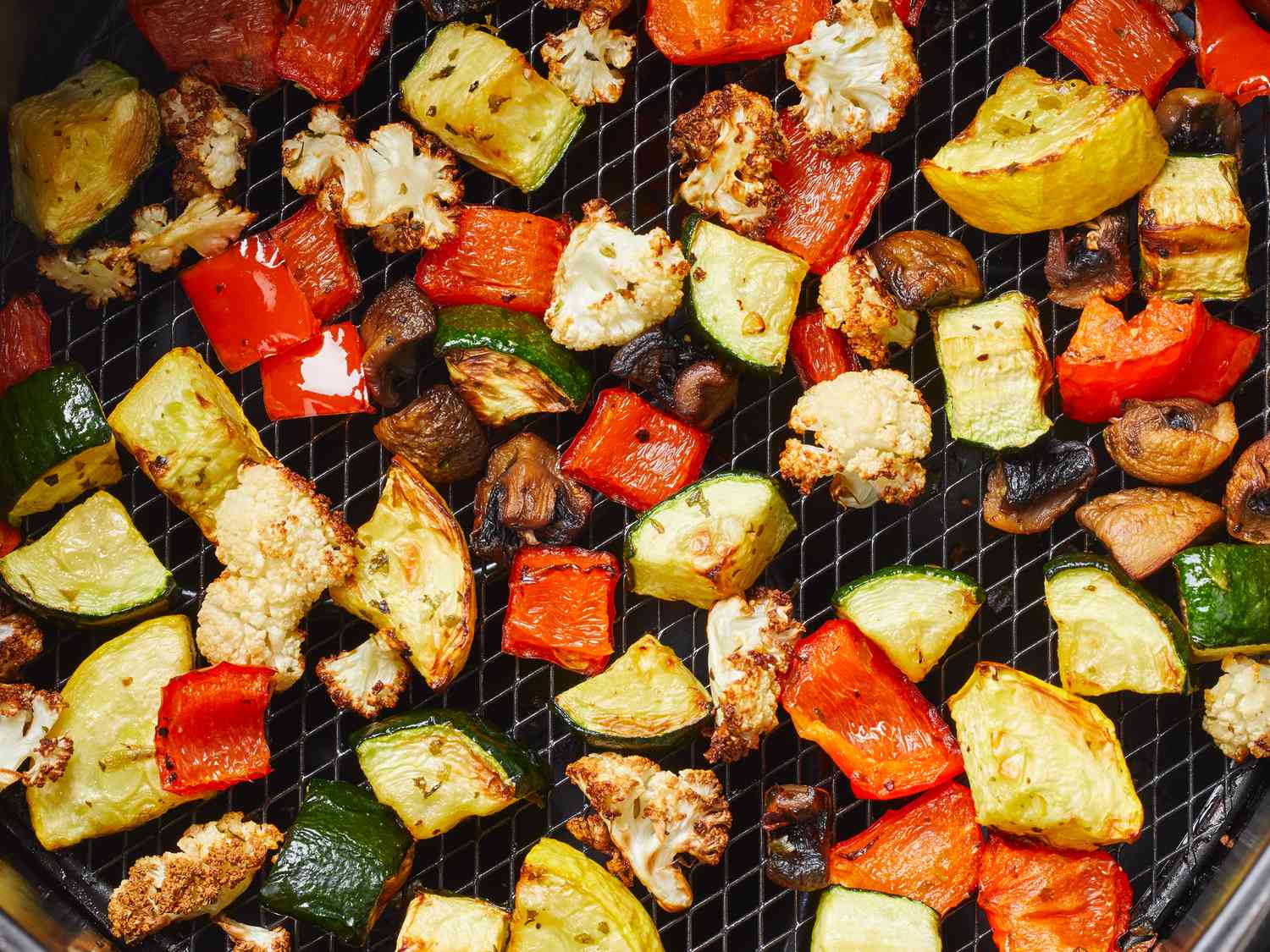
Doneness cues: times are a guide, but trust the tray. Carrots should take a fork easily but not collapse. Potatoes are done when the edges are browned and crisp and the centers feel fluffy when pierced. Broccoli is at its best when the edges are browned and the stems are tender but still bright.
Flip or not? For most vegetables, I flip once halfway through for even browning. If you are roasting small florets or thin vegetables that risk breaking apart, a quick shake of the pan works.
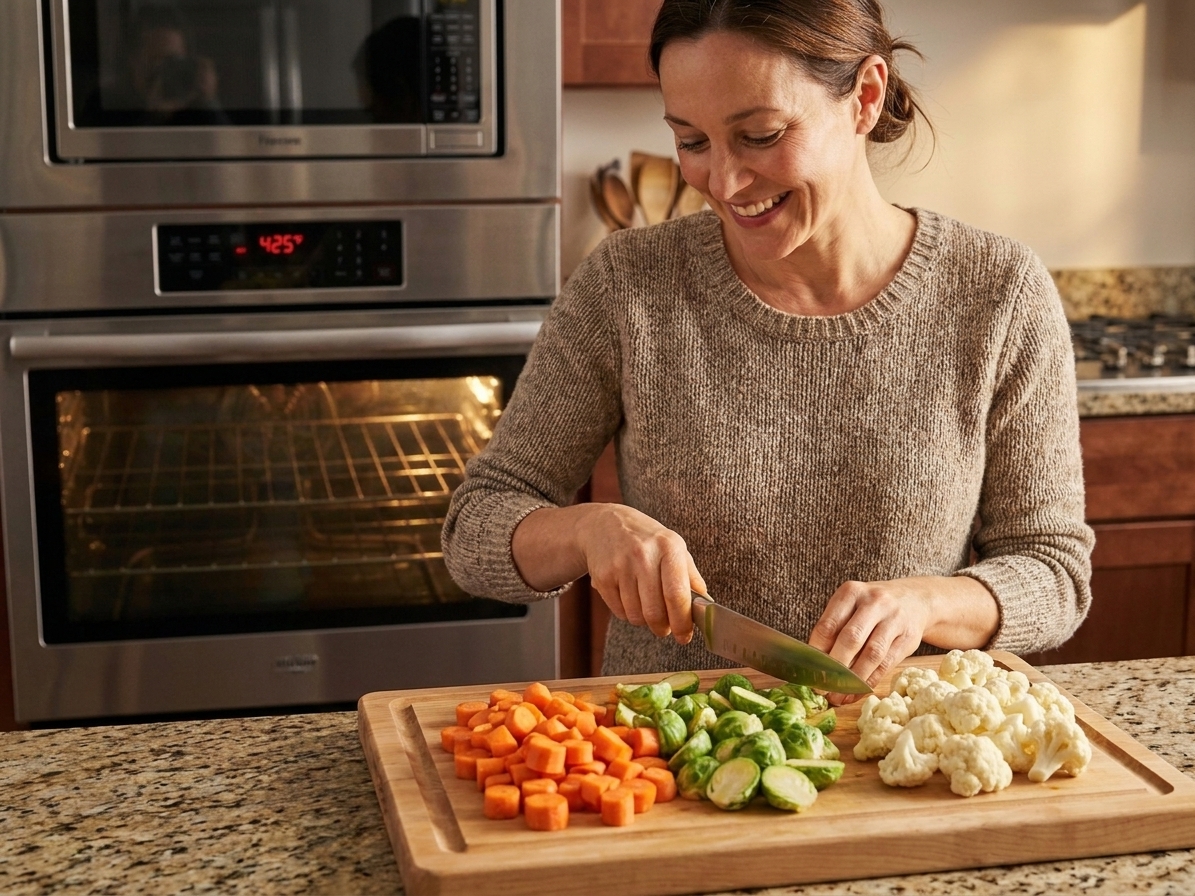
Pan and parchment
Use a sturdy, light-colored rimmed sheet pan
Warped pans create puddles of oil and uneven browning. Very dark pans can over-brown the bottoms before the centers soften. A basic aluminum rimmed sheet pan is the workhorse.
Parchment vs foil
- Parchment paper: easiest cleanup, reliable browning, my default.
- Foil: can stick unless you oil it well, but can brown aggressively.
- No liner: maximum browning, but more scrubbing.
Preheat the pan (optional, but great for crisping)
If you struggle with vegetables that never quite crisp, put the empty sheet pan in the oven while it preheats. When you spread the oiled vegetables onto the hot pan, you get an immediate sizzle and better browning.
Smoke alarm tip
High heat plus oil can get smoky, especially if drips hit the oven floor. Use a rimmed pan, avoid excess oil pooling, and wipe any spills once the oven is cool.
Seasoning blends
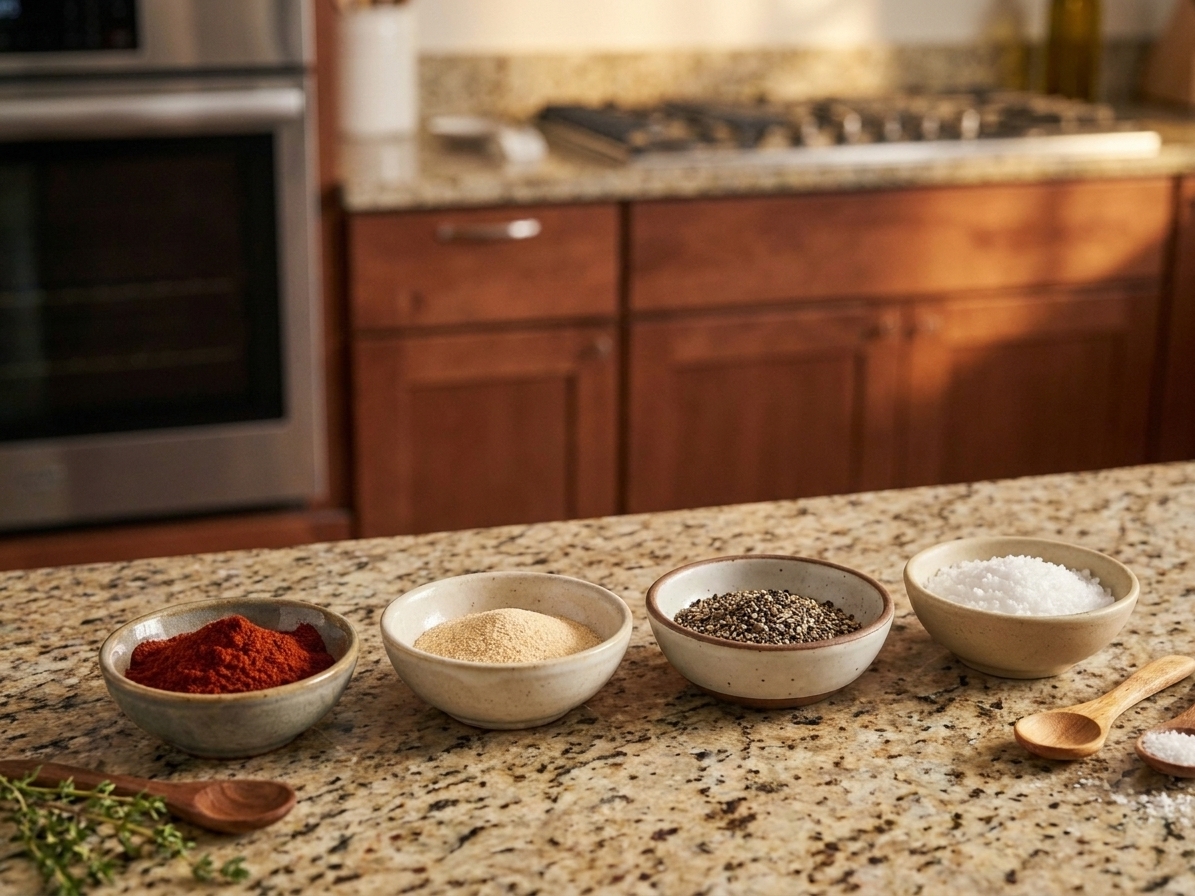
Salt and pepper are enough, but a simple blend can make vegetables feel like a real side dish instead of an obligation. Season after oiling so spices cling.
Salt note: I am using kosher salt here. If you are using fine sea salt or table salt, start with about half and adjust to taste.
Blend 1: Garlic and herb
- 1 pound vegetables
- 1 tablespoon olive oil
- 1/2 teaspoon kosher salt
- 1/4 teaspoon black pepper
- 1/2 teaspoon garlic powder
- 1/2 teaspoon dried Italian herbs (or oregano)
Blend 2: Smoky paprika
- 1 pound vegetables
- 1 tablespoon oil
- 1/2 teaspoon kosher salt
- 1/2 teaspoon smoked paprika
- 1/4 teaspoon cumin
- Pinch of chili flakes (optional)
Blend 3: Lemon pepper finish
Roast with salt, pepper, and oil. When it comes out, finish with:
- Fresh lemon juice or zest
- A drizzle of olive oil
- Grated Parmesan (optional)
Blend 4: Curry comfort
- 1 pound cauliflower or sweet potato
- 1 tablespoon oil
- 1/2 teaspoon kosher salt
- 1 teaspoon curry powder
- Pinch of turmeric (optional)
One important note: fresh garlic can burn at high heat if it is on the pan the whole time. If you love fresh garlic, stir it into the vegetables for the last 8 to 10 minutes of roasting, or use garlic powder at the start.
Mixed vegetables on one pan
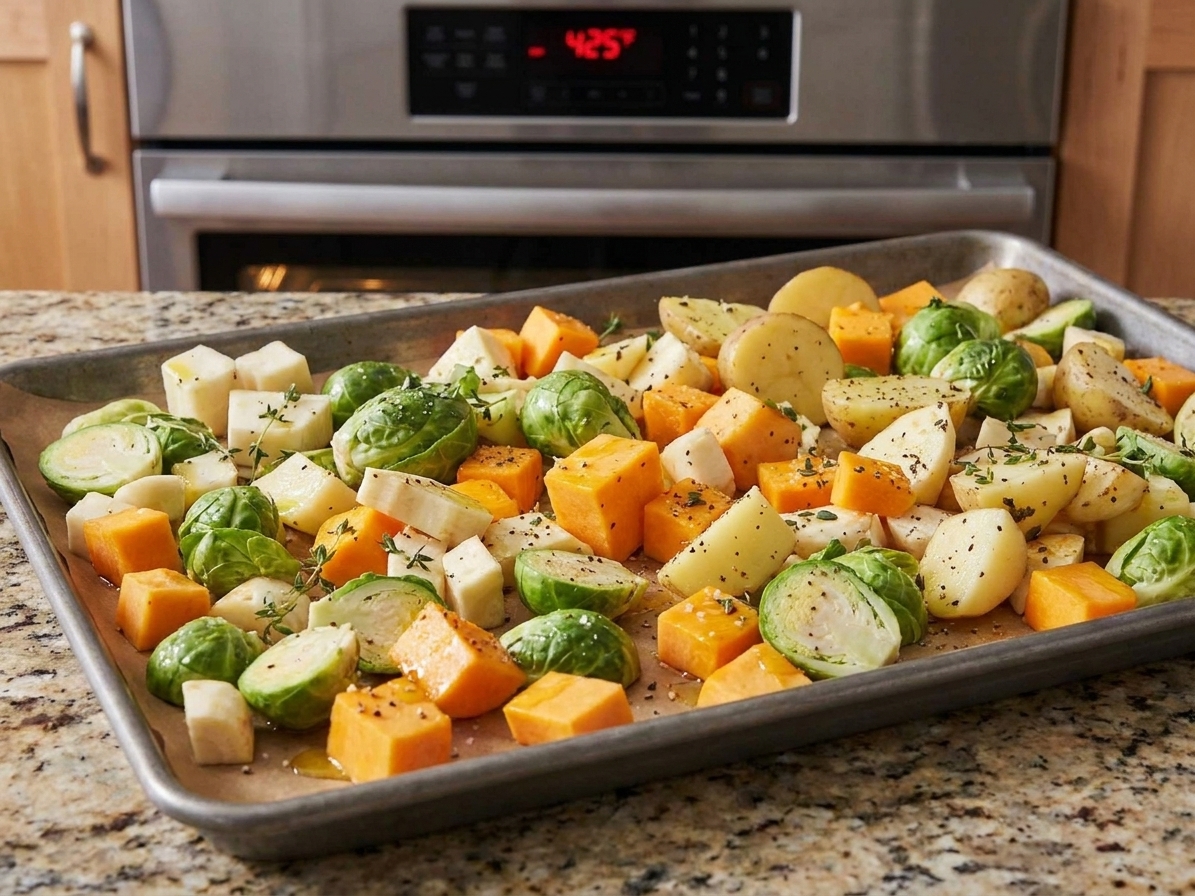
Mixed trays are convenient, but different vegetables cook at different speeds. Here are two easy ways to make it work.
Option 1: Match cook times
These play nicely together at 425°F:
- Broccoli + cauliflower + red onion
- Carrots + Brussels sprouts
- Potatoes + onions + peppers
Option 2: Stagger the timing
If you want a true mix, start the slow ones first, then add the fast ones later.
- Start potatoes or carrots (15 minutes)
- Add broccoli, cauliflower, or Brussels sprouts (then roast 15 to 20 minutes more)
- Add zucchini or mushrooms during the last 10 to 12 minutes
Yes, it means opening the oven. It is worth it for vegetables that are all perfectly done at once.
Common roasting problems
“My vegetables always turn out soggy”
- You crowded the pan: use two sheet pans if needed.
- Oven not hot enough: roast at 425°F or 450°F.
- Vegetables were wet: dry well after washing. Moisture equals steam.
- Too much oil: start with about 1 tablespoon per pound, then adjust.
“They burned outside but are hard inside”
- Pieces are too large: cut smaller and uniform.
- Too high heat for that vegetable: drop to 400°F for dense chunks.
- Rack too high: use the middle rack for more even heat.
“They are bland”
- Under-salted: most vegetables need more salt than you think. For 1 pound, 1/2 teaspoon kosher salt is a solid starting point.
- Missing an acid: lemon juice, vinegar, or a sprinkle of feta after roasting wakes up flavor.
“My broccoli tastes bitter”
Broccoli can taste bitter if it is overcooked or if the florets are very small and dry out. Bitterness can also just be the broccoli itself, depending on variety and age. Use medium florets, roast at 425°F, and pull when the edges are browned but the stems are still bright and tender. If it still tastes sharp, finish with lemon and a little Parmesan or a drizzle of olive oil.
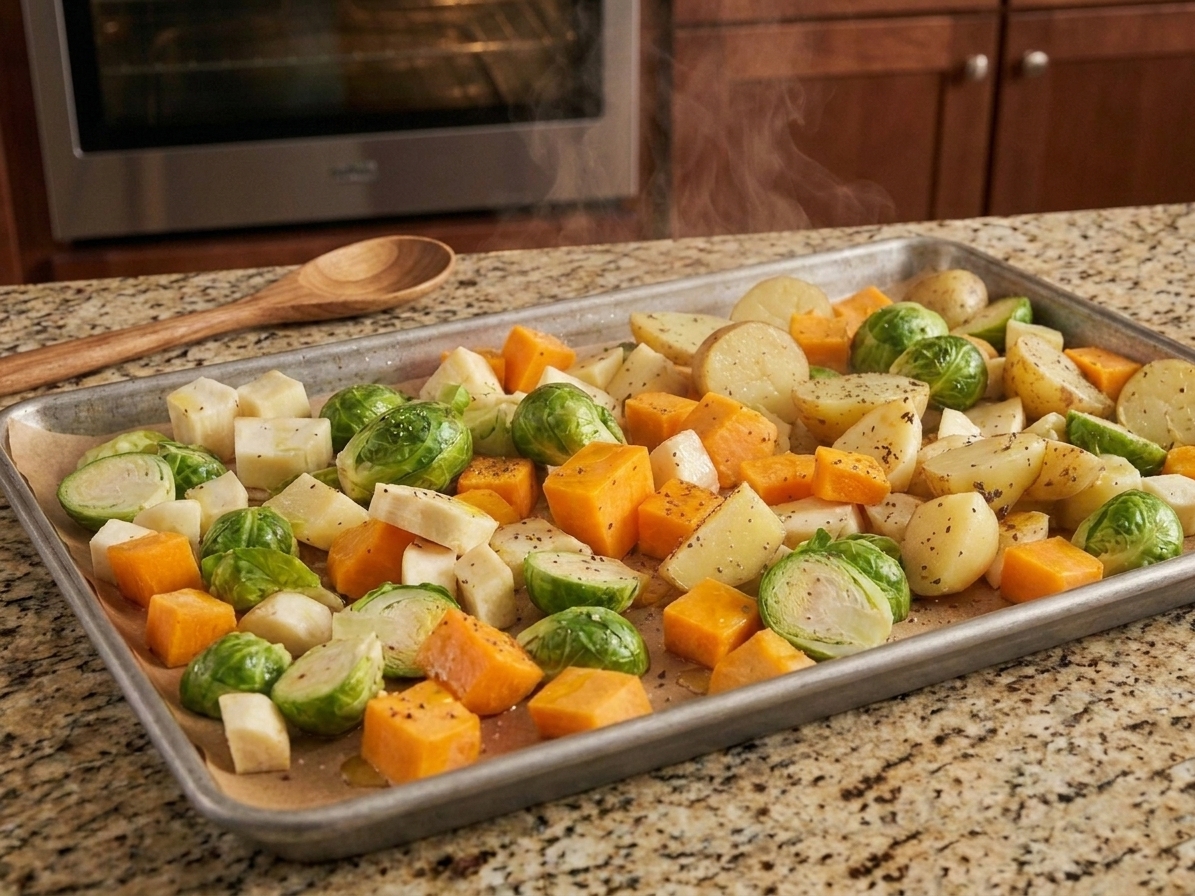
Special cases
Frozen vegetables
Frozen vegetables release a lot of water. You can still roast them well with a few tweaks:
- Roast at 450°F.
- Use parchment for easier cleanup.
- Spread in a single layer with extra space.
- Roast longer, usually 25 to 35 minutes, and flip halfway.
- Season after 10 minutes if your spices tend to wash off.
Mushrooms
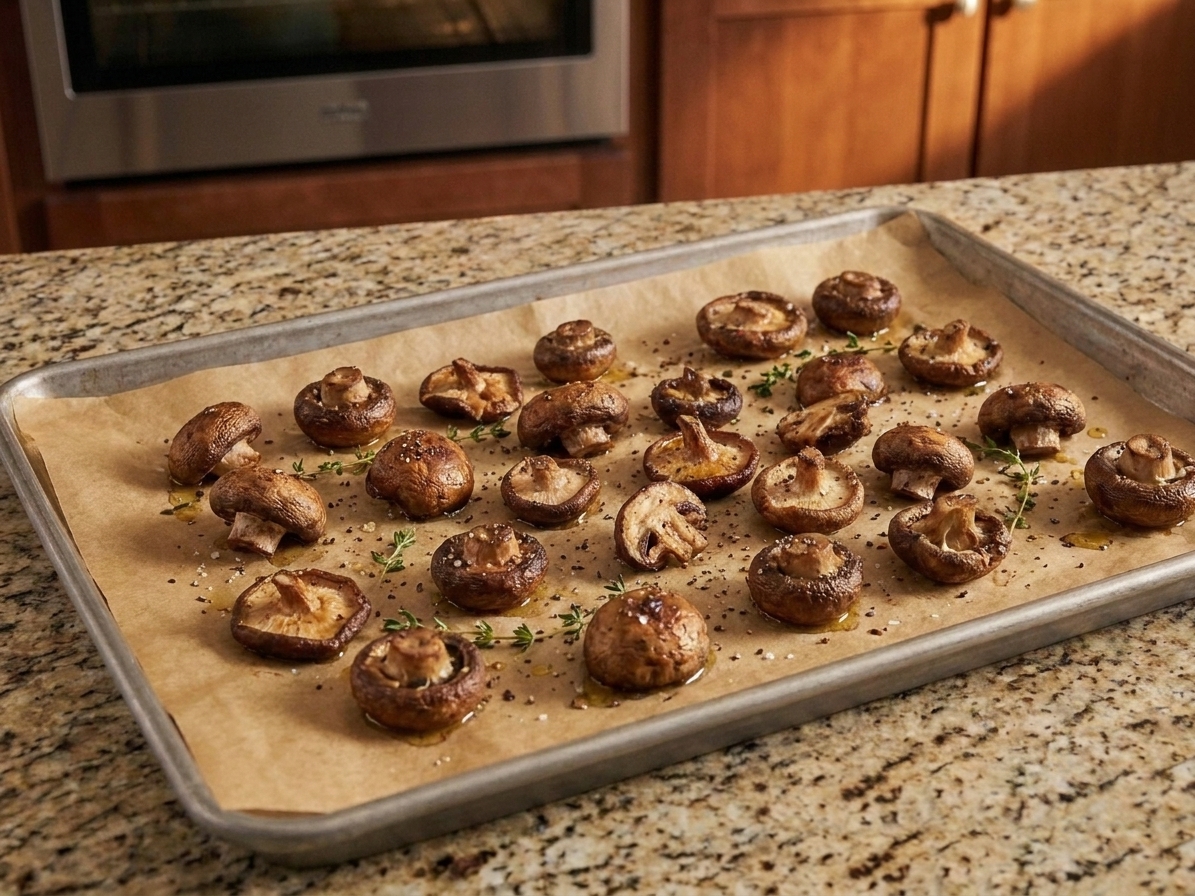
Mushrooms are little moisture machines. Two methods that work:
- Dry roast: roast plain mushrooms at 425°F for 10 minutes, then toss with oil, salt, and seasonings, and roast 10 to 15 minutes more.
- High heat and space: 450°F with plenty of room, flip once.
Zucchini and eggplant
These can go from browned to limp fast. Cut thicker pieces, start with about 2 teaspoons oil per pound, and roast hot and fast at 425°F. If you want extra browning, finish with 1 to 2 minutes under the broiler (watch closely).
My basic method
If you want one dependable routine, this is it.
- Heat the oven to 425°F. Put the rack in the middle. Preheat a sheet pan if you want extra crisping.
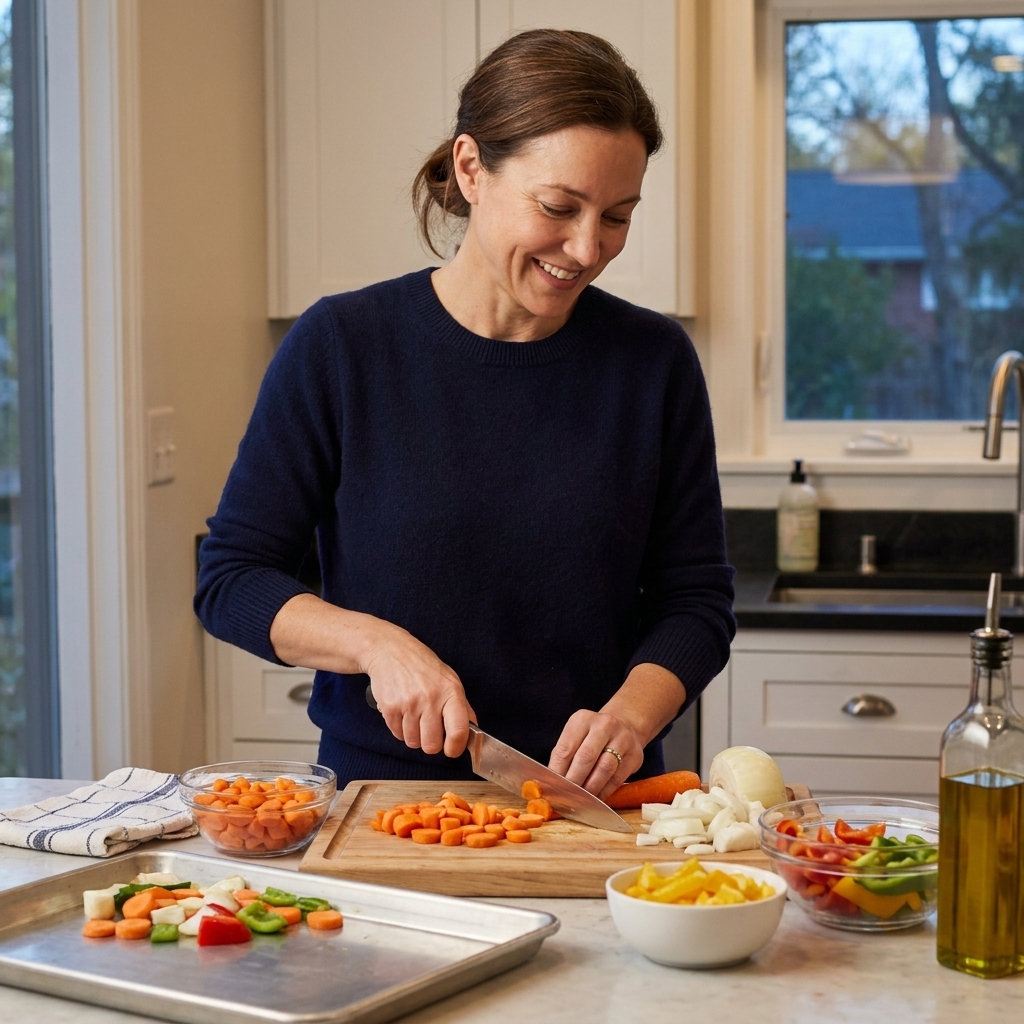
- Cut vegetables evenly. Aim for bite-sized, similar thickness.
- Dry well. Especially after washing.
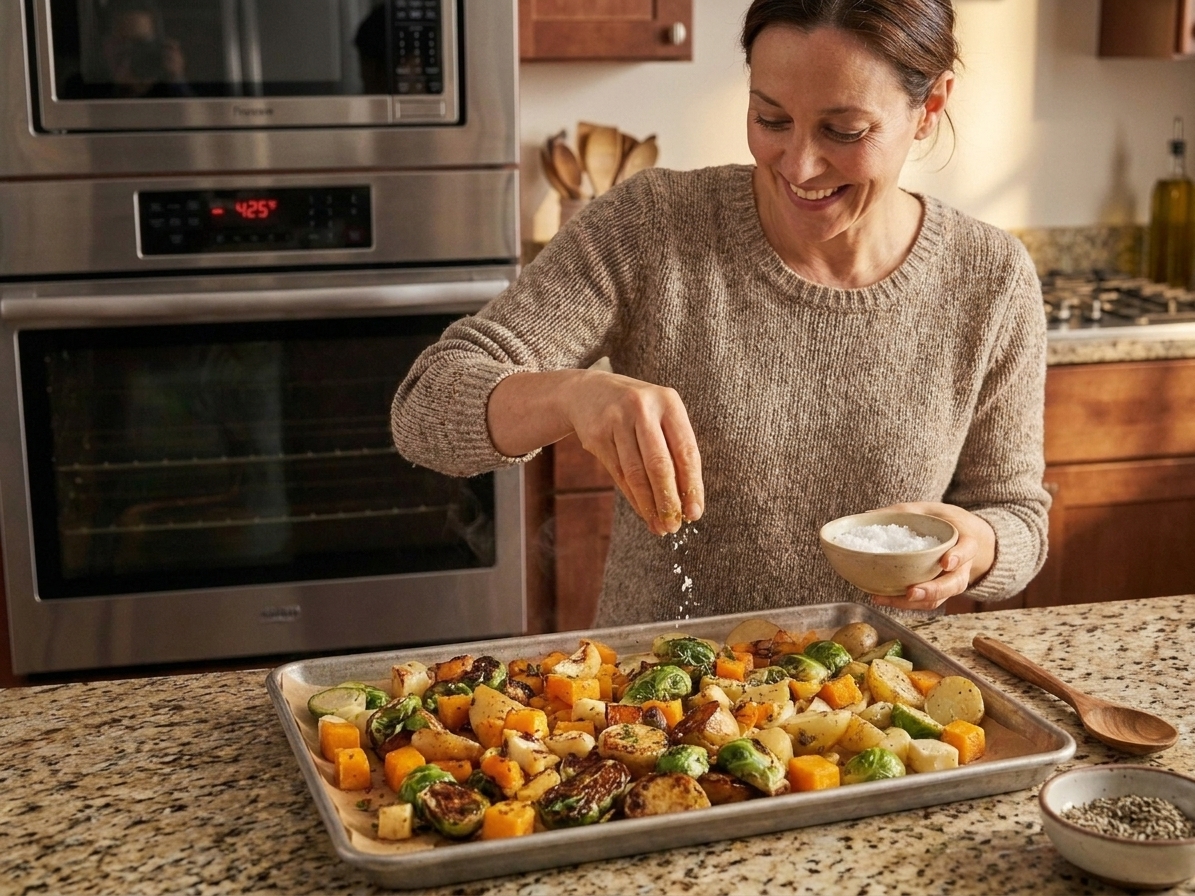
- Toss with oil and salt. Start with about 1 tablespoon oil + 1/2 teaspoon kosher salt per 1 pound vegetables.
- Spread out. Single layer with space between pieces.
- Roast. Flip once halfway through. Pull when browned at the edges and tender in the center.
- Finish. A squeeze of lemon, sprinkle of cheese, herbs, or a drizzle of good olive oil makes them taste restaurant-level with almost no effort.
FAQ
Should I roast vegetables on convection?
If you have convection, yes, it is great for crisping. Reduce the oven temperature by about 25°F (so 400°F instead of 425°F) and start checking a few minutes early.
Do I need to boil vegetables before roasting?
Usually no. The main exception is potatoes if you want very crisp outsides. Parboil 5 to 8 minutes, drain well, rough up the edges, then roast. It is extra work, but the texture is fantastic for weekend meals.
Can I roast vegetables ahead?
Yes. Roast until just tender, cool, and refrigerate. Reheat on a sheet pan at 425°F for 8 to 12 minutes. The microwave will soften them, so I save it for emergencies only.
How do I keep roasted vegetables from sticking?
Parchment paper is the easiest fix. If you roast directly on the pan, make sure the vegetables are coated with oil and do not try to flip too early. Once they brown, they release more easily.
One last pep talk
If roasted vegetables have felt hit-or-miss, I want you to know this is a technique thing, not a talent thing. Use the hot oven, measure your oil once or twice so your eyes learn it, and give your vegetables breathing room on the pan. After a few trays, you will be able to roast almost anything confidently, even on a chaotic Tuesday.