Twelve reliable, family-friendly dinners you can cook from your pantry using canned goods, pasta, rice, and basic spices. No grocery run required.
Recipe Homely
October 17, 2026
Last updated October 17, 2026
How to Upgrade Plain White Rice: 7 Simple Seasoning Combinations

Sarah Jenkins
Sarah Jenkins is a passionate home cook and the voice behind Recipe Homely, dedicated to making everyday meals stress-free and delicious. With over a decade of experience feeding a busy family, she specializes in rigorously tested, approachable recipes for dinners, desserts, and everything in between. When she isn't developing new dishes, Sarah can be found browsing local farmers' markets or baking with her two children.
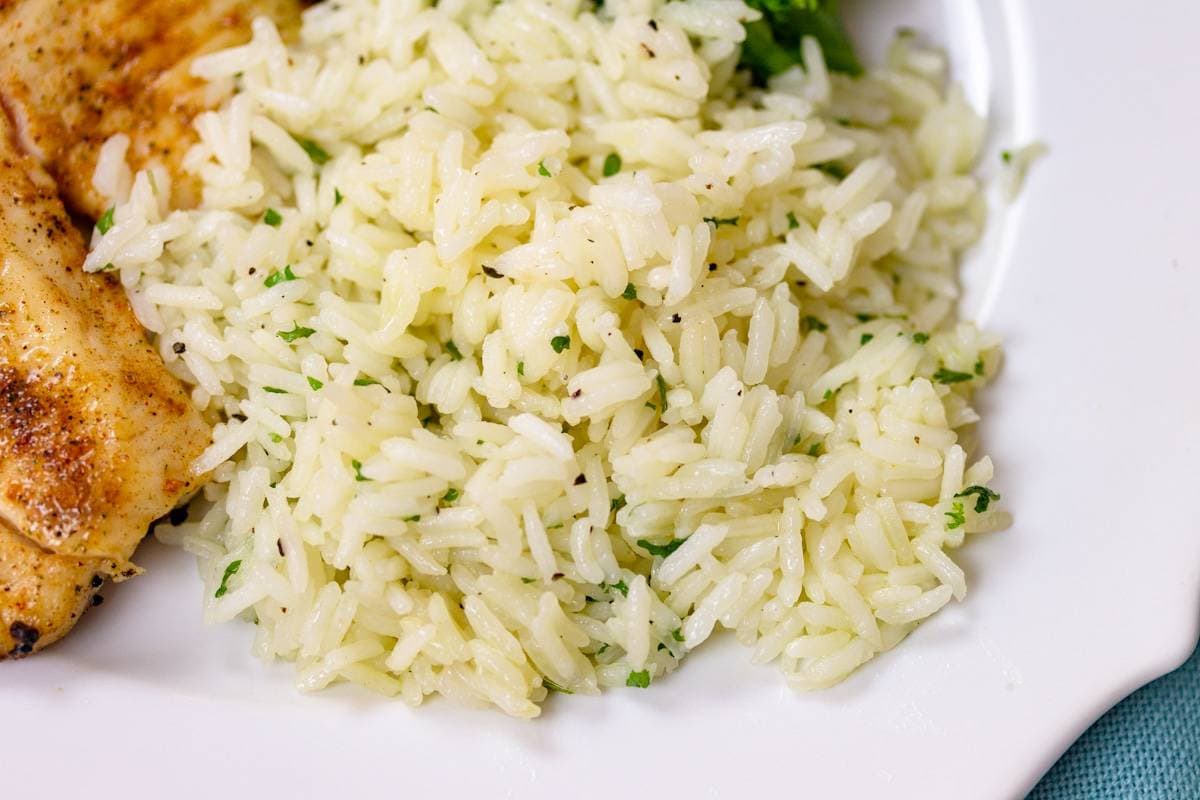
Plain rice is fine. Seasoned rice saves dinner.
If you've ever stared at a pot of plain white rice and thought, Okay, but how do I make this taste like something? you're in the right place. White rice is the ultimate blank canvas, and with a few spice rack staples you can make it taste restaurant-worthy without turning dinner into a project.
Below are my seven most-used seasoning combinations. Each one includes tested starting amounts for 2 cups cooked rice plus quick notes on when to add the seasonings so the flavor actually sticks. (FYI: 2 cups cooked is about 2/3 cup dry rice for many long-grain white rices and jasmine, but it can vary by brand and how much water you use.)
Before you season: 5 quick rules
- Season in layers. Salt the cooking water (or broth), then finish with a fat and aromatics after cooking.
- Use fat. Butter, olive oil, toasted sesame oil, or coconut oil helps spices bloom and makes rice taste rich.
- Fluff, then season. Let rice rest 5 to 10 minutes after cooking, fluff with a fork, then fold in your add-ins.
- Start small with strong flavors. Sesame oil, curry powder, smoked paprika, and garlic powder can overwhelm fast. You can always add more.
- Add fresh things at the end. Citrus juice, herbs, scallions, and delicate garnishes should go in after the heat is off.
Quick baseline: For most of these combos, I assume your rice was cooked with 1/2 to 3/4 teaspoon kosher salt in the water (or broth) for 1 cup uncooked rice. Salt brands vary a lot by volume, so start on the lower end and adjust to taste, especially if you're using a denser kosher salt.
7 seasoning combos (tested starting amounts)
1) Garlic butter and parsley
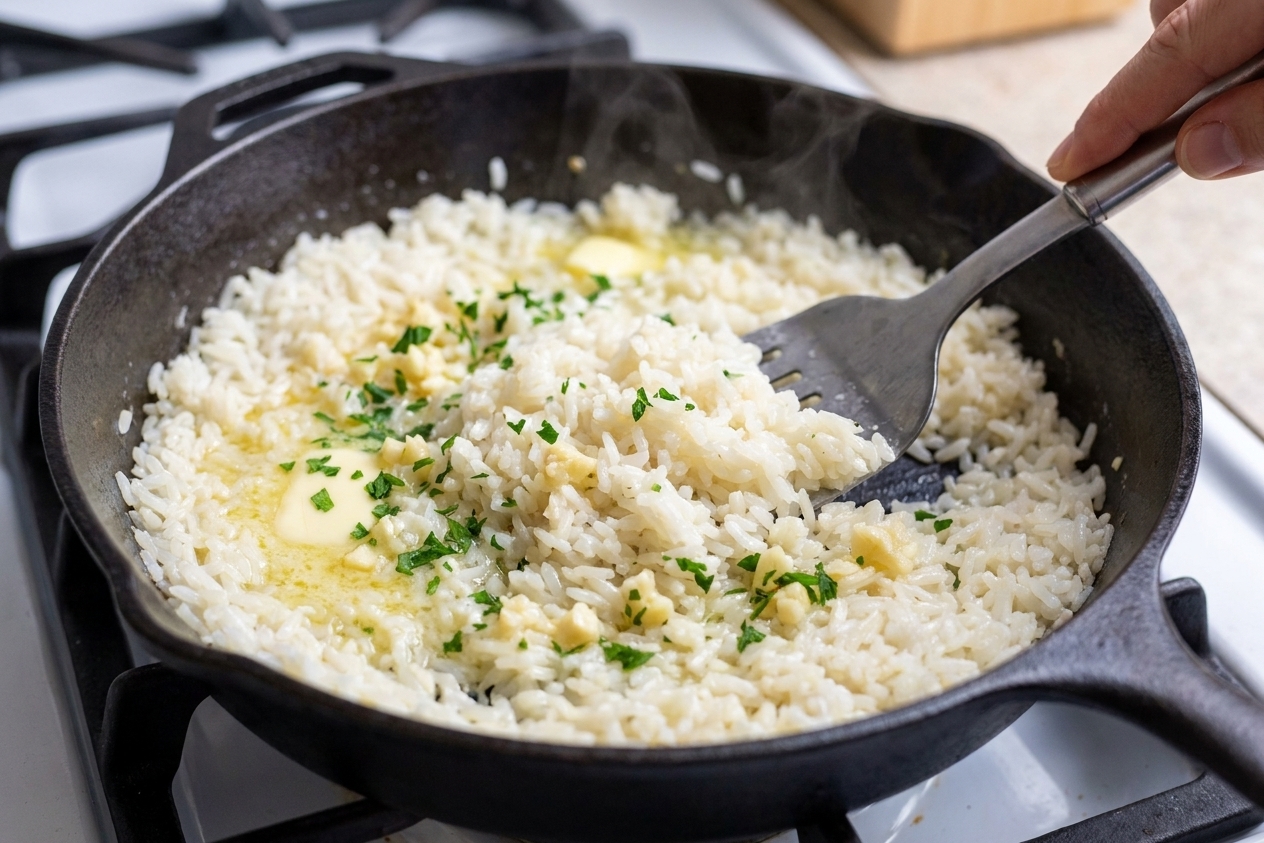
Flavor profile: cozy, savory, classic steakhouse vibes.
- 1 1/2 tablespoons butter
- 1 small garlic clove, finely minced (or 1/2 teaspoon garlic powder)
- 1 tablespoon chopped fresh parsley (or 1 teaspoon dried)
- Pinch black pepper
- Salt to taste
How to do it: Melt butter over low heat in a small pan, add garlic for about 30 seconds (just until fragrant, don't let it brown), then pour over fluffed rice. Fold in parsley, pepper, and salt as needed.
Pairs well with: roast chicken, meatballs, pork chops, sautéed green beans.
2) Lemon pepper and olive oil
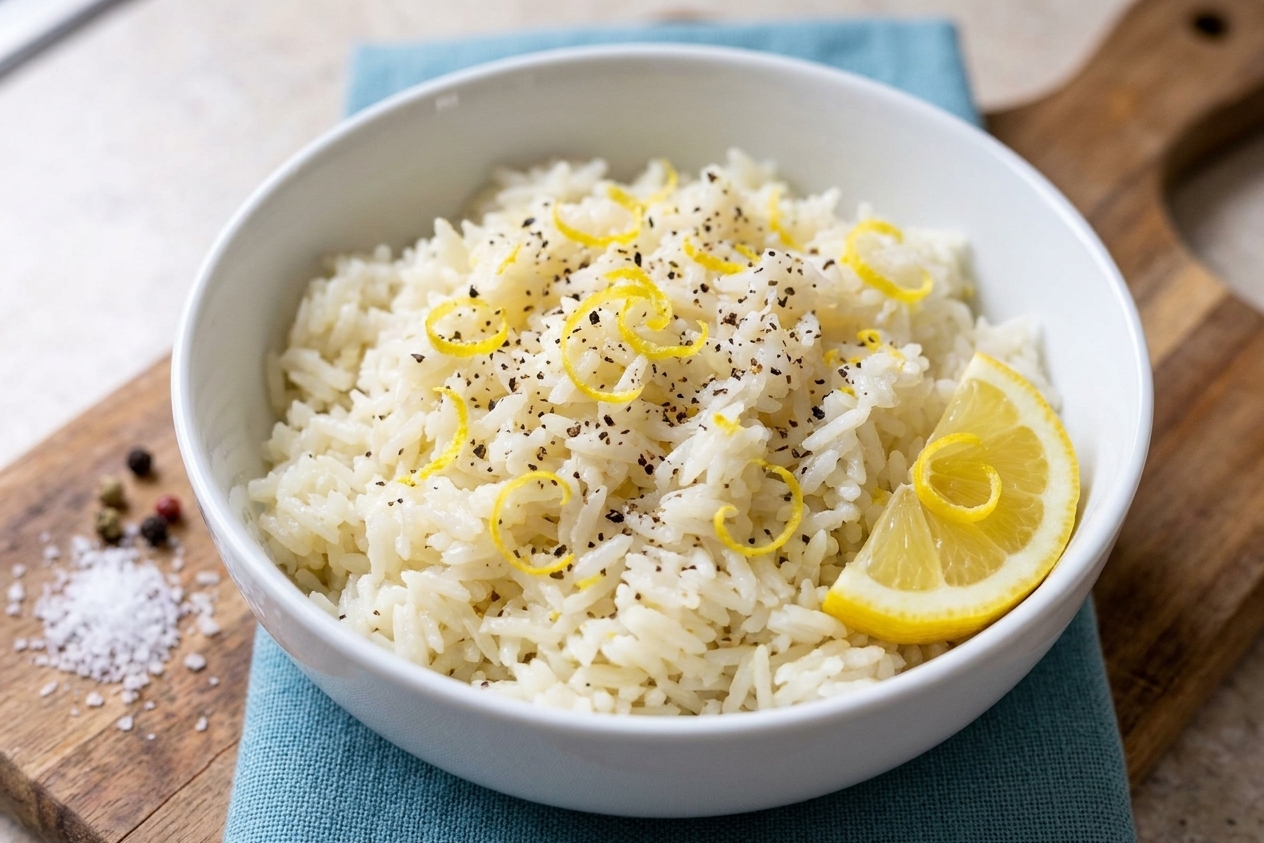
Flavor profile: light, zippy, perfect with fish.
- 1 tablespoon olive oil
- 1 teaspoon lemon zest
- 1 to 2 teaspoons lemon juice (start with 1 teaspoon)
- 1/4 teaspoon black pepper (or more to taste)
- 1/4 teaspoon garlic powder (optional but great)
- Salt to taste
How to do it: Fold olive oil and lemon zest into warm, fluffed rice. Add lemon juice gradually (too much can make rice taste sharp). Finish with pepper and salt.
Pairs well with: salmon, shrimp, roasted asparagus, Greek chicken.
3) Toasted sesame, soy, and scallion
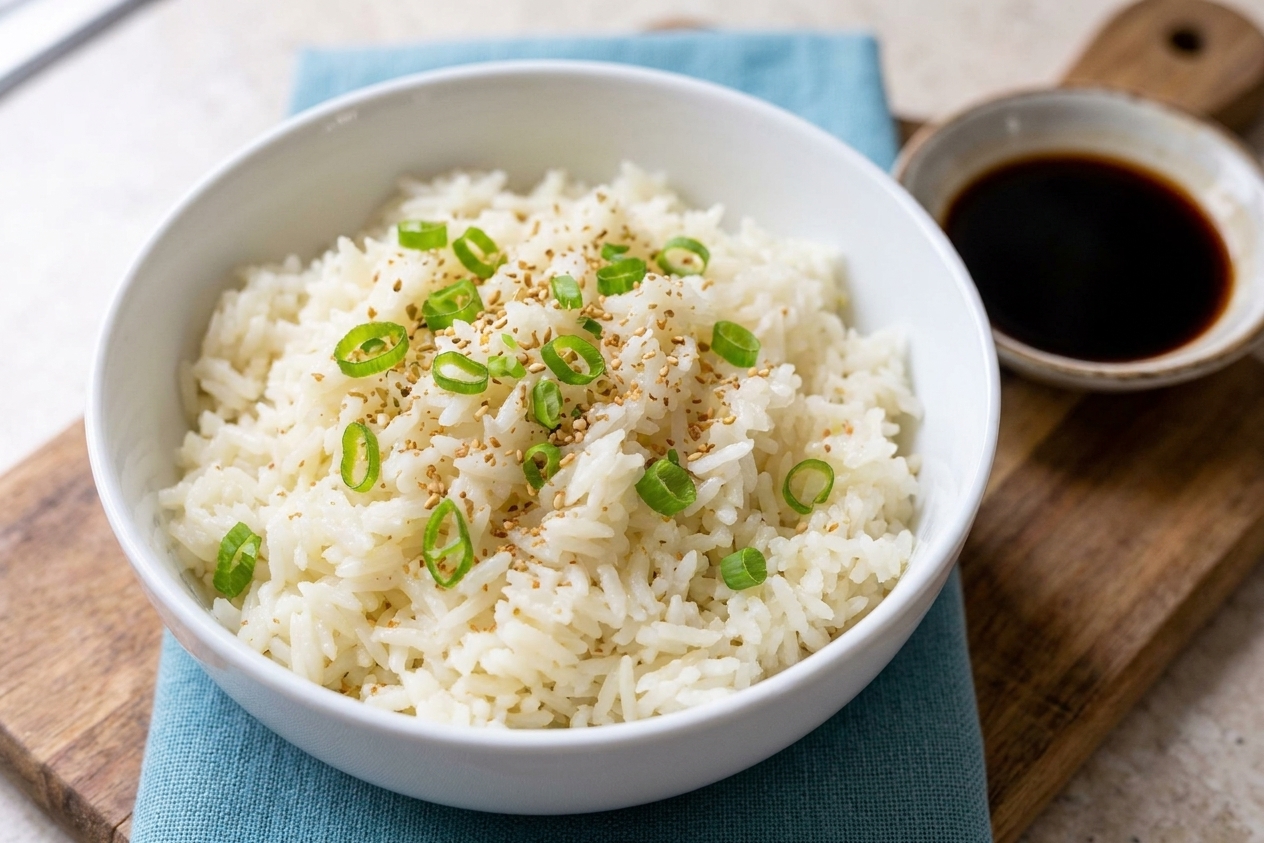
Flavor profile: savory, nutty, a little salty in the best way.
- 1 1/2 teaspoons toasted sesame oil
- 1 to 2 teaspoons soy sauce (or tamari), plus more to taste (start with 1 teaspoon)
- 2 tablespoons sliced scallions
- 1 teaspoon toasted sesame seeds
- Optional: pinch sugar or honey (about 1/4 teaspoon) for balance
How to do it: Drizzle sesame oil over warm rice and fold. Add soy sauce little by little, tasting as you go (it's easy to overdo, and low-sodium vs regular makes a difference). Finish with scallions and sesame seeds.
Pairs well with: stir-fries, teriyaki chicken, dumplings, grilled tofu.
4) Taco rice with cumin and lime
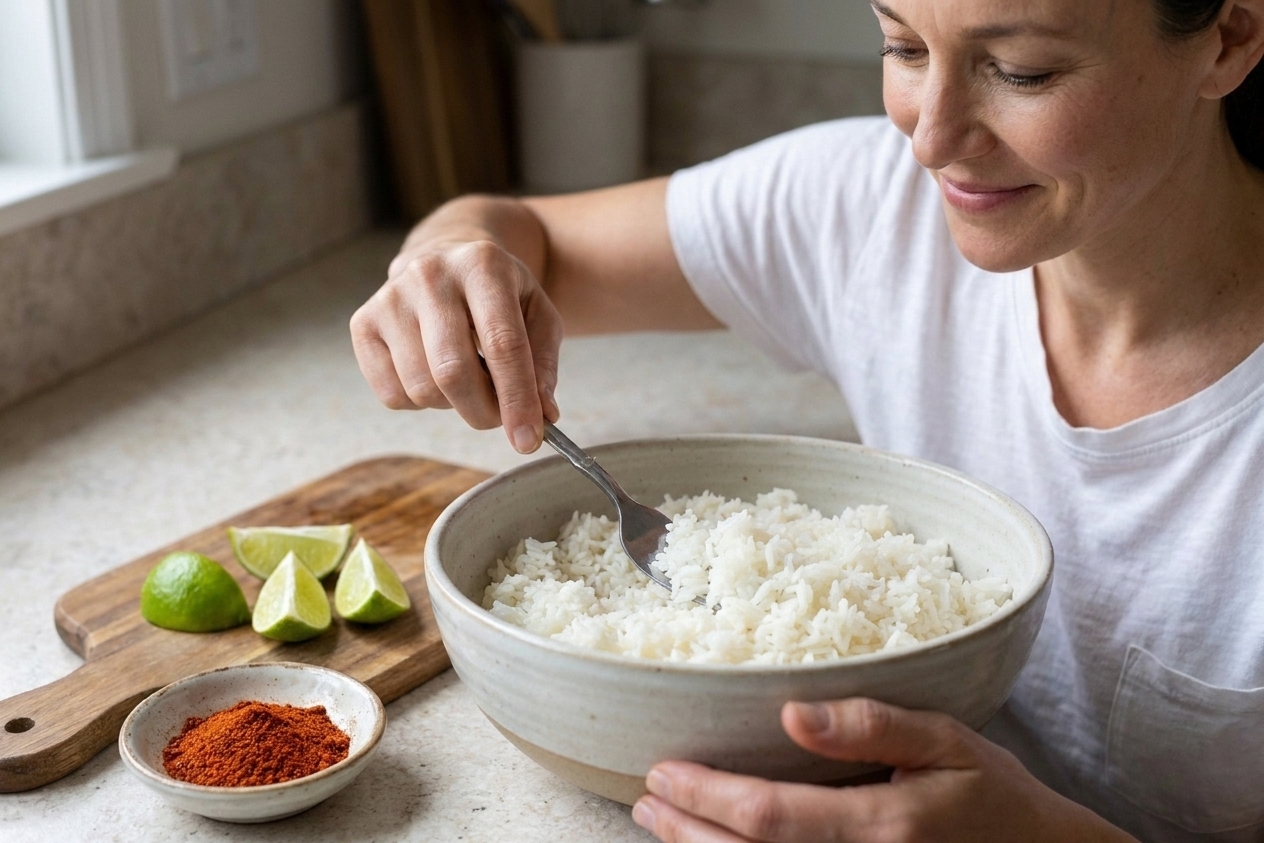
Flavor profile: warm spices, a little smoky, a little tangy.
- 1 tablespoon butter or olive oil
- 1/2 teaspoon ground cumin
- 1/2 teaspoon chili powder
- 1/4 teaspoon smoked paprika (optional, adds a little smoky depth)
- 1 to 2 teaspoons lime juice
- 2 tablespoons chopped cilantro (optional)
- Salt to taste
How to do it: Fold butter or oil and spices into warm rice first (fat helps the spices coat). Add lime juice at the end, then cilantro if you're using it.
Pairs well with: tacos, chili, black beans, grilled corn, fajitas.
5) Curry coconut rice
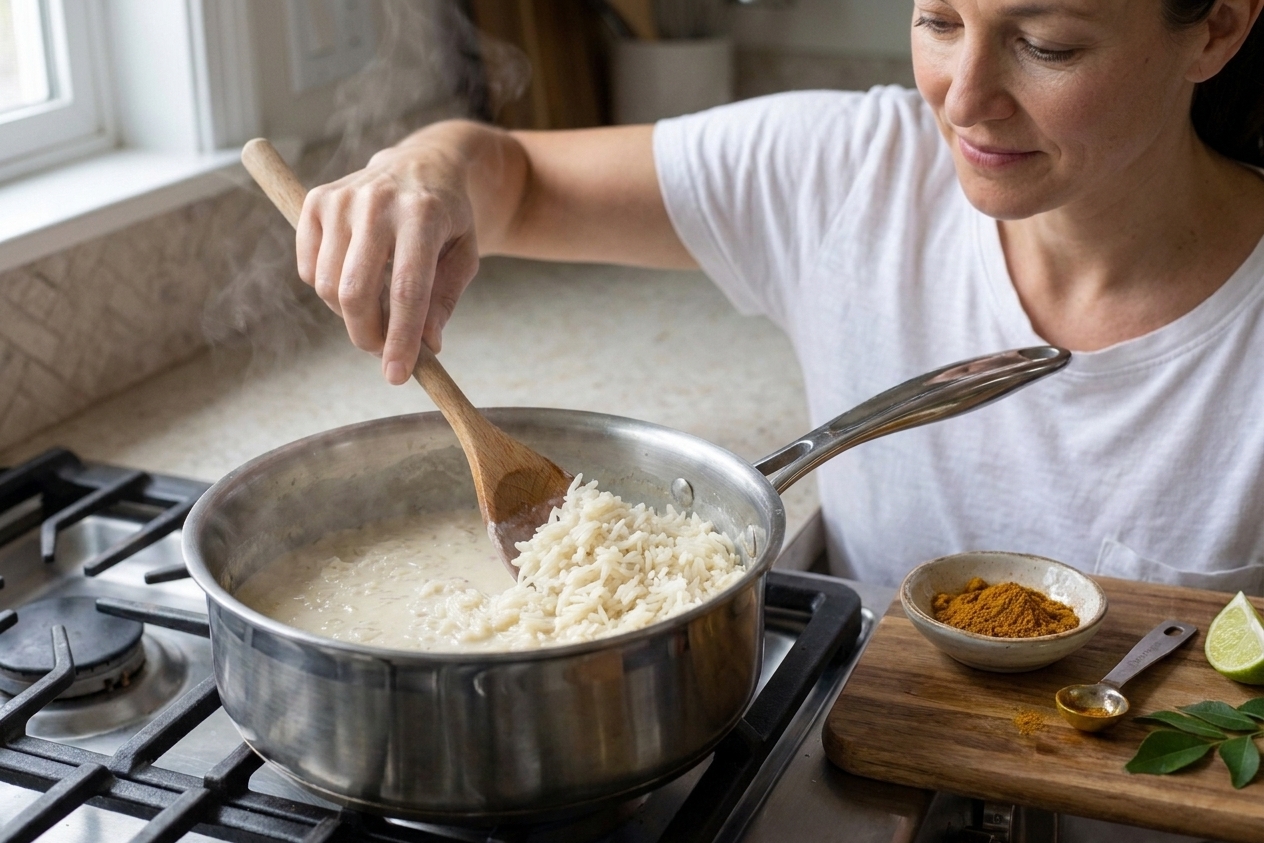
Flavor profile: gently sweet, warmly spiced, super comforting.
- 1 tablespoon coconut oil or butter
- 1/2 to 1 teaspoon curry powder (start with 1/2 teaspoon)
- 2 tablespoons canned coconut milk (full-fat for best flavor)
- Pinch salt
- Optional: 1 tablespoon chopped toasted cashews or sliced almonds
How to do it: Warm coconut oil over low heat in a small pan, stir in curry powder for 20 to 30 seconds to bloom it, then drizzle over rice. Fold in coconut milk and taste for salt.
Pairs well with: rotisserie chicken, roasted sweet potatoes, chickpea curry, sautéed spinach.
6) Italian herb and Parmesan
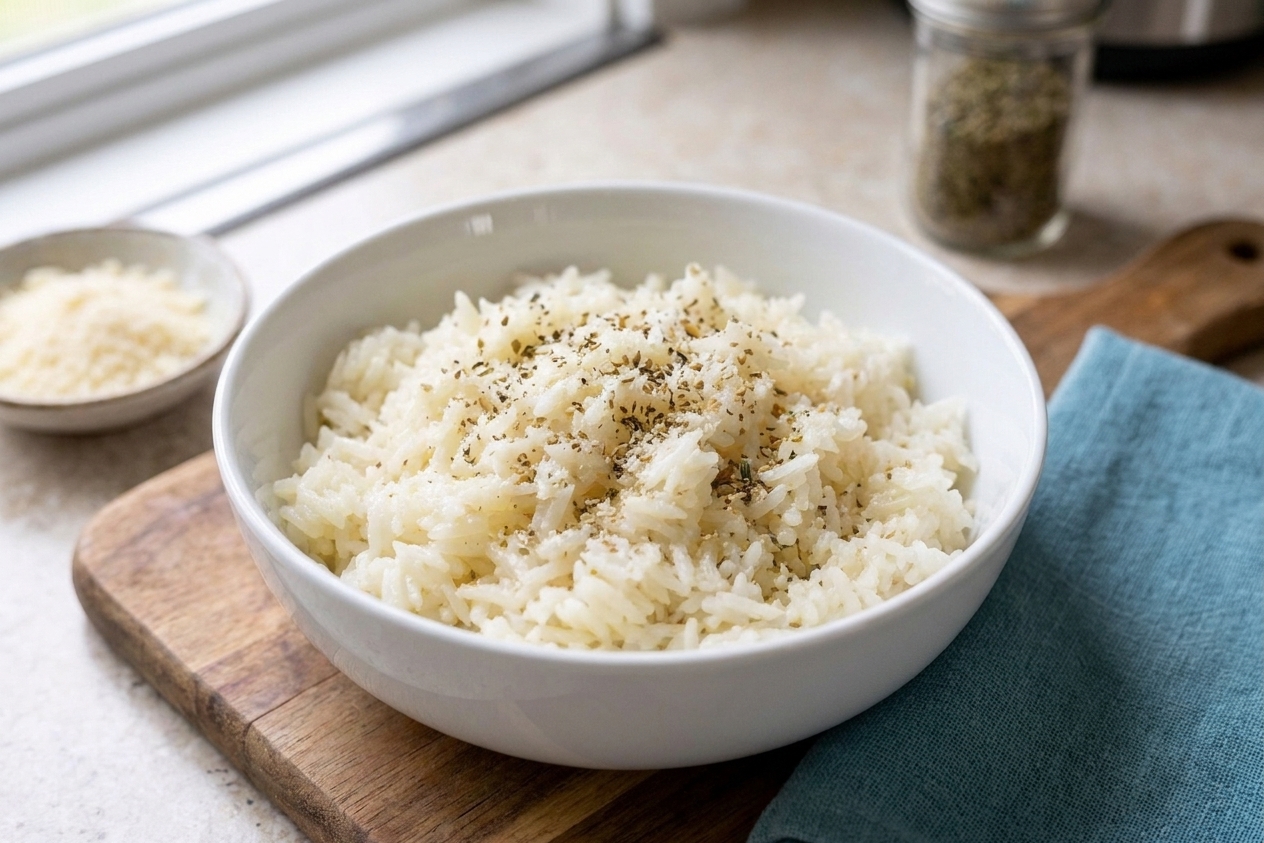
Flavor profile: savory, herby, cheesy, cozy and family-friendly.
- 1 tablespoon butter
- 2 tablespoons finely grated Parmesan
- 1/2 teaspoon Italian seasoning (or a mix of basil, oregano, thyme)
- Pinch garlic powder
- Black pepper to taste
- Salt to taste
How to do it: Fold butter into hot rice first so it melts evenly. Stir in Parmesan and seasonings. (Cheese goes in at the end so it melts smoothly instead of clumping.) Add a splash of hot water or broth if it feels tight.
Pairs well with: meat sauce, baked chicken, roasted broccoli, Italian sausage.
7) Everything bagel rice
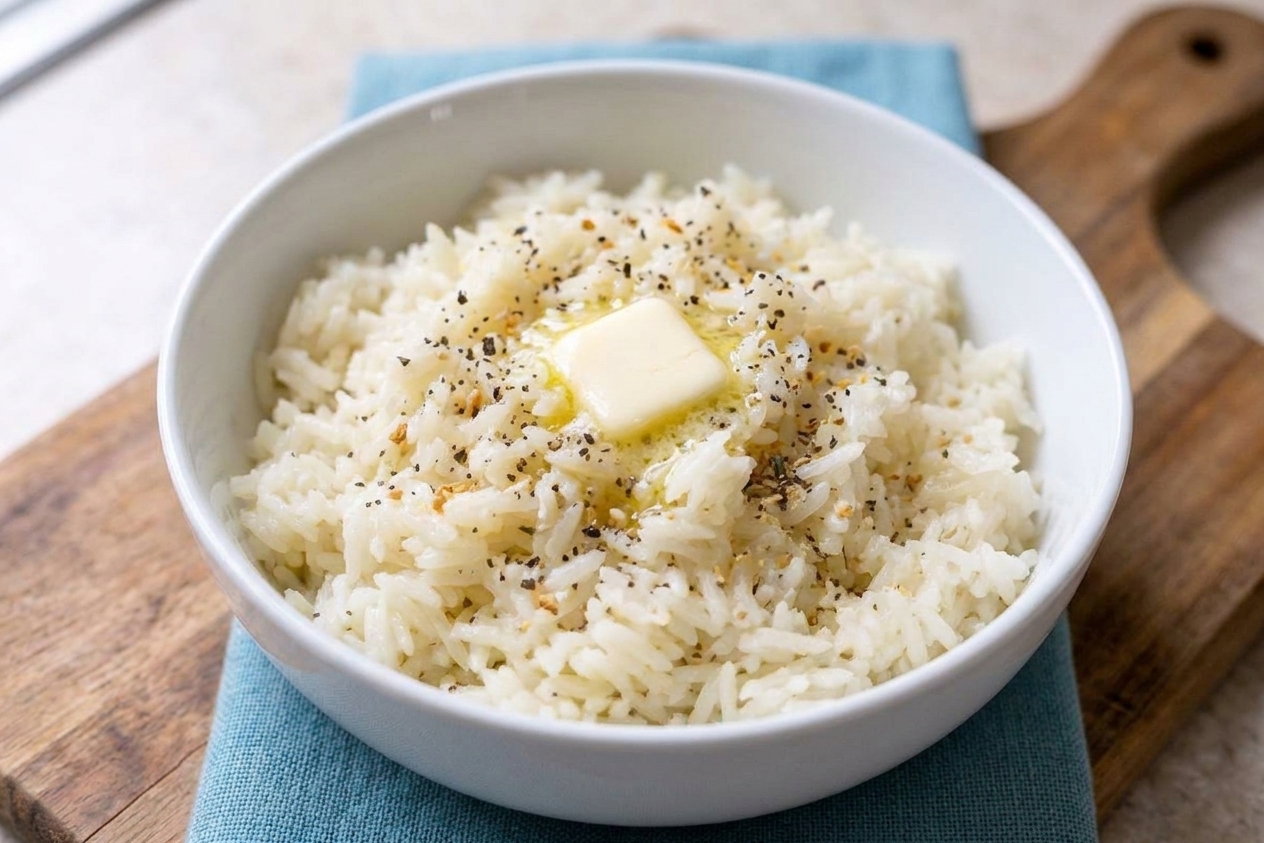
Flavor profile: oniony, garlicky, toasty, a little crunchy.
- 1 tablespoon butter or cream cheese (yes, cream cheese)
- 1 to 1 1/2 teaspoons everything bagel seasoning
- Optional: 1 teaspoon minced chives or sliced scallions
- Optional: squeeze of lemon for serving
How to do it: Fold butter (or a spoonful of cream cheese) into warm rice, then sprinkle and fold in the seasoning. Taste before adding salt because seasoning blends vary.
Pairs well with: fried eggs, smoked salmon, roasted veggies, quick cucumber salad.
My easiest method: season one bowl
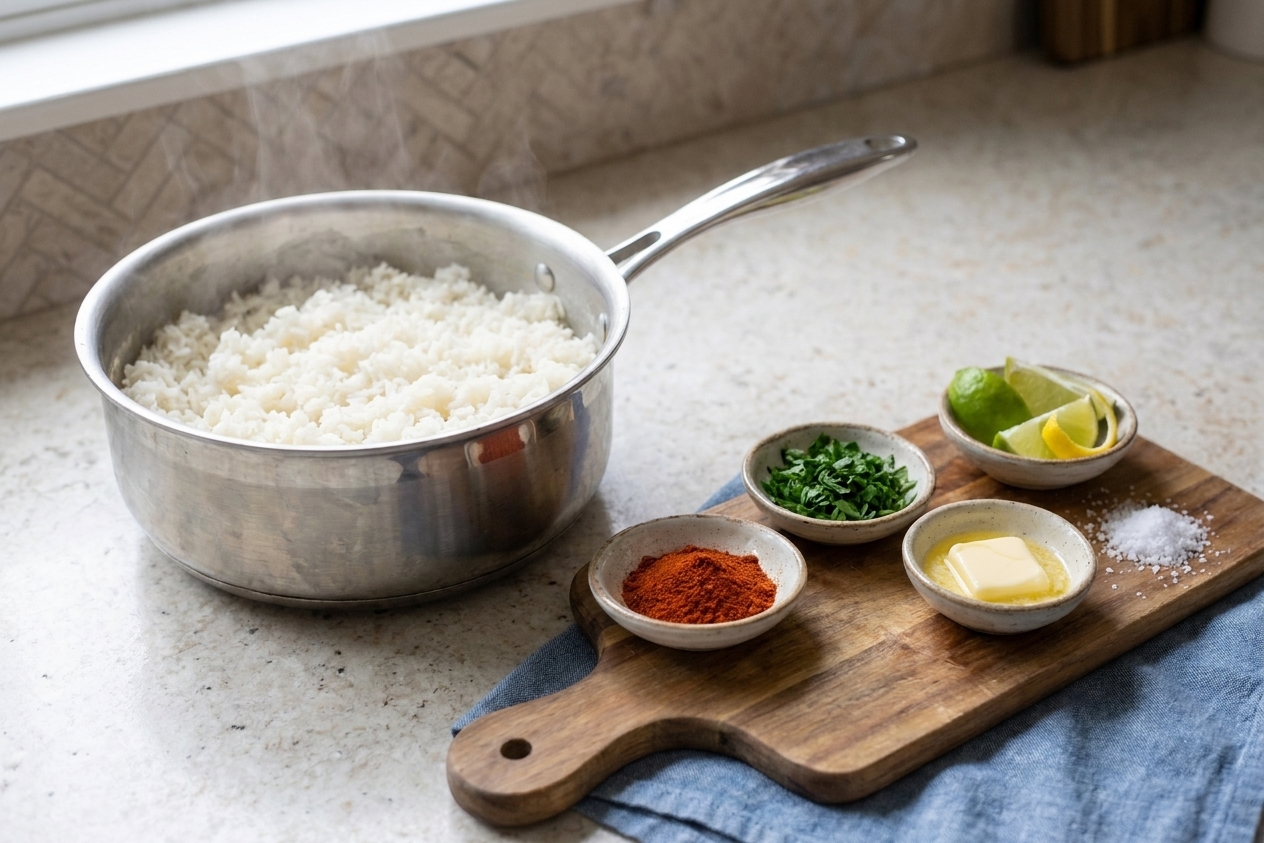
If I'm serving kids and adults (which is basically always), I keep the rice plain in the pot, then season individual bowls. It takes about 30 seconds to a minute, but everyone gets what they like and nobody complains about "green stuff" in their rice.
Fix common problems
- "My rice tastes bland." Add a pinch of salt and a teaspoon of butter or oil first. Fat plus salt wakes everything up, then add your spices.
- "I added spices and now it tastes dusty." Dry spices benefit from a quick bloom in warm butter or oil for 20 to 30 seconds, then fold into rice.
- "It tastes too salty." The best fix is dilution: stir in more plain rice if you have it. If you don't, add a splash of unsalted hot water or unsalted broth and a little butter or oil, then taste again. A squeeze of lemon can help balance the flavor too, but it won't remove salt.
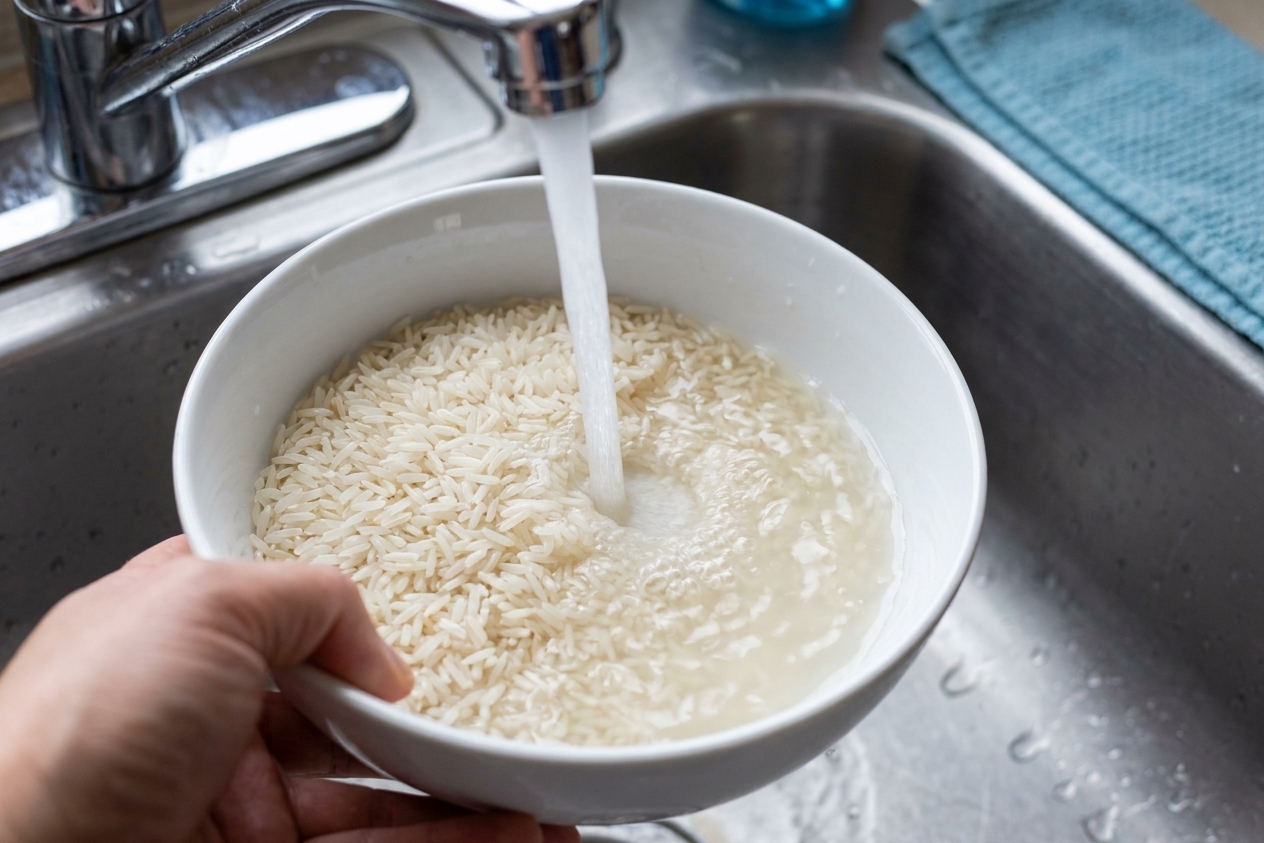
- "My rice got mushy." Season gently and fluff carefully. Avoid stirring aggressively. Next time, rinse rice and let it rest covered before fluffing.
FAQ
Should I season rice before or after cooking?
Both, if you can. Salt (or broth) goes in before cooking. Fresh herbs, citrus, scallions, and finishing oils go in after cooking so they taste bright. Cheese also goes in after cooking, mostly so it melts smoothly instead of clumping.
Can I use broth instead of water?
Yes, and it's one of the quickest upgrades. Use chicken, veggie, or beef broth in place of water, then still finish with a little butter or olive oil for the best texture.
What's the best rice for seasoning?
Long-grain white rice and jasmine rice season beautifully because they fluff up and the grains stay separate. Basmati is also great for the lemon, curry, and herb options.
How much seasoning should I use per cup of cooked rice?
A good starting point is 1 teaspoon total spices plus 1 to 2 teaspoons fat per cup of cooked rice, then adjust to taste depending on the blend.
How do I scale these up?
These amounts are for 2 cups cooked rice. For a full pot made from 1 cup uncooked rice (usually about 3 cups cooked), multiply everything by 1.5.
Can I season leftover rice?
Absolutely. Leftover rice likes a splash of water and a quick warm-up first, then add your fat and seasonings so everything coats evenly.
One last mom tip
Make a double batch of plain rice and refrigerate the extra promptly. For best food safety, get it into the fridge within about 2 hours, and use it within 3 to 4 days. Tomorrow you can turn it into sesame-scallion rice, taco rice, or Parmesan herb rice in about a minute, and it feels like you planned ahead even if you didn't.