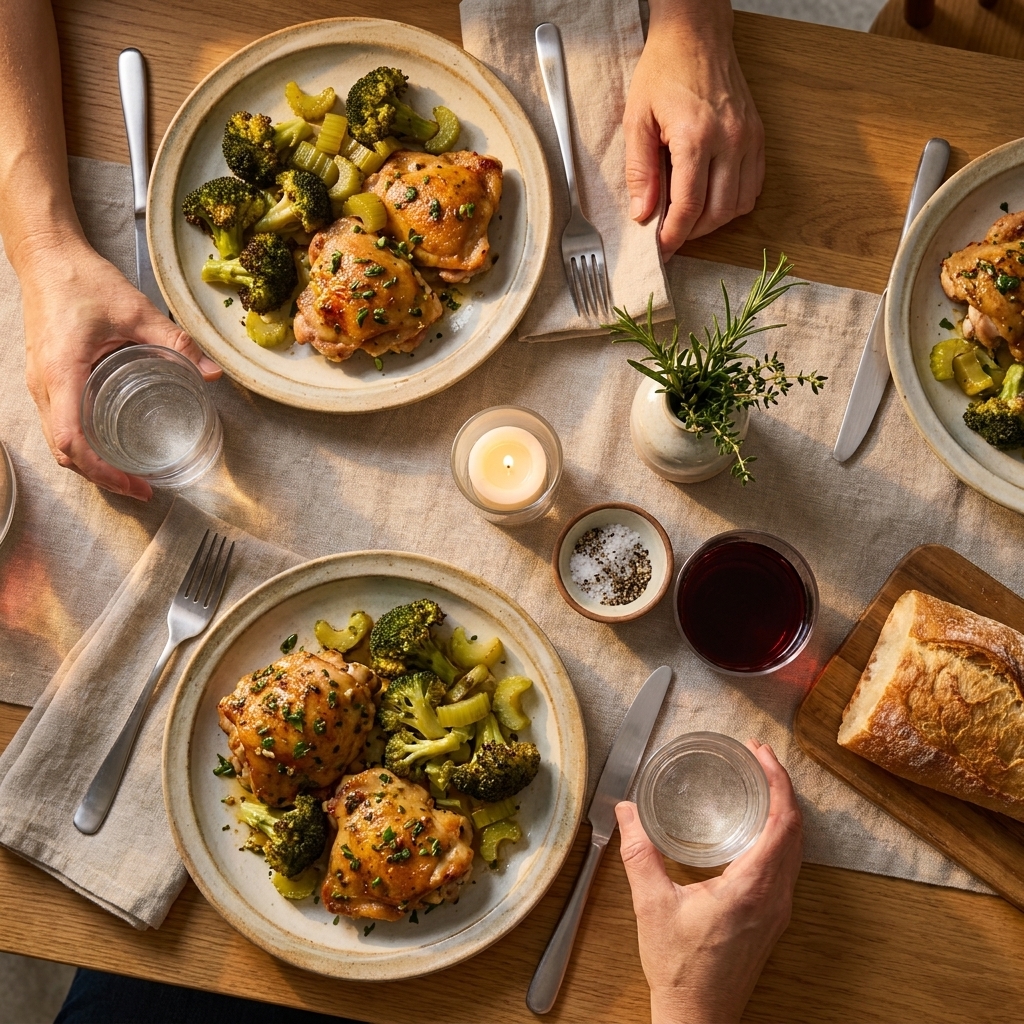
Perfect Sheet Pan Weeknight Meals

Sarah Jenkins
Sarah Jenkins is a passionate home cook and the voice behind Recipe Homely, dedicated to making everyday meals stress-free and delicious. With over a decade of experience feeding a busy family, she specializes in rigorously tested, approachable recipes for dinners, desserts, and everything in between. When she isn't developing new dishes, Sarah can be found browsing local farmers' markets or baking with her two children.
Sheet pan dinners are my weeknight safety net. One pan, one oven, minimal dishes, and dinner still feels like a real meal. The trick is not magic. It is a simple matching game: pick a protein, pick vegetables that cook at the same pace (or stagger them), then use one seasoning “lane” so everything tastes like it belongs together.
This guide is the formula I use in my own average-sized kitchen when I need dinner on the table fast, and I cannot afford a recipe that “sort of” works. Let’s make sheet pan meals reliable.
The sheet pan dinner formula
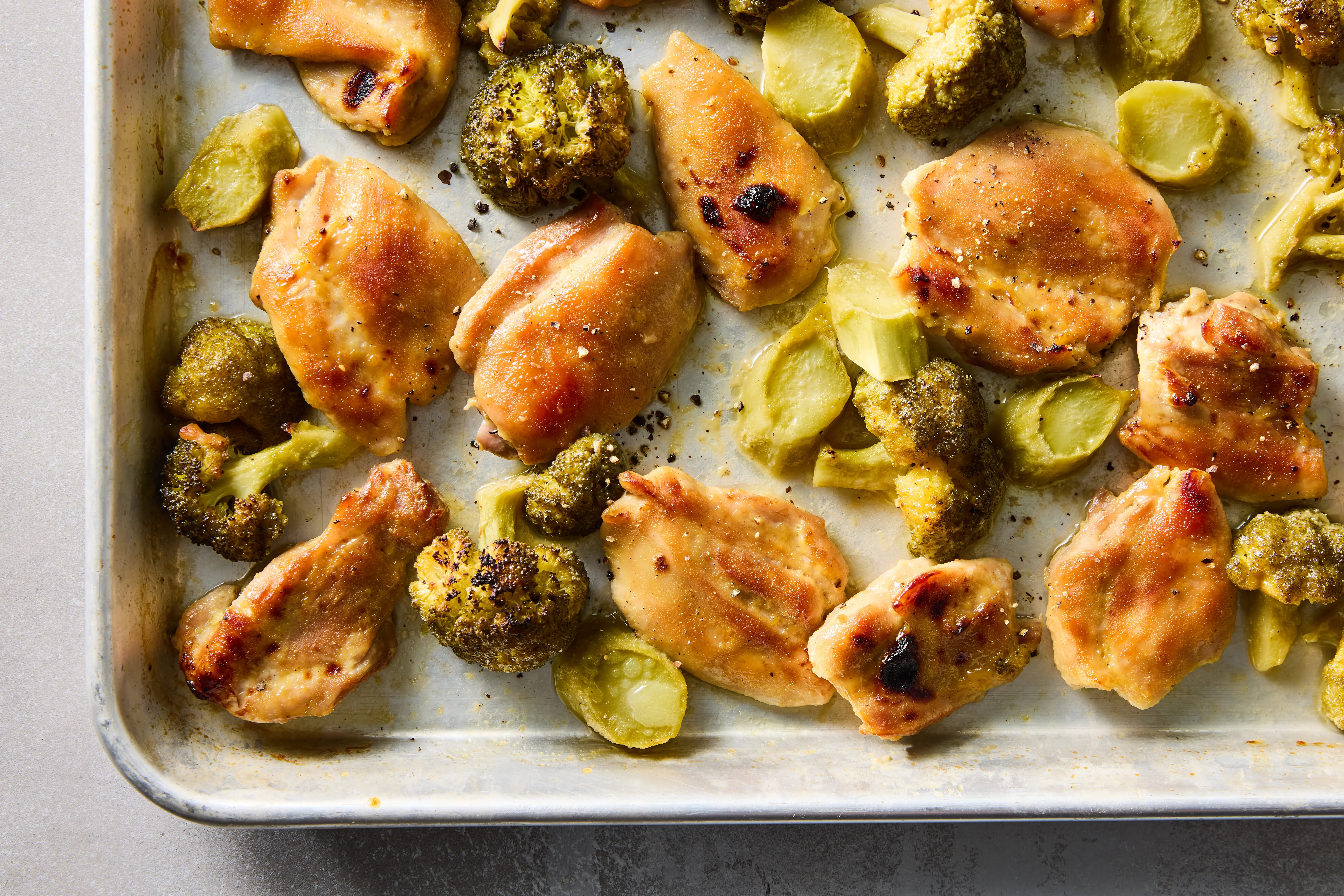
Here’s the simple framework I build almost every sheet pan meal on:
- Protein: choose a cut that cooks in about 12 to 25 minutes at high heat.
- Vegetables: choose 1 to 3 vegetables, and cut them to match cooking speed.
- Seasoning lane: pick one flavor direction and use it across everything.
- High heat: roast at 425°F for great browning. Watch lean proteins closely so they do not dry out.
- Spacing: spread food out so it roasts, not steams.
If you only remember one thing, remember this: cut size is your timing tool. You can make fast veggies slower by cutting them bigger, and you can speed up slower veggies by cutting them smaller.
Set yourself up for success
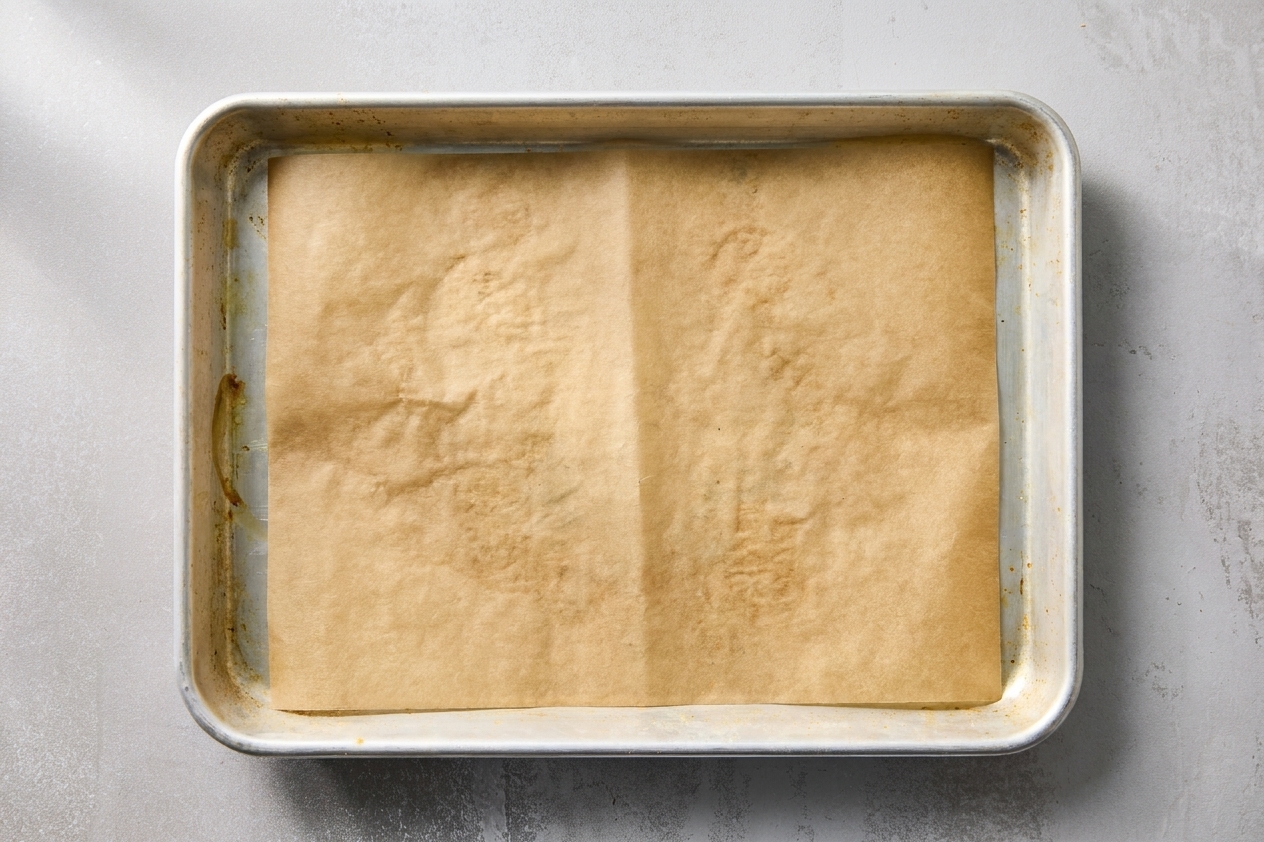
Use the right pan
You want a rimmed half sheet pan (about 18 x 13 inches). The rim keeps juices in, and the size gives you enough surface area for real roasting.
- Best material: uncoated aluminum or heavy-gauge steel for even browning
- Avoid: small pans or thin pans that warp, plus crowding that causes steaming
Pan size reality check: For 4 hearty servings, you may need two pans, especially if you are doing potatoes plus a big pile of vegetables.
Line it, but do it wisely
I use parchment most weeknights because cleanup is painless. If I want maximum crisping (especially for potatoes), I go straight on the pan with a thin slick of oil.
Preheat like you mean it
Ovens vary, so I treat the preheat beep as “almost there.” After it signals, give it another 10 to 15 minutes, or preheat until the oven is truly hot. If your oven runs cool (mine does sometimes), roast at 425°F and use the broiler for 1 to 2 minutes at the end for color.
Spacing rule
Food needs breathing room. If pieces touch all over the pan, moisture gets trapped and you end up with soft vegetables and pale chicken. If you are doubling the meal, use two pans.
Oil and salt: the boring secret
Most sheet pan failures are under-seasoning and under-oiling. As a starting point, I use about 1 to 2 tablespoons oil per pan of vegetables, and a little more if potatoes are involved. Then I salt with intention.
Match proteins and vegetables
Think in three timing buckets. All timings assume 425°F unless noted.
Fast proteins (8 to 14 minutes)
- Shrimp (peeled and deveined)
- Thin chicken cutlets
- Thin or portion-cut fish fillets (salmon often fits here, white fish varies)
Best veggie match: quick-cooking vegetables like asparagus, green beans, zucchini, bell pepper, cherry tomatoes.
Fish cue: Cook until it flakes easily and looks opaque at the edges. If you like using a thermometer, pull salmon around 125 to 130°F for medium, or cook closer to 145°F if you want it fully cooked and firm.
Medium proteins (15 to 22 minutes)
- Boneless skinless chicken thighs
- Chicken sausage (pre-cooked, just needs browning)
- Pork tenderloin medallions
Best veggie match: broccoli, cauliflower florets, Brussels sprouts halves, sliced onions, thick-cut carrots (or thinner if you need them faster).
Slow proteins (25 to 35 minutes)
- Bone-in chicken pieces (including bone-in thighs, especially if large or skin-on)
- Pork chops (thick)
- Meatballs (depending on size)
Best veggie match: potatoes, sweet potatoes, winter squash, whole carrots. Or use a staggered start (more on that below).
The staggered start method (my weeknight secret)
If you want potatoes and salmon on the same pan, do not fight physics. Start the slow item first so it is tender by the time the fast item is done.
- Step 1: Put the slow vegetables on the pan (like potatoes) with oil and salt. Roast 15 minutes.
- Step 2: Push them to the sides, add your faster items (like salmon and asparagus) to the center.
- Step 3: Roast 10 to 12 minutes more, until everything is done.
Hot spot tip: If your oven browns unevenly, rotate the pan front to back at the halfway point.
Cut sizes that work
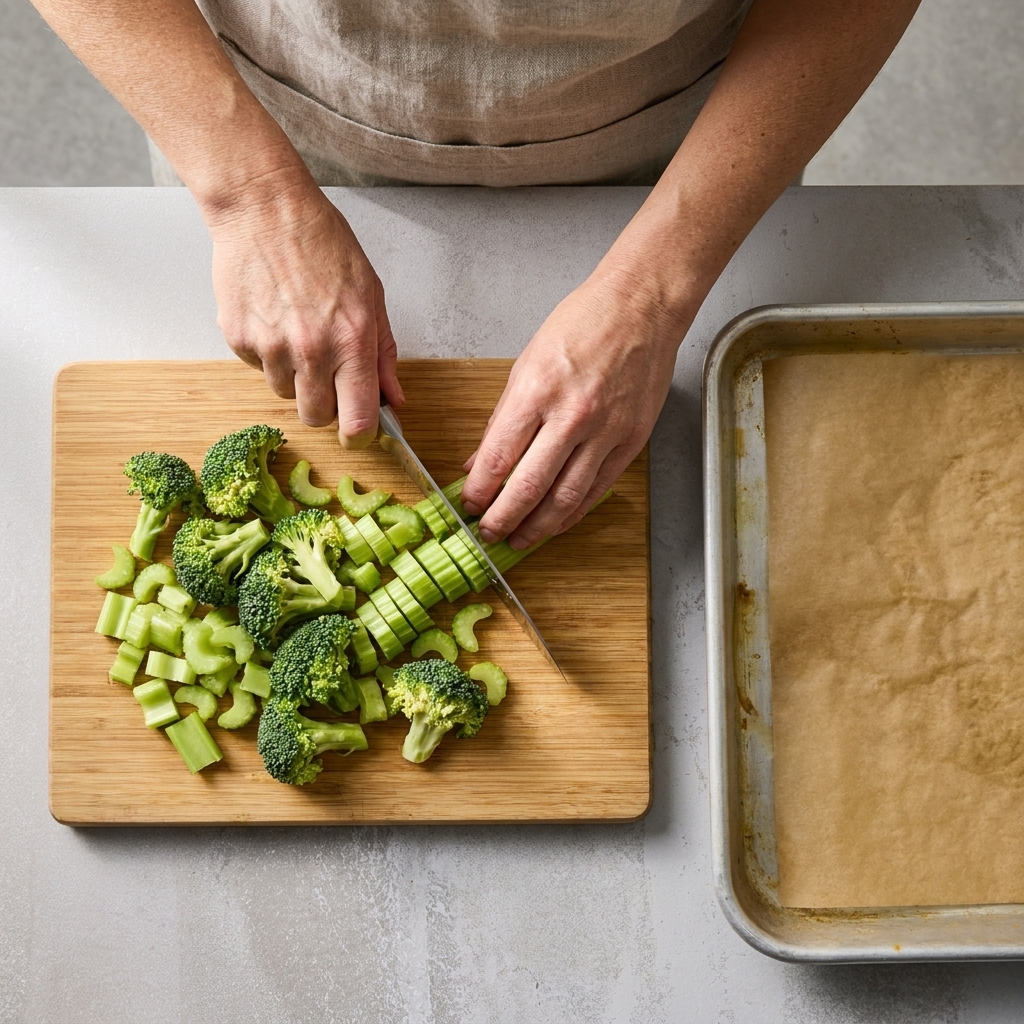
This is the part that turns “random roasting” into a sheet pan dinner you can repeat.
Fast vegetables (8 to 15 minutes)
- Asparagus: trim ends, leave spears whole
- Zucchini: 1/2-inch thick half-moons
- Green beans: trim, leave whole
- Bell peppers: 1-inch strips
- Cherry tomatoes: whole
Medium vegetables (15 to 25 minutes)
- Broccoli: medium florets, not tiny crumbs
- Cauliflower: medium florets
- Brussels sprouts: halved, or quartered if large
- Onions: 1/2-inch wedges
Slow vegetables (25 to 40 minutes)
- Potatoes: 3/4-inch cubes for 25 to 30 minutes, 1-inch cubes for 30 to 40 minutes
- Sweet potatoes: 3/4-inch cubes (they brown faster than you think)
- Carrots: 1/2-inch thick coins on a diagonal, or 3-inch batons
- Butternut squash: 3/4-inch cubes
My picky-eater tip: If your kids avoid “too crispy” vegetables, cut pieces slightly larger and pull them a minute earlier. Tender wins hearts.
Seasoning lanes
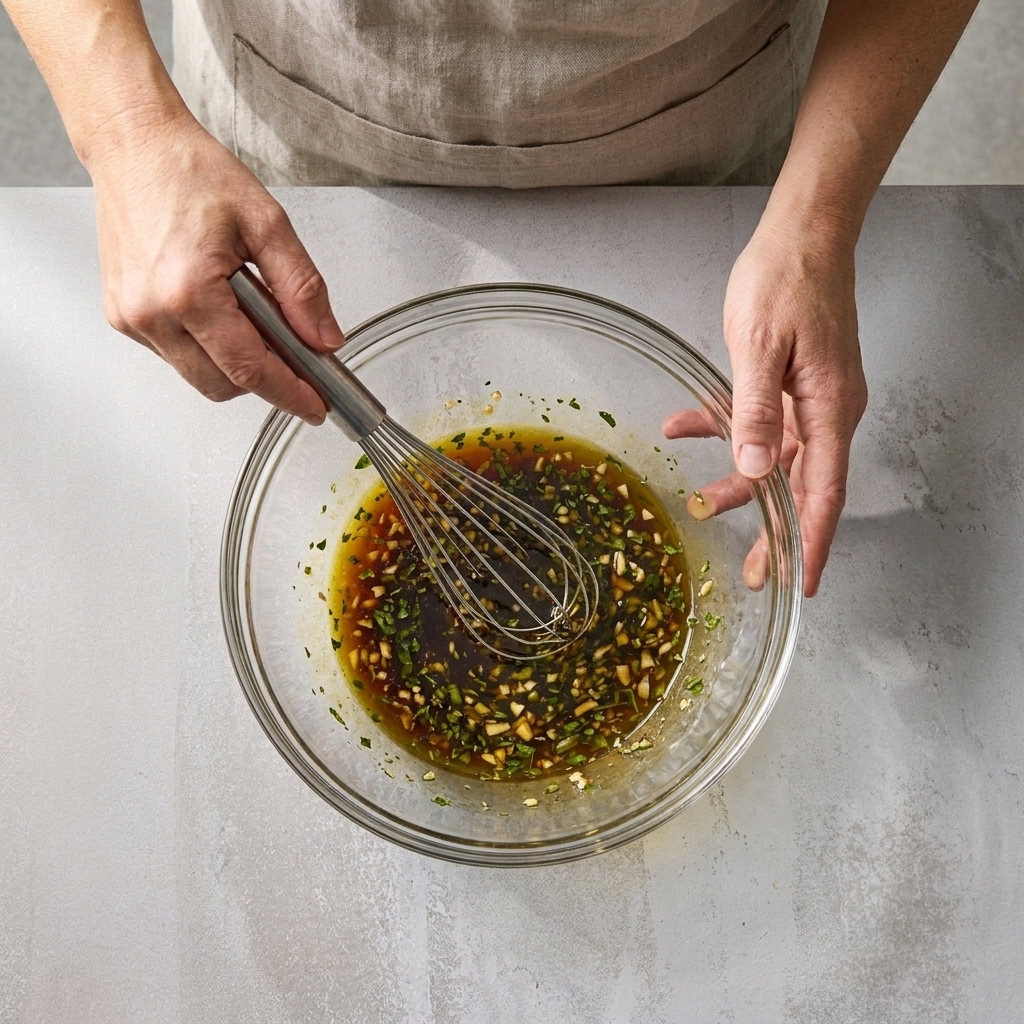
When everything is on one pan, I like a single flavor theme so the meal tastes intentional. Pick one of these lanes, then apply it to both protein and vegetables (with salt and oil in every lane).
1) Lemon herb
- Olive oil
- Lemon zest plus lemon wedges for serving
- Garlic (fresh or powder)
- Italian seasoning or a mix of oregano and thyme
2) Honey mustard
- Olive oil
- Dijon mustard
- Honey or maple syrup
- Garlic powder
3) Taco-ish (kid-friendly)
- Olive oil
- Chili powder, cumin, paprika
- Garlic powder
- Lime wedges, cilantro after roasting
4) Greek-ish
- Olive oil
- Oregano, garlic
- Lemon juice after roasting
- Finish with crumbled feta if you like
5) Sesame ginger
- Neutral oil plus a drizzle of toasted sesame oil
- Soy sauce
- Honey or brown sugar
- Fresh ginger or ground ginger
Important: Sugary sauces burn at 425°F. If you are using honey, maple, or brown sugar, either keep it modest or brush it on in the last 5 to 8 minutes.
Timing roadmap (425°F)
Every oven is a little different, but this gets you very close.
Proteins
- Boneless skinless chicken thighs: 18 to 22 minutes (165°F internal temp)
- Bone-in chicken thighs: 25 to 35 minutes (165°F), depending on size
- Chicken breasts (cut into 1-inch chunks): 15 to 18 minutes (165°F)
- Chicken sausage (fully cooked links, sliced): 12 to 15 minutes to brown
- Salmon portions (about 1-inch thick): about 10 to 12 minutes (cook to your preferred doneness, often 125 to 130°F for medium, up to 145°F for well-done)
- Shrimp: 8 to 10 minutes until pink and firm
- Pork tenderloin medallions: 14 to 18 minutes (145°F, then rest)
Vegetables
- Broccoli florets: 15 to 18 minutes
- Brussels sprouts (halved): 18 to 25 minutes
- Green beans: 12 to 15 minutes
- Zucchini: 10 to 14 minutes
- Potatoes (3/4-inch cubes): 25 to 30 minutes
My doneness rule: Roast vegetables until you see browned edges, not just “soft.” That caramelization is where the flavor lives.
10 sheet pan combos
These are mix-and-match meals I make on repeat. Each one assumes a standard half sheet pan and 425°F.
1) Lemon herb chicken thighs + broccoli + red onion
Roast everything 18 to 22 minutes, tossing halfway.
2) Honey mustard sausage + Brussels sprouts + apple slices
Roast 18 minutes, add apple slices for the last 8 minutes.
3) Taco shrimp + peppers + onions
Roast peppers and onions 10 minutes, add shrimp and roast 8 minutes more.
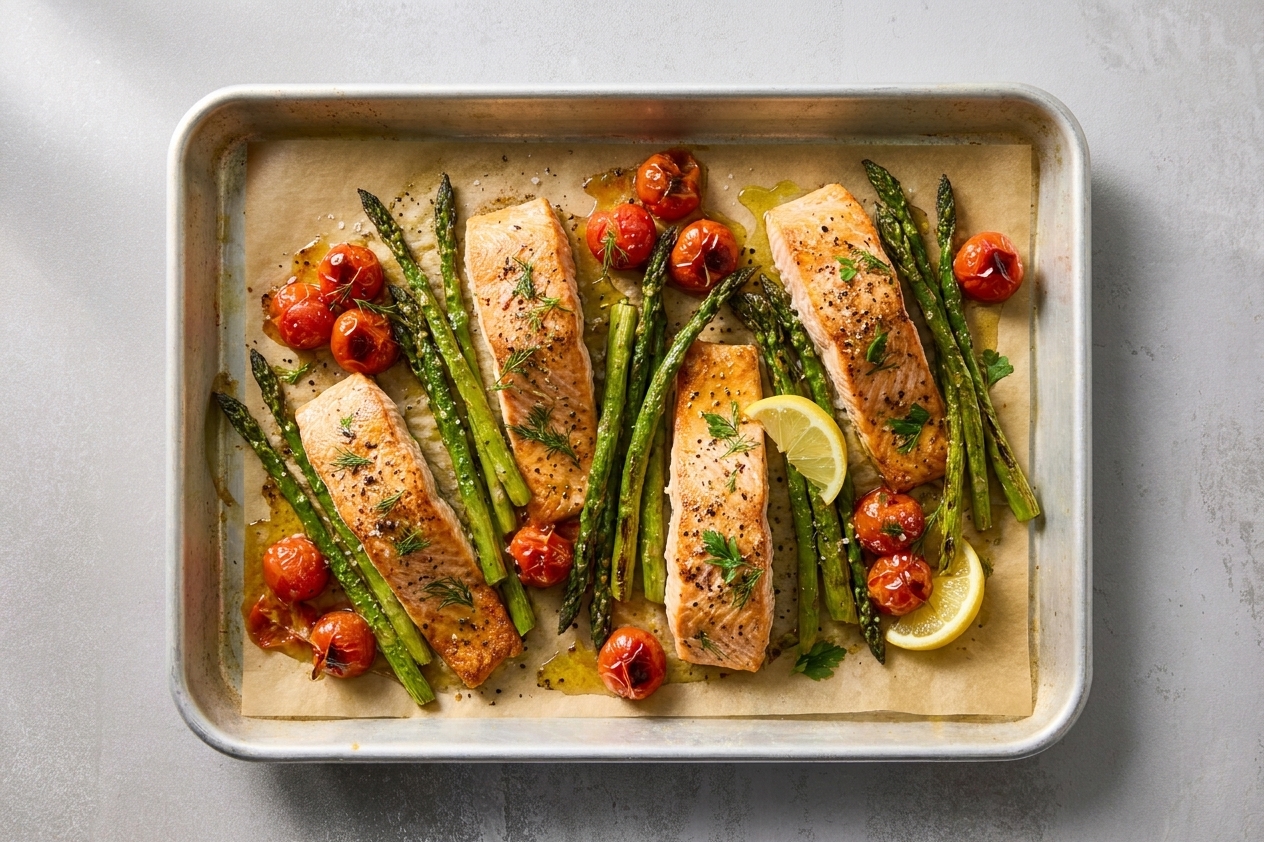
4) Salmon + asparagus + cherry tomatoes (Greek-ish)
Roast salmon and vegetables together about 10 to 12 minutes, then finish with lemon and feta. Cook salmon to your preferred doneness.
5) Pork tenderloin medallions + sweet potatoes + green beans
Start sweet potatoes 12 minutes, add pork and green beans, then roast 14 to 18 minutes more.
6) Italian meatballs + cauliflower + marinara drizzle
Roast meatballs and cauliflower 18 to 22 minutes. Warm marinara separately or spoon on at the end.
7) Sesame ginger chicken chunks + broccoli + carrots
Roast carrots and broccoli 10 minutes, add chicken, roast 15 minutes more. Drizzle sauce at the end to avoid burning.
8) Cajun-ish chicken sausage + potatoes + bell peppers
Start potatoes 15 minutes, add sausage and peppers, roast 12 to 15 minutes more.
9) Garlic butter shrimp + broccoli + lemon
Roast broccoli 12 minutes, add shrimp, roast 8 minutes more. Finish with lemon.
10) Chicken thighs + cabbage wedges + carrots (cozy weeknight)
Roast 22 to 28 minutes, turning cabbage once for browning.
Common problems and fixes
“My vegetables are mushy”
- Crowding is the #1 cause. Use two pans or reduce ingredients.
- Turn the oven up to 425°F, or finish with 1 to 2 minutes under the broiler.
- Dry vegetables well after washing. Water equals steam.
- Rotate the pan halfway if your oven has hot spots.
“My chicken is done, but my potatoes are hard”
- Start potatoes first (staggered start).
- Cut potatoes smaller (3/4-inch cubes roast much faster than 1-inch cubes).
- Do not skimp on oil. Potatoes need it to brown and soften properly.
“Everything tastes flat”
- Salt properly. For a full sheet pan meal, you usually need more salt than you think.
- Add an acid finish: lemon, lime, vinegar, pickled onions.
- Add a crunchy finish: toasted nuts, pumpkin seeds, breadcrumbs.
“My sauce burned”
- Use dry spices for roasting, then brush on sweet sauces at the end.
- Or reserve half the sauce for tossing after roasting.
Weeknight workflow
If you want sheet pan dinners to feel effortless, you need a repeatable rhythm. This is mine:
- Preheat oven to 425°F. Line pan if using parchment.
- Chop vegetables first. Put them in a big bowl.
- Season vegetables: oil, salt, pepper, lane spices. Toss well.
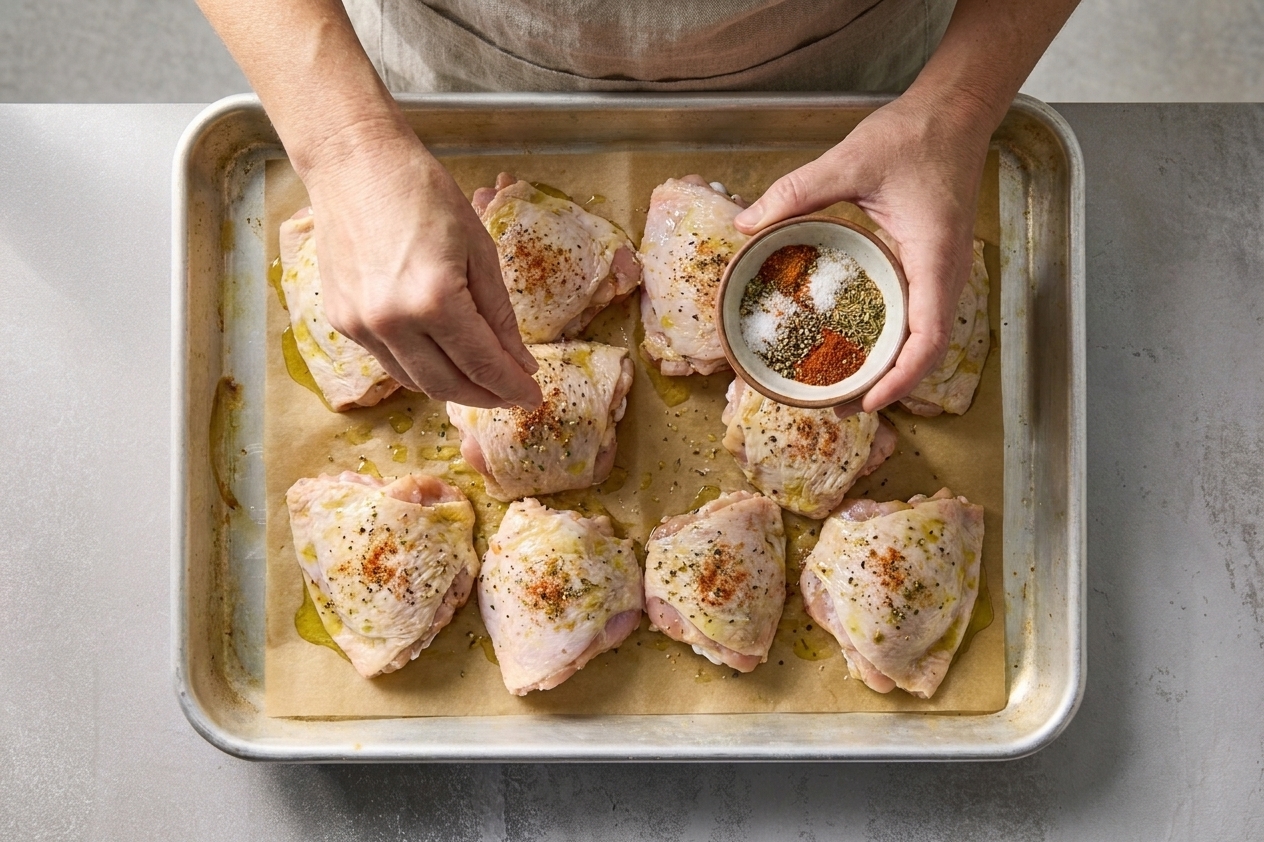
- Prep protein: pat dry, season separately (especially chicken).
- Load the pan strategically: slow items at the edges (hotter spots), delicate items toward the middle.
- Set one timer for halfway. Toss vegetables, flip pieces if needed, and rotate the pan if your oven bakes unevenly.
- Finish strong: add lemon, herbs, cheese, or a sauce drizzle after roasting.
Quick food-safety note: When working with raw chicken, keep a separate cutting board and knife for meat, and wash hands and surfaces before moving on to vegetables or garnishes.
What to serve
Most sheet pan dinners are a full meal as-is, but these quick add-ons make it feel extra complete without creating more work.
- Fast starch: microwave rice, couscous, warmed tortillas, crusty bread
- Simple sauce: tzatziki, pesto, chimichurri, ranch, or a quick yogurt-lemon-garlic sauce
- Fresh element: bagged salad, sliced cucumbers, avocado, quick pickles
My personal favorite: a bowl of warm rice under roasted veggies and protein. It catches every drop of flavorful pan juice.
Sheet pan FAQ
Do I need to flip everything halfway?
Not always, but it helps browning and even cooking. I almost always toss vegetables halfway through. For salmon, I do not flip.
Can I use frozen vegetables?
Yes, with a few tweaks: roast at 425°F, do not crowd the pan, and expect less browning. Frozen broccoli and green beans work best. Skip frozen zucchini if you want crisp edges.
How do I keep chicken from drying out?
Choose thighs for the most forgiving results, or cut chicken breast into even 1-inch chunks. Also, do not overcook. A quick-read thermometer is the single best tool for stress-free chicken.
Can I meal prep sheet pan dinners?
You can absolutely prep ahead. Chop vegetables and mix seasonings up to 2 days ahead. Store vegetables and protein separately, then toss and roast when you are ready.
A final pep talk
If sheet pan dinners have disappointed you before, it was probably not you. It was timing, cut size, or crowding. Once you get those three right, you will feel like you have a weeknight superpower.
If you want, tell me what protein you have and which vegetables your family will actually eat. I can suggest a sheet pan combo and timing that fits your pantry.