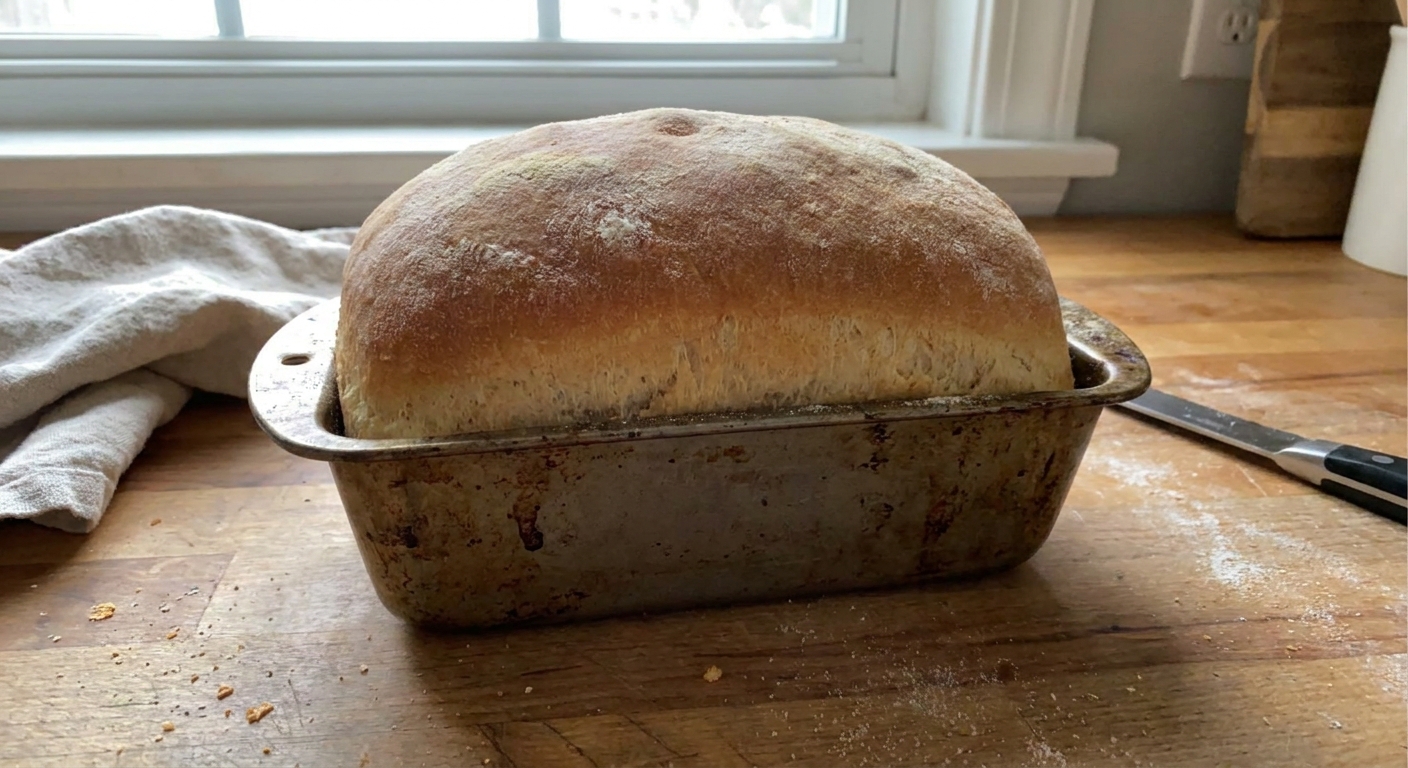
A reliable enriched sourdough pan loaf with milk and butter for a soft crust and sandwich-ready slices. Includes folding cues, proof times, bake temp, and do...
Recipe Homely
November 22, 2026
Sourdough Cinnamon Rolls

Sarah Jenkins
Sarah Jenkins is a passionate home cook and the voice behind Recipe Homely, dedicated to making everyday meals stress-free and delicious. With over a decade of experience feeding a busy family, she specializes in rigorously tested, approachable recipes for dinners, desserts, and everything in between. When she isn't developing new dishes, Sarah can be found browsing local farmers' markets or baking with her two children.
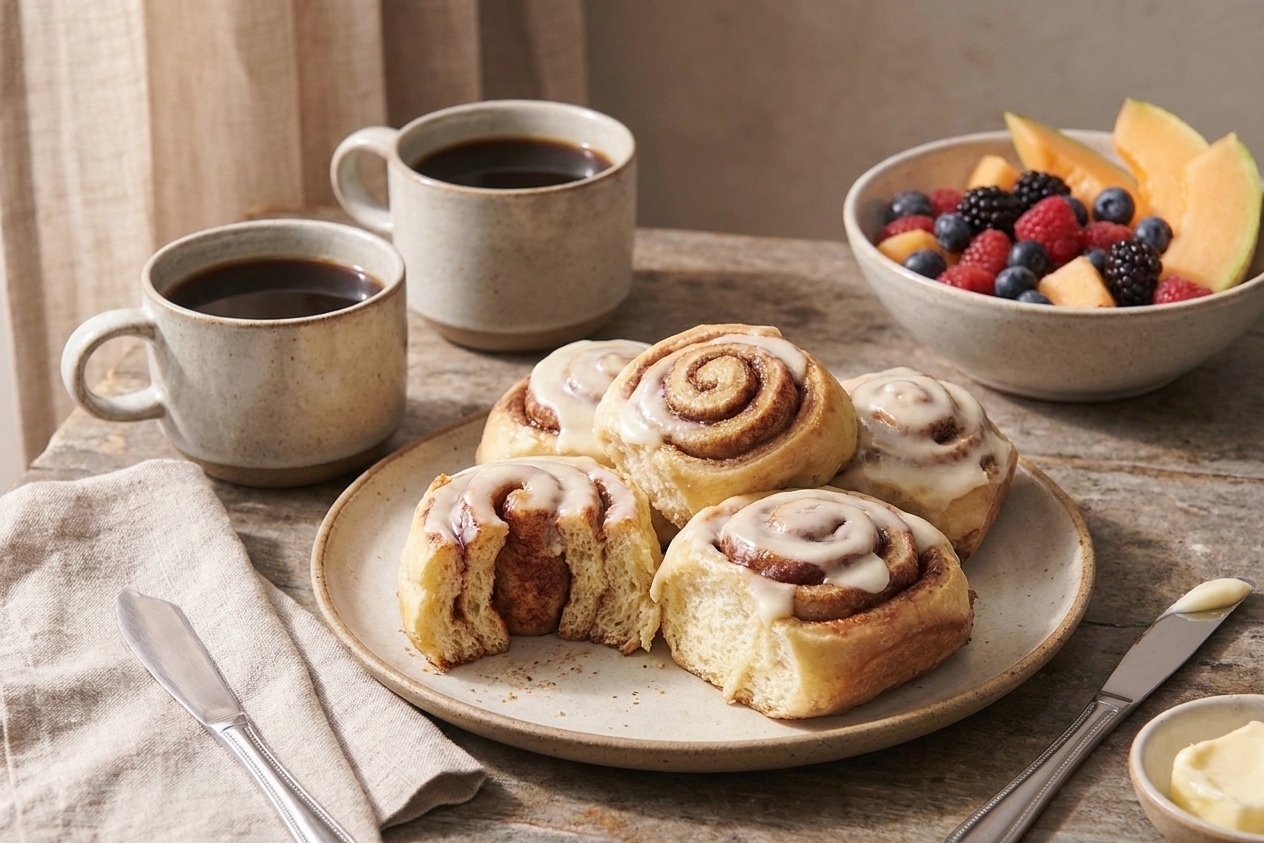
These sourdough cinnamon rolls are my answer to the classic weekend dilemma: you want something bakery-level cozy, but you also want it to actually work in a normal home kitchen with kids asking for breakfast right now. The dough is enriched with milk and butter for that soft, fluffy pull-apart texture, and the sourdough starter adds a gentle tang that keeps the sweetness from feeling heavy.
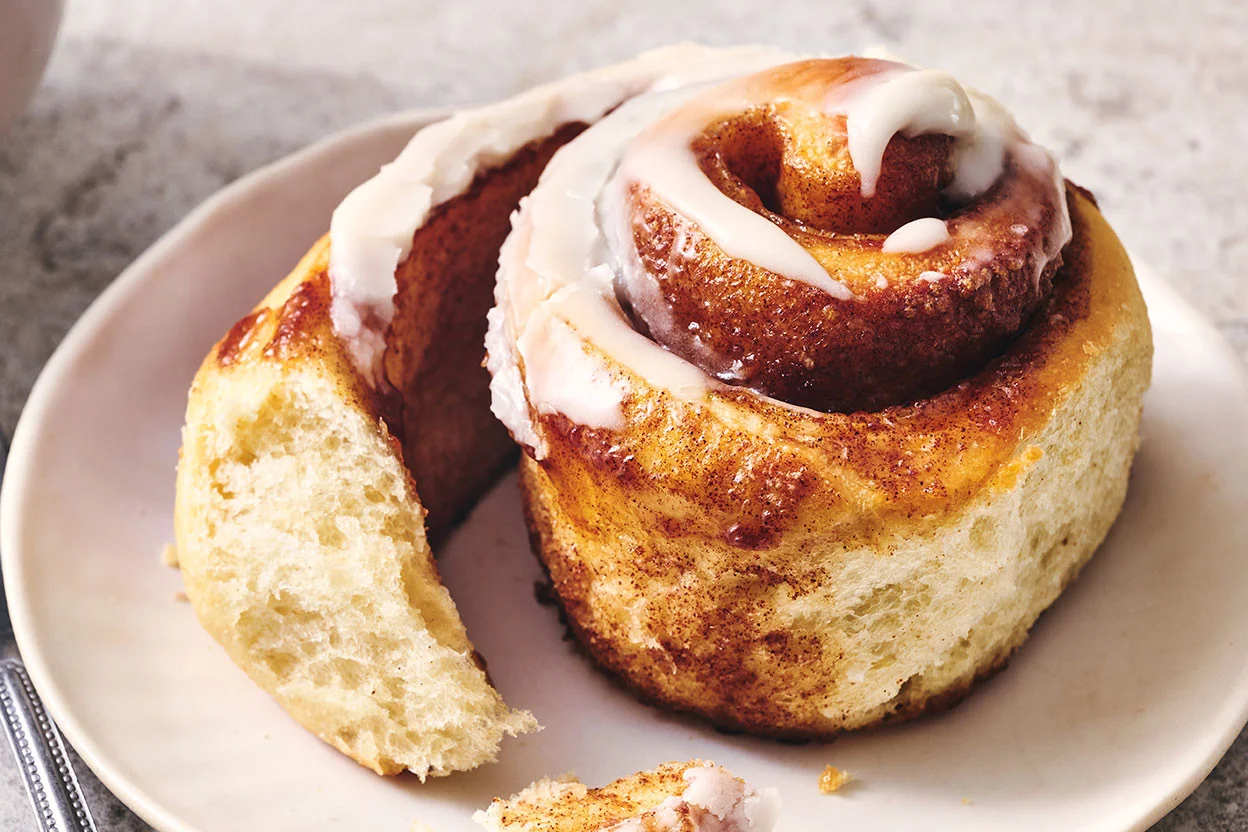
I test cinnamon roll recipes like my family is judging a bake-off, because honestly they are. These passed the picky-eater test: tender spirals, a gooey cinnamon center, and a cream cheese glaze that melts into all the nooks.
What to expect
- Texture: soft and pillowy, thanks to milk, butter, and a proper proof.
- Flavor: sweet cinnamon filling with a light sourdough tang, not overly sour.
- Timing: you can bake the same day or do an overnight proof so breakfast is easy.
- Difficulty: approachable, even if you are newer to sourdough. I will tell you what to look for at each step.
Ingredients
For the enriched sourdough dough
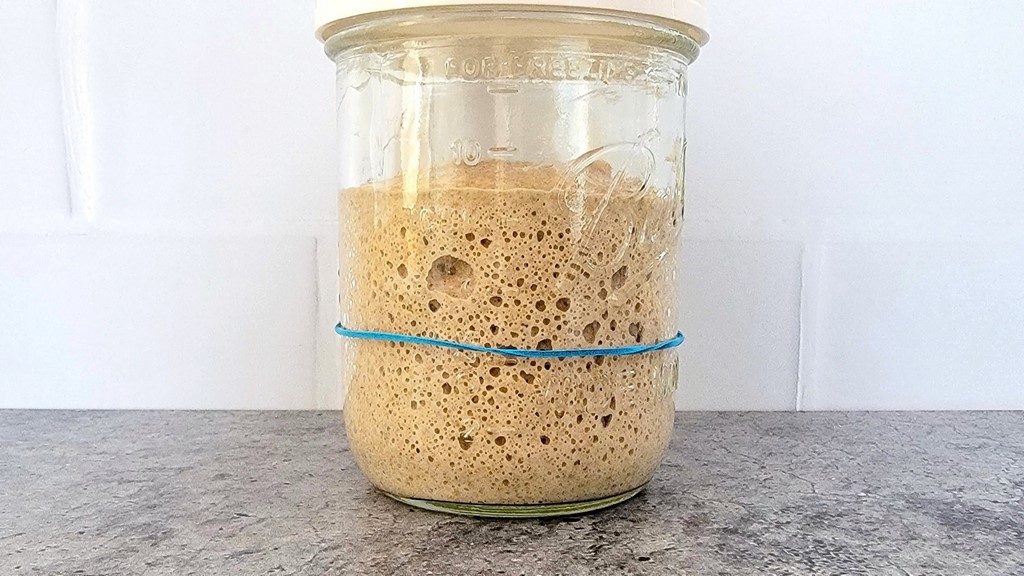
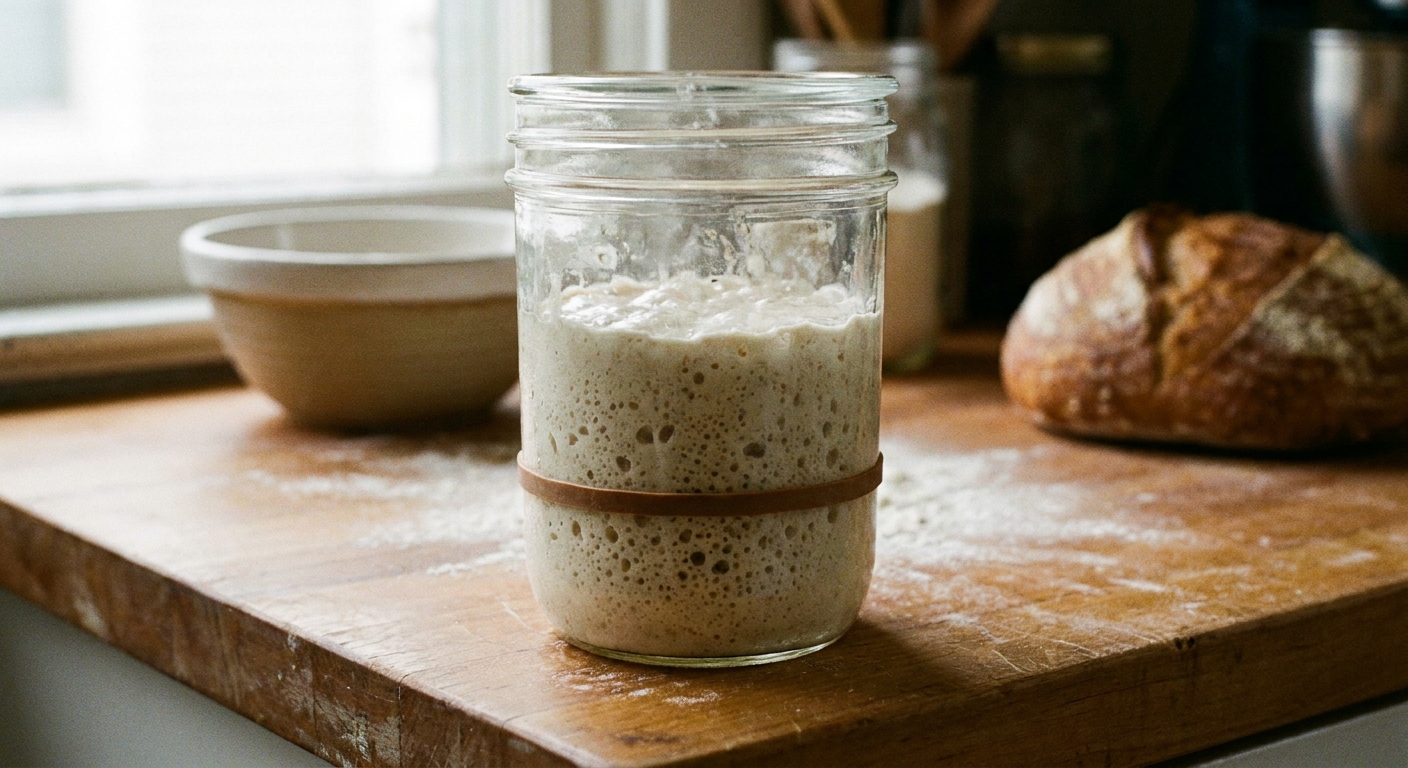
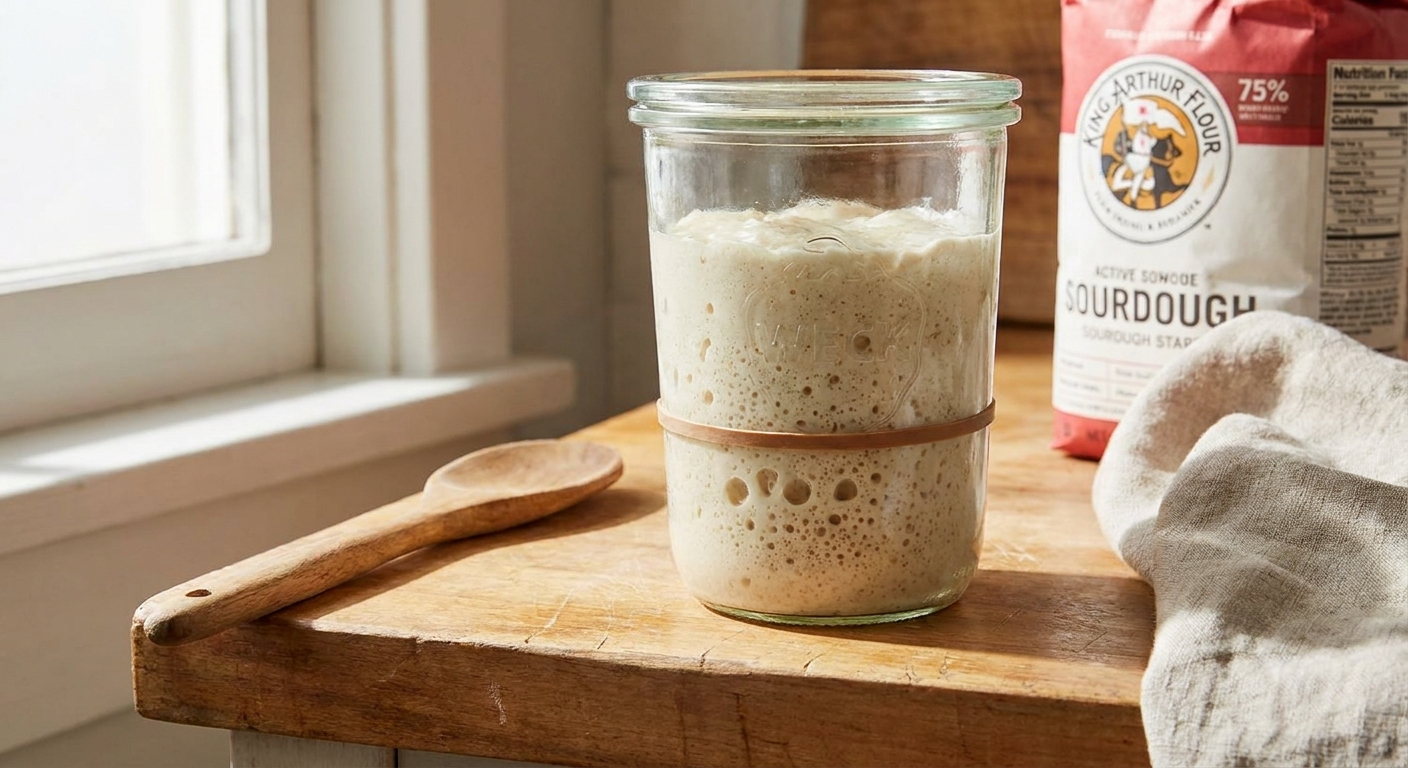
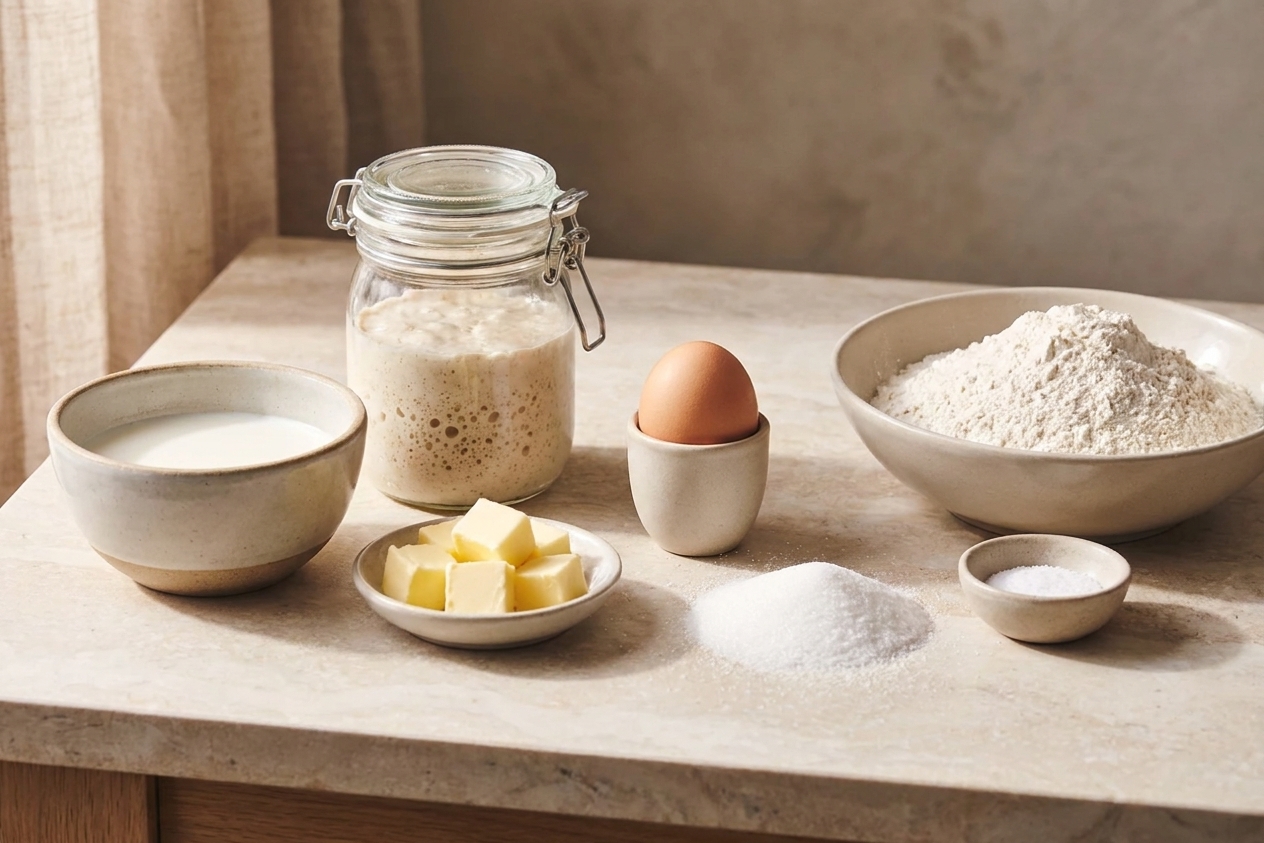
- Active sourdough starter: 150 g, bubbly and recently fed (assumes 100% hydration; volume varies by starter)
- Warm milk: 240 g (1 cup), warmed to about body temperature
- Egg: 1 large
- Granulated sugar: 50 g (1/4 cup)
- Unsalted butter: 56 g (4 tablespoons), softened
- Salt: 8 g (about 1 1/4 teaspoons fine salt)
- All-purpose flour: 420 g to 460 g (about 3 1/2 to 3 3/4 cups, spooned and leveled), start with the lower amount and add as needed
For the cinnamon-sugar filling
- Unsalted butter: 56 g (4 tablespoons), very soft
- Brown sugar: 150 g (3/4 cup), packed
- Ground cinnamon: 12 g (1 1/2 tablespoons)
- Pinch of salt: optional, but it makes the cinnamon pop
For the cream cheese glaze
- Cream cheese: 113 g (4 oz), softened
- Unsalted butter: 28 g (2 tablespoons), softened
- Powdered sugar: 120 g to 180 g (1 to 1 1/2 cups), to taste
- Vanilla extract: 1 teaspoon
- Milk: 1 to 3 tablespoons, to thin
- Pinch of salt: optional
Equipment
- 9 x 13 inch baking dish (or similar)
- Rolling pin
- Bench scraper or sharp knife
- Dental floss or thread (optional, but gives the cleanest slices)
- Stand mixer (optional, not required)
Step-by-step
1) Mix
In a large bowl, whisk together the warm milk, starter, egg, and sugar until smooth. Add the softened butter and salt. It will look a little lumpy at first; that is fine.
Add 420 g flour and mix with a spoon or dough whisk until a shaggy dough forms. If it is extremely wet and not holding together at all, add flour 1 tablespoon at a time.
2) Knead
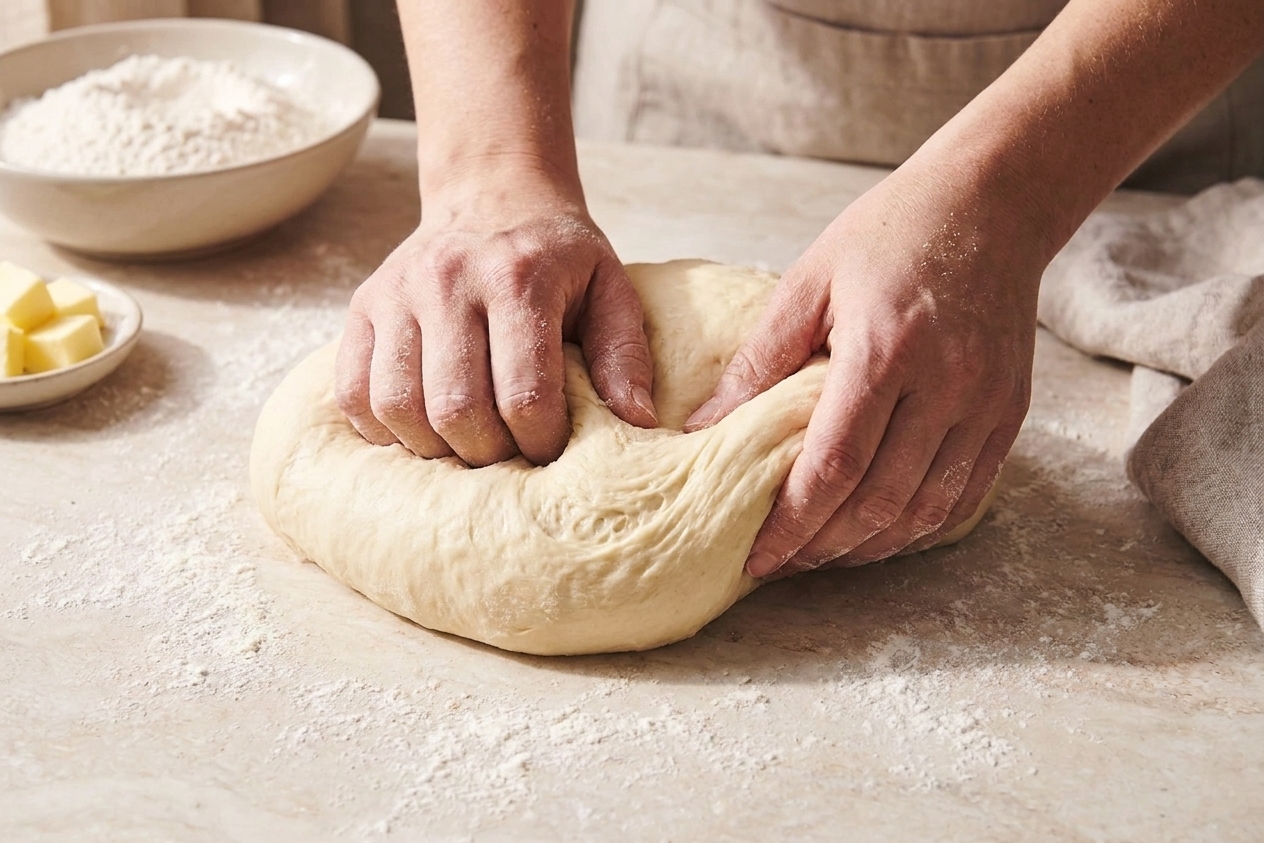
By hand: Turn the dough onto a lightly floured counter and knead 8 to 10 minutes, until it becomes smooth and elastic. It should feel soft and slightly tacky, not sticky enough to smear everywhere.
With a stand mixer: Use the dough hook on medium-low for about 6 to 8 minutes. If the dough is puddling at the bottom and not pulling away from the sides, add a little more flour a spoonful at a time.
3) Bulk rise
Place the dough in a lightly buttered bowl, cover, and let rise at warm room temperature until puffy and roughly doubled, typically 6 to 10 hours depending on your starter strength and kitchen temperature.
Helpful target: If you like numbers, aim for a dough temperature around 74 to 78°F (23 to 26°C). Colder dough will take longer.
What you are looking for: the dough should feel airy and inflated. If you gently press a fingertip into it, the indentation should slowly spring back but not disappear instantly.
Fill and shape
1) Prepare the pan
Butter a 9 x 13 inch baking dish. If you love super soft edges, you can also line it with parchment, but it is optional.
2) Roll out the dough
On a lightly floured surface, roll the dough into a rectangle about 16 x 12 inches. If the dough snaps back, let it rest 10 minutes and try again.
3) Add filling
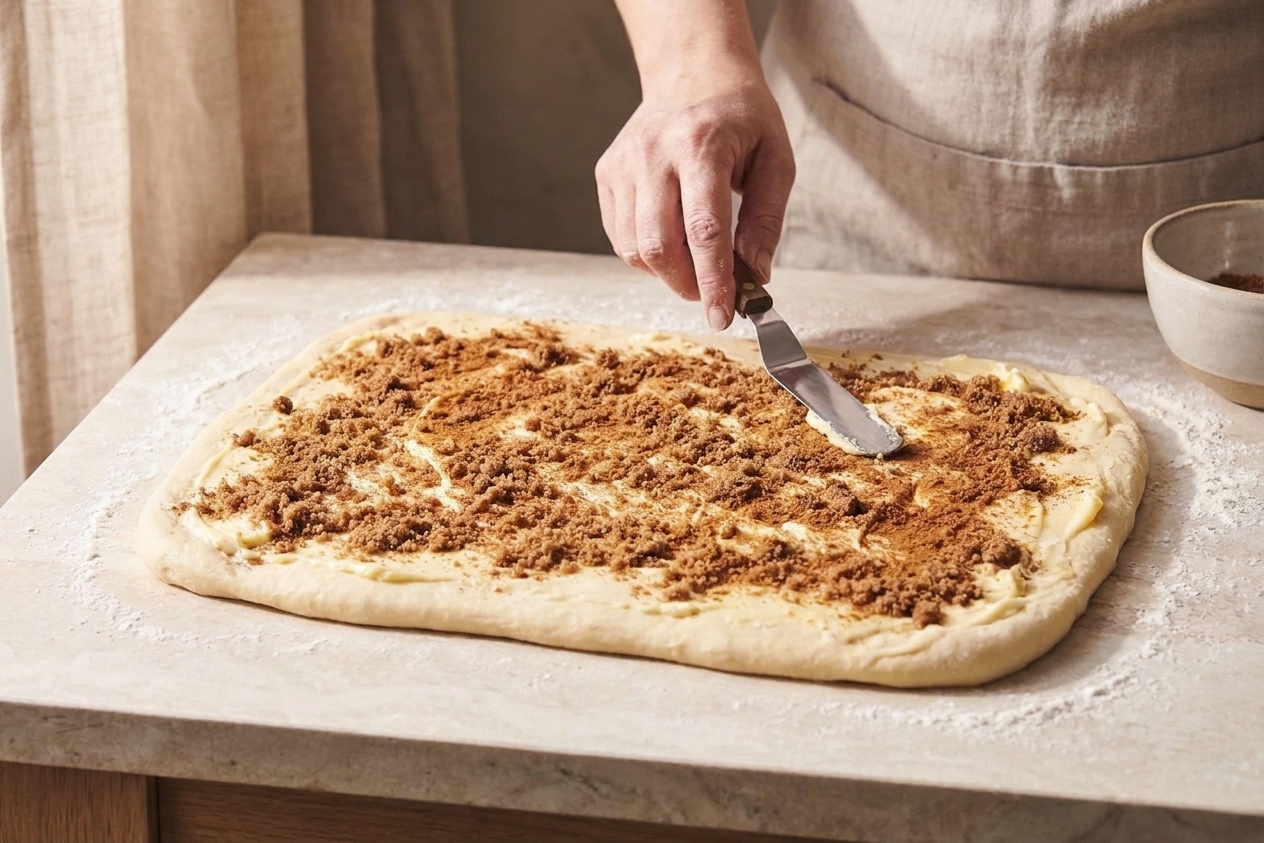
Spread the very soft butter evenly over the dough, leaving a 1/2 inch border along one long edge so you can seal the seam.
Mix brown sugar, cinnamon, and a pinch of salt, then sprinkle evenly over the butter. Use your hands to gently press it in so it sticks.
4) Roll up
Starting from the long edge (the one fully covered with filling), roll the dough into a tight log. Pinch the seam to seal.
5) Cut
Trim the ends if you want neat edges, then cut into 12 rolls.
- Dental floss method: Slide floss under the log, cross over the top, and pull to slice cleanly.
- Knife method: Use a very sharp knife and a gentle sawing motion.
6) Arrange
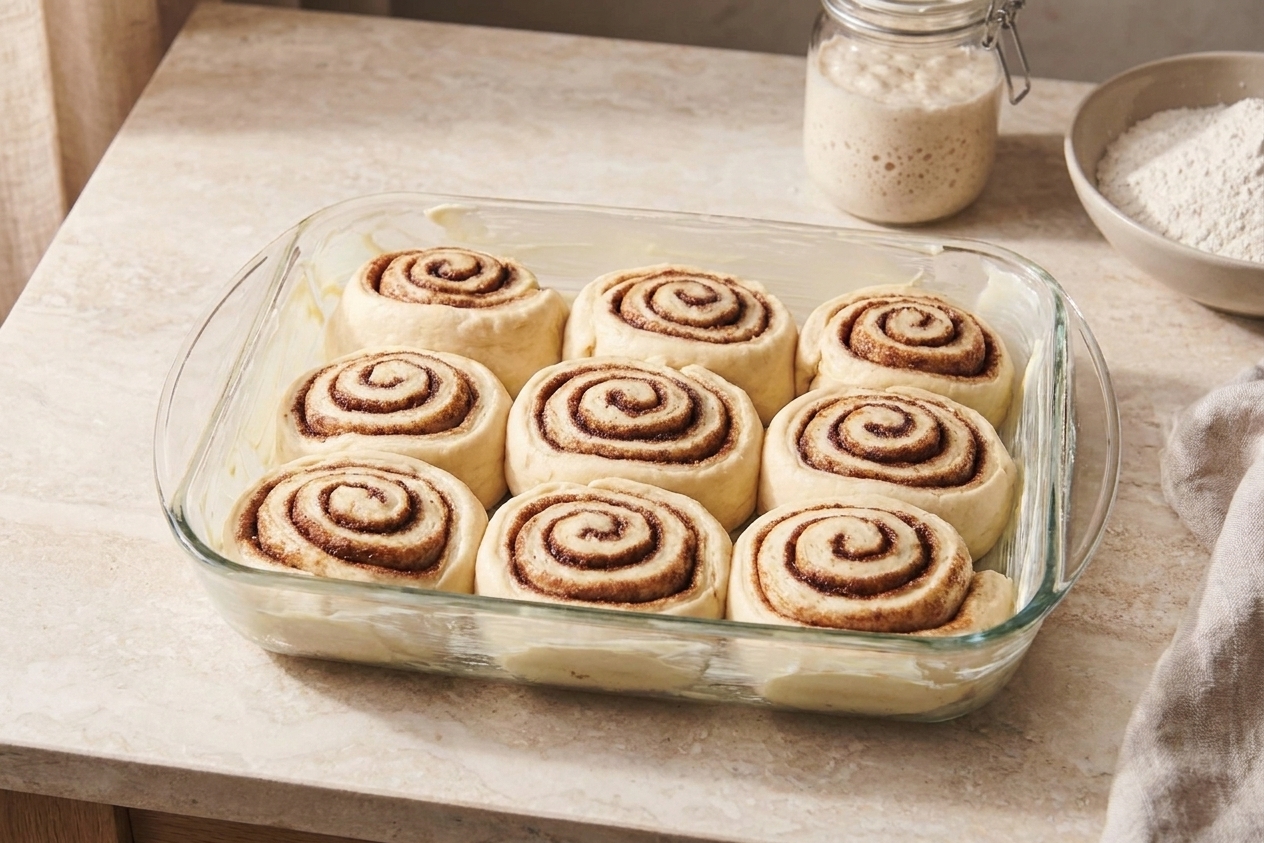
Place the rolls cut-side up in the prepared pan, evenly spaced.
Final proof
Same-day
Cover the pan and let the rolls rise at warm room temperature until puffy and touching, usually 2 to 4 hours.
Overnight (my favorite)
Cover the pan tightly and refrigerate 8 to 16 hours.
In the morning, let the pan sit at room temperature until the rolls look puffy and slightly jiggly. This is often 1 to 4 hours depending on how warm your kitchen is and how cold your fridge runs.
Quick visual cue: if you gently press the side of a roll, it should feel airy and leave a small indentation that slowly fills back in.
Bake
Heat the oven to 350°F (175°C).
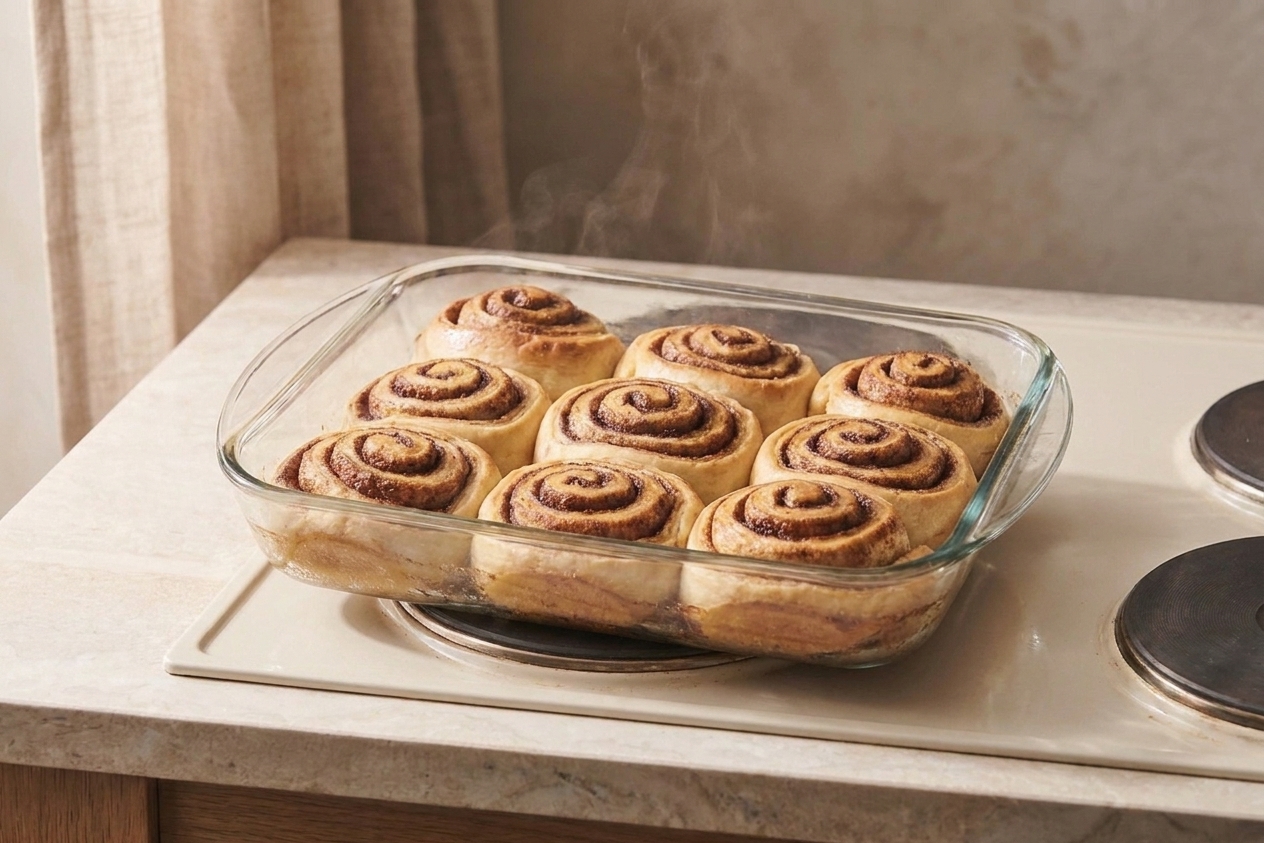
Bake for 25 to 32 minutes, until the tops are lightly golden and the center rolls are cooked through. If the tops are browning too fast, loosely tent with foil for the last 8 to 10 minutes.
Doneness cue: the center rolls should feel set (not squishy-raw). If you use an instant-read thermometer, aim for about 190 to 200°F (88 to 93°C) in the center.
Let the rolls cool for 10 minutes before glazing. Warm is perfect. Piping hot will melt the glaze right off.
Cream cheese glaze
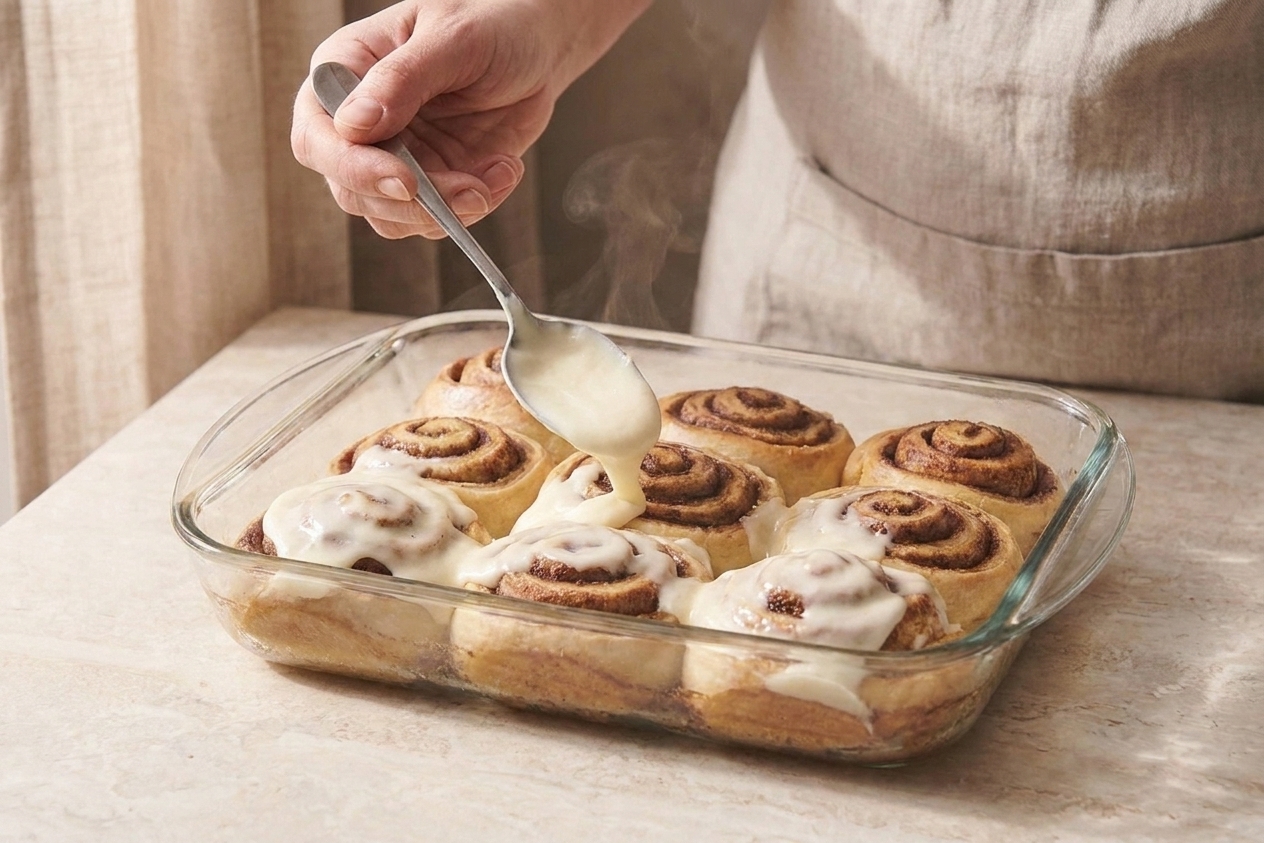
In a medium bowl, beat the softened cream cheese and butter until smooth. Add powdered sugar, vanilla, and a pinch of salt. Add milk 1 tablespoon at a time until it is spoonable and glossy.
Spread over warm rolls and let it sink into the spirals.
Best tips
- Use active starter: If your starter is sluggish, the dough will take forever and the rolls can bake up dense.
- Warm room helps: Enriched dough moves slower. I often proof near (not on) the stove while dinner is cooking.
- Do not over-flour: A slightly tacky dough bakes softer. Add flour gradually.
- Seal the seam: A tight roll gives you pretty spirals and fewer gaps.
- Underbaked is gummy, overbaked is dry: Look for light golden tops and set centers.
Troubleshooting
Why are my rolls dense?
Most often, they simply needed more time. Enriched dough can take longer to rise. Keep proofing until the rolls are truly puffy and touching in the pan. Also make sure your starter was active and recently fed.
My filling leaked out. What happened?
A little leakage is normal. To reduce it, use very soft butter (not melted), roll the log snugly, and avoid overfilling right up to the seam edge.
Can I use whole wheat flour?
You can swap in up to about 25 percent whole wheat flour, but expect a slightly heartier texture and you may need a splash more milk. For the fluffiest rolls, all-purpose flour is the most reliable.
Can I freeze sourdough cinnamon rolls?
Yes.
- Freeze baked: Cool completely, wrap well, and freeze up to 2 months. Thaw and warm gently, then glaze.
- Freeze unbaked: Freeze the cut rolls on a tray, then transfer to a bag. Thaw overnight in the fridge in a baking dish, then let them rise at room temperature until truly puffy. Depending on your kitchen, this can take a few hours.
Storage and reheating
- Room temperature: Keep covered up to 2 days.
- Refrigerator: Up to 5 days, tightly covered.
- Reheat: Microwave individual rolls 10 to 20 seconds, or warm the pan covered with foil at 300°F until soft and heated through.
Recipe
Ingredients
Dough
- 150 g active sourdough starter (100% hydration; volume varies)
- 240 g warm milk (1 cup)
- 1 large egg
- 50 g granulated sugar (1/4 cup)
- 56 g unsalted butter, softened (4 tablespoons)
- 8 g salt (about 1 1/4 teaspoons fine salt)
- 420 to 460 g all-purpose flour (about 3 1/2 to 3 3/4 cups, spooned and leveled)
Filling
- 56 g unsalted butter, very soft (4 tablespoons)
- 150 g brown sugar (3/4 cup), packed
- 12 g ground cinnamon (1 1/2 tablespoons)
- Pinch of salt (optional)
Glaze
- 113 g cream cheese, softened (4 oz)
- 28 g unsalted butter, softened (2 tablespoons)
- 120 to 180 g powdered sugar (1 to 1 1/2 cups)
- 1 teaspoon vanilla extract
- 1 to 3 tablespoons milk
- Pinch of salt (optional)
Instructions
- Mix dough: Whisk milk, starter, egg, and sugar. Mix in butter and salt. Add 420 g flour and stir until shaggy.
- Knead: Knead by hand 8 to 10 minutes (or mixer 6 to 8 minutes) until smooth and elastic, adding flour only as needed.
- Bulk rise: Cover and let rise until puffy and doubled, 6 to 10 hours.
- Roll out: Roll dough to about 16 x 12 inches on a lightly floured surface.
- Fill: Spread soft butter over dough. Combine brown sugar, cinnamon, and salt, then sprinkle evenly.
- Shape: Roll into a log and pinch the seam. Cut into 12 rolls and place in a buttered 9 x 13 inch pan.
- Final proof: Either proof at room temp until puffy and touching (2 to 4 hours) or refrigerate overnight (8 to 16 hours) and bring to room temp until puffy and jiggly (often 1 to 4 hours).
- Bake: Bake at 350°F (175°C) for 25 to 32 minutes, tenting with foil if needed. Cool 10 minutes. For an internal temp cue, aim for about 190 to 200°F (88 to 93°C) in the center.
- Glaze: Beat cream cheese and butter smooth. Mix in powdered sugar, vanilla, and milk to desired consistency. Spread over warm rolls.
Notes
- Best pan cue: Bake when the rolls are touching and look inflated, not when they just barely grew.
- Sweeter glaze: Use the full 180 g powdered sugar. For a tangier glaze, stick closer to 120 g.
- Make-ahead: Overnight proof is the easiest schedule for morning cinnamon rolls.
Serving ideas
We love these warm with coffee, fresh fruit, and scrambled eggs for a simple breakfast spread. If you are making them for a holiday morning, bake them while you prep the rest of brunch, then glaze right before serving so they look (and taste) fresh from the bakery.