My most reliable boxed cake mix upgrades: swap water for milk, use melted butter, add an extra egg, and finish with a fluffy bakery-style frosting.
Recipe Homely
October 17, 2026
Last updated October 17, 2026
Why Did My Cake Sink? 8 Common Baking Mistakes

Sarah Jenkins
Sarah Jenkins is a passionate home cook and the voice behind Recipe Homely, dedicated to making everyday meals stress-free and delicious. With over a decade of experience feeding a busy family, she specializes in rigorously tested, approachable recipes for dinners, desserts, and everything in between. When she isn't developing new dishes, Sarah can be found browsing local farmers' markets or baking with her two children.
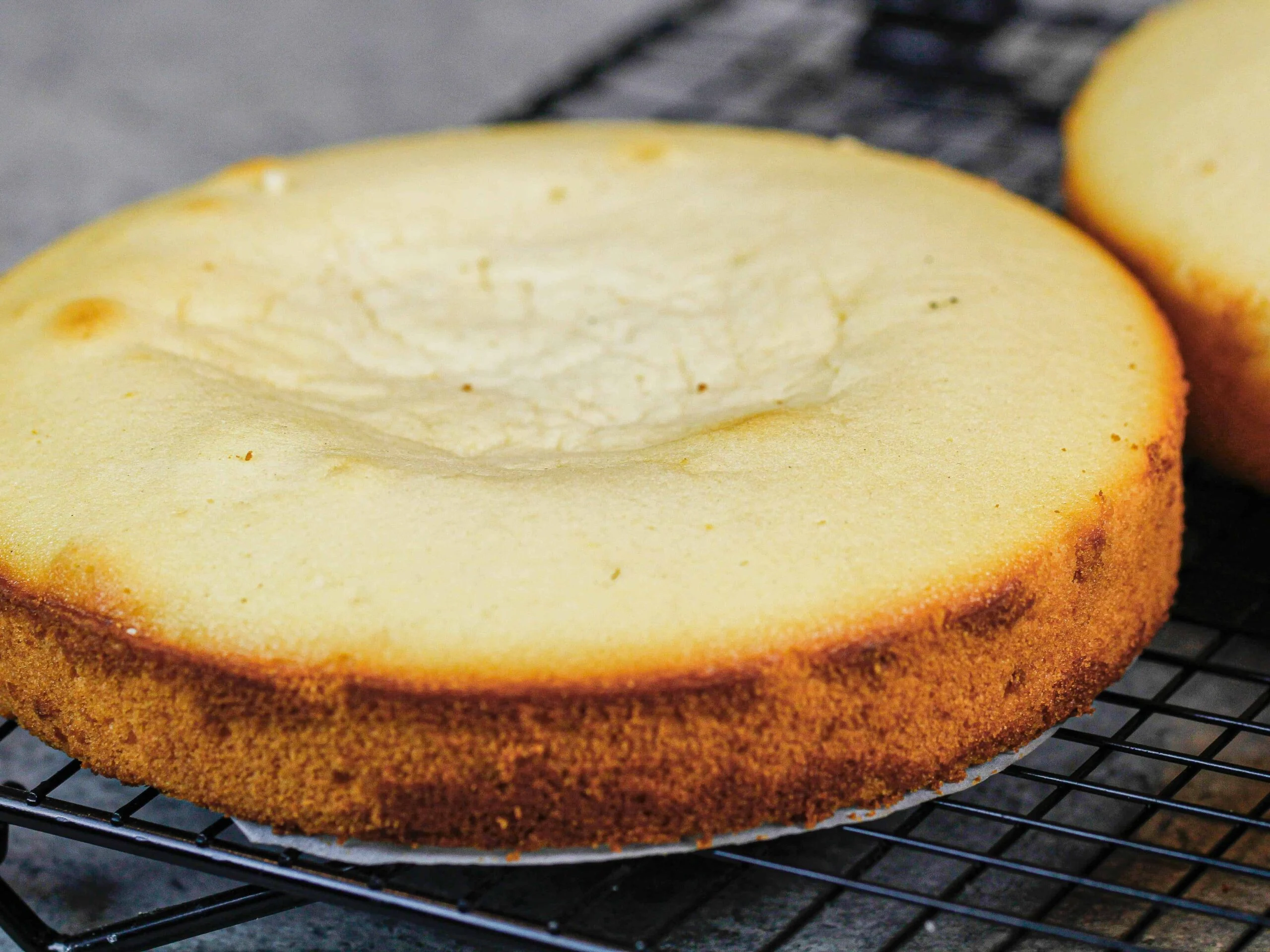
Few things feel more unfair than pulling a beautiful cake from the oven, watching it cool for five minutes, and then… it caves in like a sad little crater. I have been there. The good news is that sunken cakes are almost always a technique issue, not a “you can’t bake” issue.
Below are the most common reasons cakes sink (especially in the middle), what it looks like when that’s the culprit, and exactly what to do differently next time. I’m writing this the way I troubleshoot in my own average-sized kitchen, because that is where most of us are baking.
What sinking usually means
A cake sinks when the structure sets too late or too weakly to hold the air and steam created during baking. Cakes rise because leaveners (baking powder or baking soda), whipped air (from creaming or eggs), and steam expand in the heat. If the cake rises fast but the crumb does not set in time, it collapses as it cools.
Keep that picture in mind: rise plus set. Most fixes are about slowing the rise down a bit, strengthening the batter, or helping it set properly.
1) Your oven temperature is off
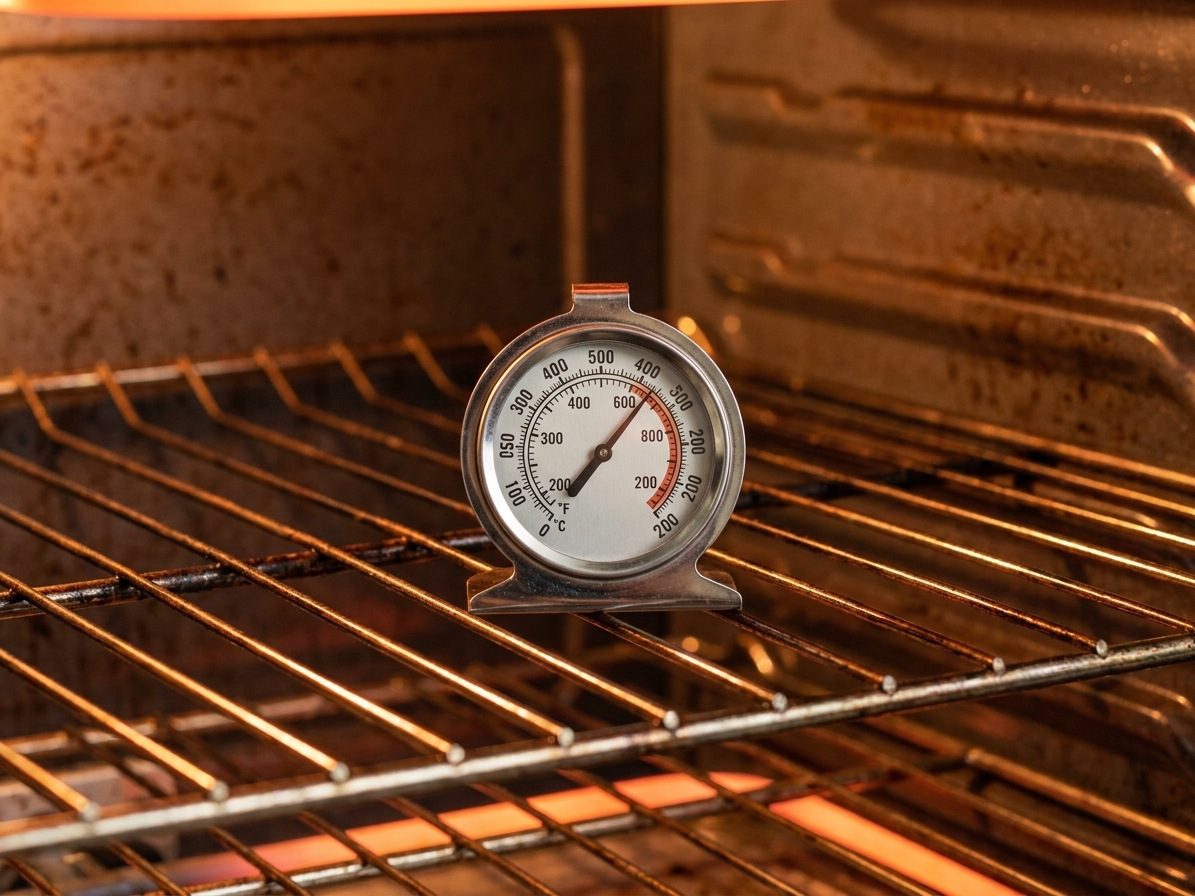
If there is one “boring” tool that improves cakes immediately, it’s an oven thermometer. Many home ovens can vary by 10 to 30°F from what the dial says (sometimes more), and cakes are sensitive.
What it looks like
- Oven too hot: cake domes quickly, edges set early, center stays underbaked and collapses later.
- Oven too cool: the batter takes longer to set, the center can stay too soft for too long, and the cake may end up underbaked and sink as it cools.
How to prevent it
- Use an oven thermometer and adjust your dial as needed.
- Preheat fully. Give it 10 to 20 minutes after the beep, or until the thermometer holds steady at your target temperature.
- Bake on the center rack unless the recipe says otherwise.
- If your cakes consistently sink, try reducing the set temperature by 25°F and baking a few minutes longer (this often helps ovens that run hot).
2) Your baking powder or baking soda is old
Leavening agents do not last forever, and weak baking powder can quietly ruin a cake. Most often, it shows up as poor rise and a dense texture. If the cake also sinks, it is usually because the rise was too weak to set into a stable structure, or because something else is also at play (like an underbaked center or a too-hot oven).
What it looks like
- Low rise, dense texture, tight crumb
- Cake looks puffy early, then settles more than expected as it cools
How to prevent it
- Check dates and store leaveners tightly sealed in a cool, dry place.
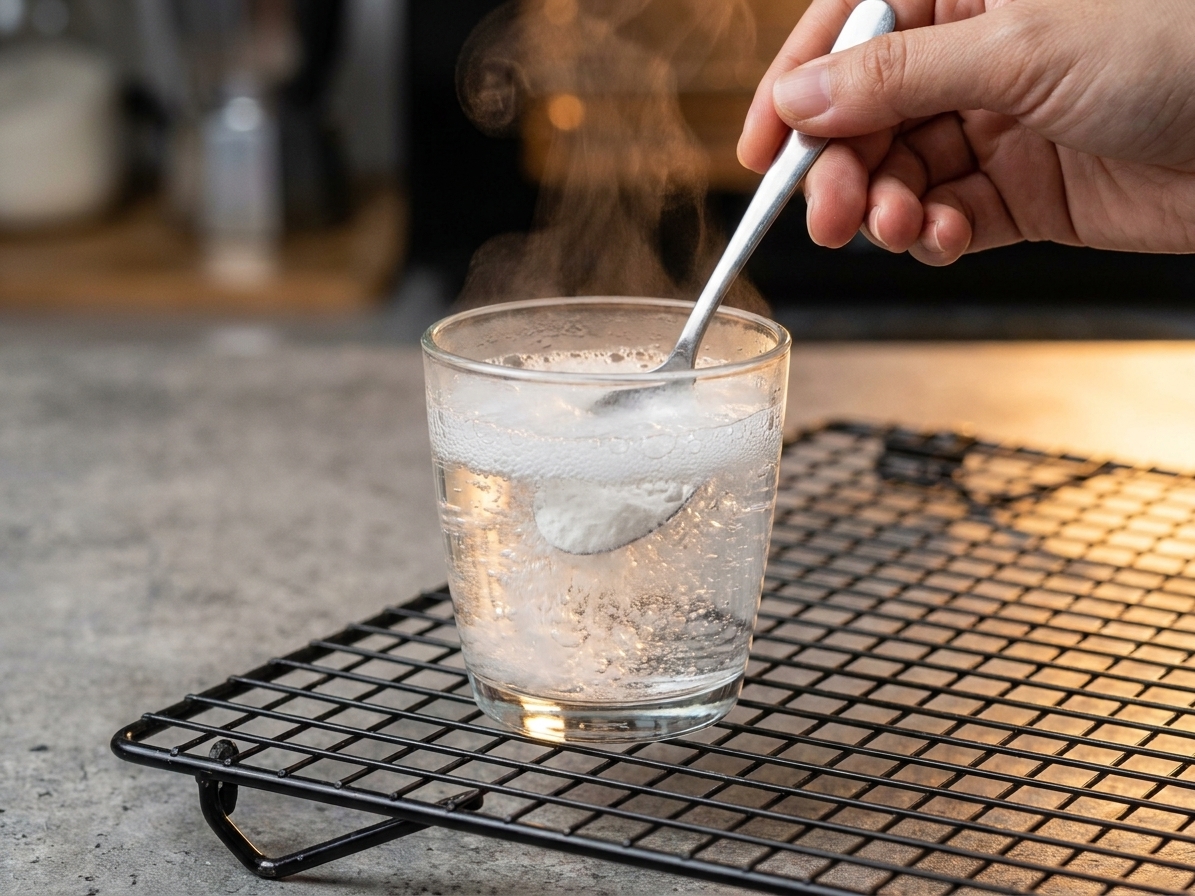
- Quick test for baking powder: stir 1/2 teaspoon baking powder into 1/4 cup hot water. It should bubble vigorously right away.
- Quick test for baking soda: stir 1/4 teaspoon baking soda into 1 tablespoon vinegar or lemon juice. It should fizz immediately.
One more note: baking soda needs an acid to activate. The most reliable are ingredients like buttermilk, yogurt, sour cream, citrus, vinegar, or natural cocoa powder. Brown sugar is mildly acidic and can contribute, but it is not as strong or consistent as dairy acids. Also, Dutch-process cocoa is less acidic than natural cocoa, so swapping cocoas can change how a recipe rises.
3) You used too much leavener
More baking powder does not equal more lift forever. Too much leavener can make a cake rise very fast and high, then collapse when the bubbles get too big and the structure cannot support them.
What it looks like
- Rapid rise, then a noticeable dip or crater
- Coarse crumb and big holes or tunnels
- A slightly bitter or soapy aftertaste (especially with too much baking soda)
How to prevent it
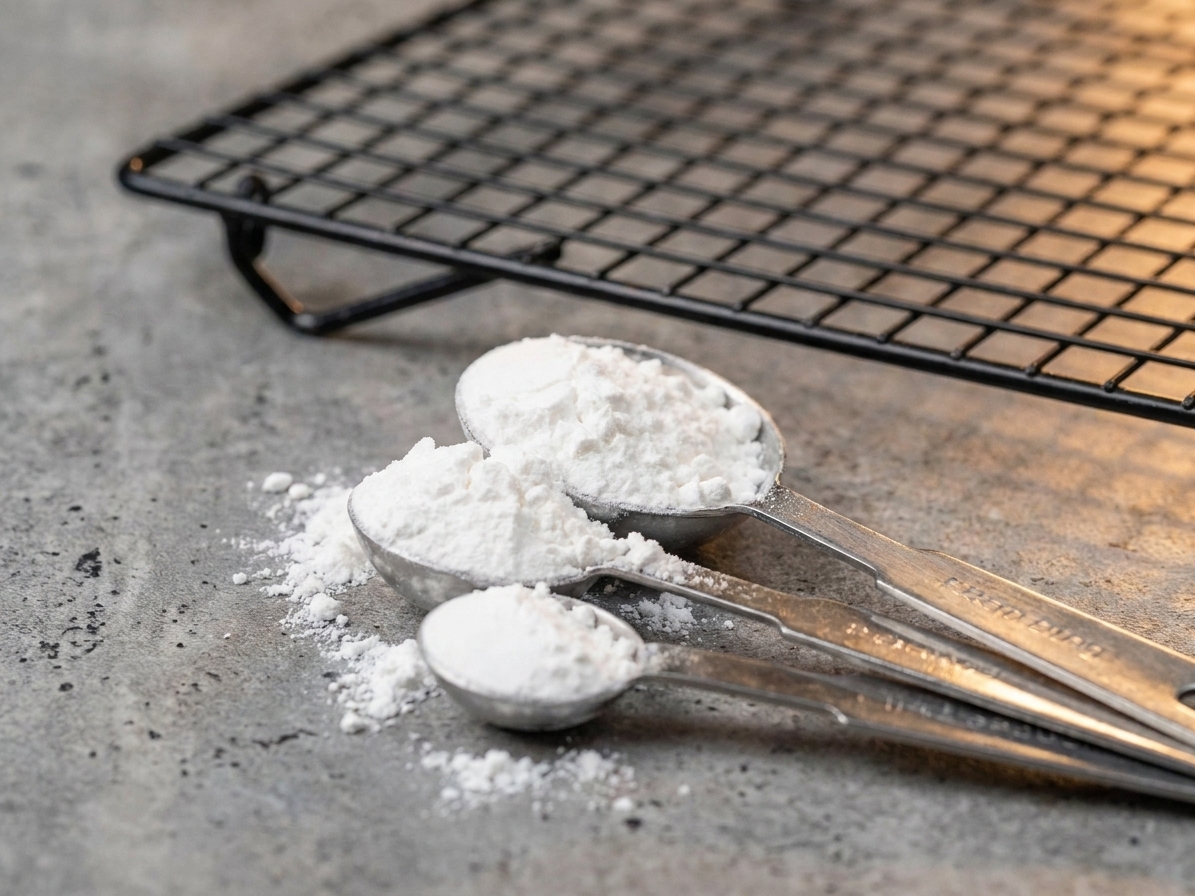
- Measure carefully. Do not heap spoons unless the recipe tells you to.
- Avoid DIY substitutions (like doubling baking powder because you are out of eggs). Baking is a ratio game.
- If you scaled a recipe up or down, double-check your math. Leavener is easy to miscalculate.
4) You overmixed after adding flour
Overmixing is a top reason for cakes that sink and turn out dense or chewy. Once flour is added, mixing develops gluten. Too much gluten makes a tougher, tighter structure that can rise oddly, then collapse, especially if the center is still soft.
What it looks like
- Rubbery or gummy line near the bottom
- Tunnels or large holes in the crumb
- Dense texture, sometimes with a sunken center
How to prevent it
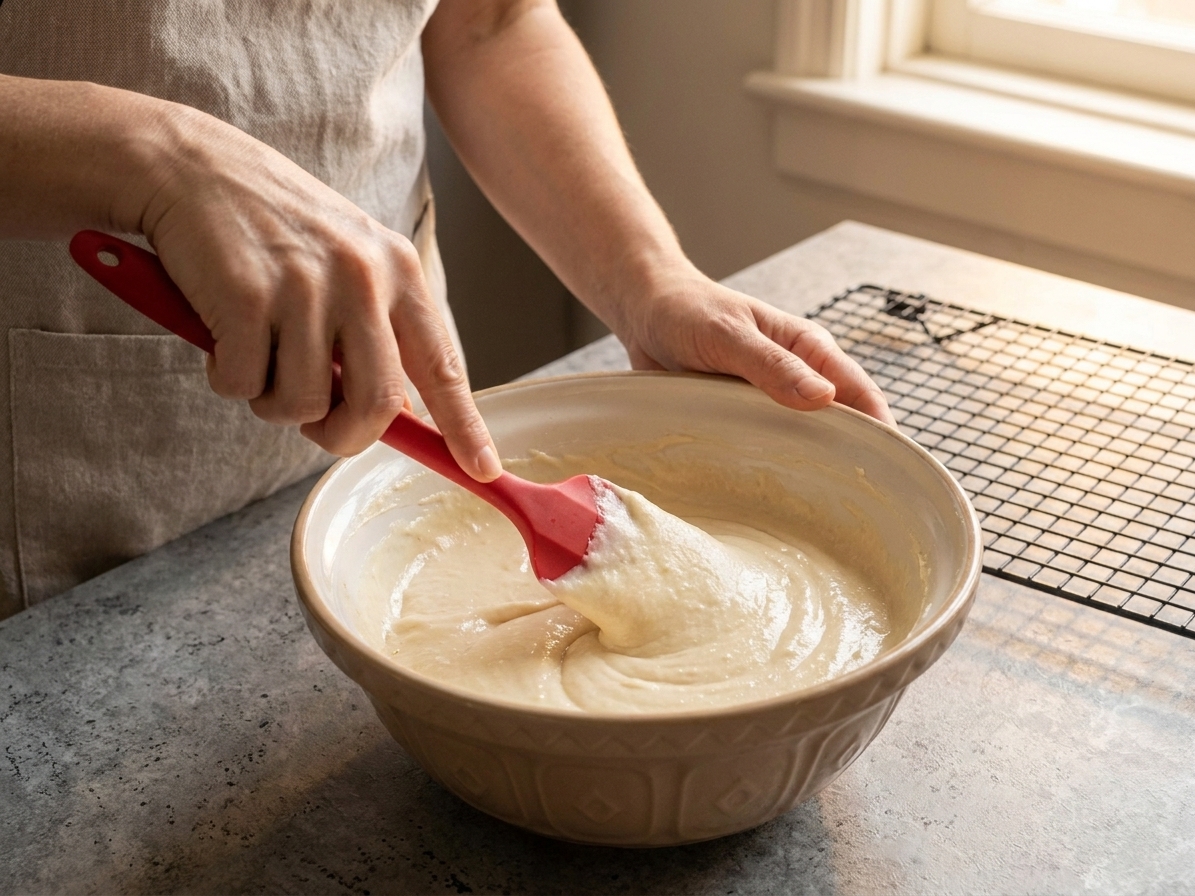
- After flour goes in, mix on low and stop as soon as you no longer see dry streaks.
- If the recipe has you alternating dry ingredients and milk, do it gently and do not rush.
- When folding whipped egg whites or whipped cream, use a spatula and fold slowly until just combined.
My simple rule: cream well, mix flour briefly.
5) You measured incorrectly
Baking is a little bit chemistry and a lot of ratios. Too much liquid or sugar weakens structure and delays setting, which can lead to sinking. Too much flour usually makes a cake heavy, dry, and low-rising.
What it looks like
- Too much liquid: center stays wet, sinks after baking, sticky or custardy middle.
- Too much sugar: cake browns fast, feels fragile, may sink or wrinkle.
- Too much flour: heavy batter, low rise, dry crumb.
How to prevent it
- Use a kitchen scale when you can. It is the fastest way to be consistent.
- If using cups, spoon flour into the cup and level. Do not scoop with the cup straight from the bag.
- Use liquid measuring cups for liquids and read at eye level.
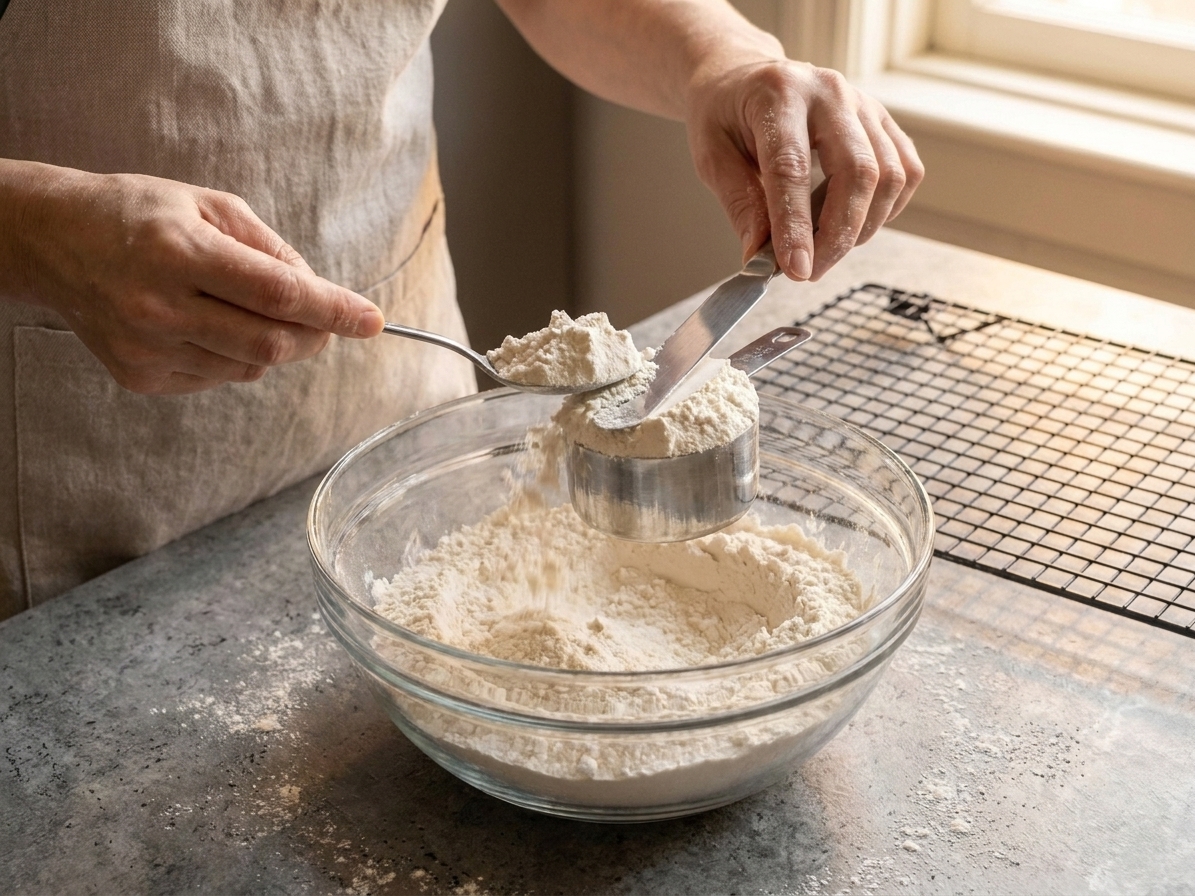
6) Your pan changed
Pan swaps seem harmless, but they change how quickly heat reaches the center. A deeper pan means the middle takes longer to set. Dark metal pans brown and set faster at the edges. Glass bakes differently than metal and sometimes benefits from a temperature adjustment.
What it looks like
- Edges done, center underbaked
- Beautiful rise in the oven, then collapse after removal
How to prevent it
- Use the pan size listed in the recipe whenever possible.
- If you must substitute, aim for a similar batter depth. For example, switching from two 8-inch pans to two 9-inch pans makes layers thinner and may bake faster.
- Be cautious with glass. Many bakers find reducing oven temp by 25°F helps, but follow your recipe and the pan manufacturer’s guidance when available.
- Do not overfill. Most cake pans should be filled about 1/2 to 2/3 full.
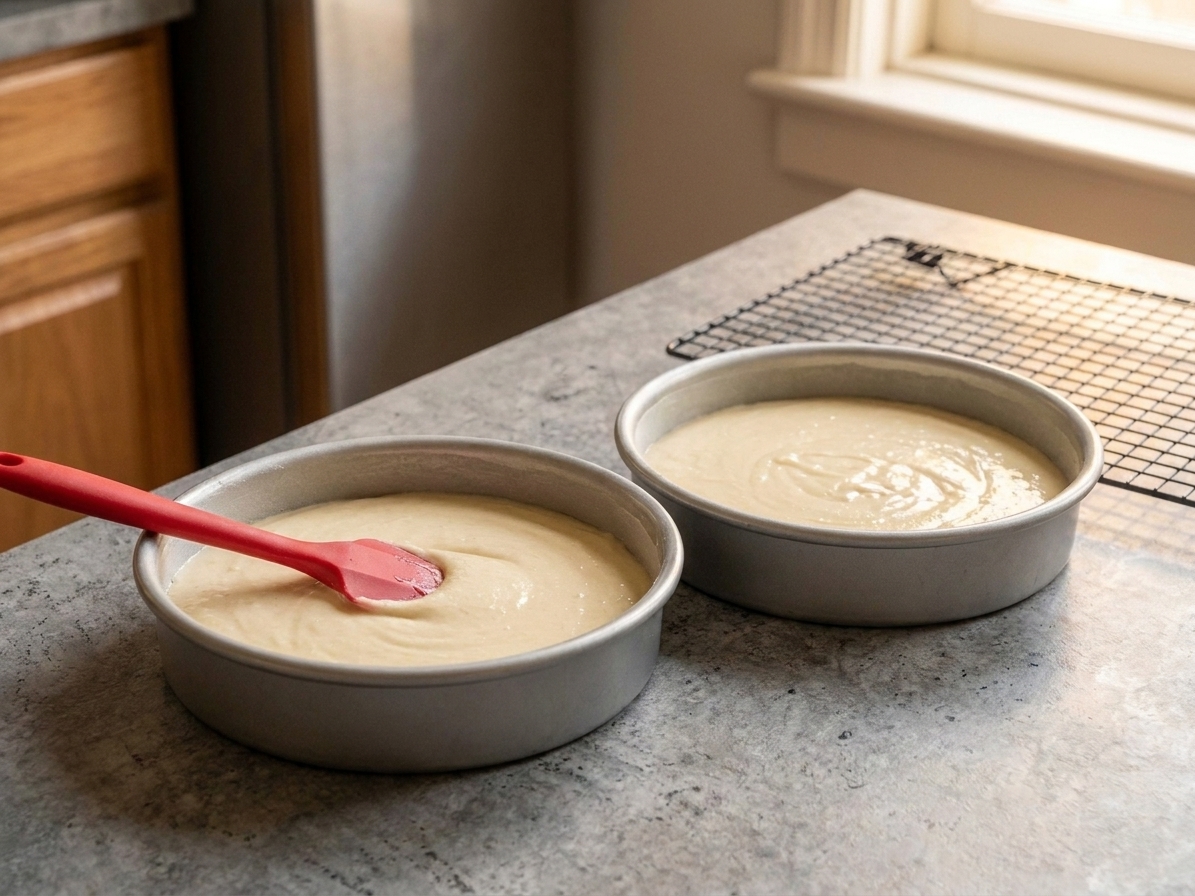
7) You opened the oven too early
I know, I know. It smells amazing and you want to check. But opening the oven door in the first two thirds of baking lets heat escape and can cause the center to fall before it sets.
What it looks like
- Cake rises, then dips suddenly
- A sinkhole or deep center crater
How to prevent it
- Keep the oven door closed until the cake looks set and lightly browned on top.
- Use the oven light if you have one.
- Rotate pans only if needed, and do it quickly after the cake has started to set (often around the 2/3 mark of bake time).
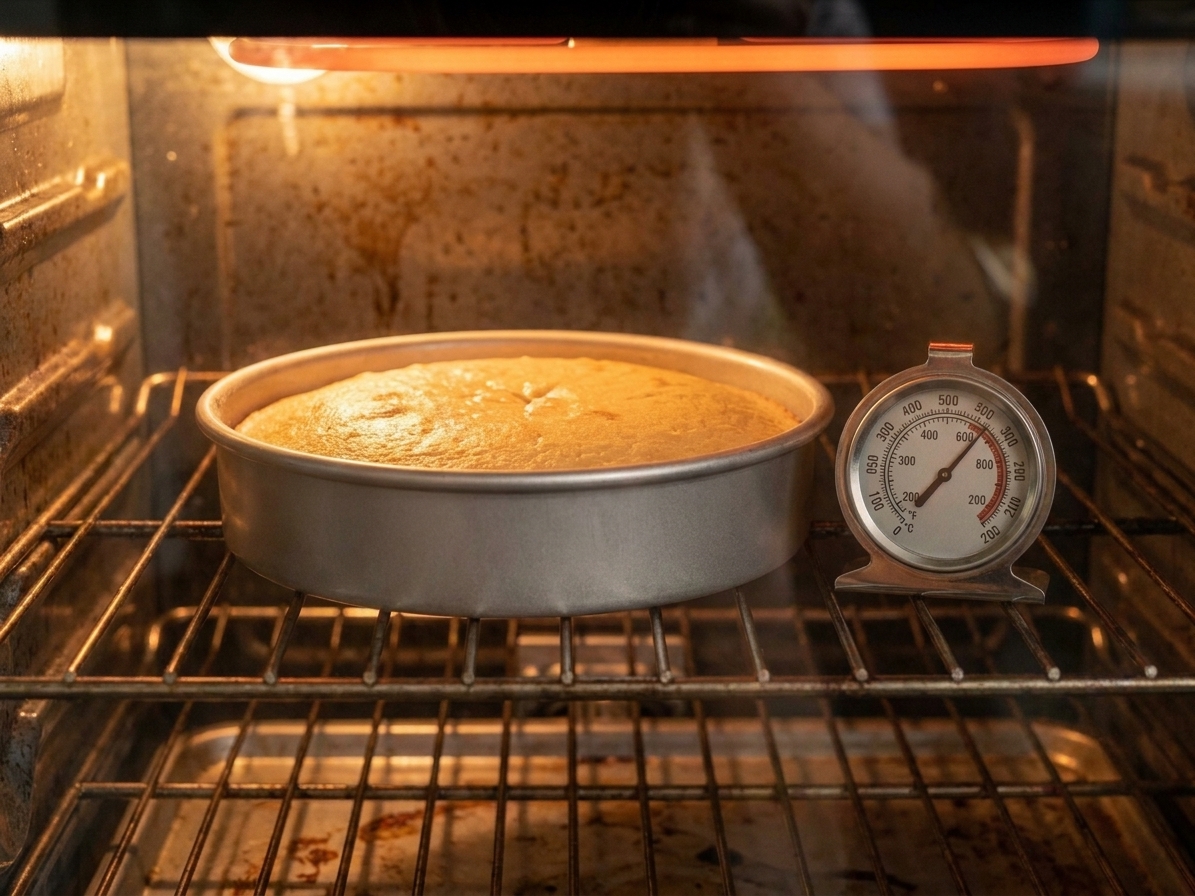
8) It was underbaked in the center
This is the most common reason for a cake that looks done, smells done, and still sinks. The edges can be perfect while the center is just not set yet. Then you remove it, steam escapes, and the middle collapses.
What it looks like
- Center looks slightly shiny or wobbly
- Gummy or dense middle even after cooling
- Cake sinks significantly as it cools
How to prevent it
- Use multiple doneness checks:
- Top springs back lightly when tapped.
- A toothpick comes out clean or with a few moist crumbs (not wet batter).
- Edges start to pull away from the pan slightly.
- Consider an instant-read thermometer. Many butter cakes are done at about 200°F in the center (up to around 205°F depending on the recipe and pan). Chocolate cakes can read a little differently, so use the visual tests too.
- Cool properly: let cake rest in the pan 10 to 15 minutes, then turn out onto a rack. If you leave it in a hot pan too long, the sides can overbake while the center continues to settle.
- Avoid blasting a hot cake with a cold draft (right under an AC vent or next to an open window). This is a smaller factor than underbaking, but it can make a delicate cake more likely to fall.
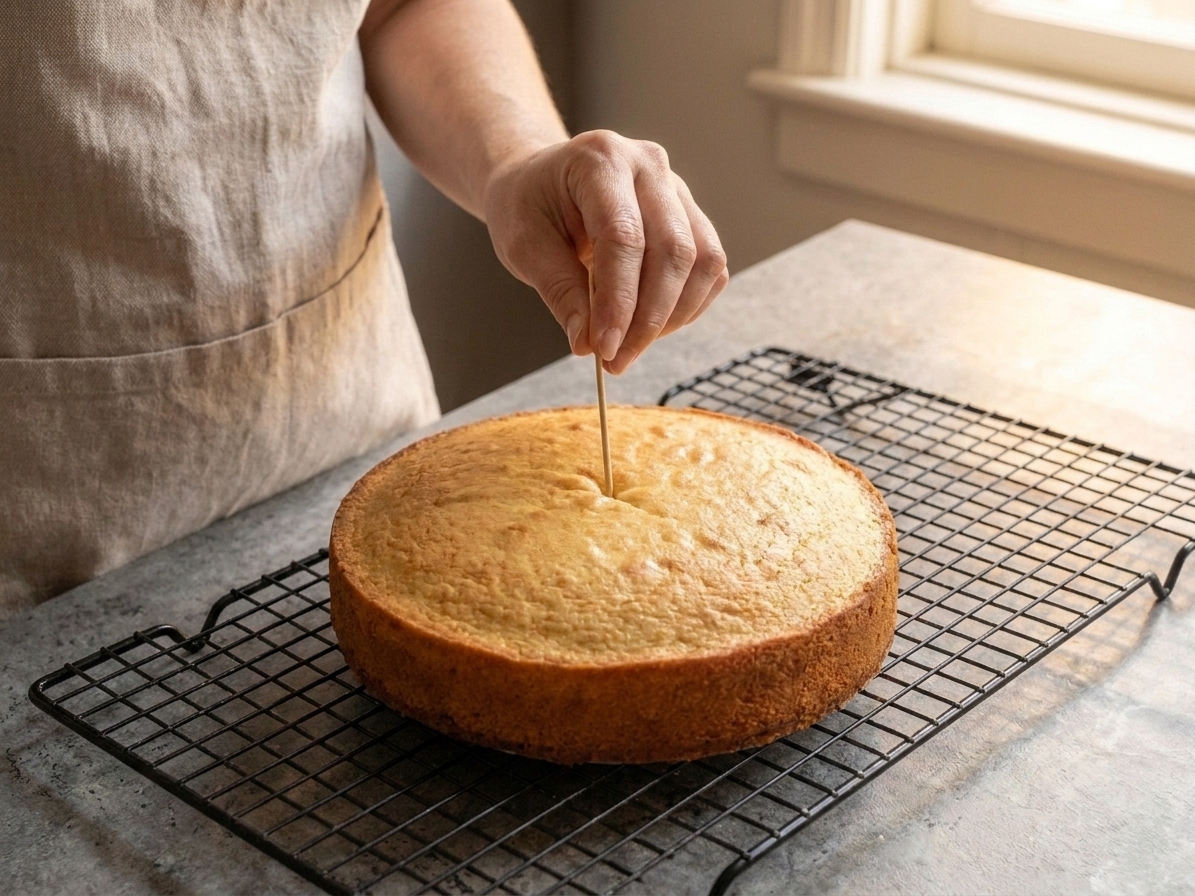
Quick diagnosis
- Deep crater in the middle: underbaked center, oven too hot, too much leavener, opened door early.
- Dense and flat overall: weak or expired leavening, overmixed batter, incorrect measuring (often too much flour).
- Edges high, center low: oven temp off, pan too deep, center not set.
- Gummy line near the bottom: overmixing, too much liquid, or underbaking.
My next-time checklist
If you want the simplest plan for your next bake, here is what I do when I am making a birthday cake for someone I love and I do not want surprises:
- Put an oven thermometer in the oven and preheat until it holds steady at temp.
- Set out ingredients so eggs, butter, and dairy can come to room temp (unless the recipe says otherwise).
- Measure flour by weight or spoon-and-level.
- Check baking powder and baking soda freshness.
- Measure leavener carefully. No heaping, no guessing.
- Cream butter and sugar well, then mix gently once flour is added.
- Use the correct pan size and do not overfill.
- Do not open the oven door early.
- Test the center for doneness with a toothpick, and if unsure, give it 3 to 5 more minutes.
FAQ
Can I fix a sunken cake?
Usually, yes. If it is fully baked but just dipped in the center, you can level it with a serrated knife and frost as normal. For a layer cake, you can also fill the dip with frosting or fruit filling. If the center is raw or gummy, it is safer to treat it as underbaked and not serve the wet middle.
Why did my cake sink after I took it out of the oven?
That points to an underbaked center, an oven temperature that was too hot (so the outside set too fast), too much leavener, or opening the door early. The cake needed a little more time to set its structure before cooling.
Do ingredients need to be room temperature?
For many butter-based cakes, yes. Cold eggs or cold dairy can cause the batter to curdle, which can affect rise and texture. Room-temp ingredients blend smoothly and trap air more predictably.
Is it okay if my cake domes?
A small dome is normal. A very tall dome with a cracked top can point to an oven that runs hot or a pan position that is too close to the heating element. If doming is extreme and you also get sinking, check oven temperature and leavener amounts first.
If you tell me what kind of cake you baked (butter cake, chocolate, chiffon, sponge, gluten-free, box mix), your pan size, and whether you are baking at high altitude, I can help you narrow it down to the most likely cause and the simplest fix for your exact situation.