Air Fryer vs. Oven for Weeknight Roasting

Sarah Jenkins
Sarah Jenkins is a passionate home cook and the voice behind Recipe Homely, dedicated to making everyday meals stress-free and delicious. With over a decade of experience feeding a busy family, she specializes in rigorously tested, approachable recipes for dinners, desserts, and everything in between. When she isn't developing new dishes, Sarah can be found browsing local farmers' markets or baking with her two children.
When it is 5:30 PM and everyone is hungry, roasting can either feel like a lifesaver or a slow-motion problem. I roast constantly because it is hands-off, forgiving, and it makes vegetables taste like you tried harder than you did. The big question I get from busy parents (and the question I asked myself when I bought my first air fryer) is simple: Is the air fryer actually faster than the oven for weeknight roasting?
In my real-life, average-sized kitchen, the answer is: the air fryer wins for speed and crisp edges in small batches, and the oven wins for volume and flexibility. Let’s break it down in a way that helps you decide what to turn on tonight.
The quick verdict
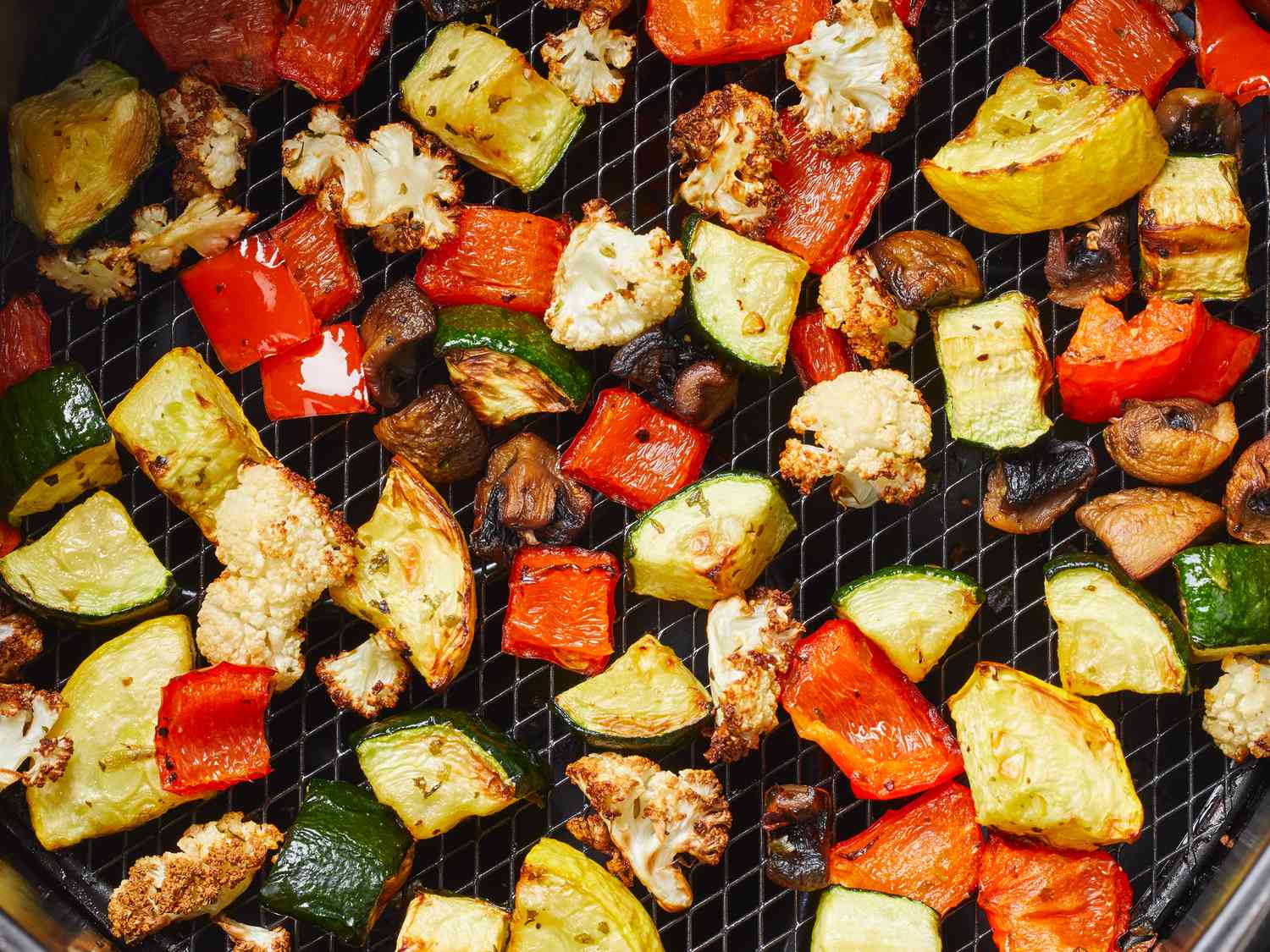
- Use the air fryer when you need a fast side for 2 to 4 people, you want extra crispiness, or you are cooking one protein plus one small veggie.
- Use the oven when you need a full sheet pan for a family, you are doing multiple items at once, or you want the easiest workflow with minimal stopping and shaking.
If you are deciding between them on a random Tuesday, ask yourself one question: Am I cooking a single small batch, or a full dinner’s worth? That alone usually tells you which appliance will feel easiest.
Cooking time
Weeknight speed is not only minutes at temperature. It is also preheat time, how often you need to check food, and whether you can cook everything in one go.
Air fryer timing
- Preheat: Often optional, but I do 2 to 3 minutes if I want the best browning.
- Cook time: Often 8 to 18 minutes for vegetables, 10 to 25 minutes for smaller cuts of meat (depending on thickness).
- Hands-on: You will likely shake the basket or flip once halfway through.
Why it feels fast: The air fryer is a small, powerful convection oven. That tight space plus strong airflow means food browns quickly.
Oven timing
- Preheat: Usually 10 to 20 minutes (varies a lot by oven).
- Cook time: About 15 to 35 minutes for vegetables, 20 to 45 minutes for many weeknight proteins.
- Hands-on: Often just one stir or flip, sometimes none if you are not chasing perfect browning.
Why it can still win: If you are roasting a lot at once, the oven’s slower start can still be faster overall because you are not doing multiple air fryer batches back-to-back.
Texture
If your family is like mine, texture is everything. One kid loves crunchy edges, the other wants soft but not mushy, and somehow they both complain if the carrots are too carrot-y. Here is what I see consistently:
Air fryer texture
- Best for: crisp edges, deep browning, and that slightly fried finish without actual frying.
- Watch out for: drying out lean proteins if you overcook, and uneven browning if the basket is crowded.
My rule: Give it breathing room. If the food is piled, you are steaming instead of roasting.
Oven texture
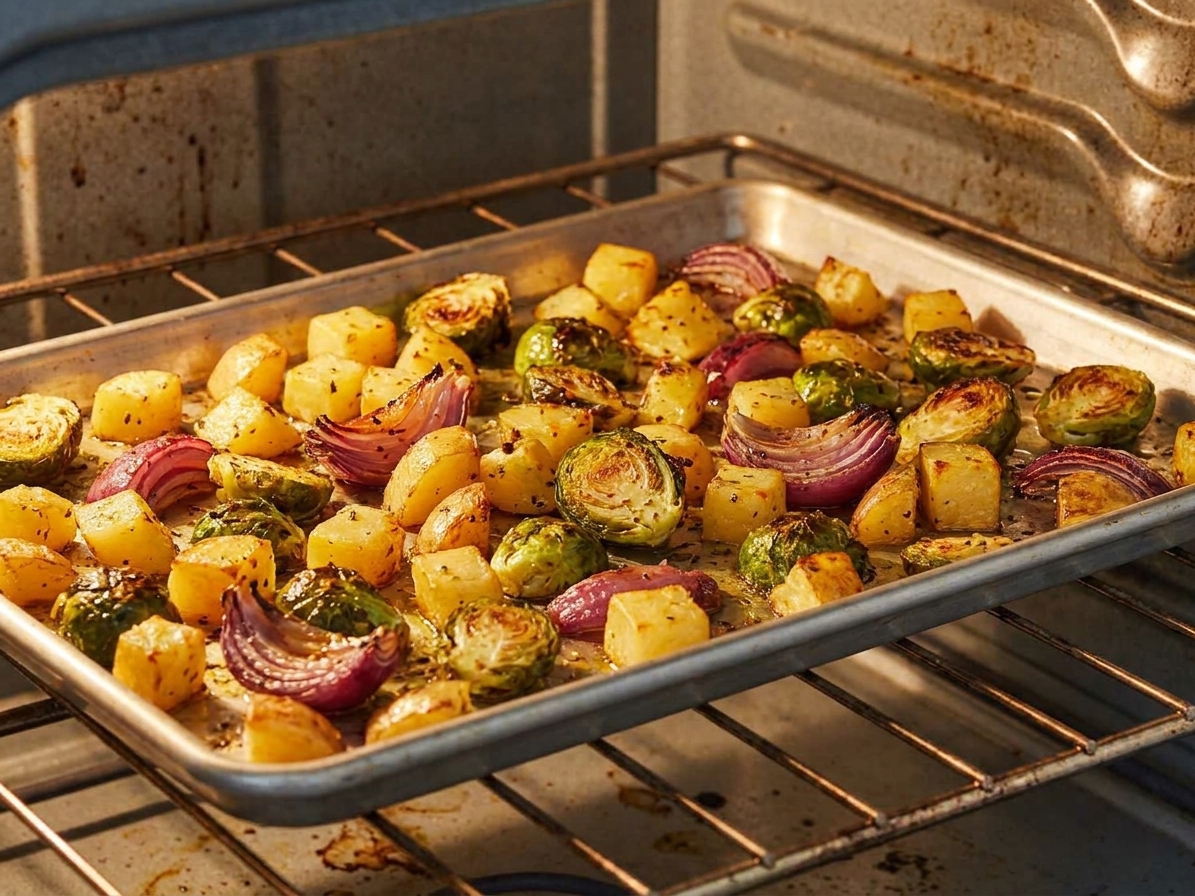
- Best for: evenly tender vegetables, juicier roasts, and consistent results when you need a big batch.
- Watch out for: less browning if your oven runs cool, the pan is overcrowded, or you skip preheating.
My rule: Use a hot oven and a hot pan when you can. A fully preheated oven at 425°F plus a dark metal sheet pan is my easiest path to caramelized edges.
Capacity
This is the part most comparisons skip, but it matters more than any air fryer is faster claim.
Air fryer capacity
An air fryer is perfect when you are making:
- One vegetable side (enough for 2 to 4)
- Chicken thighs for a smaller dinner
- Salmon portions
- Weeknight extras like roasted green beans or crispy chickpeas
If you need roasted potatoes, broccoli, and chicken all at the same time, you may end up doing batches. Sometimes that is still worth it. Sometimes it is not.
Oven capacity
The oven shines when you need:
- A full sheet pan of vegetables for a family
- Two racks going at once (vegetables on one, protein on the other)
- One-pan dinners where everything finishes together
If you are feeding hungry teenagers or you want leftovers for lunch, the oven is usually the calmer choice.
Cleanup
I care about cleanup almost as much as dinner itself. Here is my honest take.
Air fryer cleanup
- Pros: Small parts, contained grease, quick sink wash.
- Cons: Basket and crisper plate can be fiddly, corners trap sticky marinades, and some foods really glue themselves on if you skip oil.
My tip: If you are cooking something saucy or sugary (think BBQ chicken or honey-glazed salmon), use a piece of parchment made for air fryers or a light oil coating. It saves scrubbing later.
Oven cleanup
- Pros: Line a sheet pan with foil or parchment and you are basically done.
- Cons: Splatter happens, and if you roast uncovered meats often, you will eventually need to wipe down the oven.
My tip: For weeknights, parchment is my best friend. It keeps vegetables from sticking and makes pan cleanup a 30-second job.
Best uses
Vegetables
Air fryer is best for:
- Broccoli and cauliflower florets (crispy tips, tender stems)
- Green beans (quick blistering)
- Brussels sprouts halves (crisp leaves when not crowded)
- Asparagus (fast, no limp spears)
Oven is best for:
- Potatoes and sweet potatoes in large batches
- Root vegetable mixes (carrots, parsnips, beets) where you want even tenderness
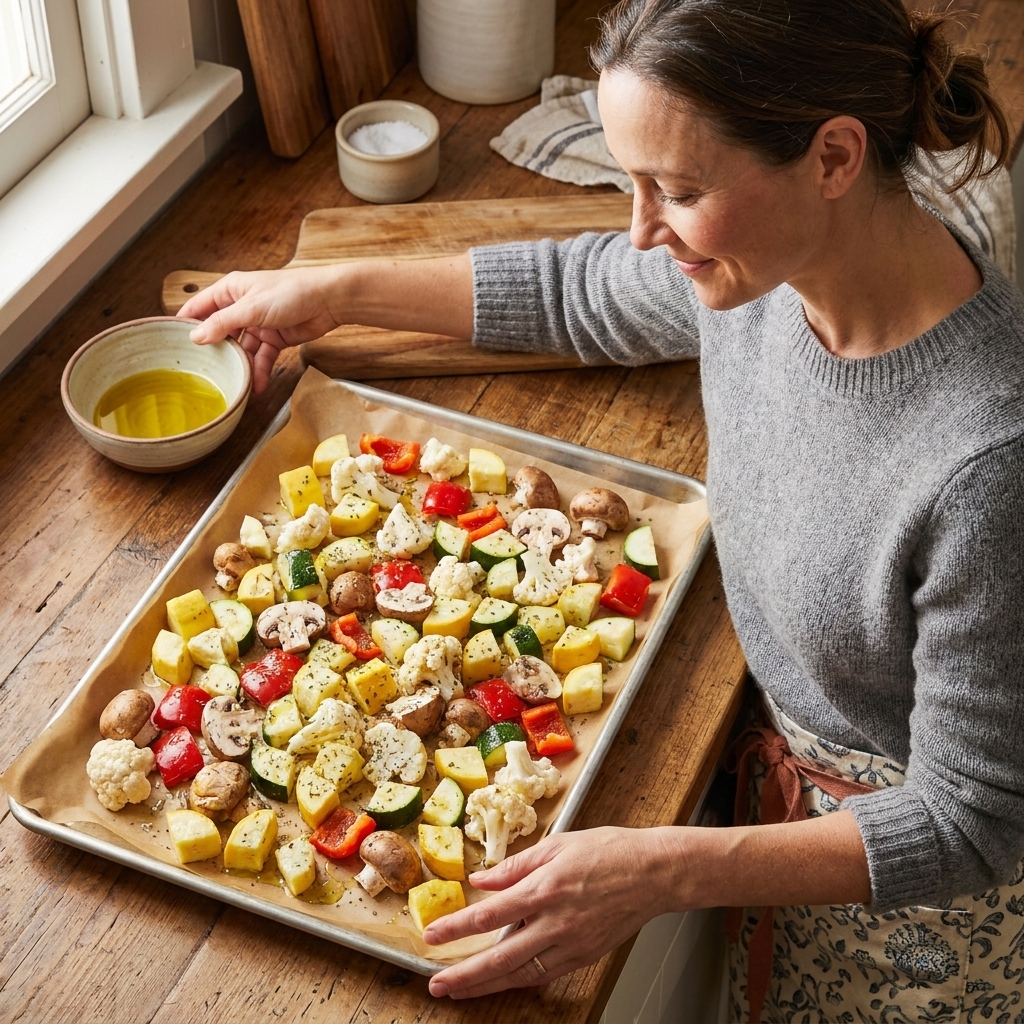
- Sheet pan vegetable medleys for meal prep
Meats
Air fryer is best for:
- Chicken thighs and drumsticks (crispy skin without babysitting)
- Pork chops (fast cook, good browning)
- Salmon and shrimp (quick, and for some kitchens it smells less lingering than stovetop frying)
- Meatballs (hands-off browning)
Oven is best for:
- Whole chickens, larger roasts, and thick cuts where you want a gentler, more even cook
- Multiple components at once like chicken plus two trays of vegetables
- Covered roasting (braise-like tenderness with less drying)
Temp and timing cheat sheet
Every appliance runs a little differently, so treat these as starting points. Air fryer wattage, basket size, how full it is, and whether food is starting fridge-cold can all change the timing. I always recommend using a meat thermometer for proteins.
Vegetables
- Broccoli florets: Air fryer 375°F for 8 to 10 minutes, shake halfway. Oven 425°F for 18 to 22 minutes, toss once.
- Brussels sprouts (halved): Air fryer 375°F for 12 to 16 minutes. Oven 425°F for 22 to 28 minutes.
- Green beans: Air fryer 380°F for 8 to 10 minutes. Oven 425°F for 14 to 18 minutes.
- Diced potatoes: Air fryer 400°F for 16 to 22 minutes, shake twice. Oven 425°F for 30 to 40 minutes.
Proteins
- Chicken thighs (bone-in, skin-on): Air fryer 380°F for 22 to 26 minutes, flip halfway. Oven 425°F for 35 to 45 minutes.
- Salmon portions: Air fryer 390°F for 7 to 10 minutes. Oven 400°F for 12 to 15 minutes.
- Pork chops (1 inch thick): Air fryer 380°F for 12 to 15 minutes, flip halfway. Oven 425°F for 18 to 22 minutes.
Safe internal temps reminder: Chicken 165°F, pork 145°F with a 3-minute rest, fish 145°F (or cook to your preferred doneness).
Best results
In the air fryer
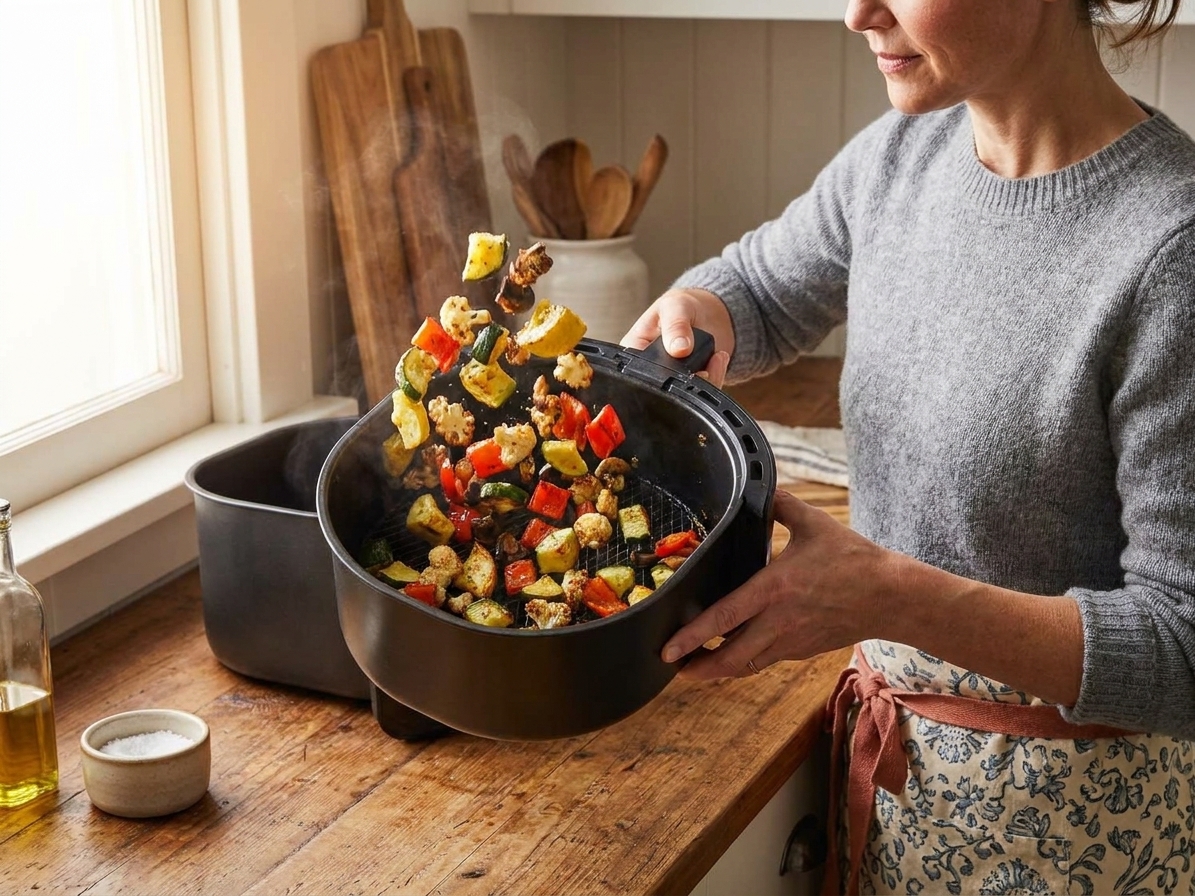
- Dry your food first. Pat meat and vegetables dry so they brown instead of steam.
- Use enough oil. Not a lot, just enough to coat. I usually do 1 to 2 teaspoons for a basket of vegetables.
- Keep it in a single layer. This is the main reason people feel air fryer roasting is disappointing.
- Shake or flip once. Set a timer for halfway and move on with your life.
In the oven
- Preheat fully. If you want roast-y flavor, give the oven time to get truly hot.
- Spread food out. One layer, with breathing room.
- Use the right pan. A rimmed metal sheet pan browns better than a glass dish for most roasting.
- Rotate once if your oven has hot spots. Quick turn at the halfway mark can fix uneven browning.
Use both
If you own both an oven and an air fryer, you do not have to pick one forever. On my busiest nights, I use them together:
- Oven: big batch item (potatoes, sheet pan veggies, or a family-sized protein)
- Air fryer: fast finishing item (broccoli, green beans, crisping up pre-cooked meatballs, warming garlic bread)
This combo is especially helpful when you need dinner and lunch leftovers in one shot.
Heat and energy
One under-rated difference is how much heat you dump into the kitchen. An air fryer usually heats up faster and warms the room less than a full oven, which I appreciate in summer. The oven can still be the better choice when one big batch keeps you from running multiple smaller rounds.
Choose tonight
- If you have 15 minutes: Air fryer vegetables or a quick protein like salmon.
- If you have 30 to 45 minutes: Oven sheet pan dinner, especially if you want leftovers.
- If you hate cleanup: Oven with a parchment-lined sheet pan, or air fryer with a light oil coating (and skip sugary sauces when you can).
- If your family loves crispy edges: Air fryer, but only if you can keep it in a single layer.
- If you are feeding 5+ people: Oven is usually more efficient than running multiple air fryer batches.
FAQ
Does an air fryer really roast?
It roasts in the sense that it uses high heat and strong airflow to brown the surface. The results can be even crispier than oven roasting because the space is smaller and the air movement is intense.
Do I need to preheat an air fryer?
Not always, but a quick 2 to 3 minute preheat helps with browning, especially for vegetables and skin-on chicken.
Why are my air fryer vegetables soggy?
Almost always it is one of these: crowding, too much moisture (not patted dry), or not enough oil to help browning. Give them space and shake halfway through.
Why do my oven-roasted vegetables look pale?
Your oven may be running cool, the pan may be overcrowded, or the oven may not be fully preheated. Try 425°F, use a metal sheet pan, and leave space between pieces.
Can I use foil or parchment in an air fryer?
Parchment designed for air fryers works well, especially for sticky marinades. Just make sure it is weighed down by food so it does not lift into the heating element.
Any air fryer safety tips for meat?
Do not stack or tightly pack raw meat, especially bone-in chicken. Air fryers cook best with airflow around the food, and you want the center to reach a safe temperature. When in doubt, cook in batches and use a thermometer.
My bottom line
If you are cooking for a typical weeknight and you want the fastest path to roasted flavor, the air fryer is my pick for small, crisp, quick batches. If you want one-and-done dinner volume with room to roast for everyone (and maybe tomorrow’s lunch), the oven still earns its keep.
And if you are lucky enough to have both, use the oven for the big job and let the air fryer handle the finishing touches. That is the kind of teamwork that gets dinner on the table before the whining starts.