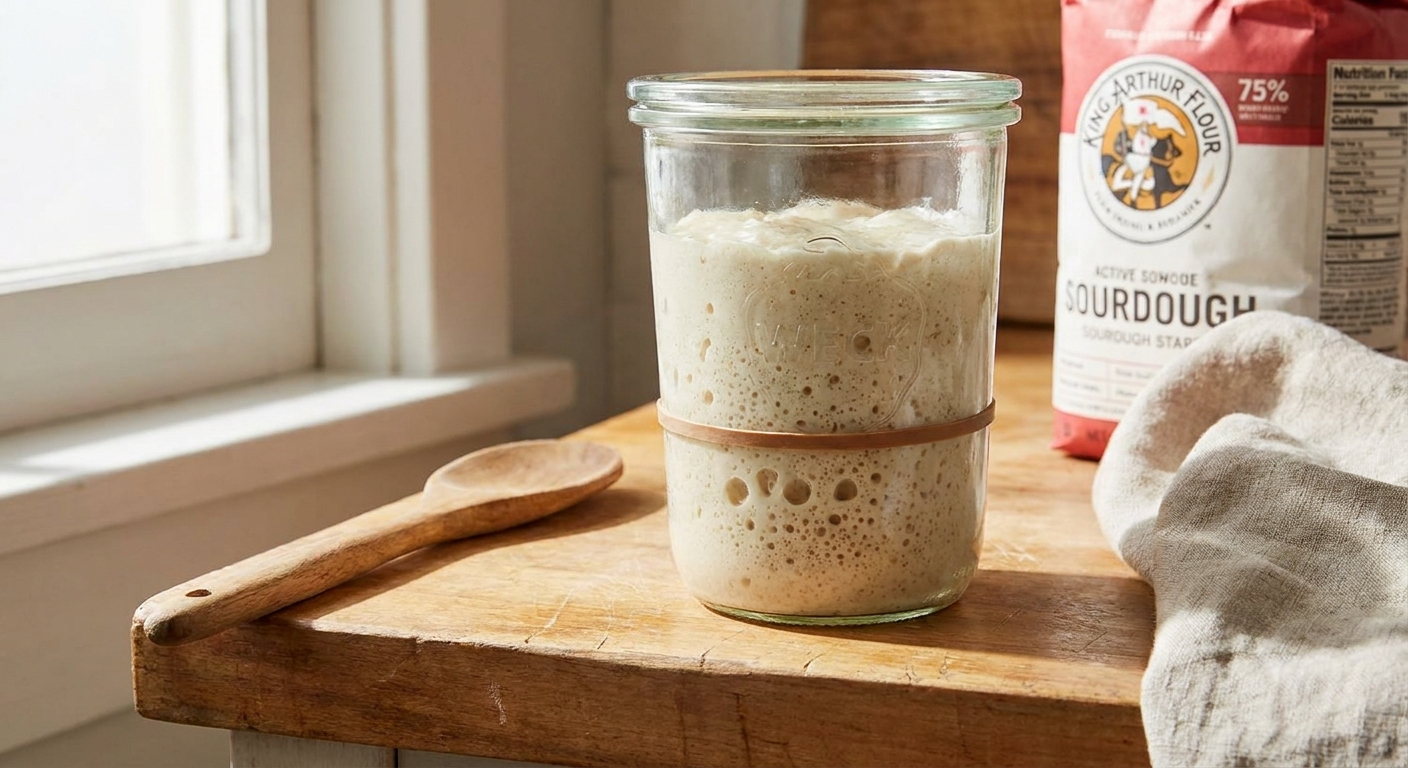
A practical, home-kitchen comparison of 1:1:1 and 1:5:5 starter feeds: when each peaks, how sour it gets, and how to time a morning bake (plus stiffer feed o...
Recipe Homely
November 22, 2026
What Is the Liquid on Top of My Sourdough Starter?

Sarah Jenkins
Sarah Jenkins is a passionate home cook and the voice behind Recipe Homely, dedicated to making everyday meals stress-free and delicious. With over a decade of experience feeding a busy family, she specializes in rigorously tested, approachable recipes for dinners, desserts, and everything in between. When she isn't developing new dishes, Sarah can be found browsing local farmers' markets or baking with her two children.
If you open your sourdough starter and see a layer of gray, brown, or even almost-black liquid on top, take a breath. You probably did not ruin anything. In my kitchen, this usually happens when life gets busy, the starter sits too long between feedings, and it starts sending up a little SOS.
That liquid is most often hooch, and it is one of the most common starter questions I get from busy home cooks. (Quick reassurance: hooch is liquid. Mold is fuzzy or raised.)
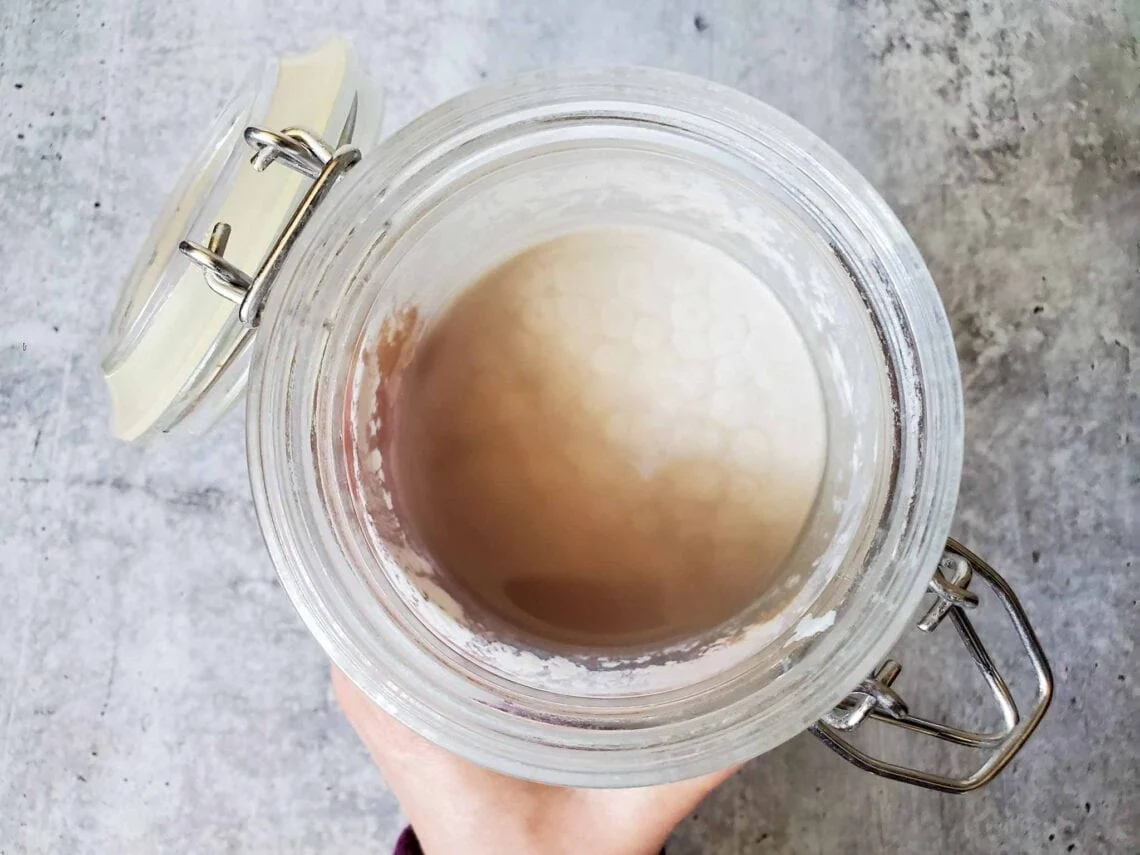
What that liquid is (hooch)
Hooch is a liquid layer that forms when your starter has used up most of its available food. It is primarily water, and it can contain ethanol (alcohol) and organic acids produced as the yeast and bacteria keep working after the easy-to-eat sugars are gone.
You might notice:
- Color: clear, gray, tan, brown, or very dark
- Smell: sharp, boozy, vinegary, or like nail polish remover when it is very hungry
- Texture: thin liquid sitting on top, or sometimes trapped in pockets
It is basically your starter saying, “Please feed me.”
Why hooch happens
Hooch forms when the starter ferments for a long time without fresh flour and water. Common reasons include:
- Infrequent feeding: especially at room temperature
- Warm kitchens: heat speeds up fermentation, so a starter gets hungry faster
- Small feedings: not giving enough flour relative to the amount of starter
- Using lots of whole grain flour: it often ferments faster than white flour
- Long fridge storage: even cold starter eventually runs out of food, so hooch can show up there too
If it helps, think of hooch as a timing issue, not a cleanliness issue. It is usually about your feeding schedule, not that you did something “wrong.”
Is it safe?
In most cases, yes. Hooch is typically safe and normal for a neglected or very hungry starter.
That said, you should pause and evaluate if anything looks off. Here is a simple safety checklist.
Normal: keep going
- Gray, tan, brown, or dark liquid on top
- Starter underneath looks like paste or batter (even if it is flat)
- Smell is sour, boozy, sharp, or “fermented”
- The surface may look wet or separated, but not fuzzy
Not normal: toss it and start fresh
- Fuzzy mold (white, green, blue, or black fuzz or raised patches)
- Pink or orange streaks or patches (discard if you see any pink or orange, regardless of the cause)
- Rotten, putrid odor (not just sour or alcohol-like)
If you see mold or pink/orange discoloration, do not try to scrape and save it. It is not worth the risk.
Stir it in or pour it off?
You have two good options, and the “right” choice depends on what you want your starter to do.
Option 1: Pour it off
If the hooch smells very strong or you have a thick, dark layer, I usually pour it off. This can help your starter taste less harsh and can make it easier to get back to a pleasant, balanced smell after a couple of feedings.
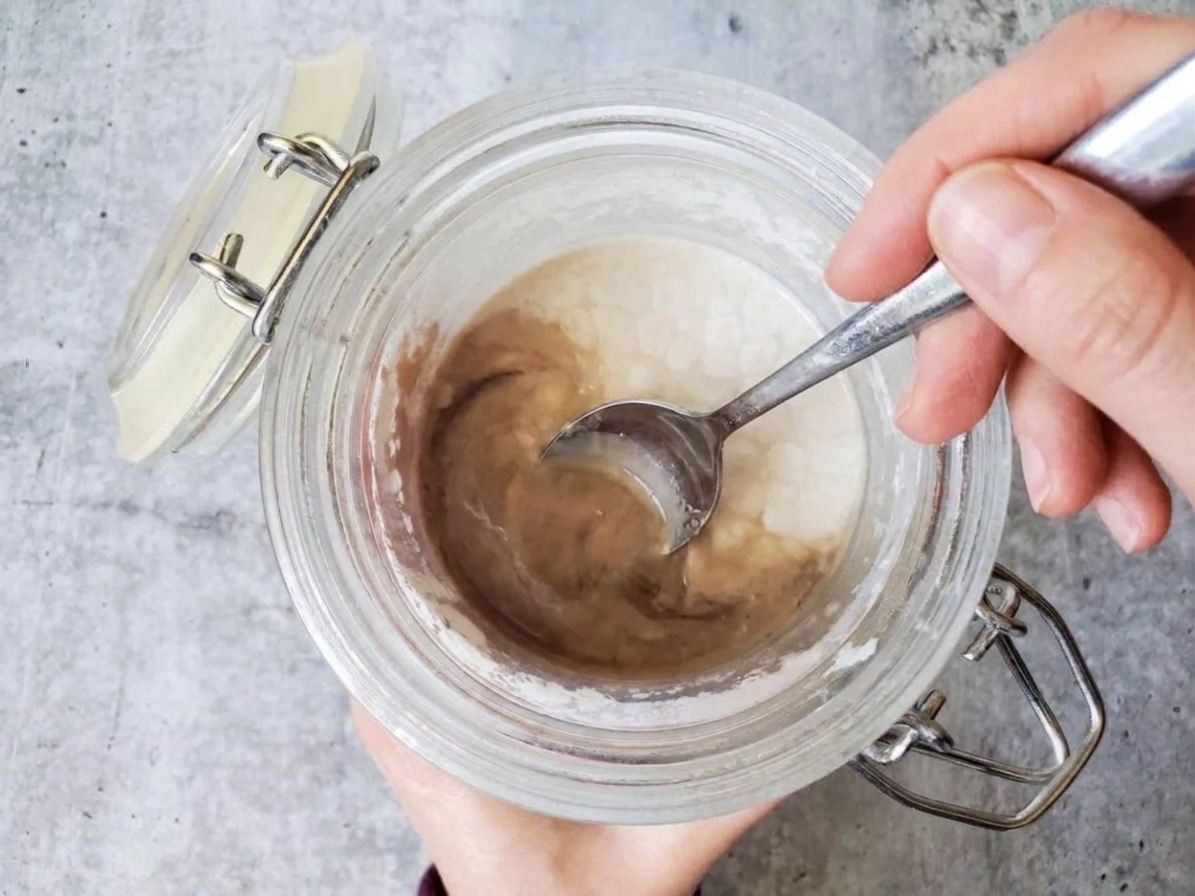
- Gently pour off the liquid.
- Stir what is left.
- Discard down to a small amount and feed with a solid ratio (I like 1:2:2 or 1:3:3 by weight for a quick comeback).
Option 2: Stir it in
If you like a more sour starter, you can stir the hooch back in. This adds acidity and that fermented flavor back into the mixture.
I do this when the hooch layer is small and the smell is not too intense.
My practical rule
- Small amount of hooch: stir it in or pour it off, either is fine
- Large amount or very dark and boozy: pour it off
How to stop hooch from coming back
If hooch shows up again and again, your starter is telling you the feeding schedule or feeding ratio is not matching your kitchen conditions.
1) Feed it more often
At room temperature, many starters need feeding about every 12 hours, sometimes every 8 to 12 hours in a warm kitchen. If you are feeding once a day and getting hooch, try twice a day for a bit.
2) Increase the feeding ratio
If you feed your starter and it gets hooch quickly, it likely needs more flour and water relative to the amount of starter.
A common maintenance approach is:
- 1:1:1 (starter:water:flour by weight)
If you are seeing hooch frequently, try a bigger feed like:
- 1:2:2 or 1:3:3
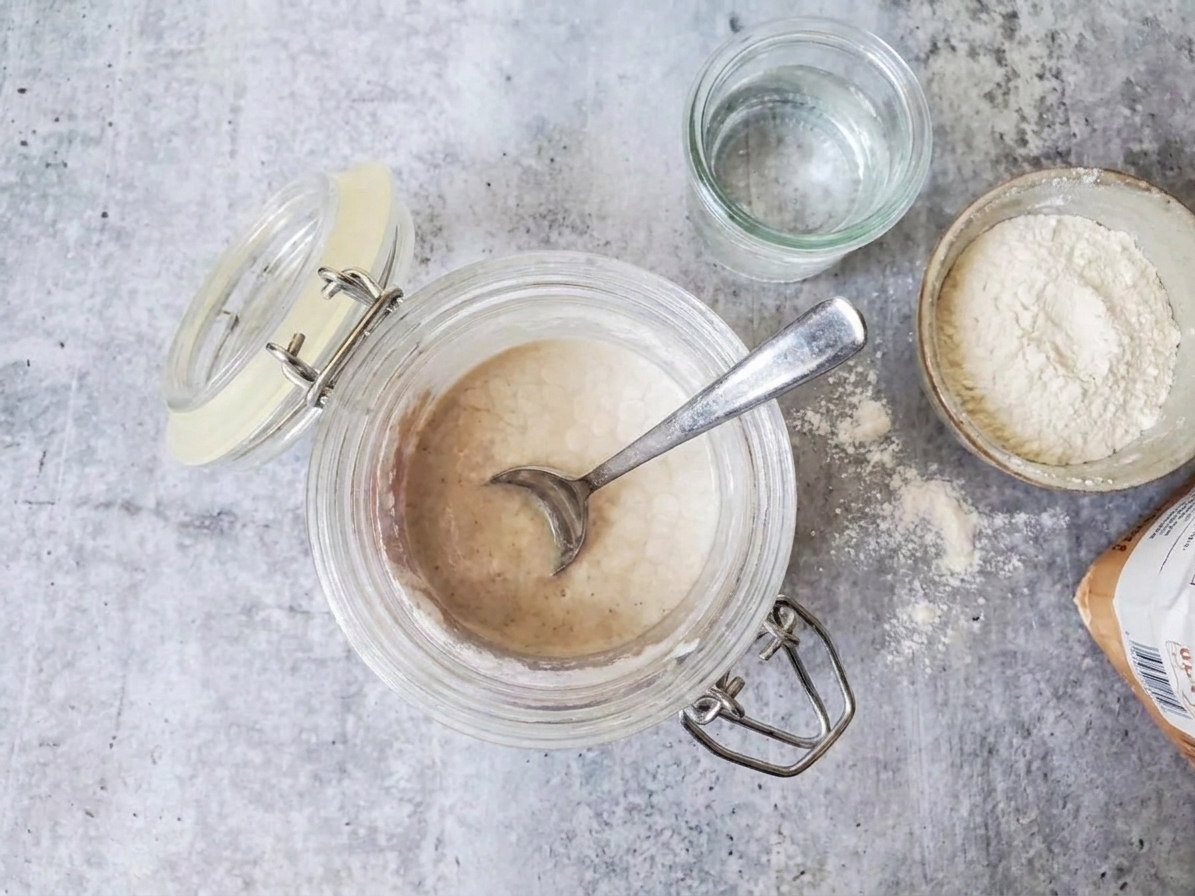
Example: Keep 20g starter, then feed 60g water + 60g flour for a 1:3:3 feed.
3) Use the fridge if you bake less often
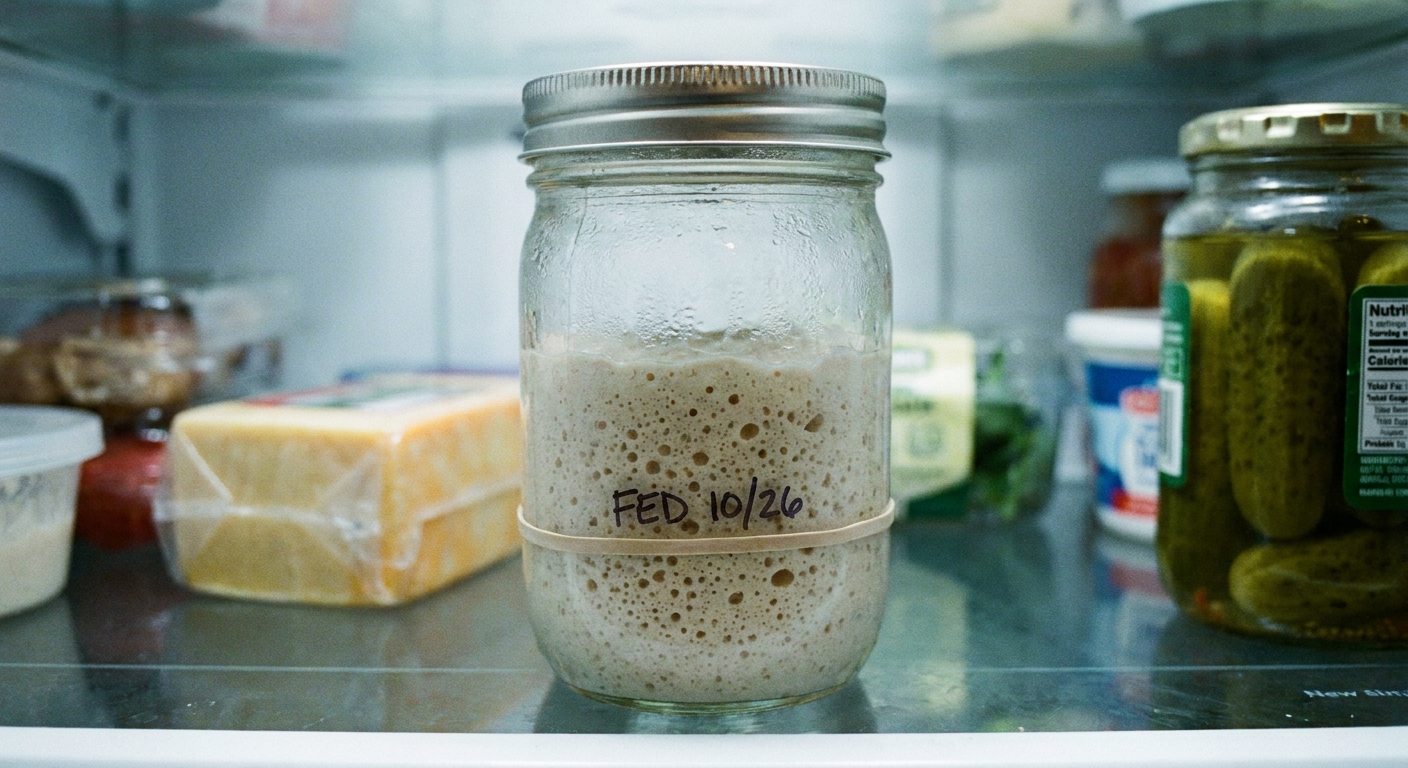
If you bake once a week or less, the fridge is your best friend. A refrigerated starter still needs feeding, but far less often.
For many home kitchens, feeding about once a week works well. If you go longer, hooch is common. It is not automatically a problem, just a reminder to refresh it.
4) Watch temperature
Warm = faster fermentation. If your jar sits near the oven, on top of the fridge, or in a sunny spot, it will blow through food quickly. Moving it to a cooler corner can reduce hooch without changing anything else.
5) Cover it, but do not crank the lid tight
Hooch is easier to manage when your starter is in a jar with room to rise and a lid that is set on loosely (or a lid that is not tightened all the way). You want it covered to prevent drying and keep kitchen dust out, but not sealed super tight. (A tightly sealed jar is usually not “dangerous,” it is just more likely to get messy if pressure builds.)
What to do right now
If you are standing at the counter with a jar of hoochy starter, here is my simple reset:
- Check for mold or pink/orange streaks. If you see them, toss it.
- Pour off or stir in the hooch. If it is very strong-smelling, pour it off.
- Stir the starter.
- Discard down to a small amount (for example 20g to 50g).
- Feed with a generous ratio like 1:2:2 or 1:3:3.
- Keep it comfortably warm and feed again once it peaks and starts to fall (often 8 to 12 hours). A good target range is about 70 to 78°F (21 to 26°C).
After a couple of good feedings, most starters bounce right back and start smelling pleasantly tangy instead of aggressively boozy.
FAQ
Why is my hooch dark gray or almost black?
Dark hooch often means the starter has been sitting a while and the liquid has separated for longer. It can also look darker due to oxidation and pigments pulled from the flour. It looks dramatic, but it is often still normal. If there is no fuzzy mold and no pink/orange staining, feed it and see how it responds over the next 1 to 3 feedings.
My starter has hooch but no bubbles. Is it dead?
Not necessarily. A very hungry starter can look flat and lifeless. After you discard and feed it with a larger ratio, give it time at a comfortable room temperature. If you see activity after a couple of feedings, it is alive and rebuilding strength.
My starter smells like acetone or nail polish remover. What does that mean?
That sharp acetone smell usually means it is very hungry. It is common when a starter needs more frequent feedings or a bigger feeding ratio. It typically improves quickly with a couple of regular feeds.
Can I bake with starter that has hooch?
You can, but you will usually get better results if you refresh it first, especially if the hooch smell is intense. A well-fed, recently peaked starter is more predictable for baking.
How long should I try to revive a neglected starter?
If there is no mold and no pink/orange discoloration, I usually give it 2 to 3 days of regular feedings (about 2 feedings a day at room temp, using a ratio like 1:2:2 or 1:3:3). If it still will not show bubbles or any rise by then, I start fresh. Some starters bounce back sooner, and some take a little longer, but you should see at least small signs of life.
Does hydration affect hooch?
Yes. A very liquid (high-hydration) starter can separate more noticeably, while a very stiff starter may not show a clear hooch layer even when it is hungry. Either way, the fix is the same: adjust feeding frequency, feeding ratio, and temperature.
How do I keep hooch from forming?
- Feed more often at room temperature
- Increase your feeding ratio (more flour and water)
- Move the starter to the fridge if you bake weekly
- Keep it in a cooler spot in your kitchen
A quick encouragement
I have found hooch after busy weeks, school projects, and one memorable stretch where I forgot my starter behind a tall bottle of olive oil. It looked questionable. It smelled like it wanted a cocktail. Two solid feedings later, it was back to its bubbly self.
Sourdough is surprisingly forgiving. Most of the time, that liquid on top is simply a reminder that your starter is ready for breakfast.