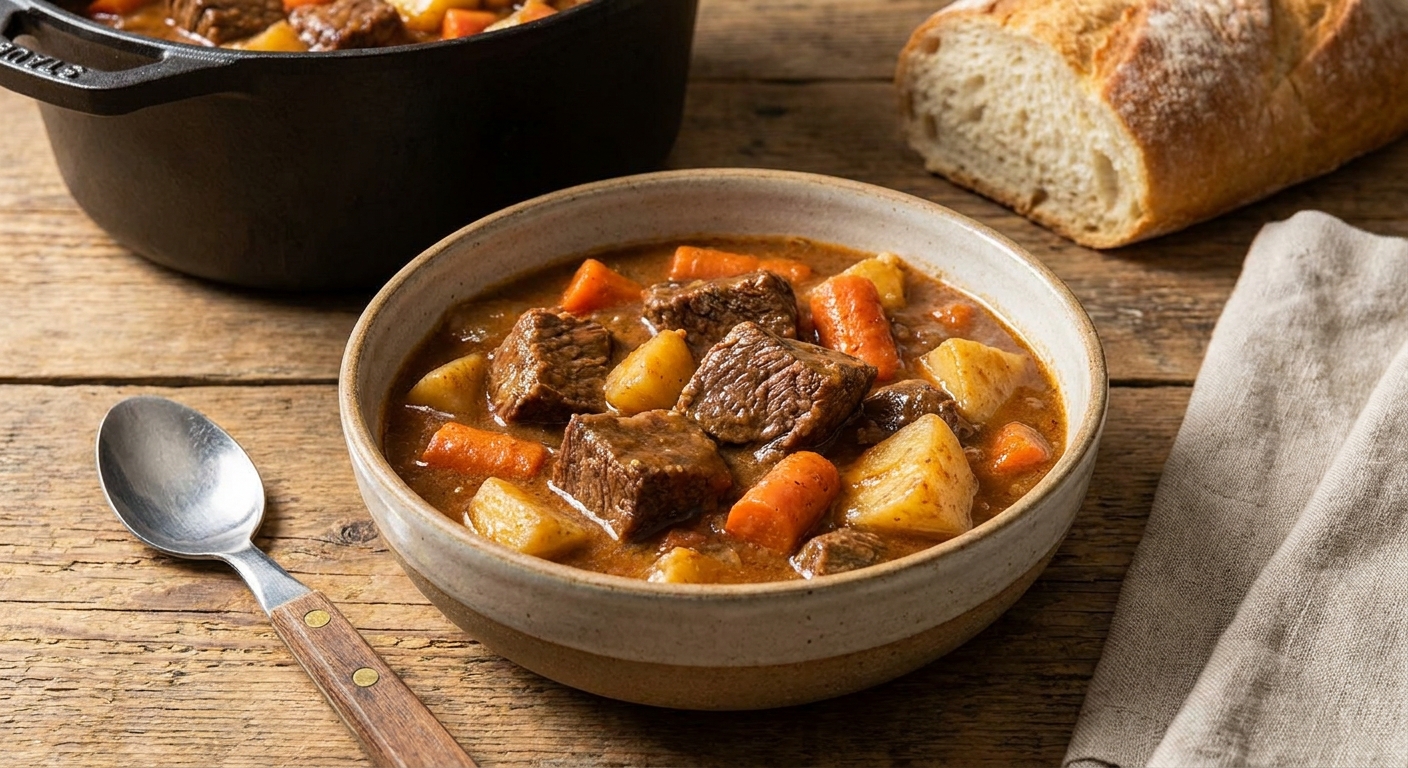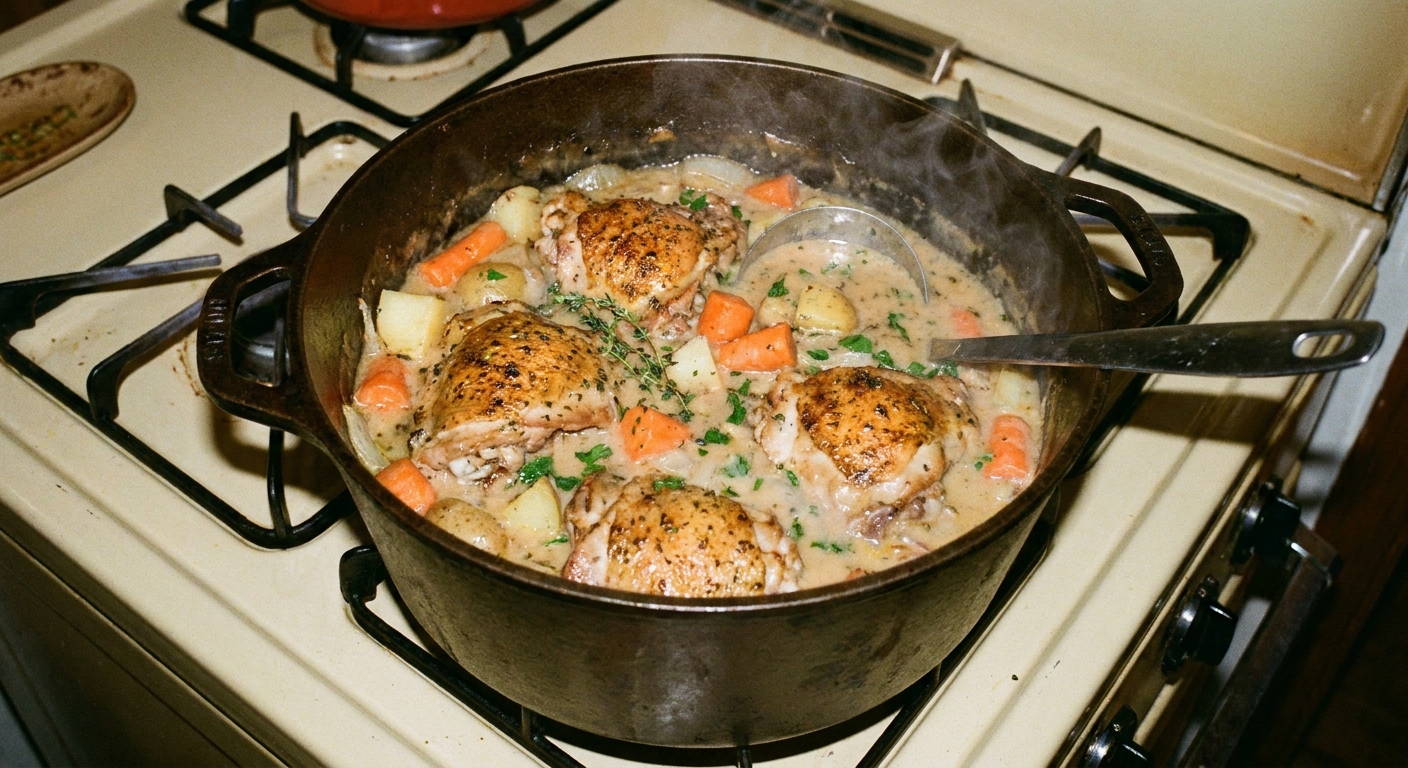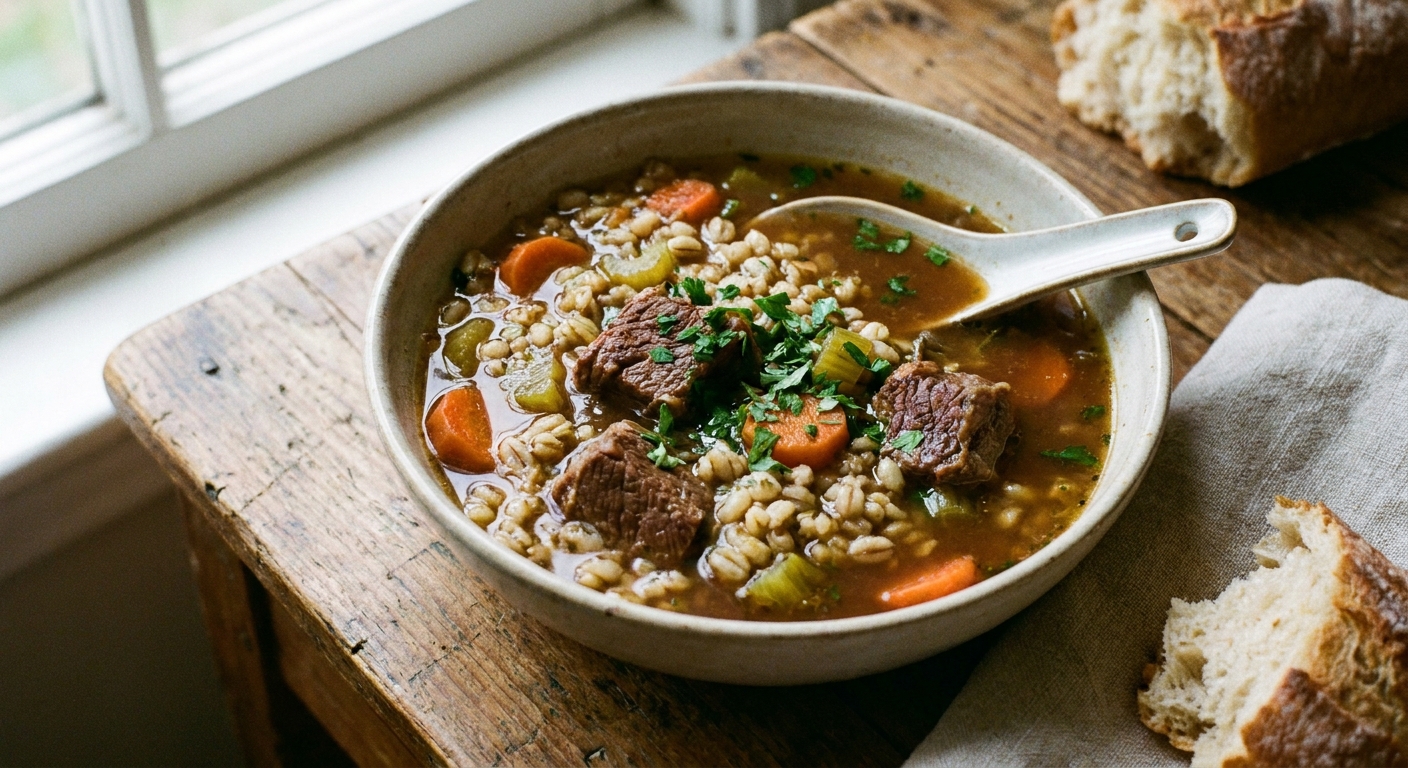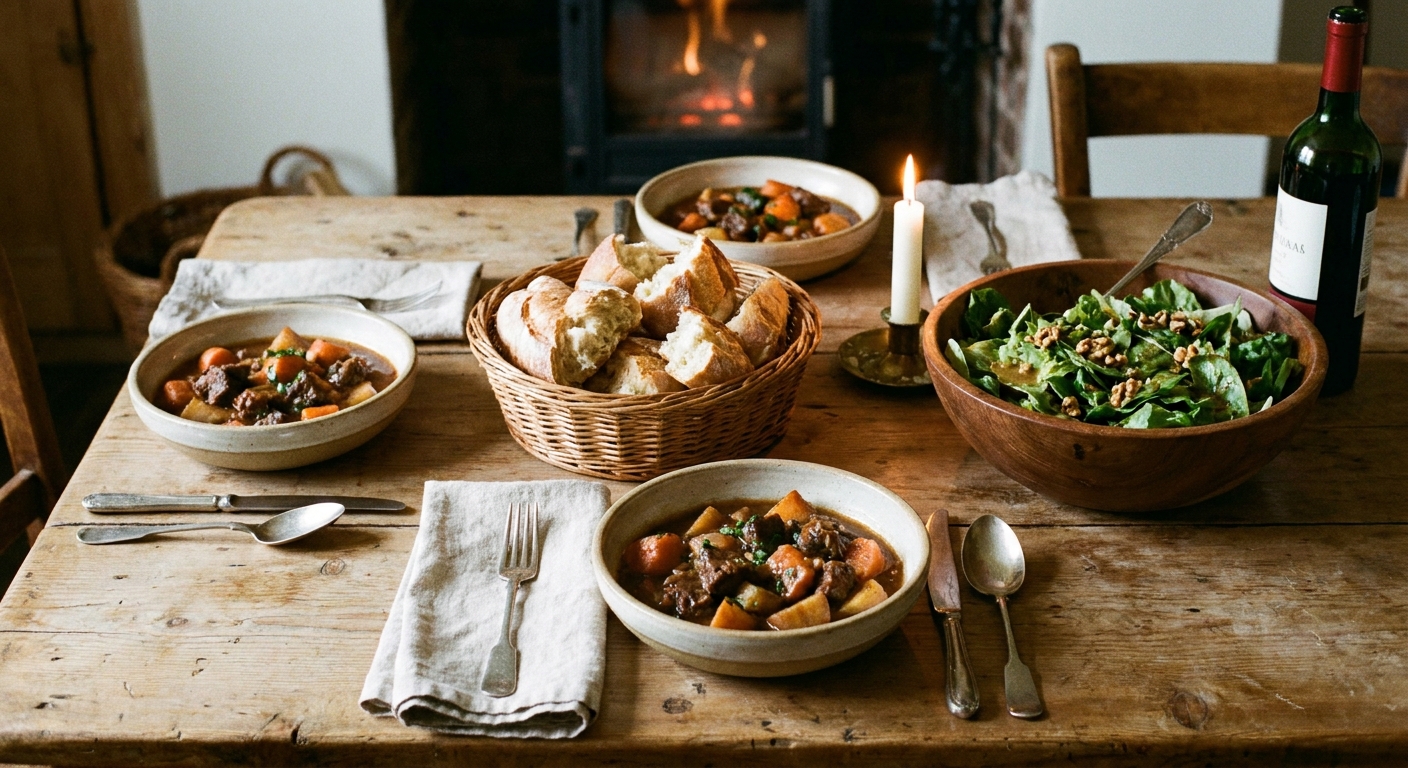
The best sides for beef stew night: gravy-catching breads, crisp salads to cut richness, and a few easy extras. Includes a simple timing plan and what starch...
Recipe Homely
November 15, 2026
Skillet Cornbread for Stew and Chili

Sarah Jenkins
Sarah Jenkins is a passionate home cook and the voice behind Recipe Homely, dedicated to making everyday meals stress-free and delicious. With over a decade of experience feeding a busy family, she specializes in rigorously tested, approachable recipes for dinners, desserts, and everything in between. When she isn't developing new dishes, Sarah can be found browsing local farmers' markets or baking with her two children.
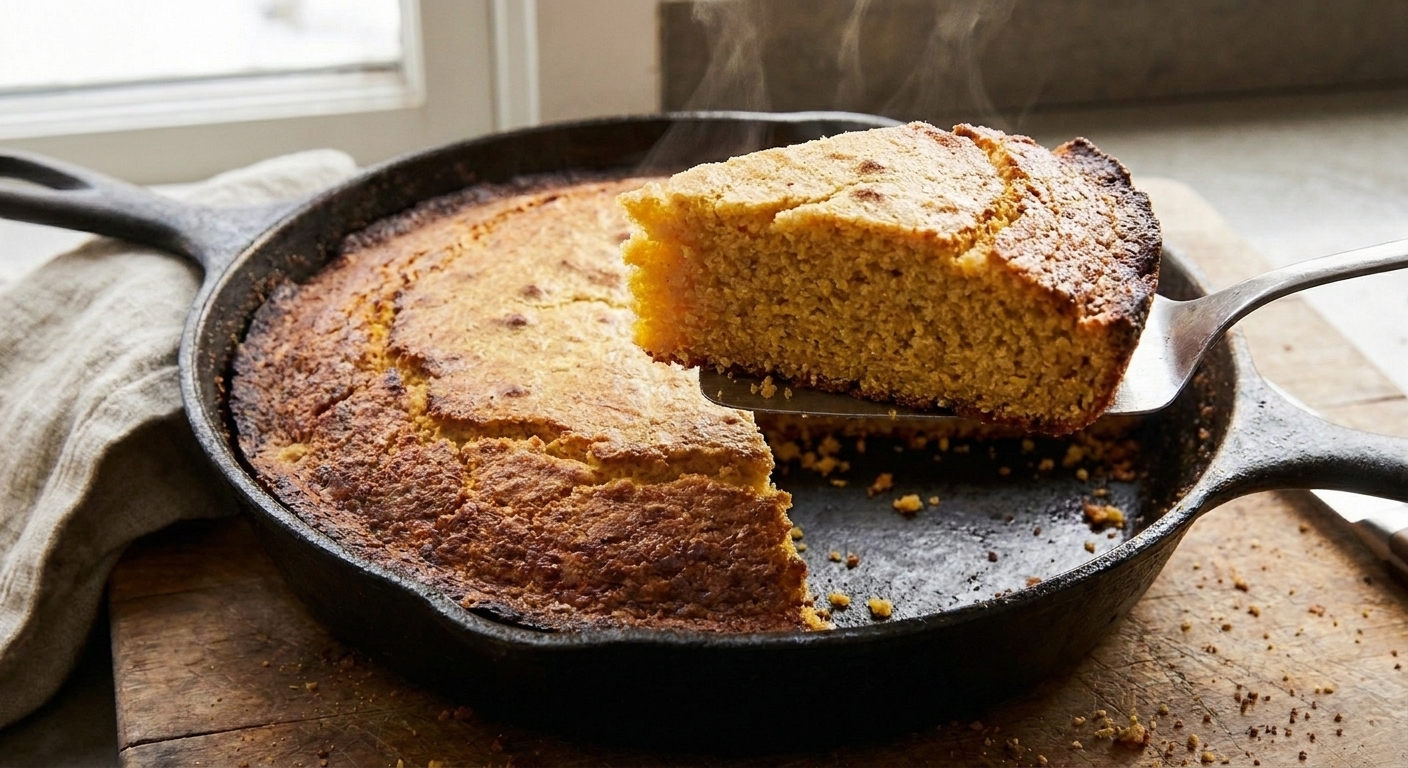
I love a good stew night, but I will be honest: what saves the whole meal in my house is having something sturdy on the side for soaking up gravy. Not a sweet, cake-like cornbread that crumbles the second it hits the bowl, but a skillet cornbread with a real crust and enough backbone to drag through chili without falling apart.
This is the version I make in my very average-sized kitchen when dinner has to be on the table fast and I need a guaranteed win. The secrets are medium-grind cornmeal, tangy buttermilk, and a properly hot cast-iron skillet so the edges sizzle the moment the batter hits.
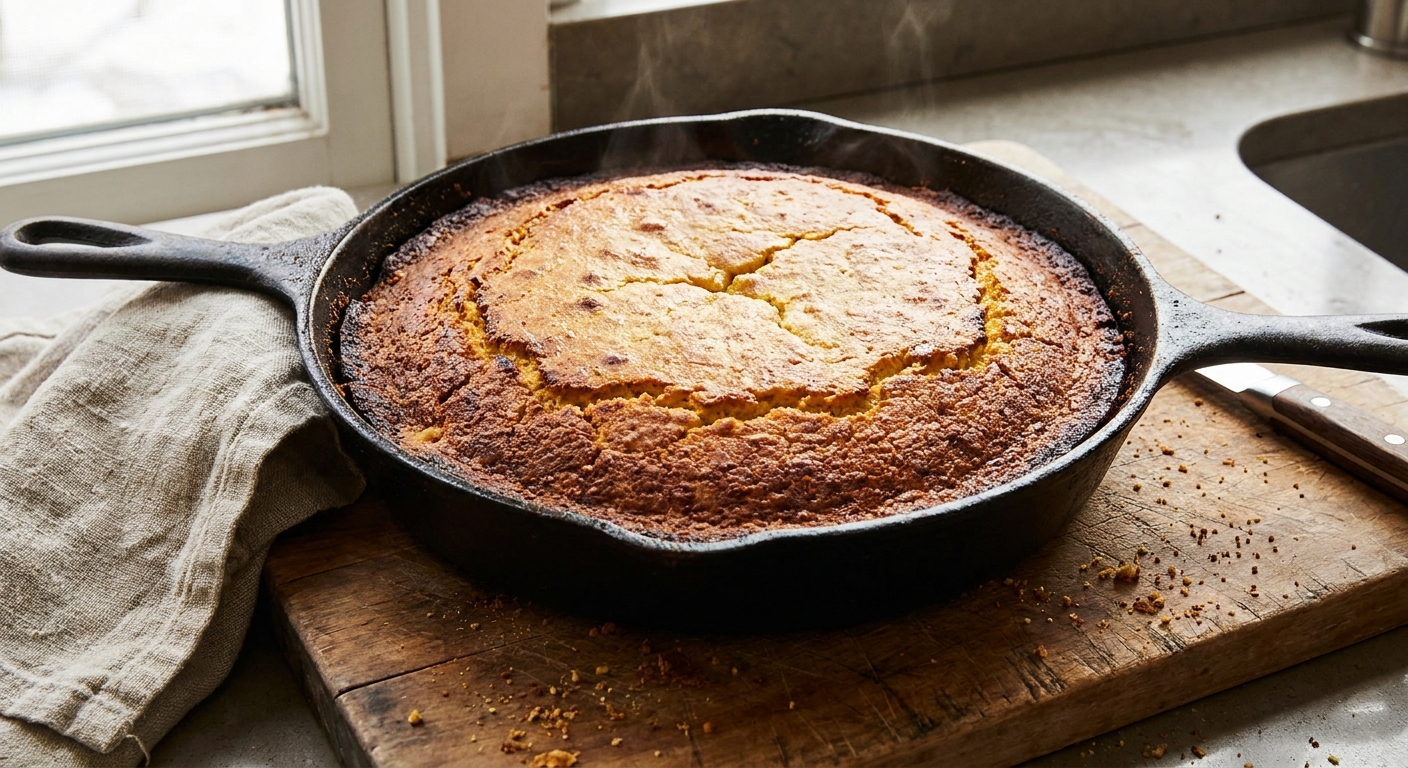
Why this cornbread works for stew
- Not sweet: no sugar added, so it tastes like real corn, not dessert.
- Sturdy crumb: medium-grind cornmeal plus a modest amount of flour keeps it sliceable and dunkable.
- Crunchy crust: preheating the skillet with fat gives you that crackly edge that stands up to gravy.
- Reliable rise: baking powder lifts it enough to feel light, but not cakey.
Ingredients (savory and sturdy)
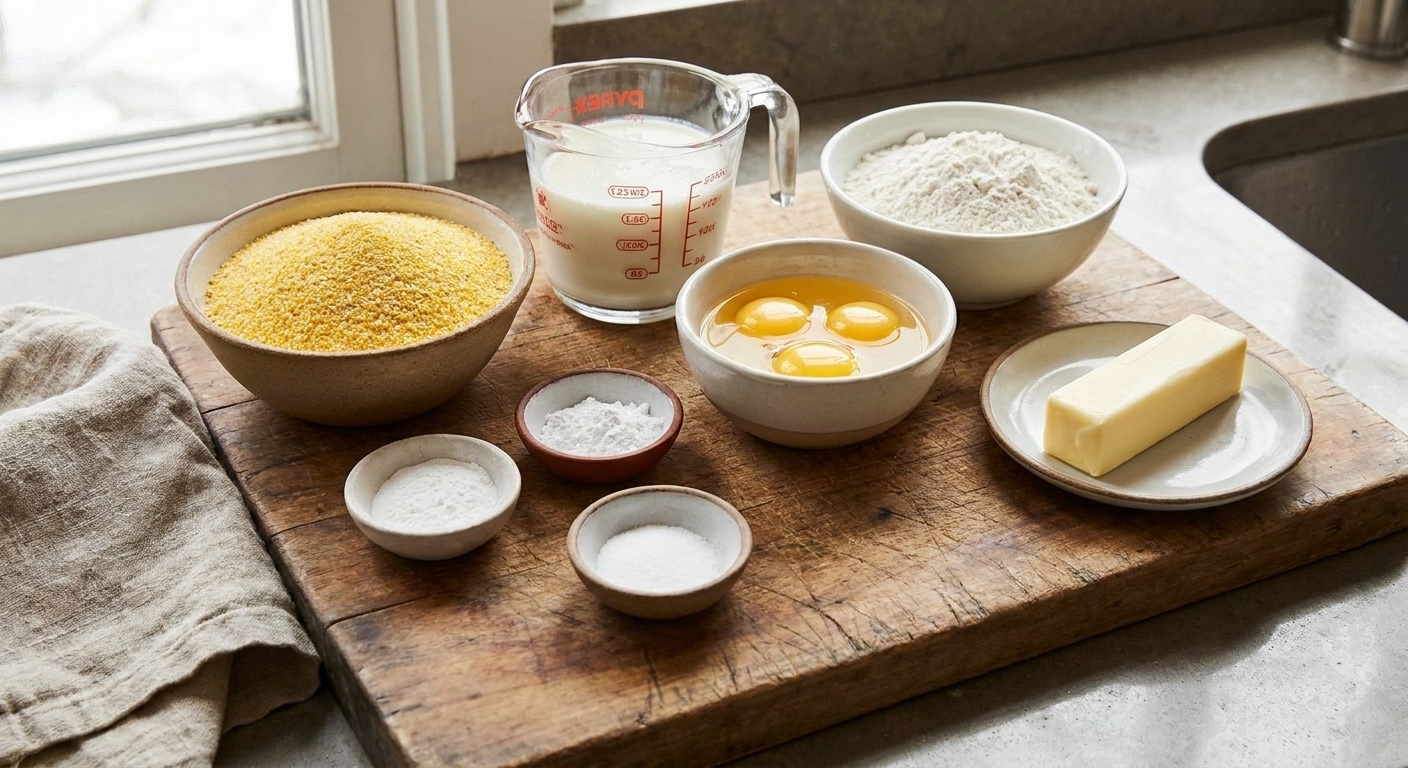
- 1 1/4 cups medium-grind cornmeal (stone-ground or “medium grind” is ideal)
- 3/4 cup all-purpose flour
- 1 tablespoon baking powder
- 1 teaspoon fine salt
- 1/4 teaspoon baking soda (just a little for tenderness and color with buttermilk)
- 2 large eggs
- 1 1/2 cups buttermilk
- 1/3 cup melted unsalted butter (plus 1 tablespoon for the skillet)
Cornmeal grind matters: For stew and chili, I recommend medium-grind. Fine cornmeal tends to bake up soft and cake-like. Very coarse cornmeal can turn gritty unless you soak it a long time. Medium is the happy middle: tender, but hearty.
No buttermilk? You can make a quick stand-in: add 1 1/2 tablespoons lemon juice or white vinegar to a measuring cup, then fill to 1 1/2 cups with milk. Let it sit 5 minutes, then use. It is not identical to real buttermilk, but it gets you very close for texture and lift.
Equipment
- 10-inch cast-iron skillet (9-inch works too, it will be thicker)
- Mixing bowl and whisk
- Measuring cups and spoons
Step-by-step: hot skillet cornbread
1) Preheat the oven and skillet
Set your oven to 425°F. Put your cast-iron skillet in the oven while it preheats so it gets screaming hot. Use good oven mitts and remember the handle stays hot long after it comes out.
2) Mix the dry ingredients
In a large bowl, whisk together the cornmeal, flour, baking powder, salt, and baking soda.
3) Mix the wet ingredients
In a second bowl or large measuring cup, whisk the eggs until blended, then whisk in the buttermilk and melted butter.
4) Combine gently
Pour the wet into the dry and stir just until no dry pockets remain. The batter will look thick and rustic. That is exactly what we want for a sturdy slice.
5) Create that crust
Carefully remove the hot skillet from the oven. Add 1 tablespoon butter and swirl to coat the bottom and a bit up the sides. It should melt immediately and may foam.
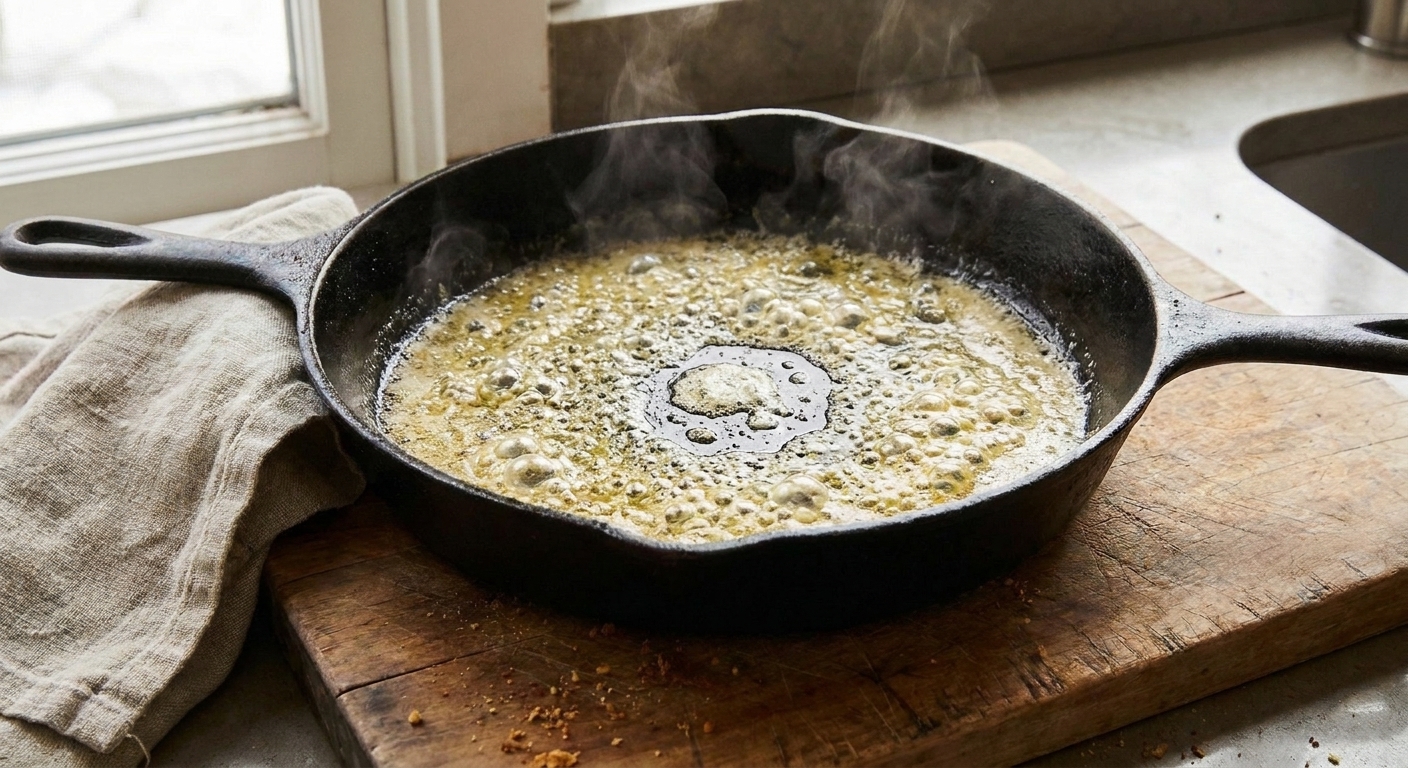
Pour the batter into the hot skillet. You should hear a sizzle around the edges.
Note on fat: Butter is my favorite for flavor, but it can brown fast at 425°F. If your oven runs hot, swap the skillet fat for bacon drippings or a neutral oil, or keep an eye on the last few minutes.
6) Bake
Bake at 425°F for 18 to 22 minutes, until the top is golden and the center springs back when gently pressed. A toothpick should come out clean or with just a couple of moist crumbs.
If you like an extra-clear cue, aim for an internal temperature around 200 to 205°F in the center.
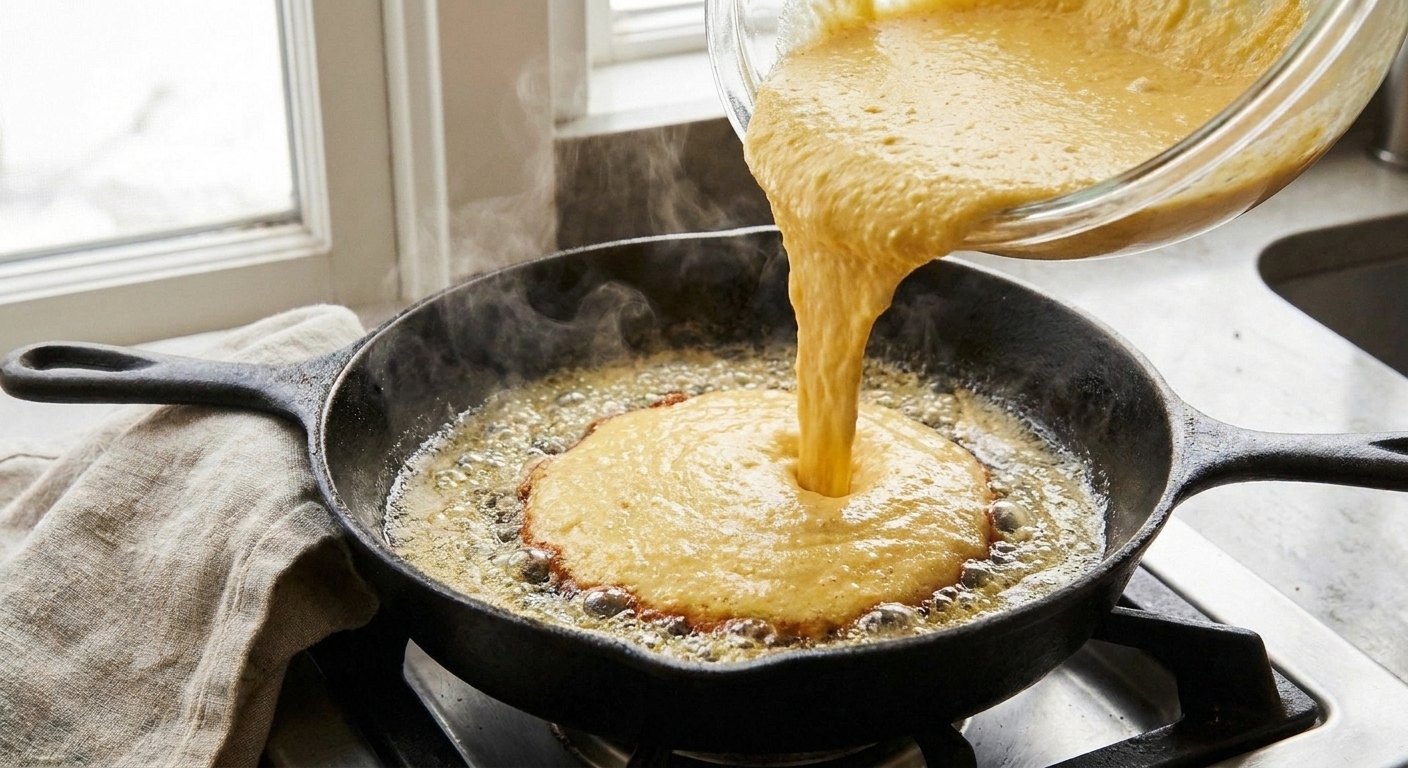
Using a 9-inch skillet? It will bake up thicker. Plan on 2 to 5 extra minutes and check the center for doneness.
7) Cool briefly, then slice
Let it cool in the skillet for 5 to 10 minutes. This sets the crumb so it slices cleanly and stays sturdy for dunking.
How to avoid sweet, cake-like cornbread
- Skip the sugar: even a couple tablespoons nudges cornbread into cupcake territory.
- Use medium-grind cornmeal: it gives a hearty texture that holds up in chili.
- Do not overmix: stirring hard develops gluten from the flour and can make the crumb oddly bouncy, then crumbly as it cools.
- Go hot and fast: 425°F plus a preheated skillet builds crust and keeps the interior moist.
- Watch the bake time: overbaking dries it out, and dry cornbread crumbles into your stew bowl.
Serving tips for stew and chili
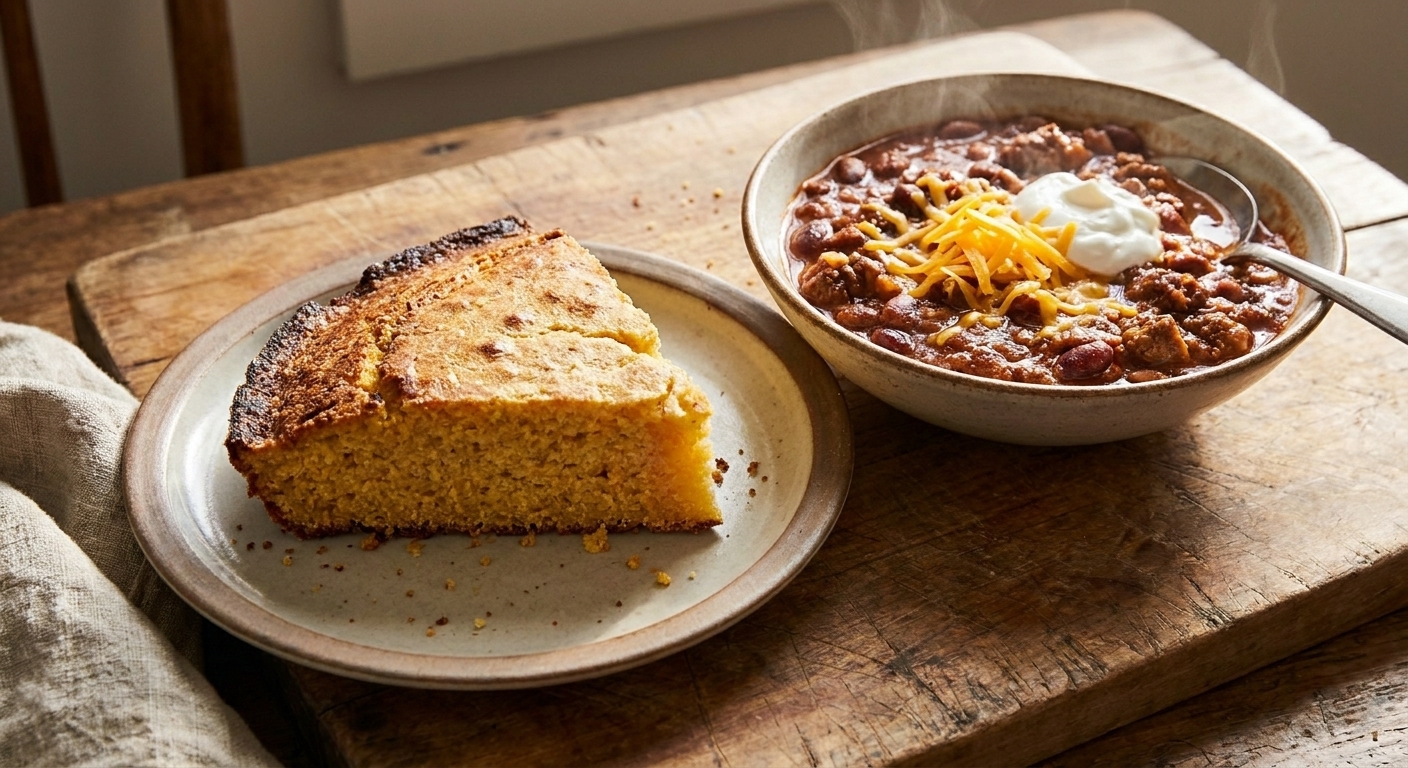
For stew nights, I slice this into wedges and serve warm right from the skillet. If you want maximum dunking power, let it cool 10 minutes, then cut thicker pieces so the crumb stays intact in the bowl.
Storage and reheating
Store: Once fully cooled, wrap the cornbread tightly or keep in an airtight container at room temperature for up to 1 day in a cool, dry kitchen. If your house runs warm or humid, or you are storing it longer than a day, refrigerate it (up to 5 days).
Reheat for a crisp edge: Skip the microwave if you can. It softens the crust.
- Oven: Place wedges on a baking sheet and reheat at 375°F for 8 to 10 minutes.
- Skillet method (my favorite): Warm a dry cast-iron skillet over medium-low heat. Add a wedge and cover loosely for 3 to 5 minutes, then uncover and heat 1 to 2 minutes more to re-crisp the bottom.
Freezer: Wrap individual wedges and freeze up to 2 months. Thaw at room temp, then reheat in the oven at 375°F until warm and crisp.
Troubleshooting
My cornbread is crumbly. What happened?
The most common causes are overbaking, cornmeal that is too coarse, or too little fat. Next time, pull it a minute earlier and make sure you are using medium-grind cornmeal. Also measure flour by spooning into the cup and leveling, not scooping and packing.
The center is underbaked but the edges are dark.
Your skillet may run hot or be smaller than 10 inches, making the bread thicker. Drop the oven to 400°F and bake a few minutes longer, or use a 10-inch skillet for the timing listed.
No cast-iron skillet?
You can use a metal cake pan, but you will lose some of that signature crust. Heat the pan in the oven first and grease generously, just like you would with cast iron.
Skillet Cornbread (Savory, Dunkable)
Yield: 8 wedges
Time: 10 minutes prep, 18 to 22 minutes bake
Ingredients
- 1 1/4 cups medium-grind cornmeal
- 3/4 cup all-purpose flour
- 1 tablespoon baking powder
- 1 teaspoon fine salt
- 1/4 teaspoon baking soda
- 2 large eggs
- 1 1/2 cups buttermilk
- 1/3 cup melted unsalted butter, plus 1 tablespoon for the skillet
Instructions
- Preheat oven to 425°F. Place a 10-inch cast-iron skillet in the oven to heat.
- In a large bowl, whisk together cornmeal, flour, baking powder, salt, and baking soda.
- In a separate bowl or large measuring cup, whisk eggs. Whisk in buttermilk and melted butter.
- Pour wet ingredients into dry and stir just until combined.
- Carefully remove hot skillet from oven. Add 1 tablespoon butter and swirl to coat.
- Pour batter into skillet and bake 18 to 22 minutes, until golden and the center springs back. (For a 9-inch skillet, expect 2 to 5 minutes more.)
- Cool 5 to 10 minutes, then slice into wedges and serve warm.
Notes
- For less crumble: Do not overbake. Pull it when a toothpick comes out clean or with a few moist crumbs.
- For extra crust: Let the baked cornbread sit in the skillet 5 minutes, then run a thin spatula around the edge before slicing.