A friendly, tested guide to building a bubbly sourdough starter with just flour and water, plus how to feed it daily and know when it is ready to bake.
Recipe Homely
November 16, 2026
How to Make Sourdough Pancakes

Sarah Jenkins
Sarah Jenkins is a passionate home cook and the voice behind Recipe Homely, dedicated to making everyday meals stress-free and delicious. With over a decade of experience feeding a busy family, she specializes in rigorously tested, approachable recipes for dinners, desserts, and everything in between. When she isn't developing new dishes, Sarah can be found browsing local farmers' markets or baking with her two children.
The first time I had an active sourdough starter in my kitchen, I felt so proud… and then I stared at that jar of discard like, now what? These sourdough pancakes were my “aha” moment. They use up discard, they cook fast, and they taste like weekend breakfast even on a regular morning.
You can make them two ways: a quick batter with sourdough discard (ready in minutes), or an overnight sponge (extra tangy, extra tender, and very hands-off). I test both versions in my average-sized, busy-family kitchen, and I am giving you the exact cues that keep pancakes fluffy instead of flat or gummy.
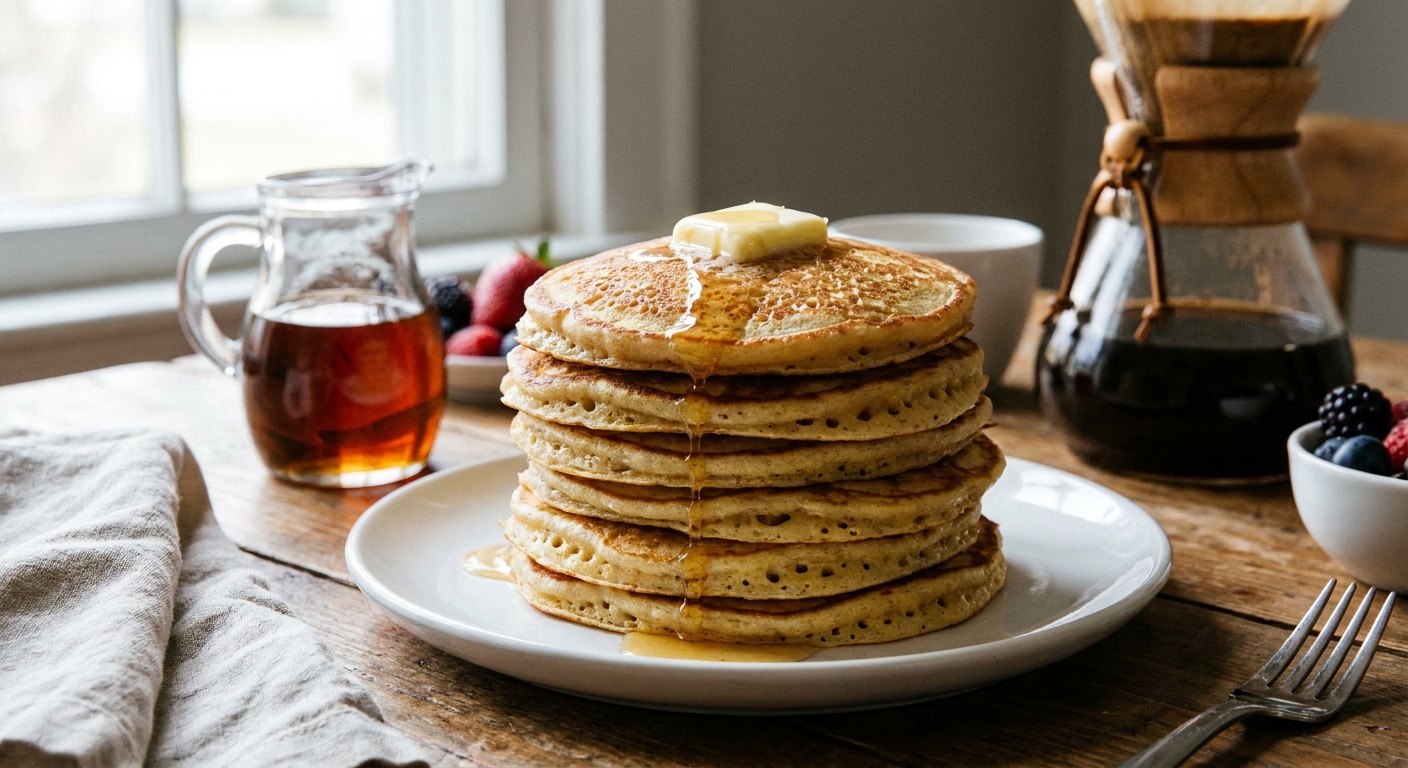
What makes these pancakes different
- They are tender in the center. The acidity from sourdough plus buttermilk helps keep them soft, and a short rest lets flour hydrate.
- They are forgiving. Discard can be thin or thick and still work, as long as you adjust with flour or milk using the cues below.
- They brown beautifully. A medium griddle heat and the right flip cue makes the difference.
Two options: Discard batter or overnight sponge
Option 1: Quick sourdough discard pancakes
This is the fast version, using sourdough discard plus a little baking soda for lift. It is mildly tangy and fluffy.
Option 2: Overnight sourdough sponge
This version ferments flour and milk overnight. In the morning you add egg, fat, salt, and leavening. The pancakes come out extra tender with a deeper sourdough flavor.
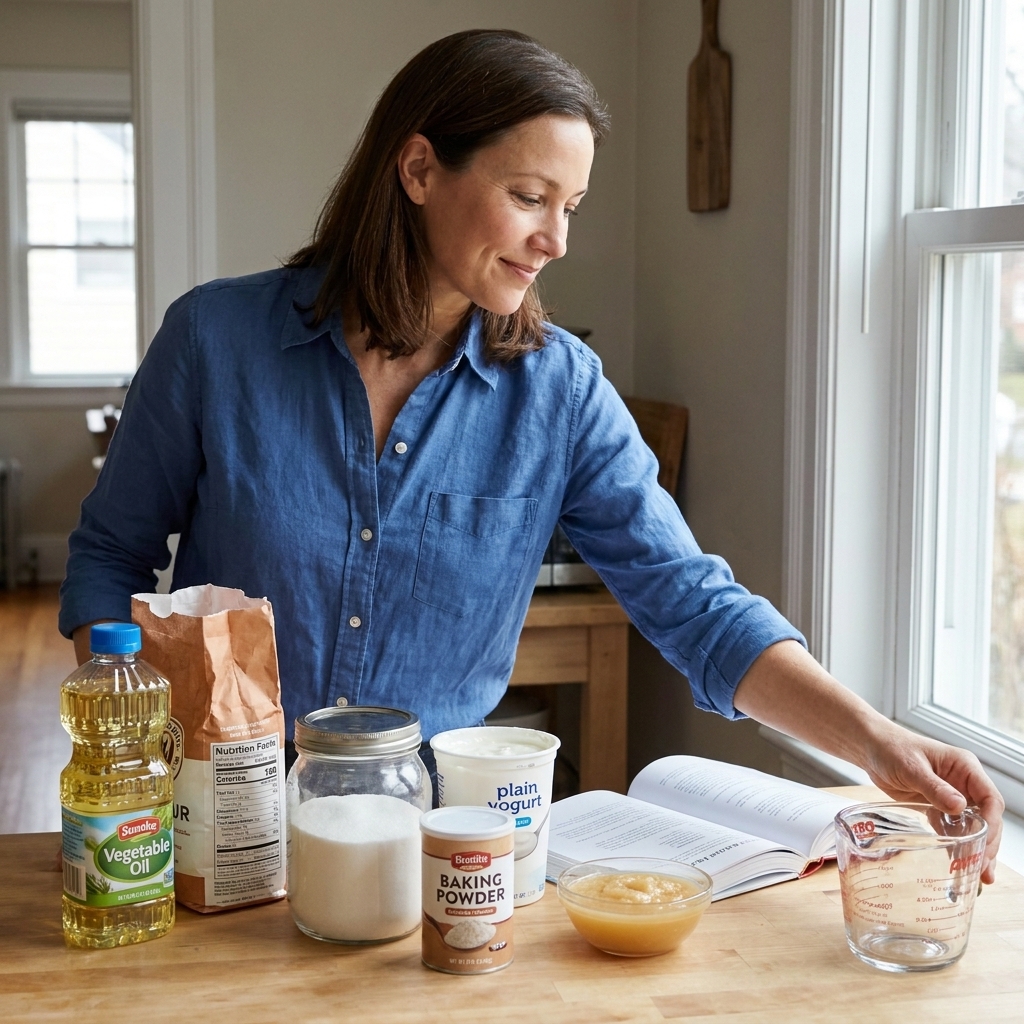
Ingredients
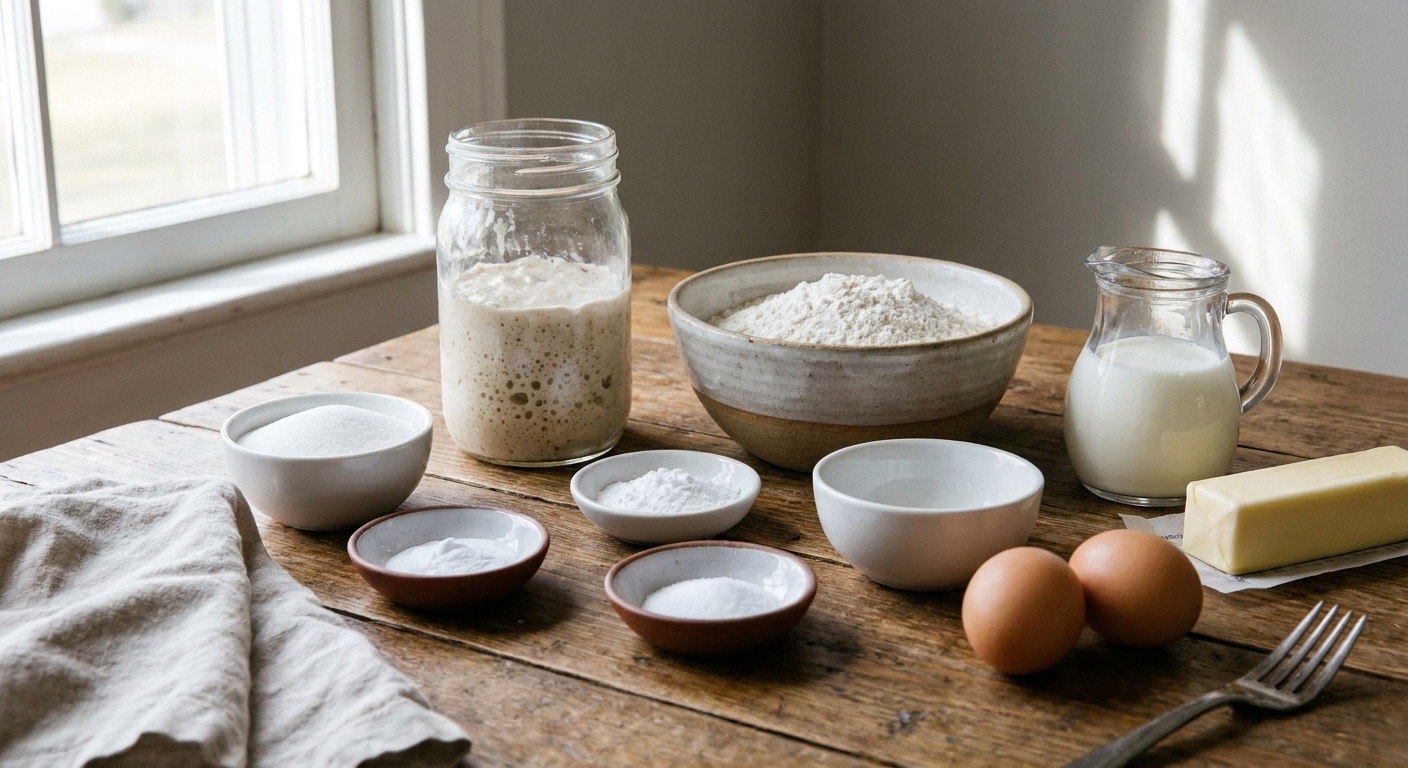
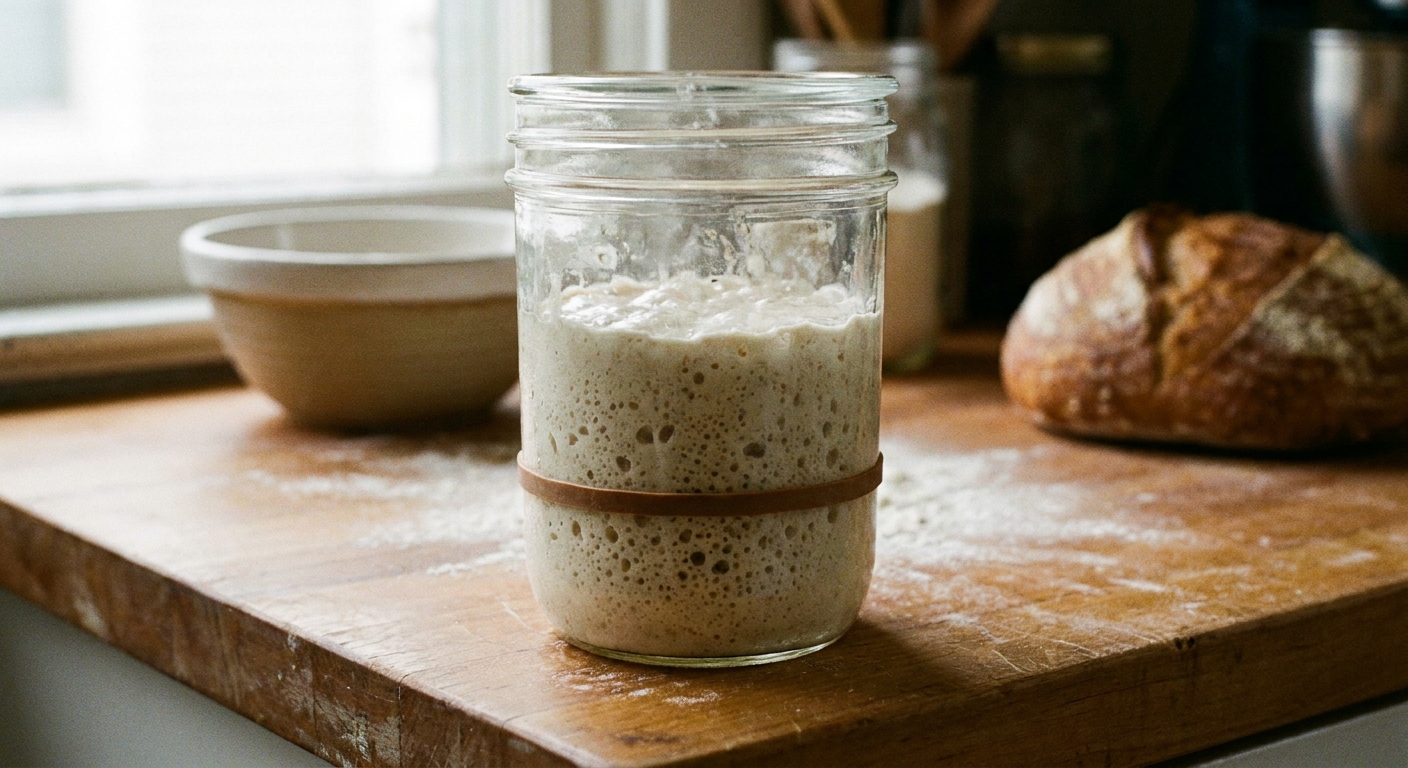
- Sourdough discard or active starter: unfed discard is perfect here. For consistency, I recommend weighing it, especially if your discard is very thick or very thin.
- Flour: all-purpose is the most consistent. You can swap in up to 50% whole wheat for a heartier pancake.
- Milk or buttermilk: I find buttermilk gives especially tender pancakes and great browning. Regular milk works too.
- Egg: structure and richness.
- Butter (melted) or neutral oil: butter for flavor, oil for extra-soft pancakes.
- Sugar: optional but helps browning.
- Salt: makes the flavor pop.
- Leavening: baking powder for lift, and baking soda to react with the sourdough acidity.
The batter guide
If you only remember one thing, make it this: pancake batter needs enough flour to set, and enough liquid to spread slightly on the griddle without running like crepe batter.
A simple ratio to remember
By weight: most pancake batters land somewhere around 1 part flour to 1 to 1.3 parts liquid, depending on how thick you like them and how hydrated your starter is.
- Your sourdough discard counts as both flour and liquid. Most starters are around 100% hydration (roughly equal parts flour and water by weight), but fridge discard can vary a lot. That is why the visual cues below matter more than a single number.
- This recipe runs a little on the thicker side on purpose, and then you thin it as needed so you end up with fluffy, not flat, pancakes.
What the batter should look like
- It should fall off a spoon in a thick ribbon.
- It should spread into a 4 to 5 inch circle on the griddle, then stop spreading.
- You should still see small lumps. Overmixing makes pancakes tough.
Quick fixes
- Too thick: stir in milk 1 tablespoon at a time.
- Too thin: sprinkle in flour 1 tablespoon at a time, rest 5 minutes, then reassess.
- Very stiff discard: plan on adding a little extra milk to loosen the batter.
Recipe: Quick sourdough discard pancakes
Makes: about 10 to 12 pancakes (4-inch) depending on scoop size
Ingredients
- 1 cup (240 g) sourdough discard (any hydration, but weighing is best)
- 1 cup (240 g) buttermilk or milk, plus more as needed
- 1 large egg
- 2 tablespoons (28 g) melted butter or neutral oil
- 2 tablespoons (25 g) sugar (optional)
- 1 teaspoon vanilla extract (optional)
- 1 1/2 cups (180 g) all-purpose flour
- 2 teaspoons baking powder
- 3/4 teaspoon fine salt
- 1/2 teaspoon baking soda
Instructions
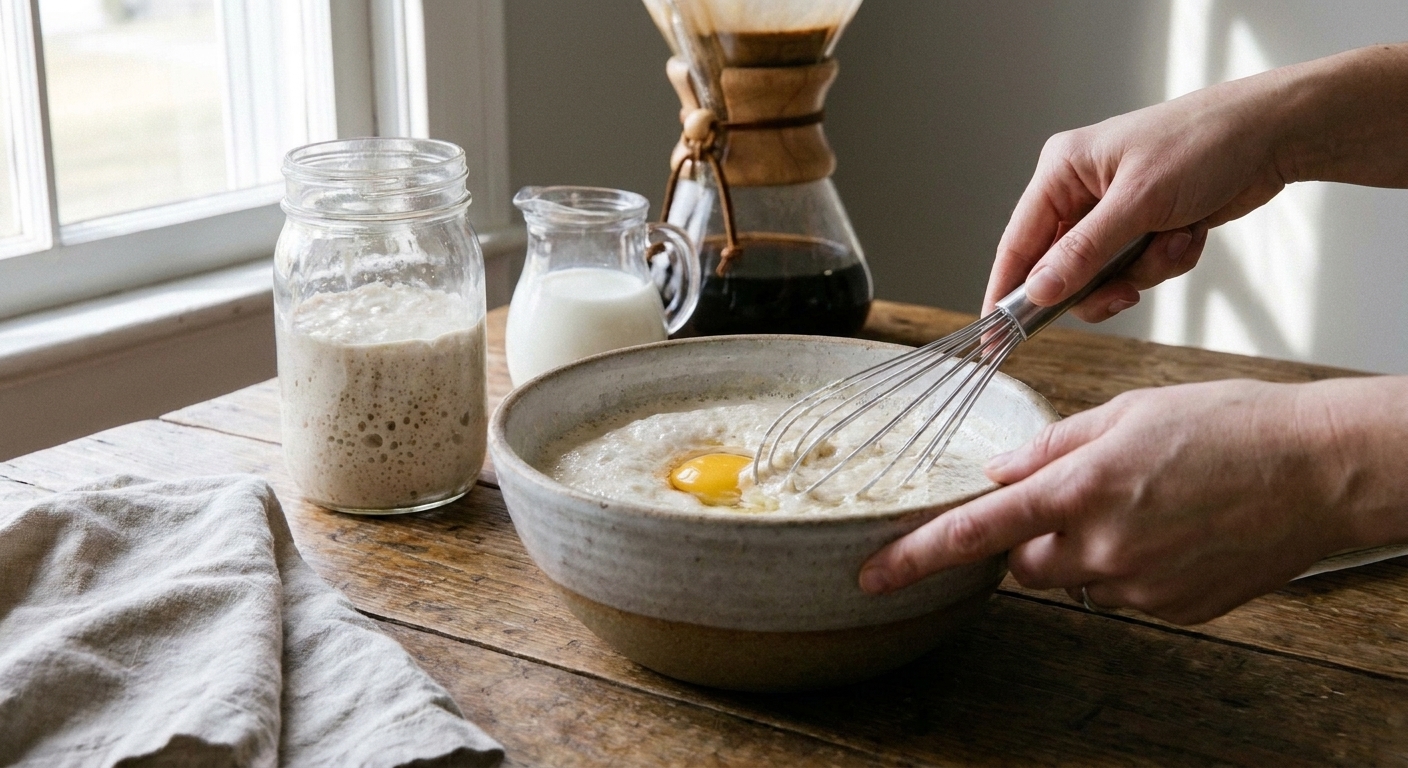
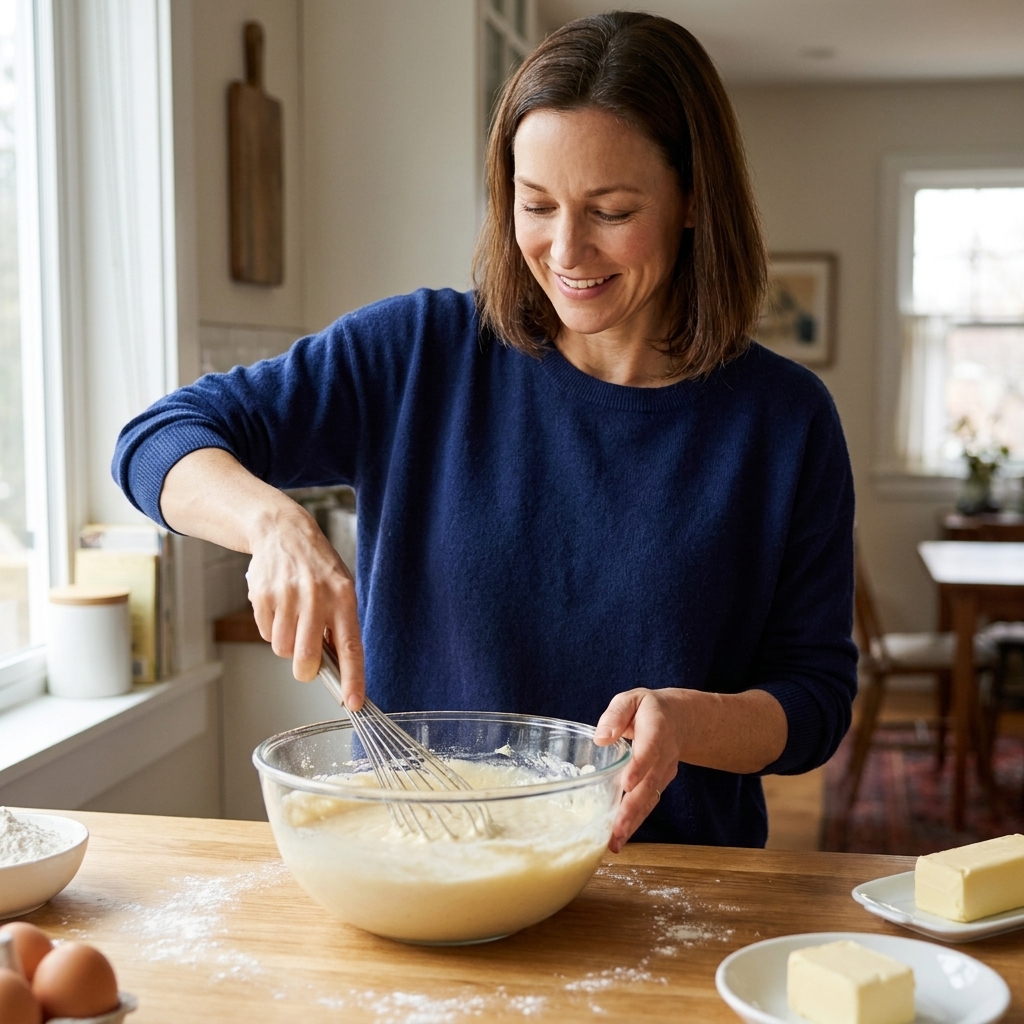
- Mix the wet ingredients. In a large bowl, whisk together the sourdough discard, milk (or buttermilk), egg, melted butter, sugar, and vanilla.
- Add the dry ingredients. Sprinkle in the flour, baking powder, salt, and baking soda. Stir gently just until you no longer see dry flour. The batter should look thick and slightly lumpy.
- Rest briefly, then cook. Let it sit for 10 minutes while your griddle heats. Once the baking soda is in, do not let the batter sit around too long. For the best rise, cook within about 30 minutes.
- Preheat the griddle. Heat a nonstick skillet or griddle over medium to medium-low. If you have an infrared thermometer, aim for about 350°F.
- Grease lightly. Swipe the pan with a thin layer of butter or oil. Too much fat can cause uneven browning.
- Cook. Scoop about 1/4 cup batter per pancake. Cook the first side until bubbles rise and pop, and the edges look set, 2 to 3 minutes.
- Flip once. Flip and cook until the second side is golden and the center springs back lightly when touched, 1 to 2 minutes.
- Hold warm (optional). Keep pancakes warm on a sheet pan in a 200°F oven while you finish the batch.
Recipe: Overnight sourdough sponge
This is my favorite for slow weekend mornings or when I want breakfast to feel extra special without extra work at 7 AM.
Night before
- 1 cup (240 g) sourdough starter or discard
- 1 1/2 cups (360 g) milk or buttermilk
- 2 cups (240 g) all-purpose flour
- 1 tablespoon (12 g) sugar (optional)
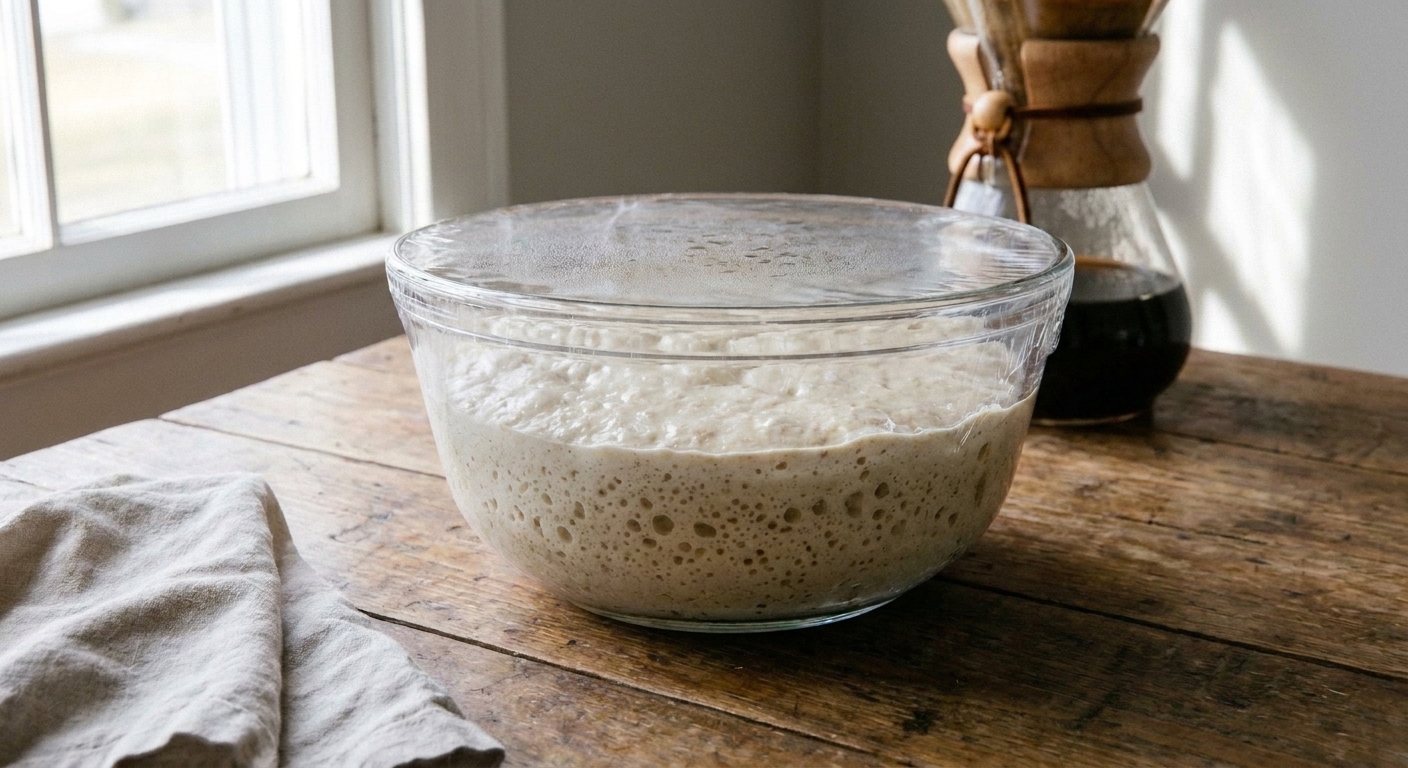
- In a large bowl, stir together starter, milk, flour, and sugar until combined.
- Cover and leave at room temperature 8 to 12 hours.
If your kitchen runs warm
If your room temperature is consistently above about 75 to 78°F, shorten the ferment to 6 to 8 hours, or let it start on the counter for a bit and then refrigerate overnight. You are looking for a bubbly, airy sponge that smells pleasantly tangy, not something that has raced past its prime.
Morning
- 1 large egg
- 3 tablespoons (42 g) melted butter or neutral oil
- 3/4 teaspoon fine salt
- 1 teaspoon baking powder
- 1/2 teaspoon baking soda
- Whisk in egg and butter. Add the egg and melted butter to the sponge and stir gently.
- Add leavening and salt last. Sprinkle in salt, baking powder, and baking soda. Stir just until incorporated. The batter will look airy and may puff slightly.
- Cook on a medium griddle. Use the same heat guidance and flip cues below. If the batter seems too thick after fermenting, add milk 1 tablespoon at a time.
Griddle heat and flip cues
Best griddle heat
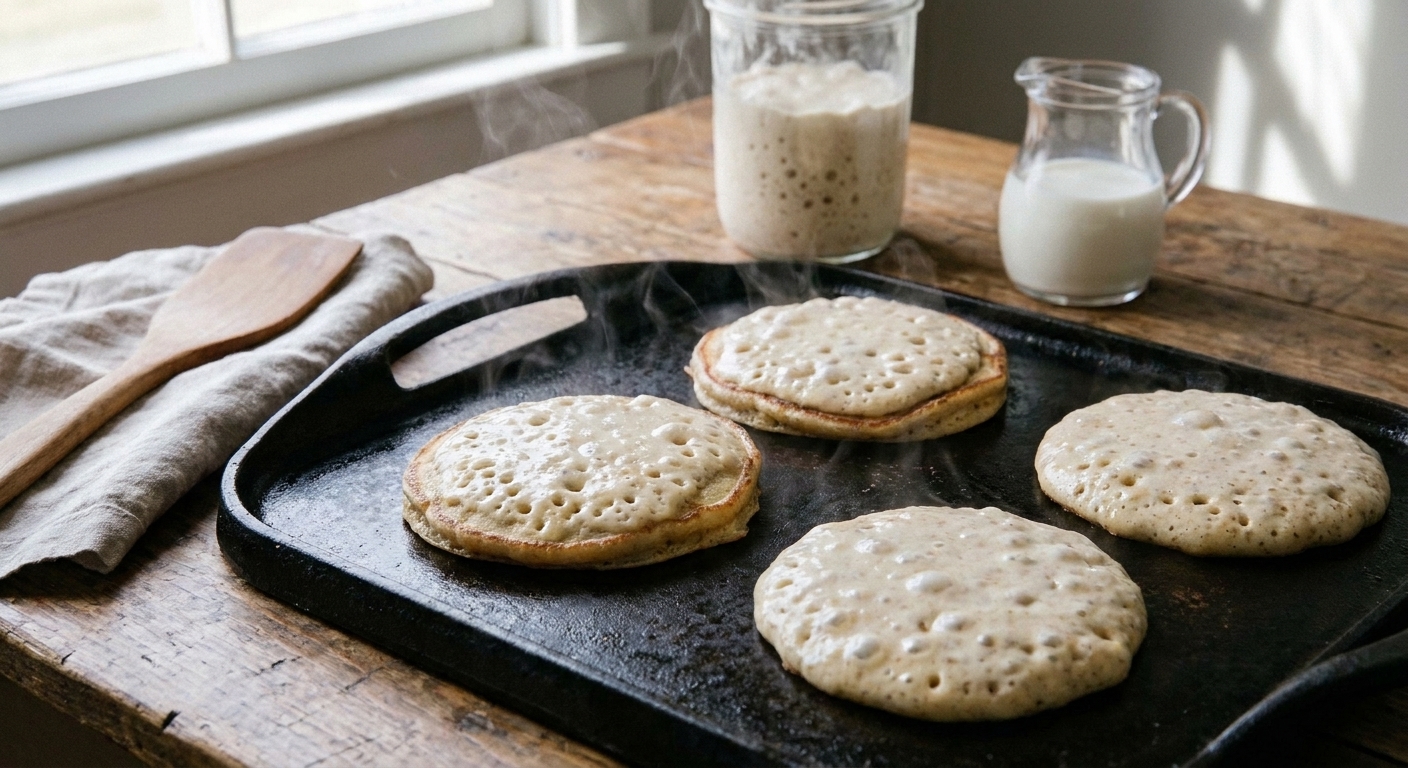
Most pancake problems are heat problems. Too hot and you get dark outsides with undercooked centers. Too cool and they dry out before they brown.
- Stovetop dial: medium to medium-low
- Surface temperature: about 350°F
- First pancake test: if it browns in under 90 seconds, your pan is too hot. If it takes over 4 minutes to brown, go a little higher.
Flip cues
- Bubbles rise and pop, leaving little craters that do not fill back in quickly.
- The edges look set and slightly matte, not wet and shiny.
- When you slide a thin spatula under, the pancake lifts cleanly and holds together.
The tender center basics
- Rest the batter (10 minutes for quick batter, or overnight sponge).
- Mix gently. Stir until just combined. Lumps are your friend.
- Flip once. Repeated flipping compresses pancakes and makes them rubbery.
- Cook the second side less. The second side usually needs only 1 to 2 minutes.
My favorite add-ins
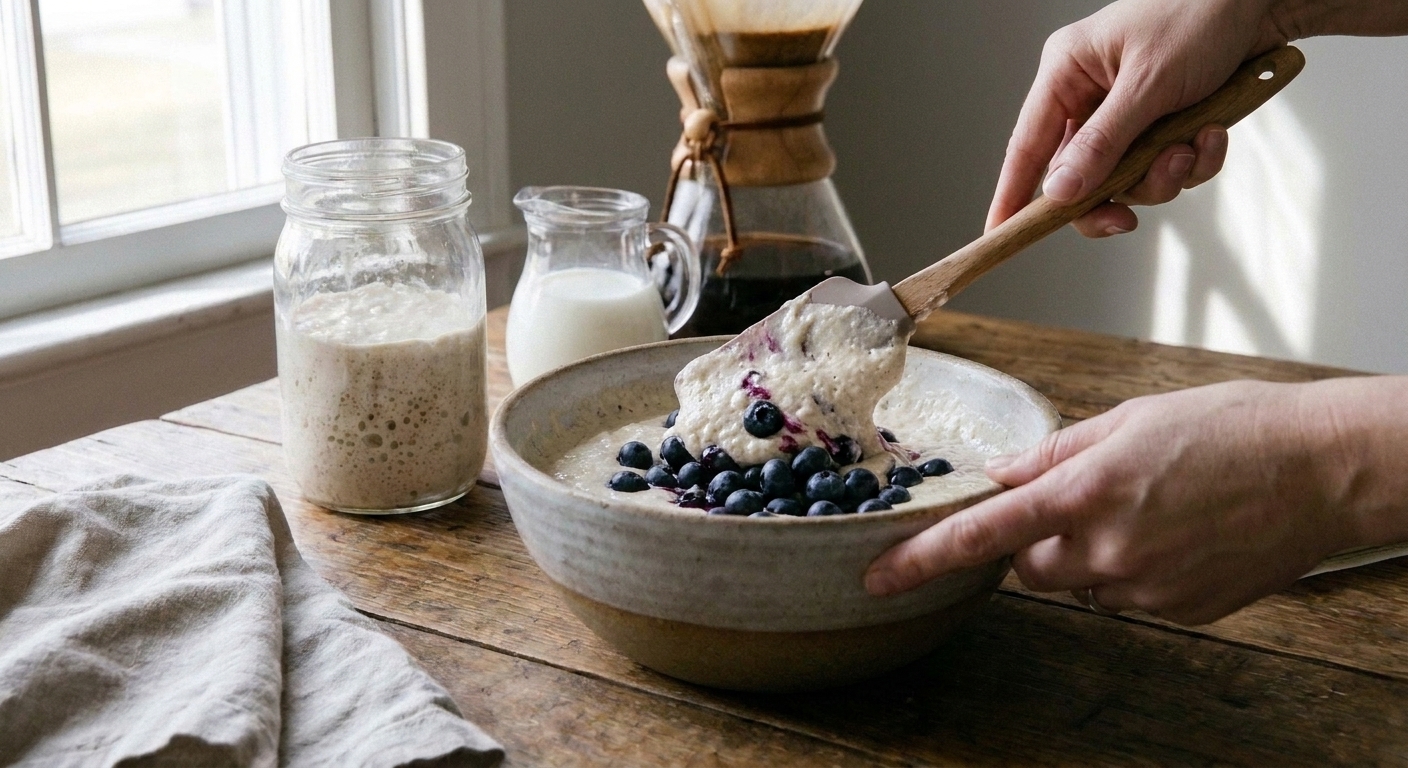
- Blueberries: sprinkle on top right after you pour the batter, rather than mixing into the bowl, to avoid purple streaks.
- Chocolate chips: same trick as blueberries. Sprinkle on top so they do not sink and burn.
- Cinnamon: whisk 1/2 teaspoon into the dry ingredients.
- Lemon zest: add 1 teaspoon to the wet ingredients for a bright, bakery vibe.
Serving ideas
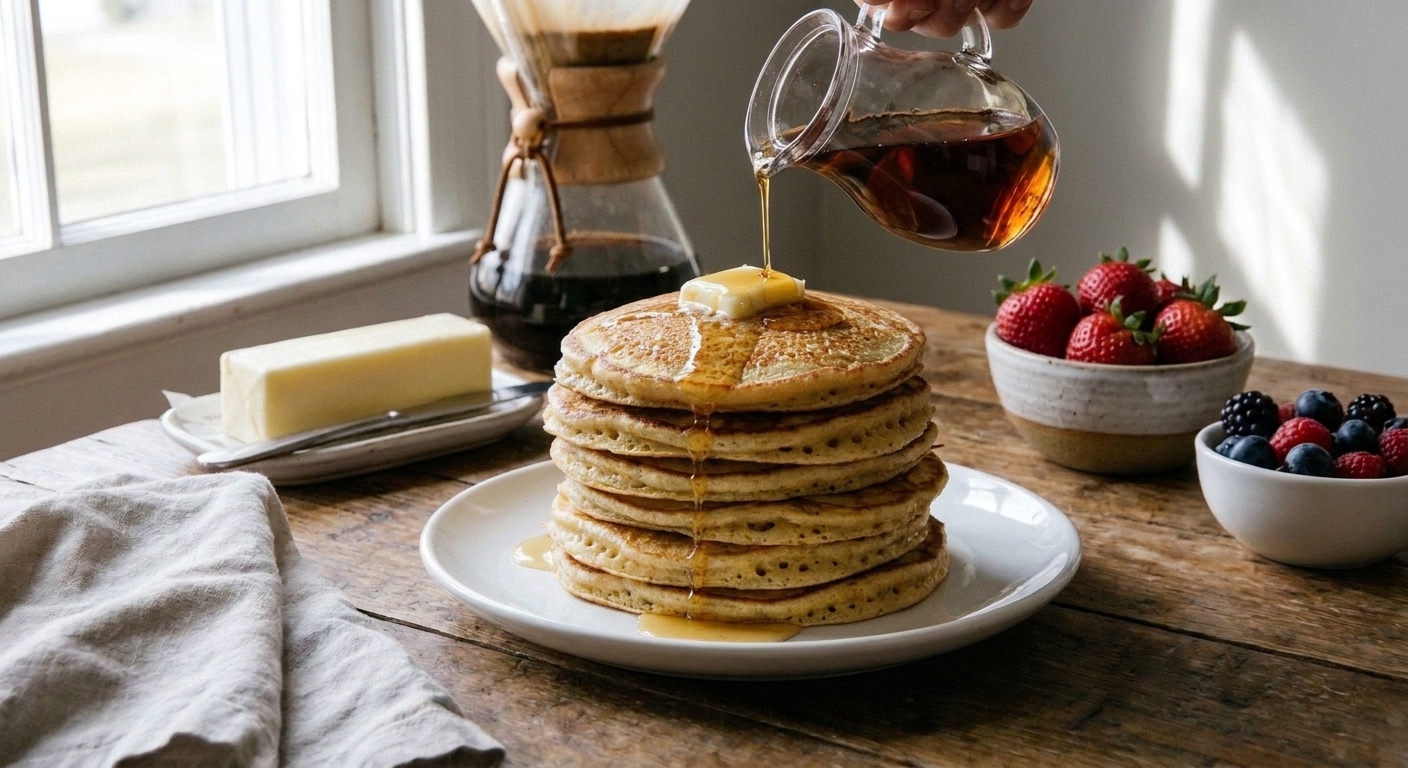
- Butter and warm maple syrup (classic for a reason)
- Greek yogurt and berries for a tangy, creamy topping
- Peanut butter and sliced bananas for a filling school-day breakfast
- Honey and toasted nuts for a little crunch
Storage and reheating
Refrigerator
Cool completely, then store in an airtight container for up to 4 days.
Freezer
Freeze pancakes in a single layer on a sheet pan, then transfer to a freezer bag with parchment between layers. They keep well for about 2 months.
Best ways to reheat
- Toaster: my favorite for crisp edges and fast mornings.
- Oven: 350°F for 6 to 10 minutes on a sheet pan.
- Microwave: works in a pinch, but keep it short so they do not turn chewy.
Troubleshooting
My pancakes are flat
- Your baking powder may be old. Replace if it has been open a long time.
- You may have overmixed. Next time, stir just until no dry flour remains.
- Your batter may be too thin. Add flour 1 tablespoon at a time, then rest 5 minutes.
They are brown outside but raw inside
- Turn the heat down. This is almost always a too-hot pan.
- Make slightly smaller pancakes so the center cooks through faster.
They taste too sour
- Use fresher discard (discard that has not sat as long in the fridge tends to be milder).
- Use milk instead of buttermilk, and add a little extra sugar (1 to 2 teaspoons).
They are gummy
- Make sure you are cooking until the centers spring back lightly.
- Do not press pancakes with a spatula. It squeezes out steam and makes the inside dense.
FAQ
Can I use discard straight from the fridge?
Yes. Cold discard works fine. Your first batch might take slightly longer to brown because it cools the batter, but the texture will still be great.
Do I need active, bubbly starter?
No. This recipe is built for discard. Active starter also works.
Can I make the batter ahead?
The overnight sponge is the best make-ahead approach. For the quick batter, you can mix the wet and dry separately the night before, then combine in the morning. Once baking soda is added, cook within about 30 minutes for the fluffiest pancakes.
Can I make these dairy-free?
Yes. Use an unsweetened non-dairy milk and swap melted butter for neutral oil. The tang will be a little less pronounced, but they still cook up tender.