A reliable, tested sourdough English muffin recipe with cornmeal-dusted rounds and low-and-slow skillet cooking for the best nooks and crannies.
Recipe Homely
November 22, 2026
How to Make Sourdough Bagels

Sarah Jenkins
Sarah Jenkins is a passionate home cook and the voice behind Recipe Homely, dedicated to making everyday meals stress-free and delicious. With over a decade of experience feeding a busy family, she specializes in rigorously tested, approachable recipes for dinners, desserts, and everything in between. When she isn't developing new dishes, Sarah can be found browsing local farmers' markets or baking with her two children.
Bagels are one of those breads that feel like a bakery-only project until you actually make them once. The key is not fancy ingredients. It is the method: a low-hydration dough, a confident shape, a quick boil, and a hot oven. I started making sourdough bagels when my kids realized store-bought “bagels” were basically fluffy rolls with holes. These are chewy, glossy, and sturdy enough for cream cheese without collapsing, and the overnight cold proof means you can bake them fresh in the morning without waking up at dawn.
What makes a sourdough bagel a bagel
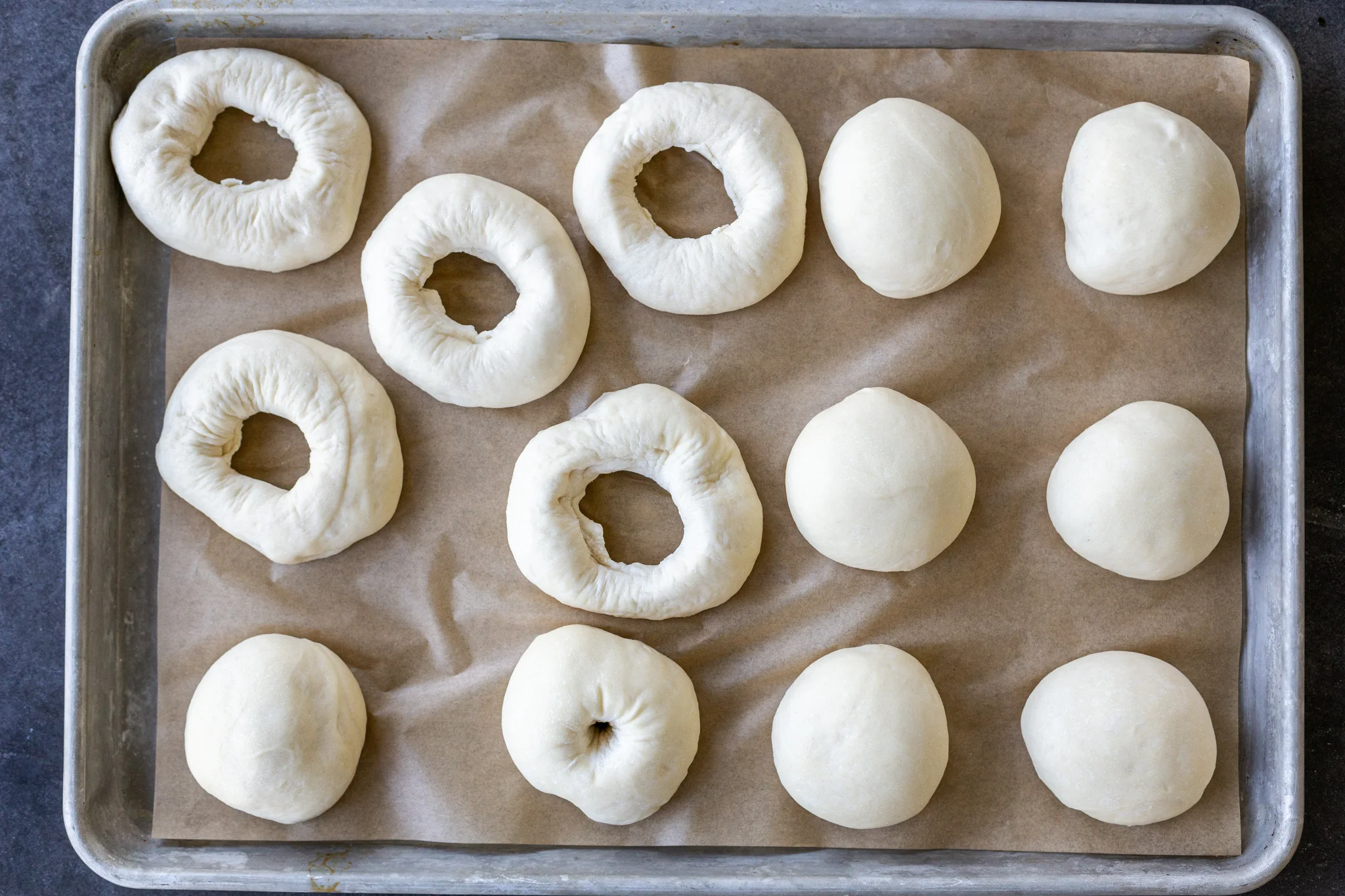
- Stiff dough: Bagel dough is tight and low hydration. That is what gives you that chew.
- Boiling: A quick dip in simmering water sets the crust and creates that classic shiny exterior.
- Hot bake: Bagels like a bold oven. High heat finishes the crust fast so the inside stays dense but tender.
- Overnight cold proof: Flavor and scheduling. The fridge slows fermentation while building that lovely sourdough tang.
Recipe: Chewy sourdough bagels (overnight)
Makes: 8 bagels
Timeline: Mix and shape in the afternoon or evening, cold proof overnight, boil and bake in the morning.
Ingredients
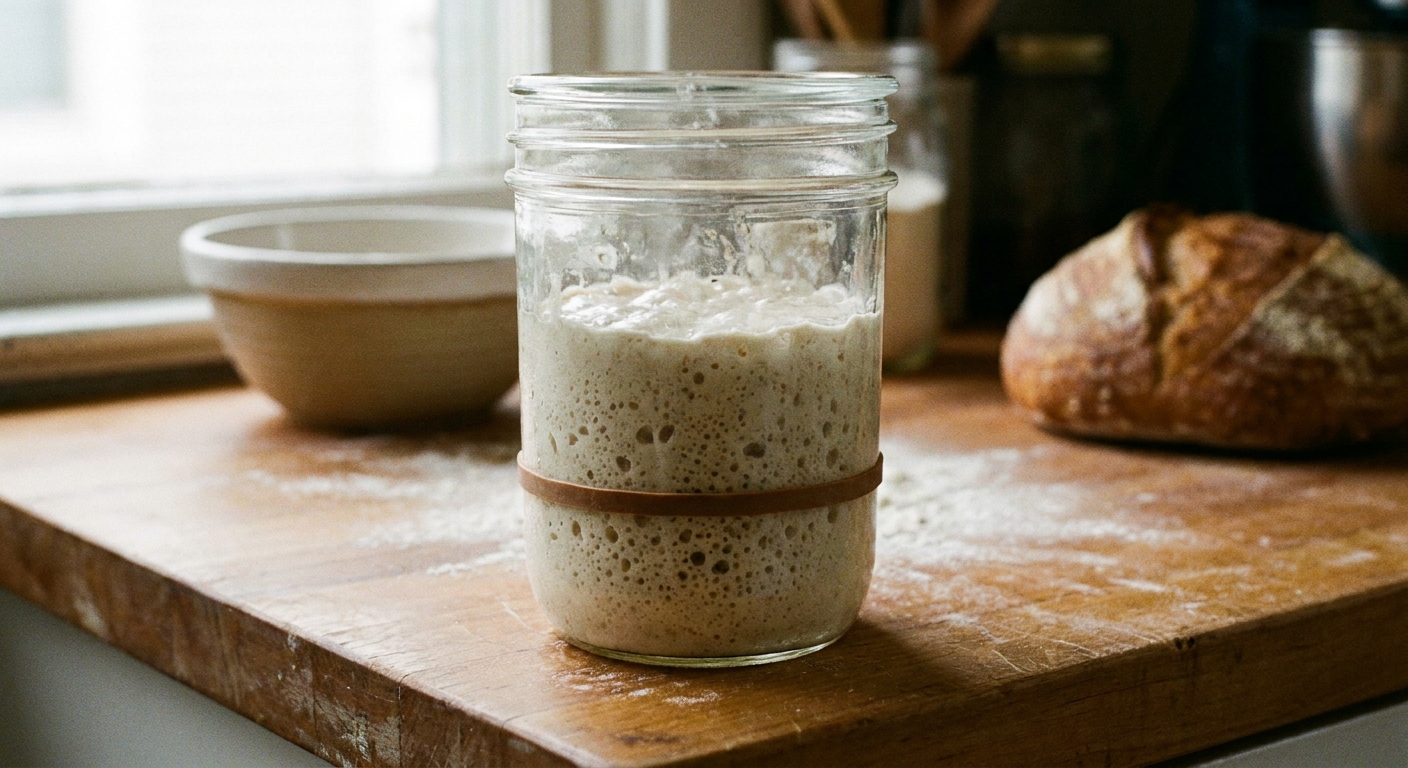
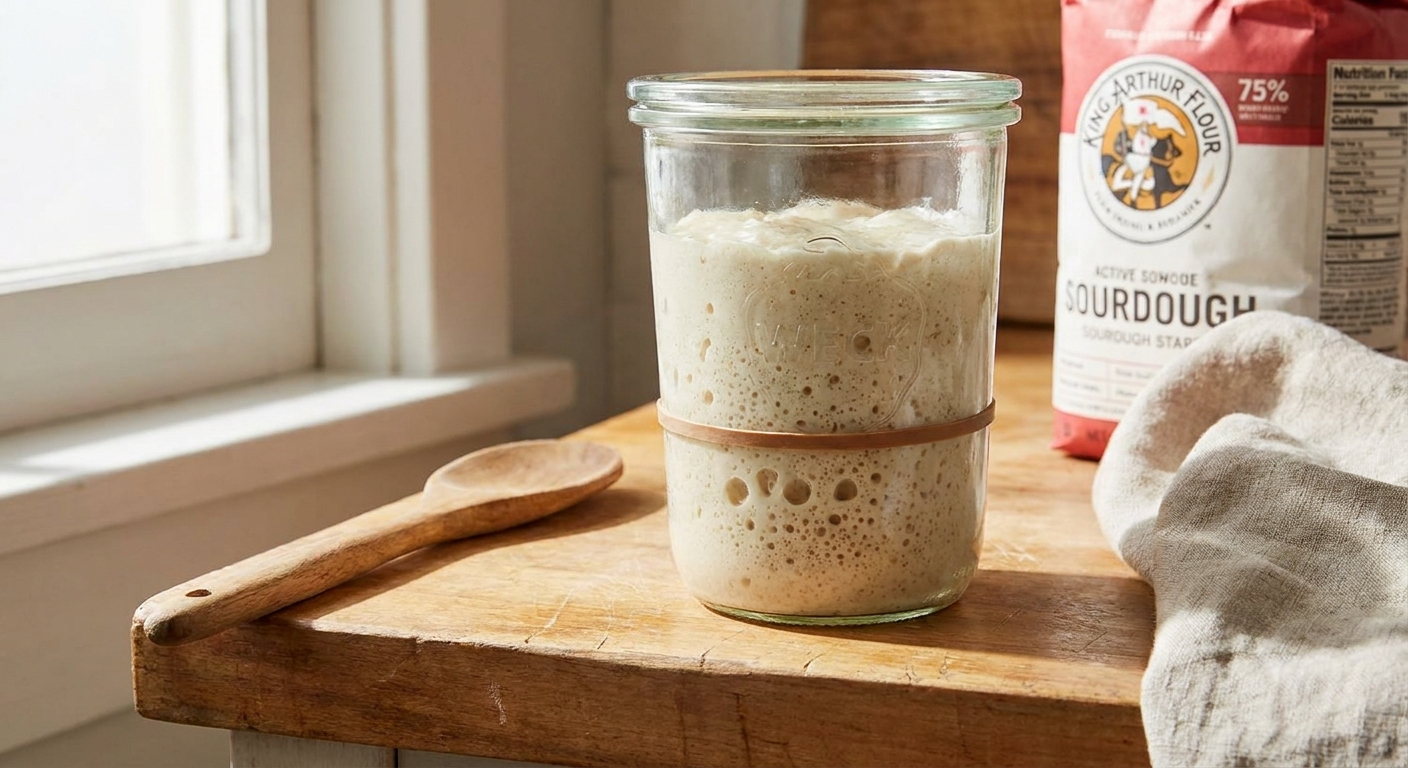
- 100 g active sourdough starter (100% hydration, bubbly and recently fed)
- 250 g warm water
- 25 g honey or sugar (honey adds a subtle shine and color)
- 10 g fine sea salt
- 500 g bread flour (bread flour gives the best chew)
- Optional: 5 g diastatic malt powder, if you have it (extra classic bagel flavor and browning)
For boiling (choose one)
- Honey boil: 1 tablespoon honey per 2 quarts (about 2 liters) water
- Baking soda boil: 1 to 2 teaspoons baking soda per 2 quarts (about 2 liters) water (start small and adjust to taste)
Toppings (mix and match)
- Sesame seeds
- Poppy seeds
- Everything seasoning
- Dehydrated onion or garlic
- Flaky salt (use lightly)
- Cinnamon sugar (best on plain boiled bagels, not heavily honeyed water)
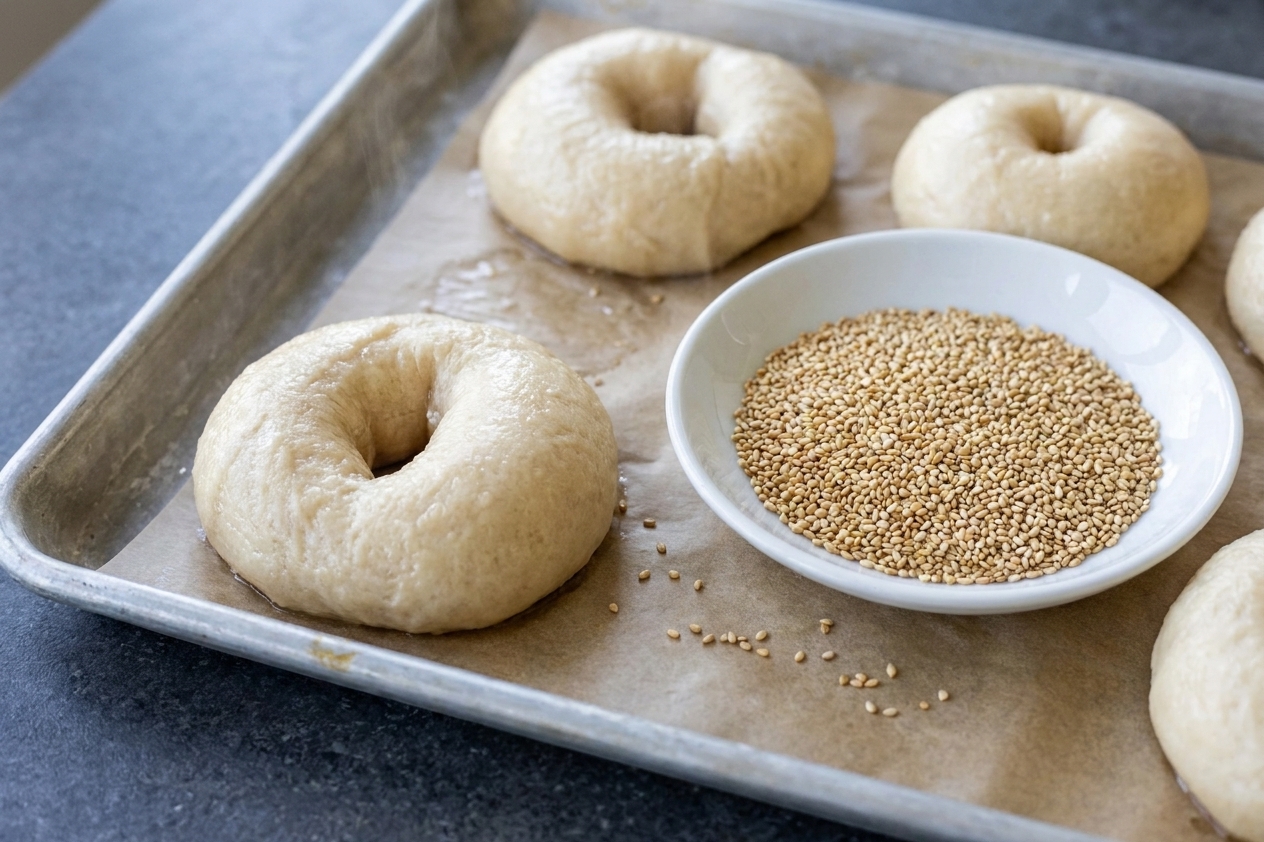
Tip from my kitchen: Set your toppings out in small shallow bowls before you boil. Once bagels come out of the water, you want to top them right away while they are tacky.
Step-by-step instructions
1) Mix the dough
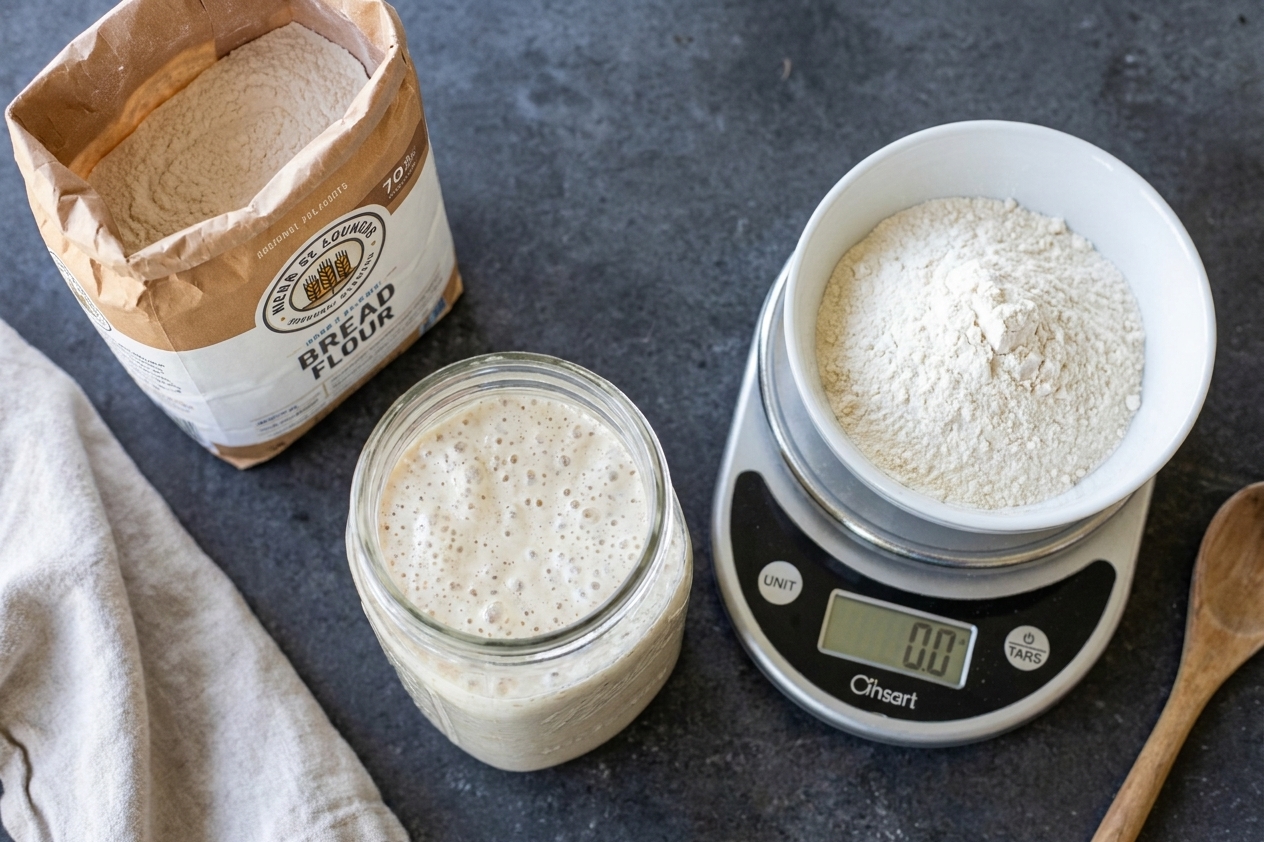
In a large bowl, whisk together the warm water, starter, and honey (or sugar) until combined. Add the bread flour, salt, and malt powder (if using). Mix with a sturdy spoon until a shaggy dough forms, then switch to your hands and squeeze and fold until no dry flour remains.
The dough will feel stiff. That is exactly what you want for chewy bagels.
2) Knead until smooth and tight
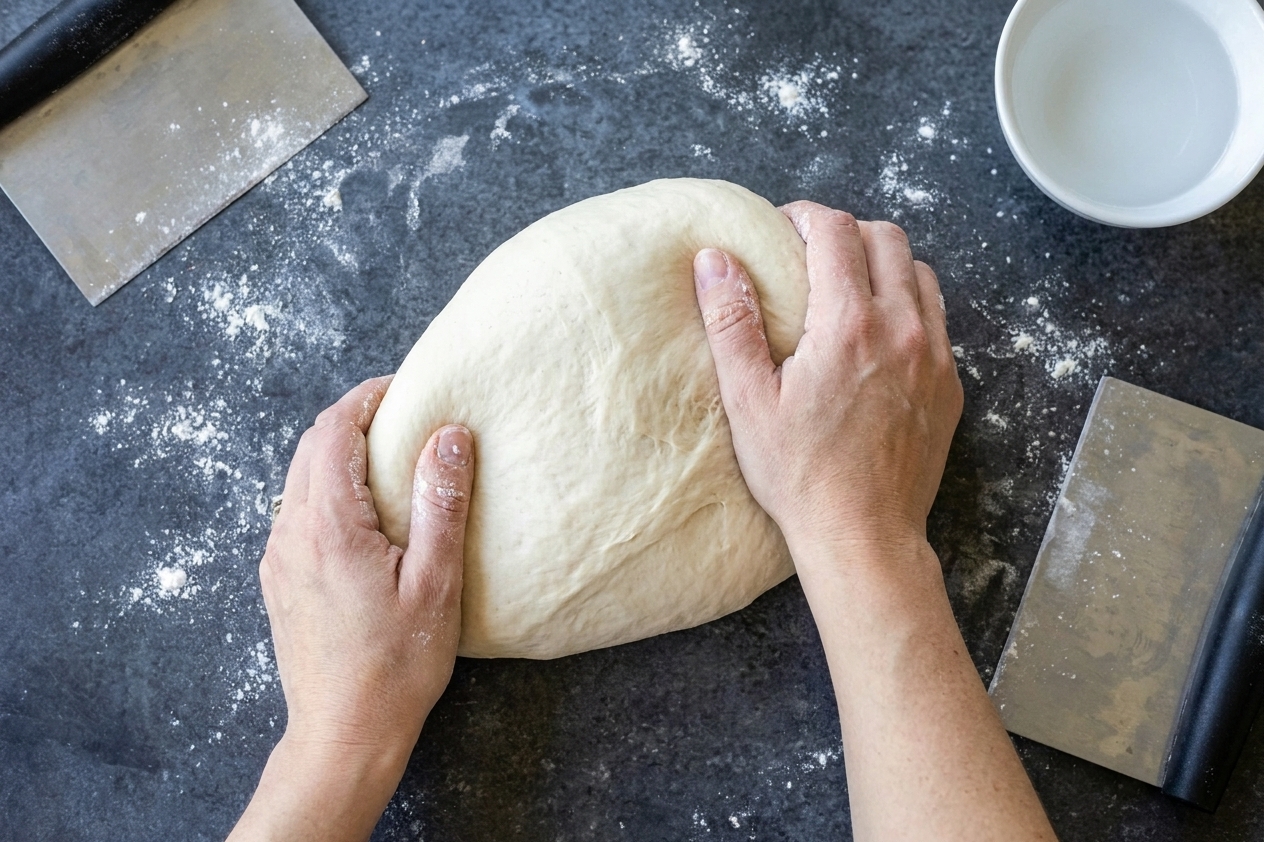
Knead by hand on an unfloured counter for 8 to 10 minutes, or until the dough is smooth, elastic, and noticeably tighter. If it is sticking, use a bench scraper to lift and fold the dough as you knead. If it still feels stubborn, let it rest for 5 minutes, then continue. Avoid adding extra flour if you can, since bagel dough is already on the dry side.
3) Bulk ferment (first rise)
Place the dough in a lightly oiled bowl, cover, and let it rise at room temperature until puffed and slightly expanded, about 3 to 5 hours depending on your kitchen and starter strength. A warmer kitchen (around 70 to 78°F) will move faster than a cool one. You are not looking for a huge doubling here. Aim for roughly a 10 to 30% increase, and the dough should feel a bit more aerated when you press it.
4) Divide
Turn the dough onto the counter. Divide into 8 equal pieces (about 110 g each). For the most even bagels, use a scale.
5) Pre-shape into tight balls
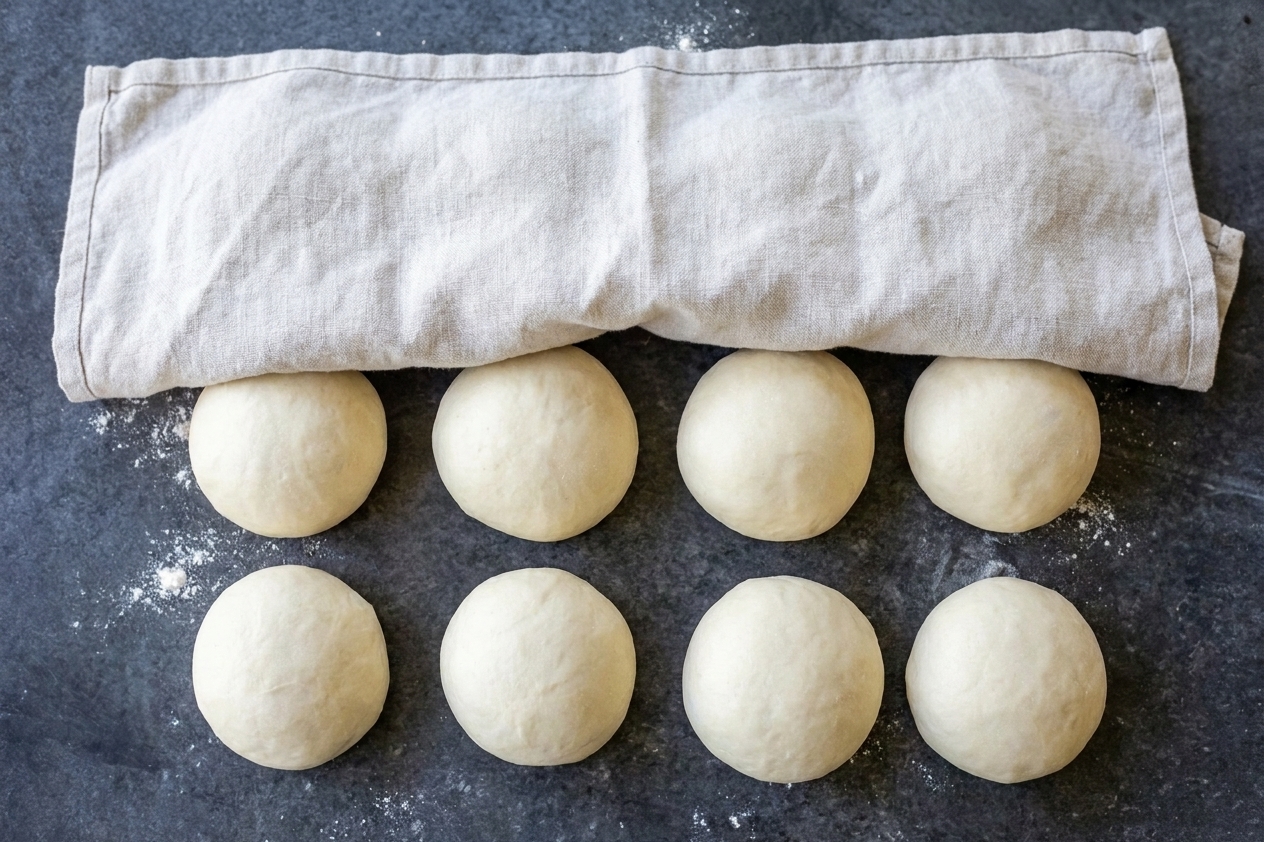
Roll each piece into a smooth, tight ball by cupping your hand over it and making small circles on the counter until the surface is taut. Cover the balls with a towel and rest 10 minutes. This rest makes shaping easier.
6) Shape the bagels (two easy options)
Option A: Poke-and-stretch (my weeknight favorite)
Press your thumb through the center of a dough ball, then gently stretch the hole with both thumbs, rotating as you go. Aim for a hole about 1 1/2 to 2 inches wide. It will shrink back.
Option B: Rope-and-wrap (more classic shape)
Roll a piece into an 8 to 10 inch rope, slightly thicker in the middle. Wrap around your hand and overlap the ends in your palm, then roll the seam on the counter to seal.
Shaping tip: Make the hole larger than you think. A small hole tends to close during proofing and baking.
7) Overnight cold proof
Line a baking sheet with parchment. Lightly oil the parchment or spray it to prevent sticking. Place shaped bagels on the tray with space between them, cover well (a roomy bag or covered tray), and refrigerate 8 to 14 hours.
This is where the flavor happens, and it also makes the bagels much easier to handle during boiling.
Boil and bake (the next morning)
1) Preheat the oven
Preheat to 475°F. Place an oven rack in the middle. If you have a pizza stone or baking steel, preheat it too and bake the bagels on parchment directly on the stone for extra bottom browning.
2) Check proof (quick float test)
Before you start boiling a whole batch, do a quick check. Drop one cold bagel into the simmering water. If it floats within about 10 to 20 seconds, you are ready to boil and bake. If it sinks and stays down, let the bagels sit at room temperature for 20 to 45 minutes, then test again.
3) Prepare the boil
Bring a wide pot of water to a gentle boil, then reduce to a steady simmer. Add either honey or baking soda (choose one). Both work well:
- Honey boil: slightly sweeter aroma and nice browning.
- Baking soda boil: can deepen browning and give you a sturdier crust. If you want the most traditional bagel-shop flavor, use malt (malt syrup or diastatic malt) instead of baking soda.
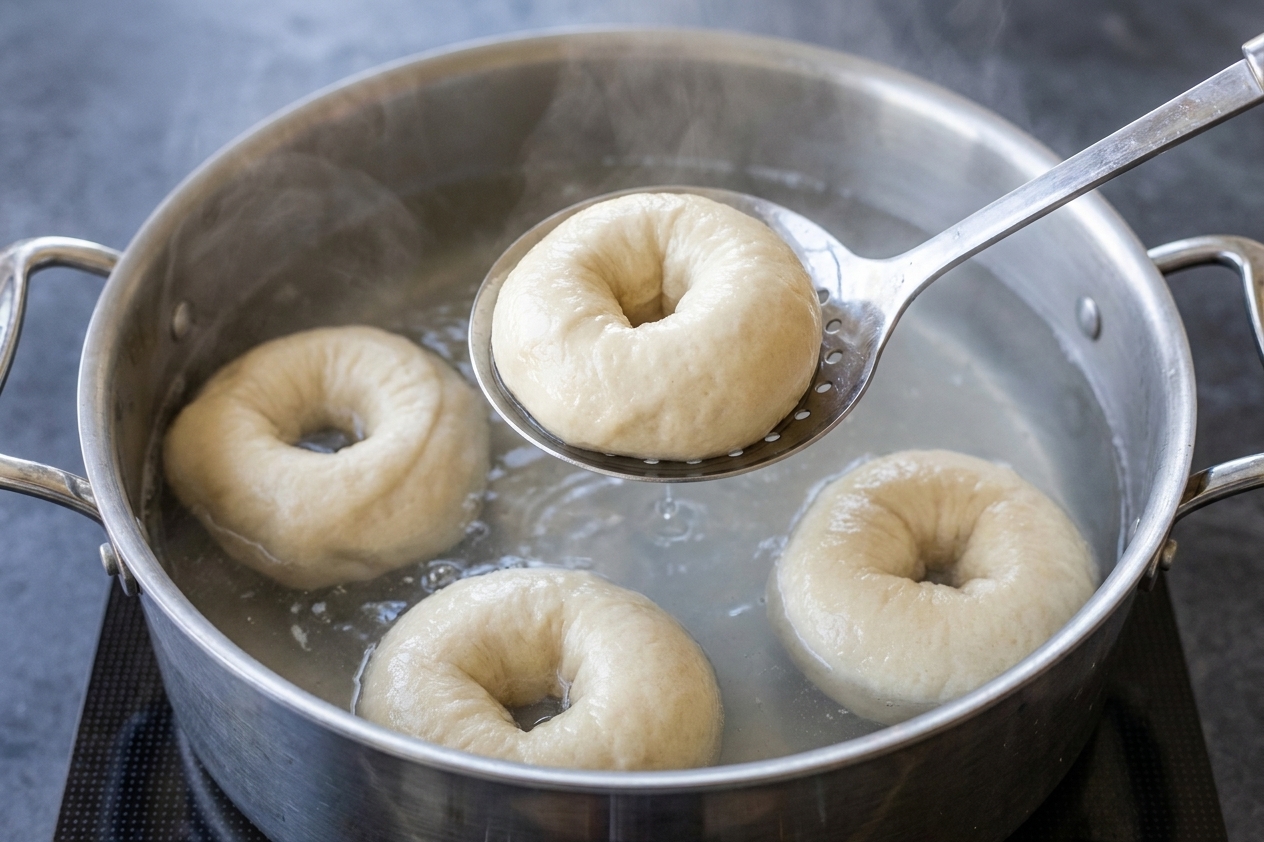
4) Boil the bagels
Working in batches, boil 2 to 4 bagels at a time. Boil for 30 seconds per side for a balanced crust and chew. For a thicker, chewier crust, go up to 45 to 60 seconds per side.
Remove with a slotted spoon, let excess water drip off, and place on a parchment-lined sheet.
5) Top while tacky
Immediately sprinkle on toppings while the surface is still damp and sticky. If you want toppings on both sides, you can dip the top of the boiled bagel into a shallow bowl of seeds.
6) Bake hot
Bake for 18 to 22 minutes, rotating the pan halfway through, until deeply golden brown.
How to tell sourdough bagels are done
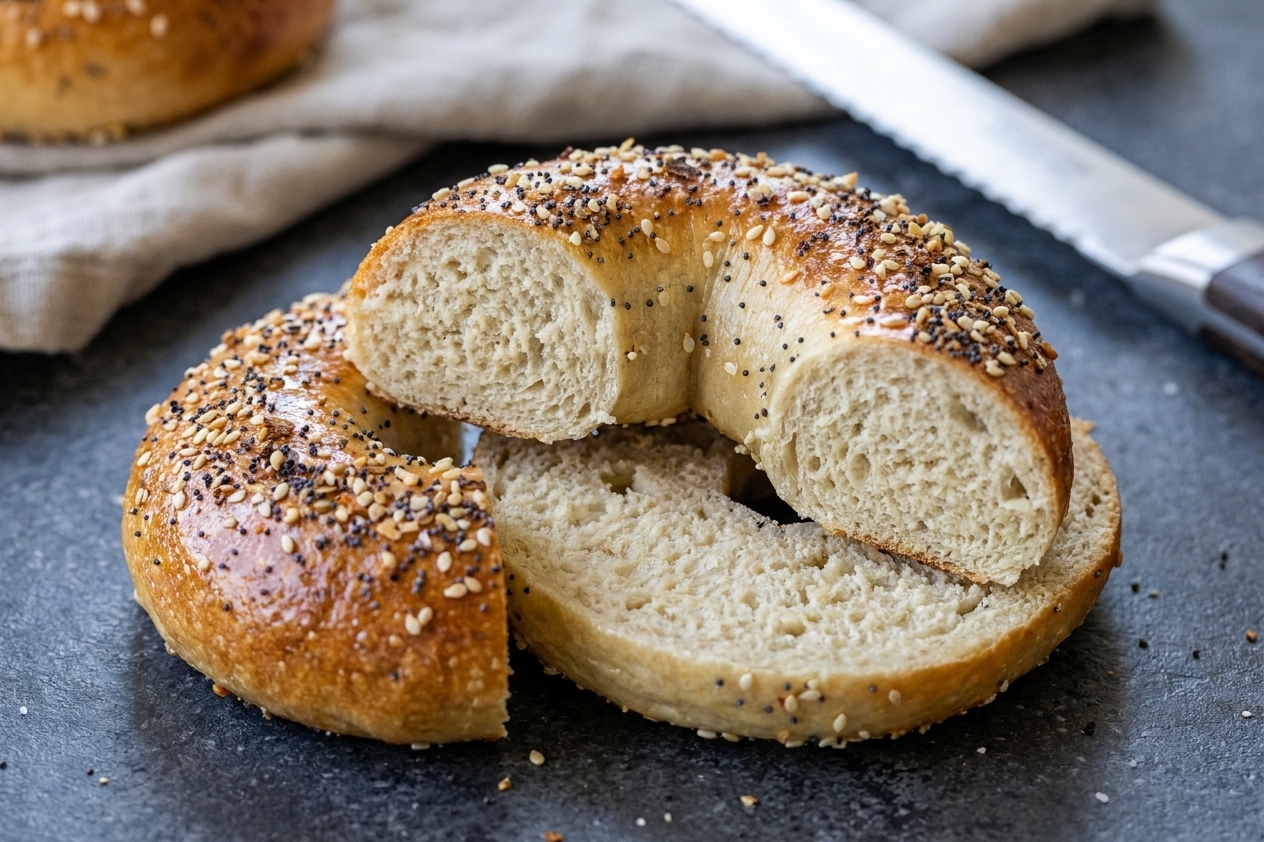
- Color: Look for a rich golden brown, not pale blond. The crust should look set and slightly shiny.
- Feel: They should feel light for their size and firm on the outside.
- Sound: Tap the bottom. It should sound hollow and a little “thunky.”
- Temperature (most reliable): If you have an instant-read thermometer, aim for 195 to 205°F in the center.
Cool at least 30 minutes before slicing. Fresh bagels finish setting as they cool, and slicing too early can make the crumb feel gummy.
Topping ideas (and how to make them stick)
Bagel toppings are simple, but the timing matters. Add toppings right after boiling while the bagels are still wet. If you wait even a few minutes, seeds will slide right off.
- Everything: A mix of sesame, poppy, dried garlic, dried onion, and salt.
- Sesame or poppy: Classic and kid-friendly.
- Cheese: Add shredded cheddar or parmesan in the last 5 minutes of baking so it does not burn.
- Cinnamon sugar: Bake plain, then brush warm bagels with a little melted butter and dip in cinnamon sugar.
- Sea salt and rosemary: Go light on salt, especially if you use a baking soda boil.
My best bagel troubleshooting tips
My dough feels too dry to come together
Give it a 5 to 10 minute rest after mixing. Stiff dough hydrates as it sits. If it is still crumbly after resting, add water 1 teaspoon at a time until it comes together.
My bagels spread flat
This usually means they overproofed or the dough was too wet. Next time, keep the dough stiff and shorten the room-temperature bulk rise. Also make sure your fridge is cold and the bagels are covered well.
My bagels stuck to the parchment
Lightly oil the parchment before placing the shaped bagels on it. Cold-proofed dough can glue itself to dry paper.
My bagels have no oven spring
If the bagels are underproofed, they can come out dense. Use the float test before boiling and give them a little extra room-temperature time if they sink. If the bagels are overproofed, they can deflate slightly during boiling. Try reducing the bulk rise time by 30 to 60 minutes, or shorten the cold proof.
My bagels are pale
Make sure the oven is truly hot. Also consider a slightly longer bake, adding malt powder if you keep it on hand, or using honey (or malt) in the boil for better browning.
Storage and freezing
- Room temperature: Store completely cooled bagels in a bag or airtight container for up to 2 days. Slice and toast for best texture.
- Freeze: Slice first, then freeze in a freezer bag for up to 2 months. Toast straight from frozen.
My weekday-morning trick is slicing everything before freezing so nobody is sawing through a rock-hard bagel at 7 AM.
Frequently asked questions
Do I have to use bread flour?
For the chewiest results, yes. You can use all-purpose flour, but the bagels will be a bit softer and less classic.
Can I use discard starter?
Not for this recipe as written. Bagels need strong fermentation to rise a stiff dough. Use active, bubbly starter that was fed recently.
Honey boil or baking soda boil: which is better?
Both work. Honey gives a gentle sweetness and shine. Baking soda can deepen browning and make the crust a little sturdier, but too much can taste alkaline, so start with a smaller amount. If you want the most traditional bagel-shop flavor, malt (syrup or powder) is the classic move.
Why are my bagel holes closing?
The hole was too small at shaping time, or the bagels overproofed. Stretch the center wider than you think you need, and keep the cold proof within 8 to 14 hours.
Serving ideas
These sourdough bagels are sturdy and make an actual satisfying meal. A few favorites in my house:
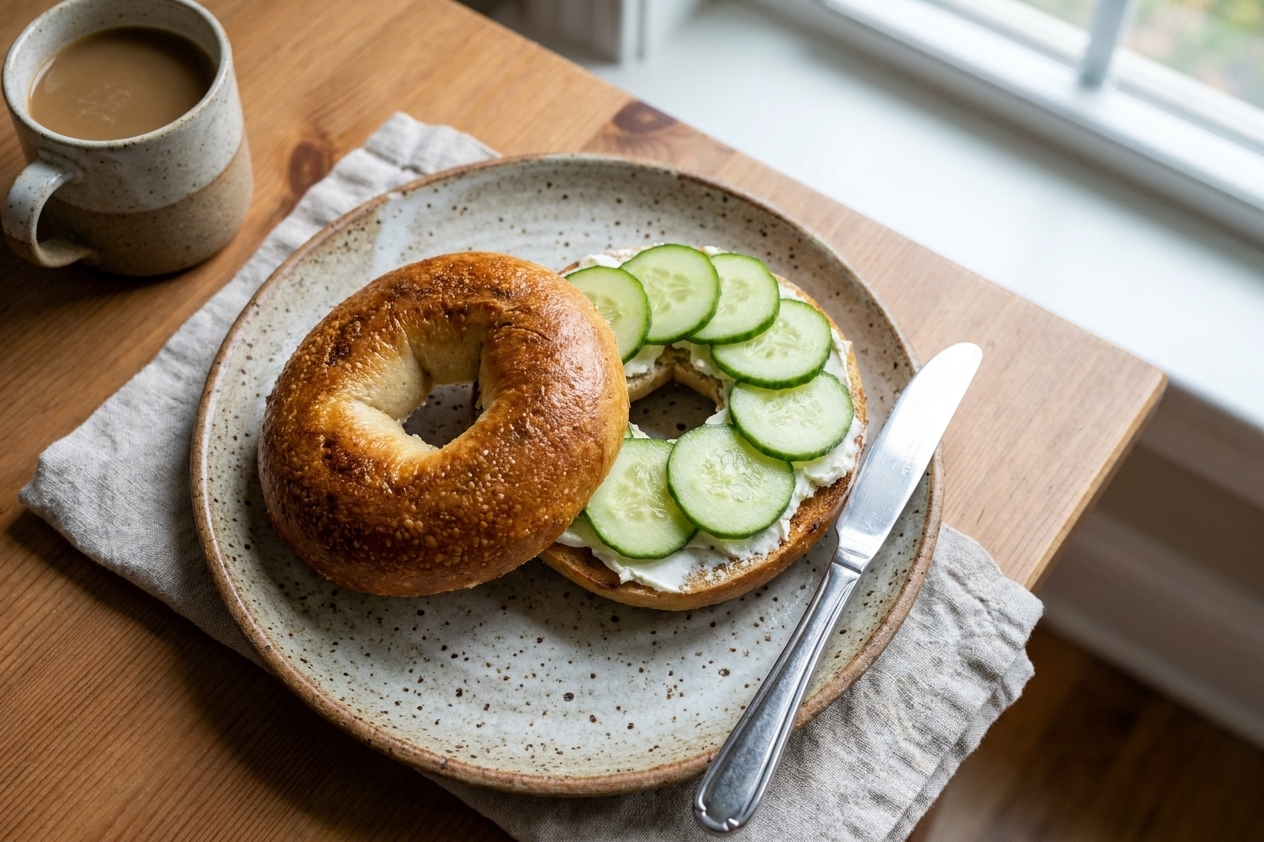
- Cream cheese + sliced cucumbers + everything topping
- Peanut butter + banana (great on sesame bagels)
- Egg sandwich with cheddar and hot sauce
- Smoked salmon + cream cheese + capers + red onion