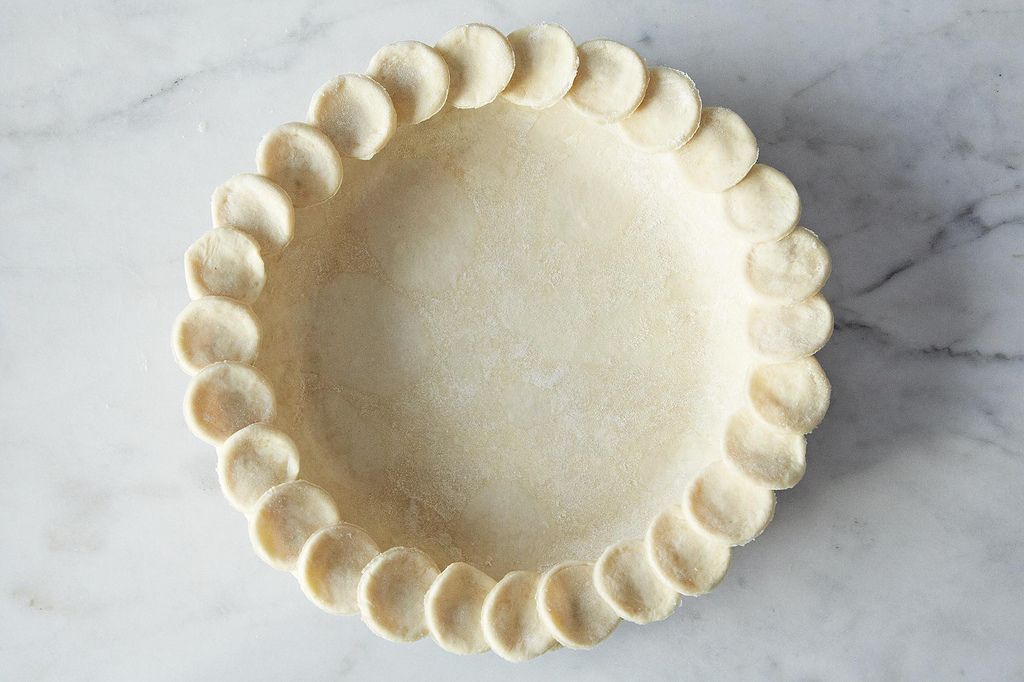
A rigorously tested homemade pie crust that bakes up tender and flaky. Butter temperature tips, folding method, chilling timeline, blind baking cues, and fix...
Recipe Homely
November 16, 2026
How to Make Quiche That Slices Clean

Sarah Jenkins
Sarah Jenkins is a passionate home cook and the voice behind Recipe Homely, dedicated to making everyday meals stress-free and delicious. With over a decade of experience feeding a busy family, she specializes in rigorously tested, approachable recipes for dinners, desserts, and everything in between. When she isn't developing new dishes, Sarah can be found browsing local farmers' markets or baking with her two children.
Quiche is one of those “easy” dinners that can turn into a frustrating mess fast. I have pulled plenty of beautiful-looking quiches out of the oven, only to watch the first slice slump into a soft puddle. After a lot of testing in my very average-sized kitchen (and getting honest feedback from two picky kids), here is what consistently gives me clean, tidy slices: a fully blind-baked crust, a custard that sets, and enough resting time before cutting.
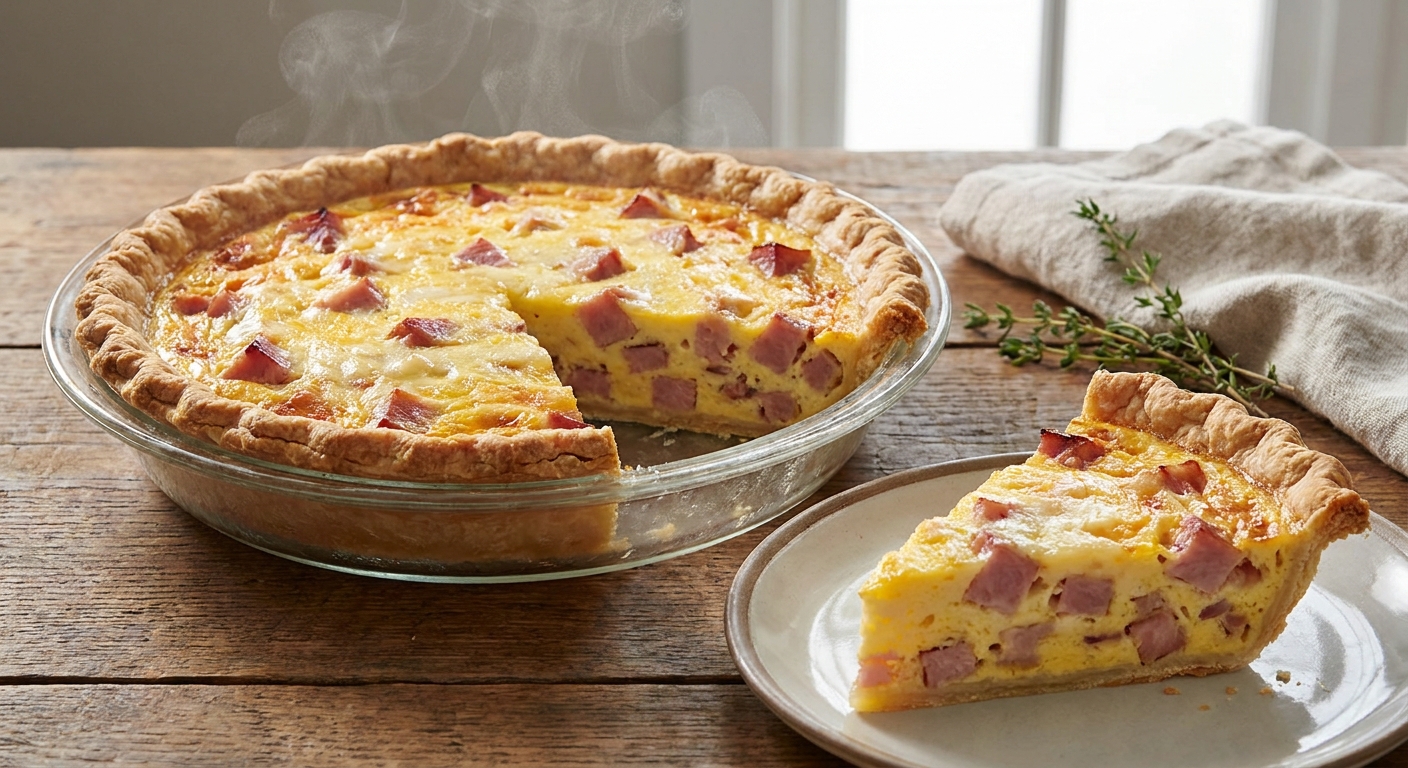
The 3 rules for clean slices
- Blind-bake the crust until it is truly dry. A pale crust soaks up custard and turns soft, which makes slices collapse.
- Use a custard ratio that sets. Too much dairy or watery add-ins can create a quiche that never fully firms up.
- Bake until the center barely jiggles, then rest. Quiche finishes setting as it cools. Cutting too soon is the fastest way to make it run.
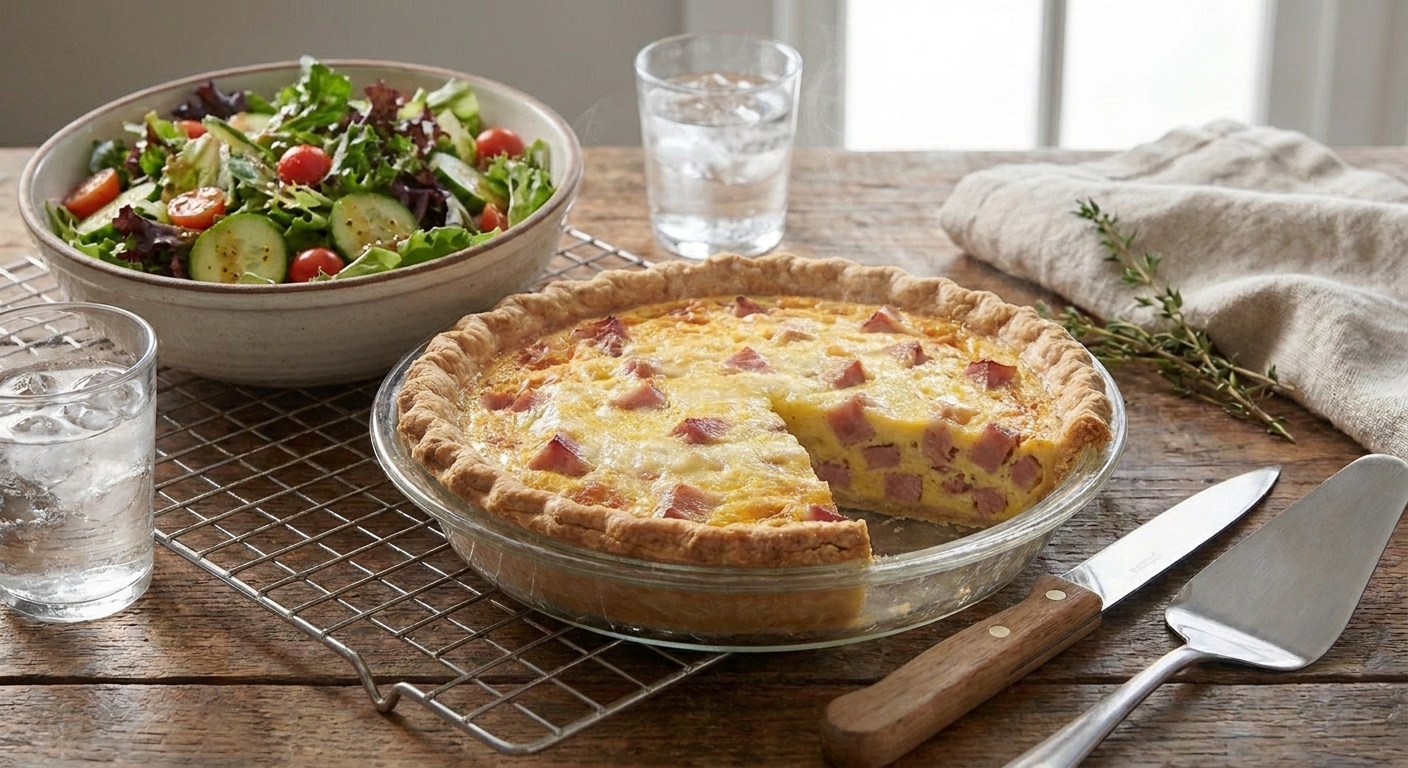
Recipe: Ham and Cheddar Quiche
This is my go-to savory quiche when I want something that feels brunch-y but still works for a weeknight dinner. The filling is classic ham and cheddar, with a little sautéed onion for sweetness. You can swap in vegetables too, and I included my favorite options below.
What you will need
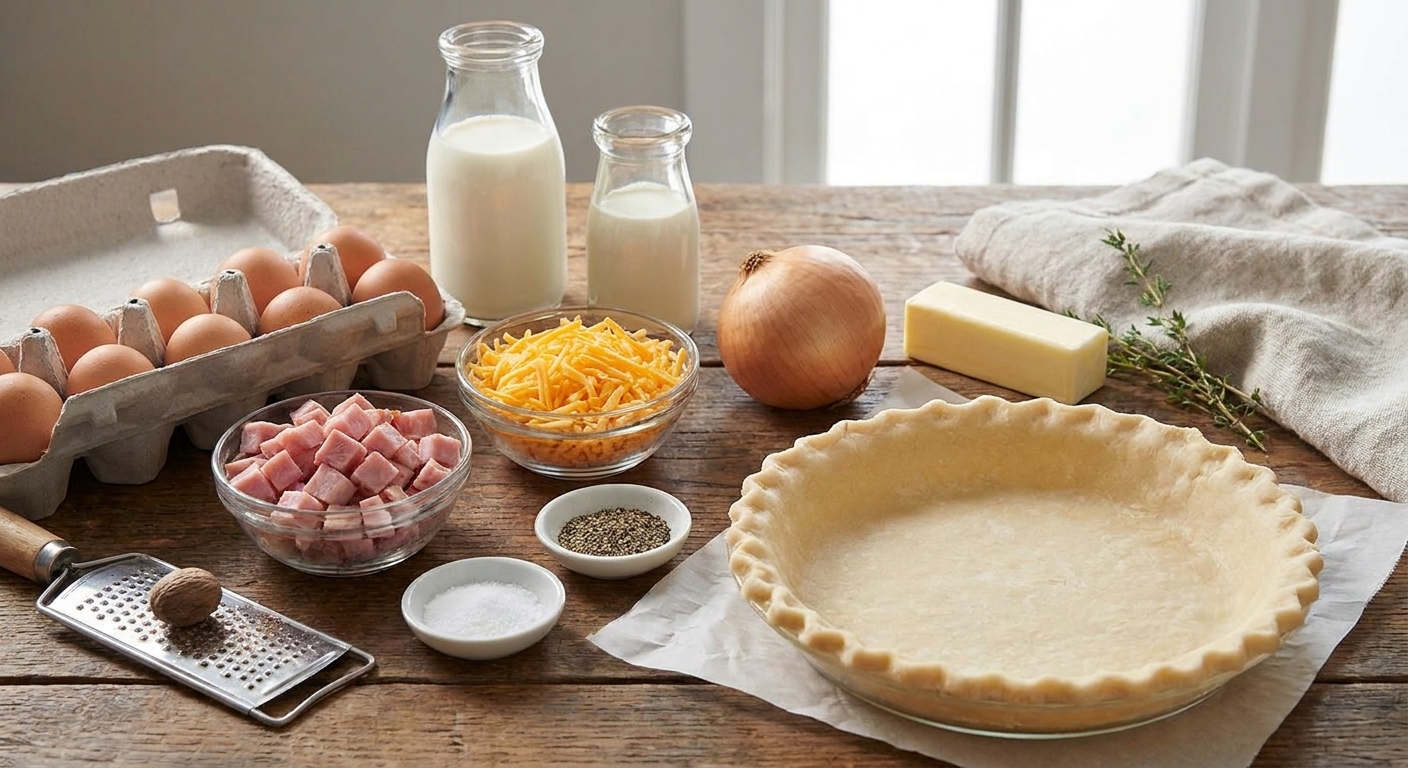
- 1 9-inch pie crust (regular, not deep dish, homemade or refrigerated)
- 1 tbsp unsalted butter
- 1/2 cup finely diced yellow onion
- 1 cup diced ham (about 6 ounces)
- 1 1/2 cups shredded sharp cheddar (about 6 ounces), divided
- 4 large eggs
- 1 cup heavy cream
- 1/2 cup whole milk
- 3/4 tsp kosher salt
- 1/4 tsp black pepper
- Pinch ground nutmeg (optional)
Why this custard ratio works
For a standard 9-inch quiche in a regular pie dish, I get the cleanest set with 4 large eggs + 1 1/2 cups dairy. It is a little firmer than some classic quiche ratios, which is exactly what I want when I am aiming for neat slices. Using a mix of cream and milk keeps it rich and tender, without feeling heavy. If you use all milk, it still sets, just with a lighter, less silky texture.
If you are using a deeper pie plate, you may need a bit more custard and bake time. Keep the egg-to-dairy balance similar and treat doneness cues as the final word.
Equipment
- 9-inch pie dish (glass or metal)
- Parchment paper or foil
- Pie weights or dried beans
- Whisk and mixing bowl
Blind-bake the crust
This is the unglamorous step that makes or breaks clean slices. Blind-baking dries the crust out so the custard stays where it belongs.
1) Heat the oven
Place a rack in the lower third of the oven. Preheat to 375°F.
2) Fit and chill the crust
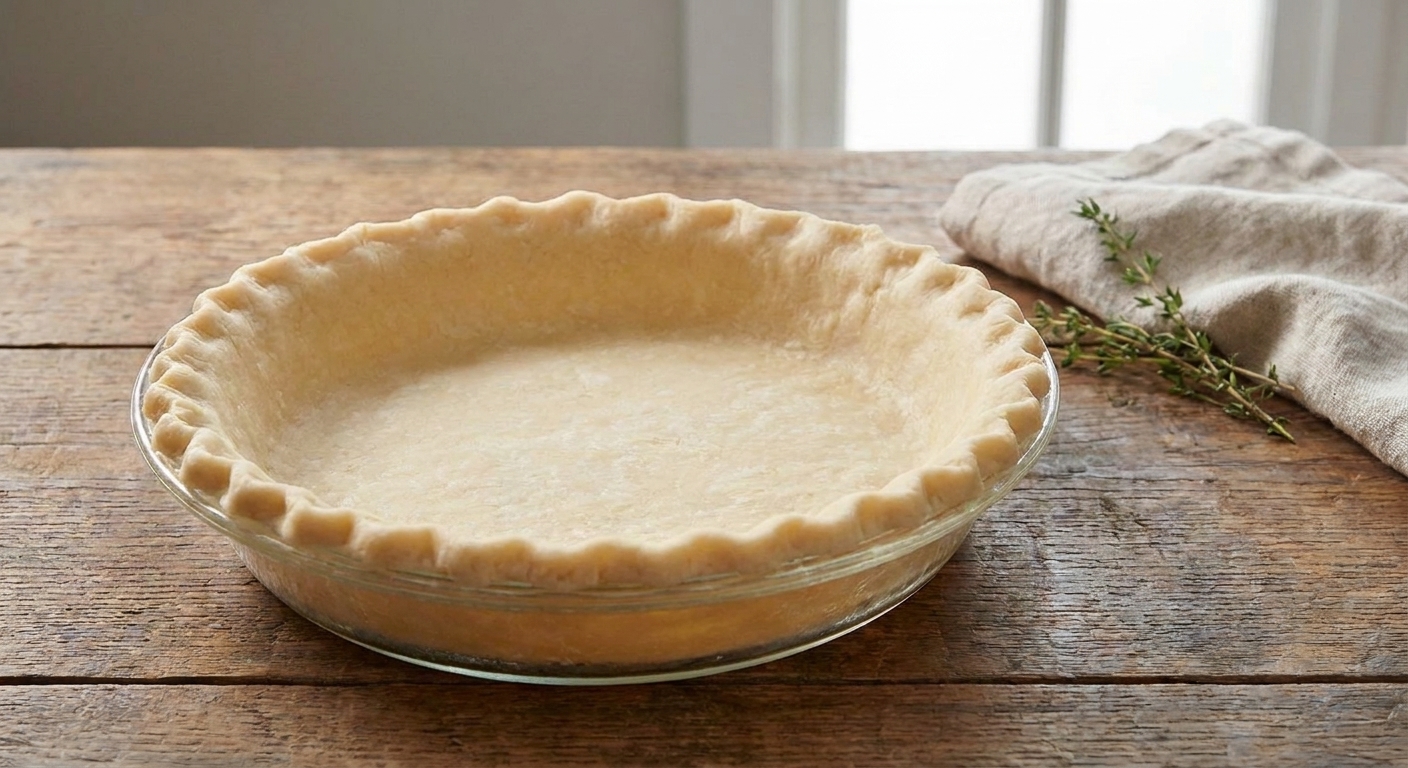
Press the pie crust into a 9-inch pie dish, crimp the edges, then refrigerate for 15 minutes. Cold dough holds its shape better.
If you are using a very soft refrigerated crust (or your kitchen is warm), give it a longer chill or freeze it for 10 minutes to help prevent slumping.
3) Dock, line, and weight
Prick the bottom all over with a fork. Line with parchment or foil, then fill with pie weights or dried beans.
4) Blind-bake
- Bake 15 minutes with weights.
- Carefully remove parchment and weights, then bake 8 to 10 minutes more, until the bottom looks dry and is just starting to turn golden.
Optional but very helpful: If your crust still looks a bit shiny in the center, bake it 2 to 3 minutes longer. A dry-looking crust is your best insurance policy.
Make the filling
1) Cook the onion
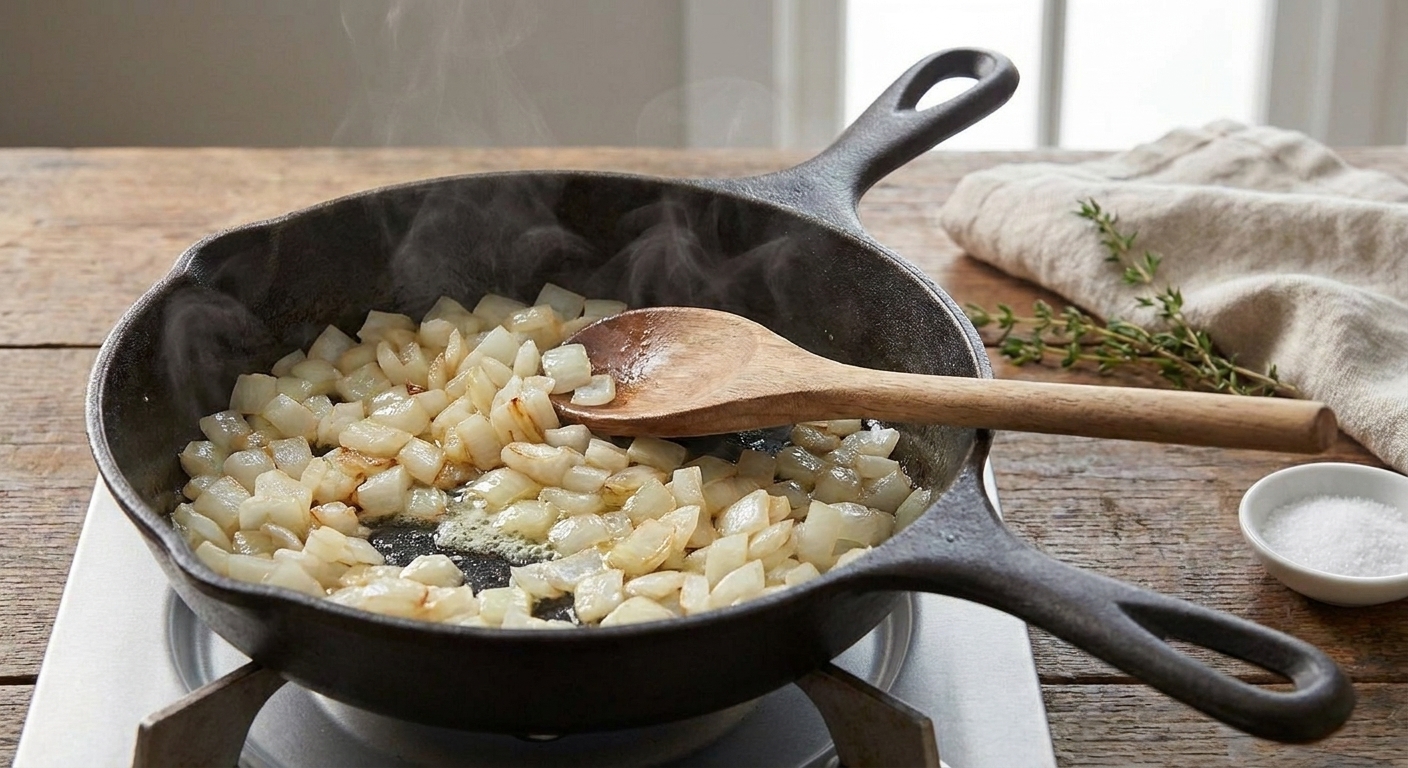
While the crust blind-bakes, melt butter in a skillet over medium heat. Add onion and cook 4 to 5 minutes, until softened. Let it cool slightly so it does not steam up the custard.
2) Layer the quiche
Reduce oven temperature to 350°F.
- Sprinkle 1 cup of the cheddar over the warm crust.
- Add the ham and sautéed onion evenly.
- Save the remaining 1/2 cup cheddar for the top.
Tip: I like cheese on the bottom because it can help create a little buffer between the custard and the crust. It is not magic, but it helps in my kitchen.
3) Whisk the custard
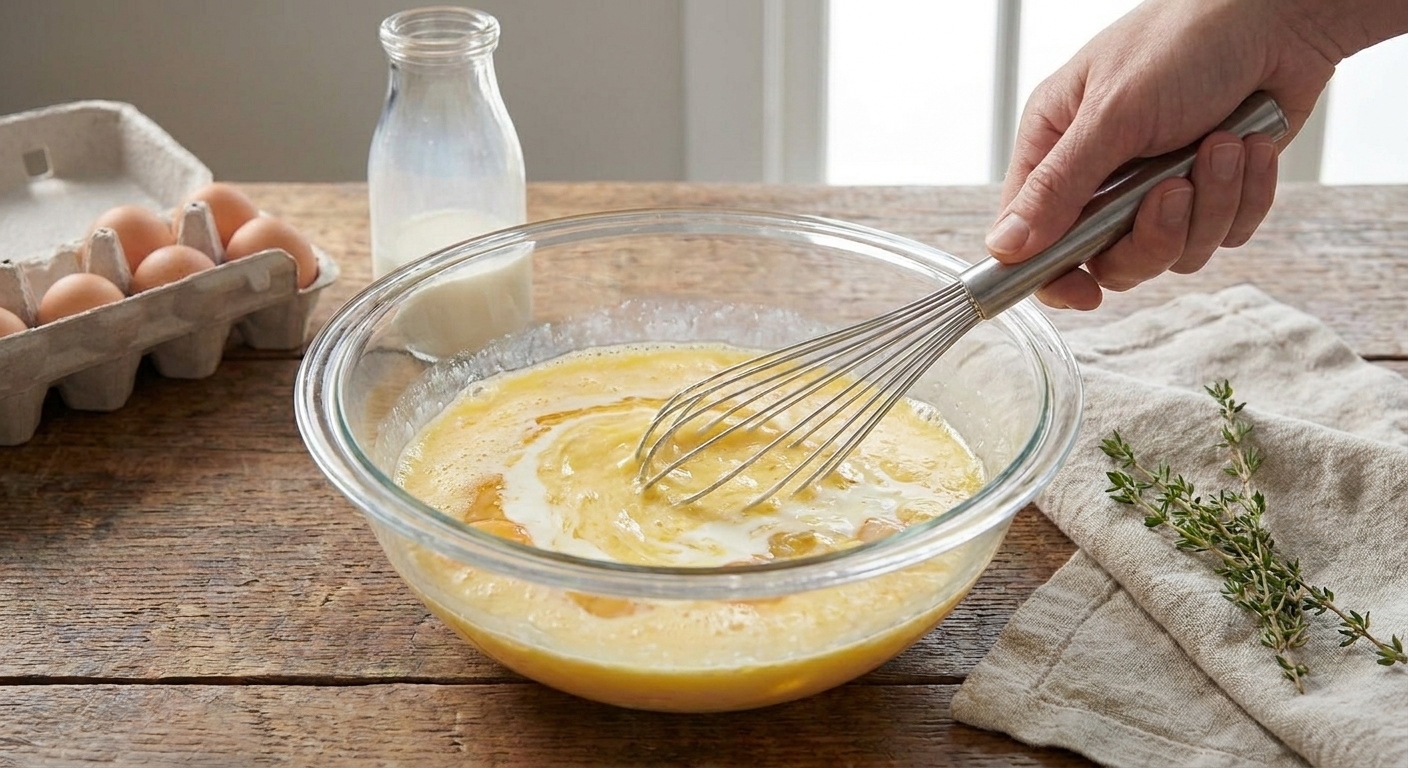
In a bowl, whisk together eggs, heavy cream, milk, salt, pepper, and nutmeg until smooth and fully combined. Try not to whip in lots of air. If you see a lot of foam, let the bowl sit for 2 to 3 minutes so bubbles rise before you pour.
4) Pour and top
Set the pie dish on a rimmed baking sheet (much easier to move). Pour the custard over the filling. Top with the remaining cheddar.
Bake until barely jiggly
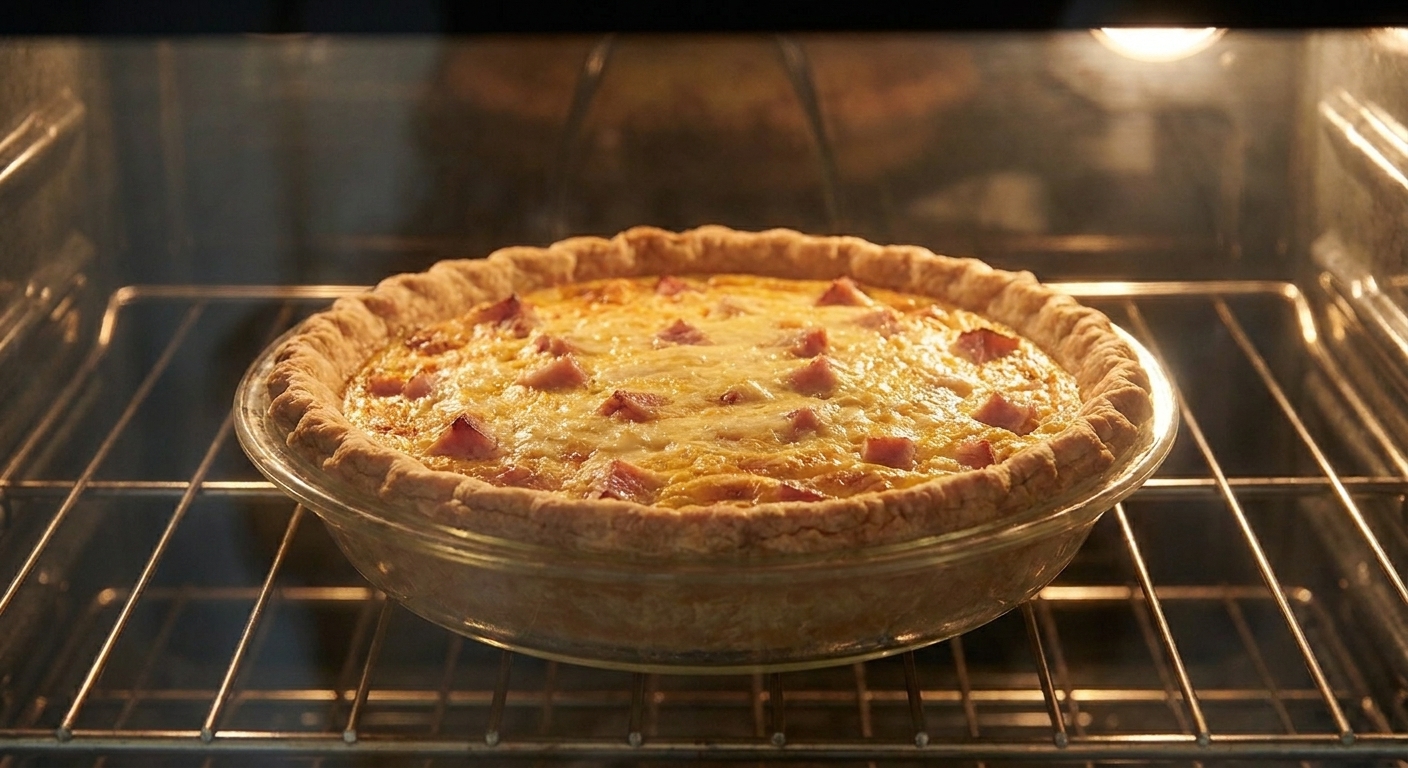
Bake at 350°F for 35 to 45 minutes. Glass pie dishes often run a little longer than metal, and deeper dishes can take longer too.
How to tell it is done
- The edges should look set and lightly puffed.
- The center should barely jiggle when you gently nudge the dish. Think: gelatin, not waves.
- A knife inserted about 1 inch from the center should come out mostly clean.
- If you like extra certainty, aim for an internal temperature around 165°F in the center.
If the crust edge is browning too quickly, loosely cover just the crust with foil for the last 10 to 15 minutes.
Rest before slicing
This is the part busy parents often find hardest, but it is the difference between a clean wedge and a runny scoop.
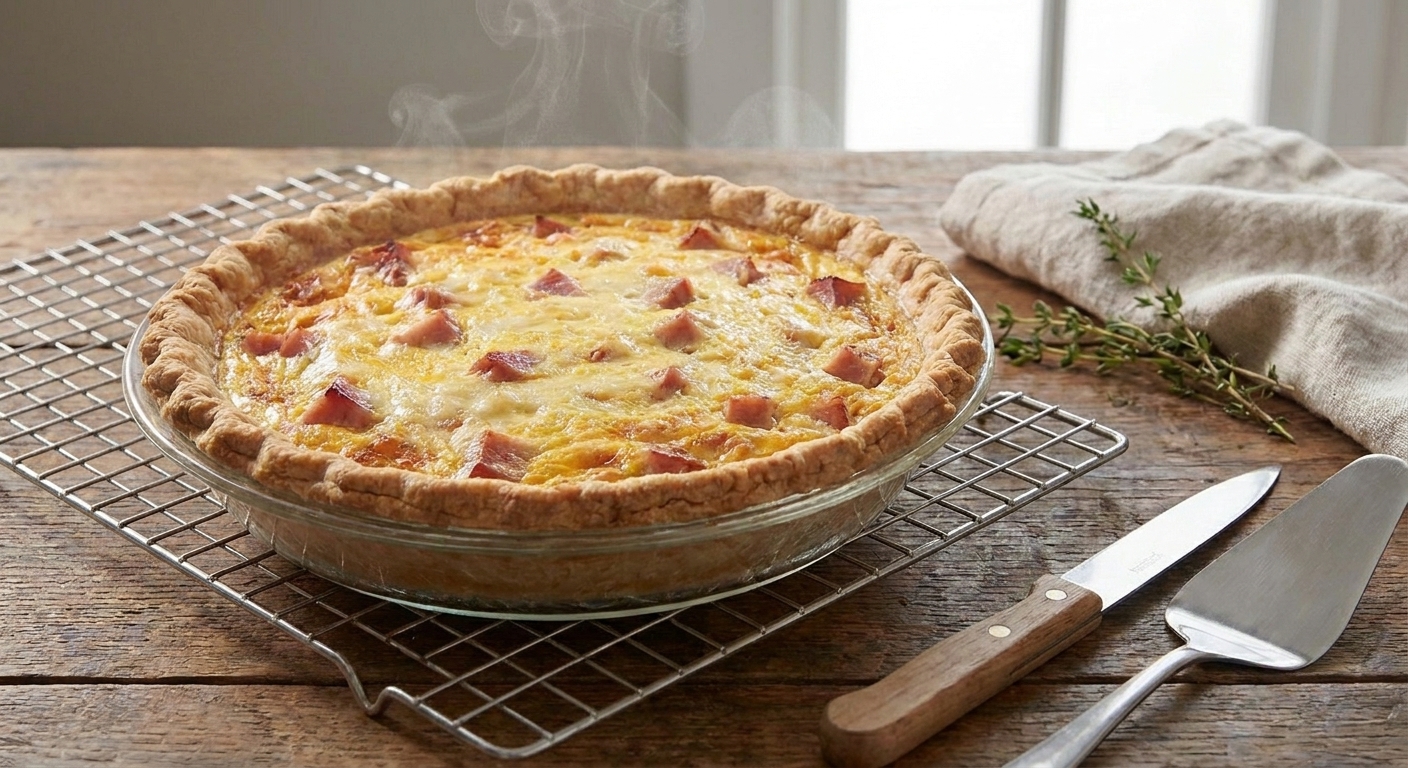
- Let the quiche cool on a rack for 20 to 30 minutes before slicing.
- For the sharpest slices, cool 45 minutes.
As it rests, the custard finishes setting and the steam settles down, so you do not get that watery layer between the filling and the crust.
Easy filling swaps
If you want a cheese-and-vegetable version, the key is removing moisture from the vegetables first. Sauté, roast, or thaw and squeeze. Also, let hot add-ins cool a bit so they do not dump steam into the custard.
Swap ideas
- Broccoli cheddar: Use 1 to 1 1/2 cups small broccoli florets, briefly steamed and patted dry.
- Spinach and feta: Use 1 cup cooked spinach, squeezed very dry, plus 3/4 cup crumbled feta and 3/4 cup shredded mozzarella.
- Mushroom Swiss: Sauté 8 ounces sliced mushrooms until they release liquid and the pan looks dry.
Moisture rule: Keep total add-ins around 2 to 2 1/2 cups so the custard stays the star and sets properly.
Make-ahead and storage
Make ahead
- Blind-bake the crust 1 day ahead: Cool completely, wrap well, and store at room temperature in a cool, dry spot, or refrigerate if your kitchen runs warm.
- Prep fillings ahead: Cook onion, dice ham, shred cheese, then refrigerate.
- Bake ahead: You can bake the whole quiche up to 24 hours in advance. Cool, cover, and refrigerate.
How to reheat
- Whole quiche: Cover loosely with foil and warm at 325°F for 15 to 25 minutes, until heated through.
- Single slices: Place on a baking sheet and heat at 325°F for 8 to 12 minutes. For a quick option, microwave on 50 percent power in 30-second bursts, but the crust will soften.
Storage
- Refrigerate leftovers in an airtight container for up to 4 days.
- Quiche can be frozen, but the custard texture is slightly less silky after thawing. If you freeze it, wrap slices well and thaw overnight in the fridge before reheating in the oven.
Troubleshooting
It is runny in the middle
- It likely needed more bake time. Keep baking in 5-minute increments until the center barely jiggles.
- Your add-ins may have been watery (spinach, mushrooms, tomatoes). Cook off moisture first and cool add-ins before using.
- If you used a deep-dish plate, it may simply need more time for the center to set.
It looks set, but slices slump
- It was cut too soon. Rest at least 20 to 30 minutes.
- The custard may be on the looser side for your dish or add-ins. For firmer, cleaner slices, keep a similar balance to 4 eggs and 1 1/2 cups dairy in a standard 9-inch plate.
The crust is soggy
- The crust was not blind-baked long enough. The bottom should look dry before adding custard.
- A layer of cheese on the bottom can help, but the biggest fix is a fully blind-baked crust and not-too-wet fillings.
Serving ideas
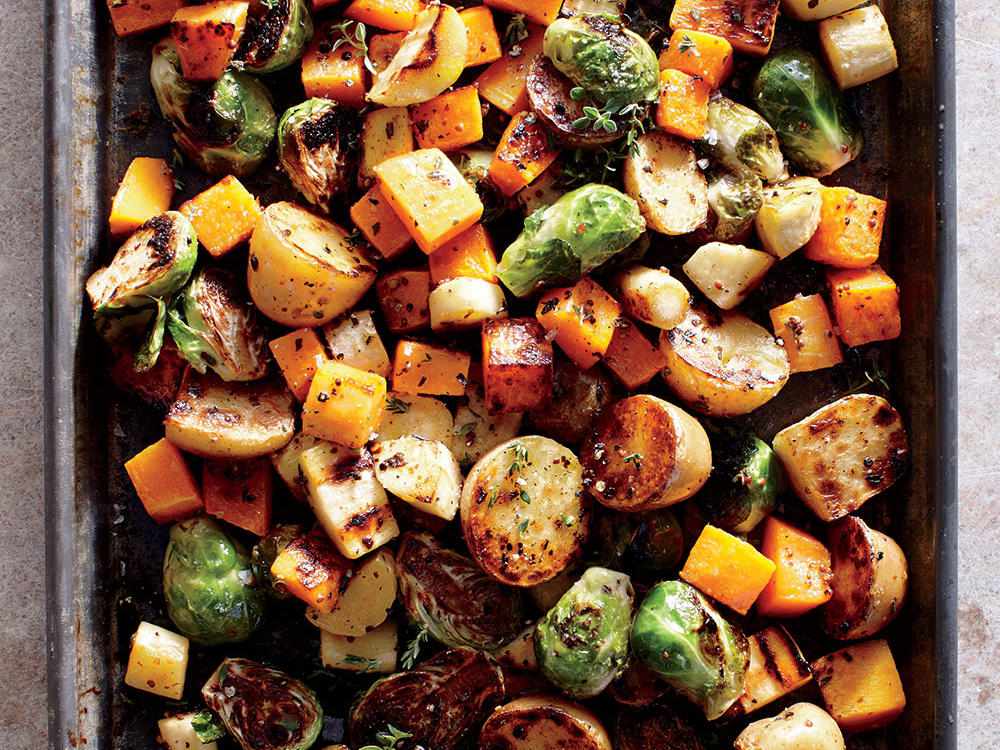
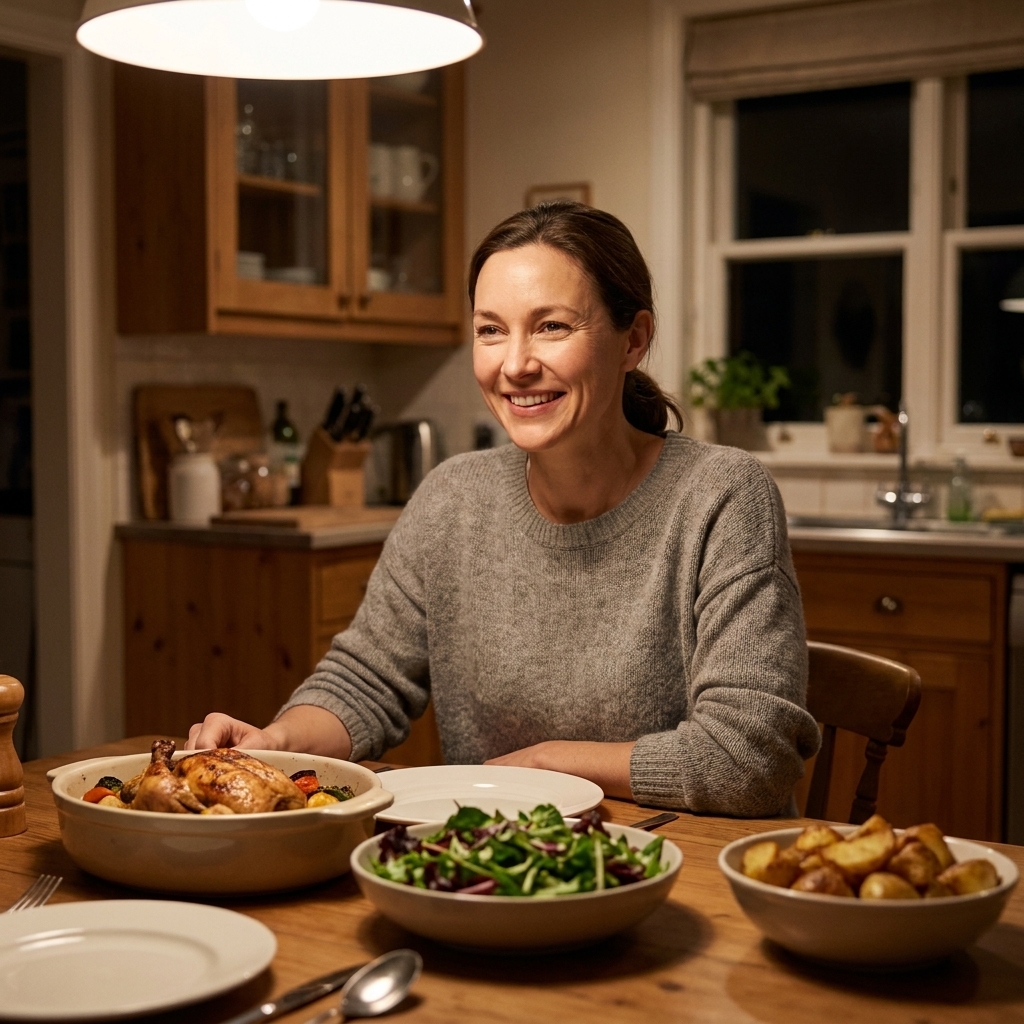
For brunch, I love quiche with a bright green salad (lemony vinaigrette is perfect) and fruit. For dinner, add roasted potatoes or a simple tomato soup on the side.