A reliable whole-turkey roast for a home oven: oven temp, minutes per pound (unstuffed), breast and thigh internal temps, rest time, and the key checks that ...
Recipe Homely
November 16, 2026
Prime Rib Temperature and Resting Time for a Pink Center

Sarah Jenkins
Sarah Jenkins is a passionate home cook and the voice behind Recipe Homely, dedicated to making everyday meals stress-free and delicious. With over a decade of experience feeding a busy family, she specializes in rigorously tested, approachable recipes for dinners, desserts, and everything in between. When she isn't developing new dishes, Sarah can be found browsing local farmers' markets or baking with her two children.
Prime rib is my favorite holiday dinner because it feels special but it does not require you to babysit a pot all day. What it does require is two things busy home cooks rarely get handed with confidence: the right temperature to pull the roast and the patience to rest it long enough so the center stays pink instead of turning gray on the cutting board.
This is the standing rib roast method I use in my very average-sized oven, tested more than once because my kids will absolutely call me out if it is overcooked. If you want that classic rosy center with a browned crust and slices that stay juicy, this is the roadmap.
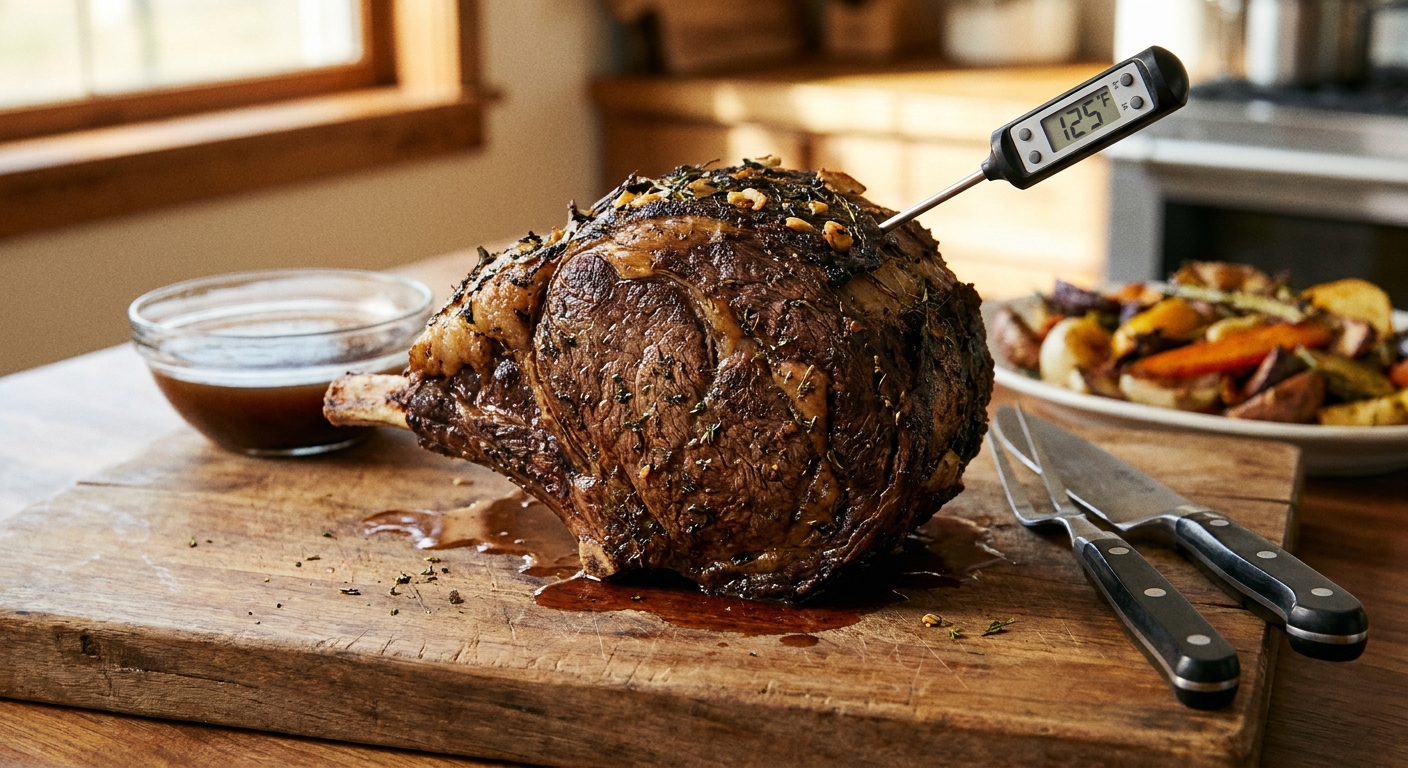
What makes it pink (and what ruins it)
A pink center comes down to three controllable things:
- Even starting temperature: taking the chill off helps the roast cook more evenly.
- Pulling at the right internal temperature: prime rib continues cooking after it leaves the oven.
- A real rest: resting finishes the cook gently and keeps juices from flooding your cutting board.
The biggest pink-center killer is overcooking by “just a few more minutes.” With prime rib, a few minutes can be the difference between rosy and medium-well.
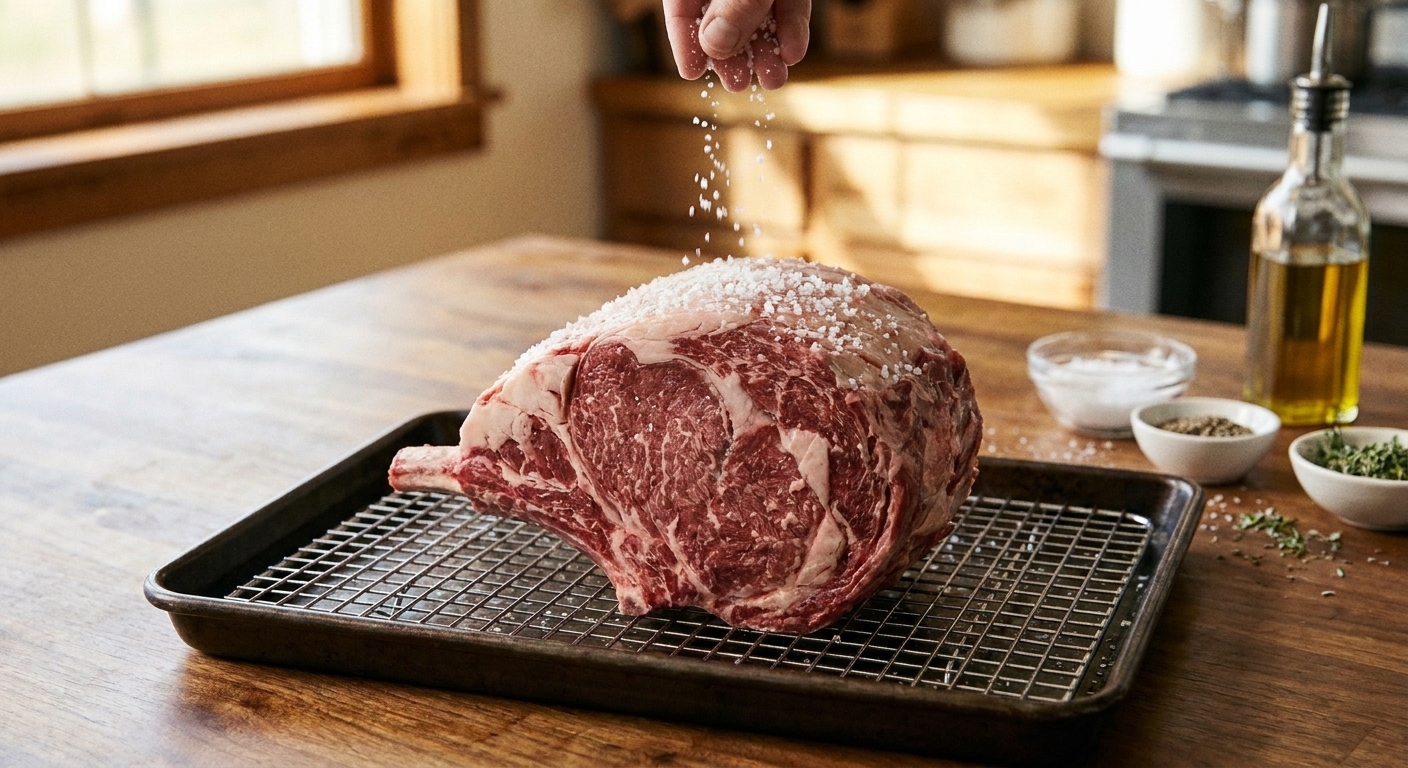
How to salt ahead (do this if you can)
If you only adopt one habit from this post, let it be this: salt early. Dry brining seasons the meat all the way through and dries the surface so you get a better crust.
Option A: Dry brine overnight (best)
- Unwrap and pat dry the roast with paper towels.
- Salt all over (including sides and ends) with kosher salt. I use about 1/2 teaspoon kosher salt per pound as a reliable starting point.
- Place on a rack set in a rimmed baking sheet and refrigerate uncovered for 12 to 24 hours.
Uncovered in the fridge looks a little strange the first time you do it, but it is the secret to that steakhouse-style crust.
Option B: Salt a few hours ahead (still helpful)
If overnight is not happening, salt the roast and refrigerate uncovered for 2 to 4 hours.
Option C: No time to pre-salt
Pat dry very well, salt right before roasting, and know you will still get a delicious roast. The interior seasoning just will not be as deep.
What you need
- Standing rib roast (prime rib), ideally 2 to 4 ribs for most family dinners
- Kosher salt and black pepper
- Garlic and fresh herbs (optional but lovely): rosemary, thyme
- Oil or softened butter for the exterior (helps pepper and herbs stick)
- Rimmed roasting pan and rack (a rack helps with even cooking)
- Instant-read thermometer plus ideally a probe thermometer for the roast
About bones: Bone-in roasts are forgiving and flavorful. If yours is boneless or the butcher tied the bones back on, you can use the same temperature targets below.
Quick probe note: If you use a leave-in probe for the roast, check the manufacturer’s max temperature. Some probes can handle a 450°F finish and some cannot, so you may need to pull the probe before the high-heat blast and spot-check with an instant-read thermometer instead.
Oven temp for a pink center
In my home oven, the most consistent method is a low roast to gently bring the center to the right temperature, then a hot finish for crust.
My approach: low then high
- First stage: 250°F to cook evenly edge-to-edge
- Second stage: 450°F to brown and crisp the outside
This gives you a wider band of pink and less of that thick gray ring.
If you only want one oven temperature: Roast at 325°F the whole time. It works, but you usually get a slightly thicker cooked edge. The pull temperatures and resting rules are the same.
When to pull prime rib
If you want a pink center (medium-rare), this is the key:
- Pull at 118 to 125°F in the thickest center for medium-rare after resting.
Carryover cooking during the rest typically raises the internal temperature about 5 to 10°F. The hotter and longer your 450°F finish is, and the larger your roast is, the more that number can creep. If you are nervous, aim for the higher end of the pull range and keep a close eye during the crust step.
Temperature guide (final doneness after resting)
- Rare: pull 113 to 118°F, rest to about 120 to 125°F
- Medium-rare (classic pink): pull 118 to 125°F, rest to about 125 to 135°F
- Medium: pull 125 to 130°F, rest to about 135 to 145°F
Important: Insert the thermometer into the center of the thickest part, avoiding bone and fat pockets.
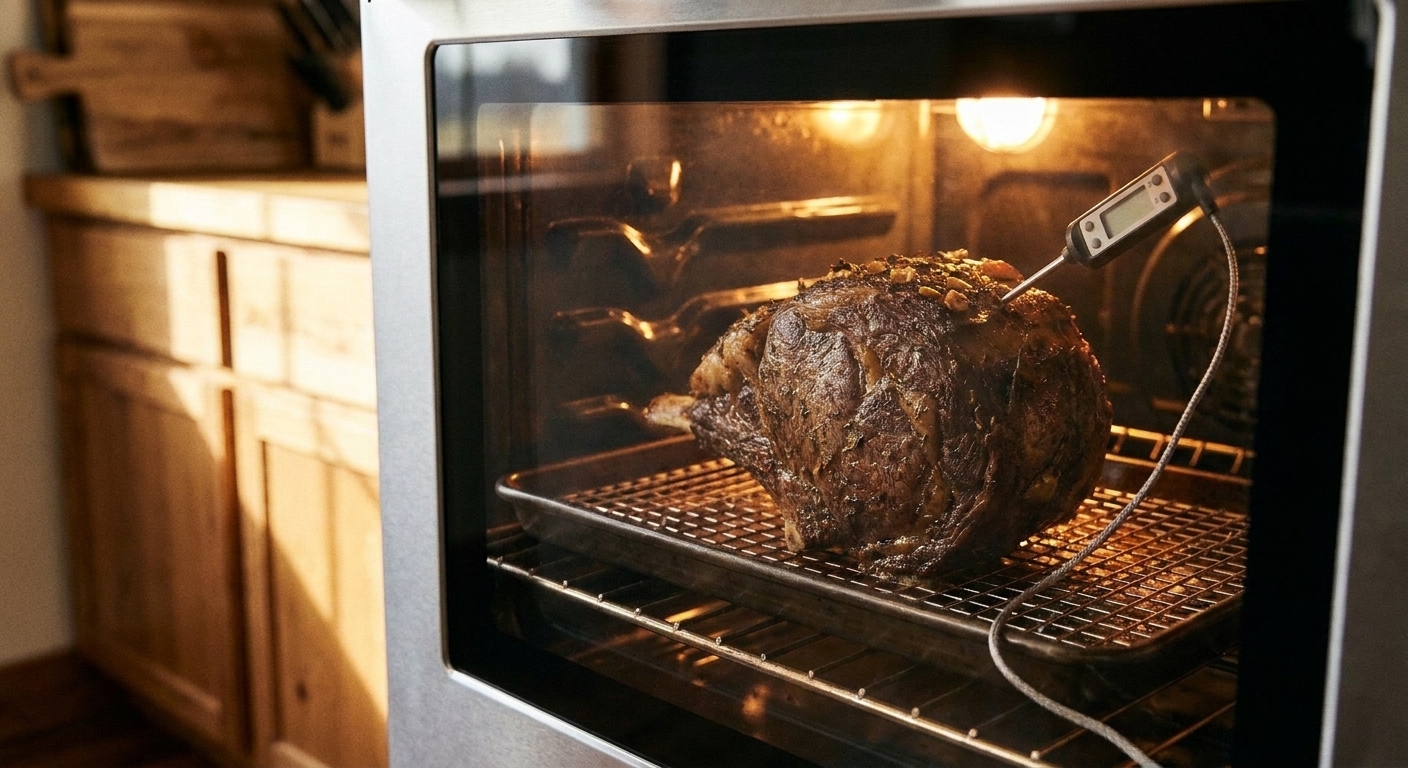
Step-by-step: standing rib roast
1) Take the chill off
About 1 to 2 hours before roasting, set the roast out at room temperature. You are not trying to “warm it up,” just taking the harsh fridge chill off for more even cooking.
2) Preheat and prep the pan
Heat oven to 250°F. Set a rack in a rimmed roasting pan. If you do not have a rack, thickly sliced onions can act as a makeshift lift.
3) Season simply
If you already dry brined, you can usually skip extra salt or add just a light touch. Pepper generously. If you like, rub the exterior with a little oil or softened butter, plus minced garlic and chopped rosemary or thyme.
4) Roast low and slow
Roast at 250°F until the center hits your pull temperature. Timing varies wildly by roast size and shape, so I plan by temperature, not minutes. As a very rough planning estimate, many roasts take about 20 to 40 minutes per pound at 250°F, but your thermometer is the boss.
5) Pause, then blast for crust
When the roast hits your pull temperature, take it out and rest 20 to 30 minutes while you increase the oven to 450°F. You are not cooling it down to room temperature. It stays plenty warm on the counter, and this pause helps keep the outside from overcooking during the hot finish.
Return the roast to the oven at 450°F for 8 to 12 minutes, just until the crust looks deeply browned. If you have a probe in, keep an eye on the internal temp because the blast can add a few degrees faster than you expect.
6) Now do the full rest
Transfer roast to a cutting board and rest at least 30 minutes, and up to 45 minutes for a larger roast. Do not tent tightly with foil. If you want to cover, drape foil loosely so it does not trap steam and soften your crust.
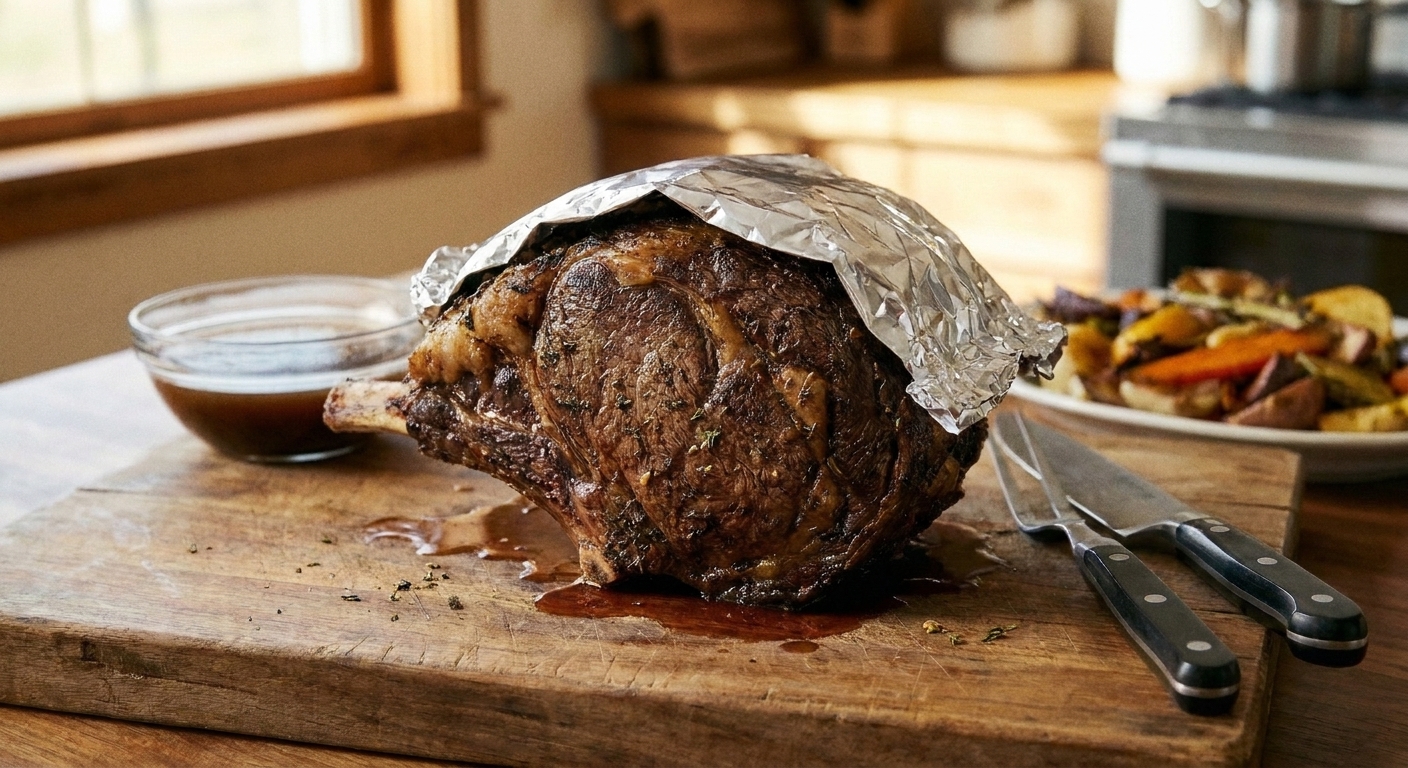
Why resting works
Resting is not just to “let it cool.” During the rest:
- Carryover cooking gently finishes the center to the doneness you want.
- Juices settle so you lose less moisture when you slice and the roast stays juicier.
If you carve too soon, hot pressure inside the roast pushes more liquid out onto the board, and the slices can eat drier than they should.
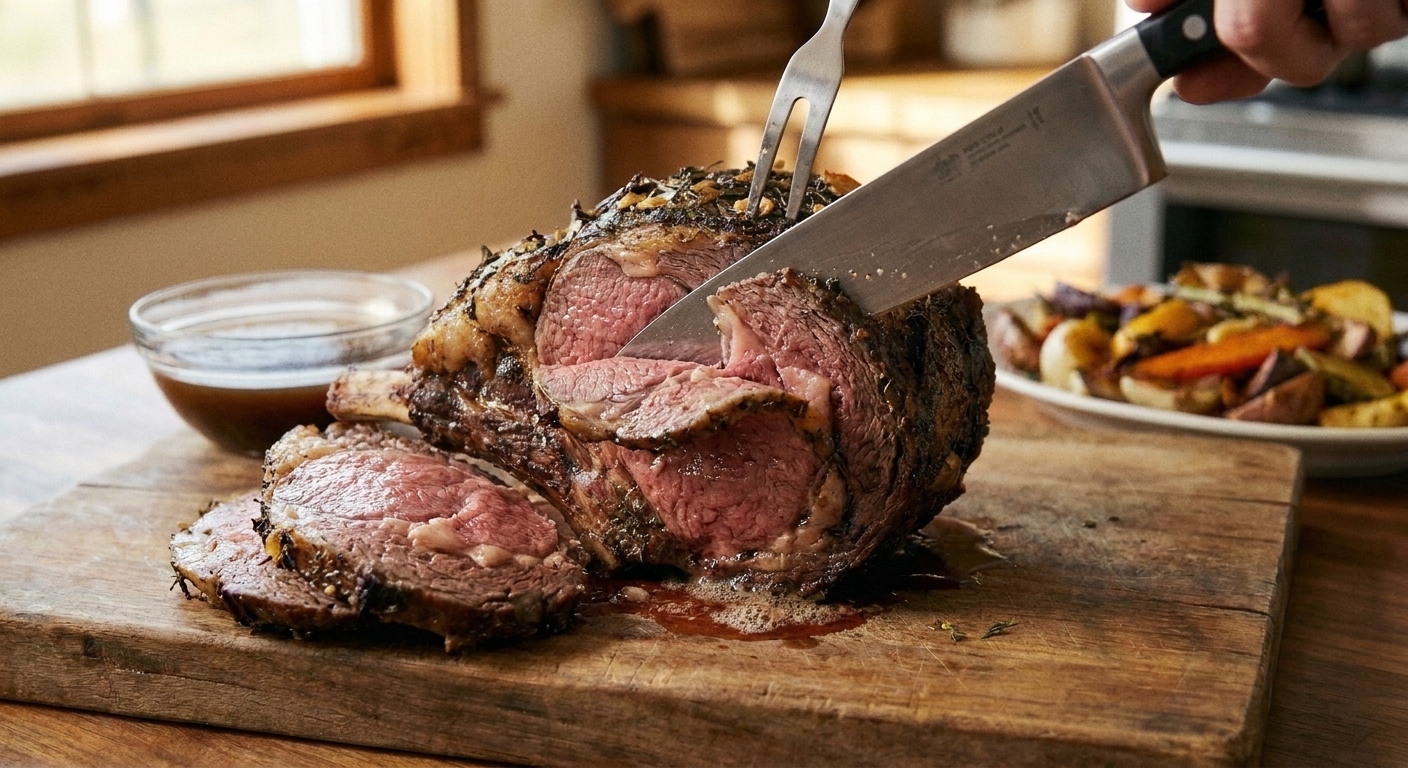
How to carve prime rib
- If bones are attached, stand the roast on its side and slice along the bones to remove the rack in one piece. (You can snack on those chef treats later.)
- Slice the roast across the grain into 1/2-inch to 1-inch slices, depending on your crowd.
- Sprinkle each slice with a pinch of flaky salt right before serving if you like.
Quick pan-drippings jus
I love a creamy horseradish sauce with prime rib, but a simple jus is the easiest win because you are already holding a pan full of flavor.
Simple jus method
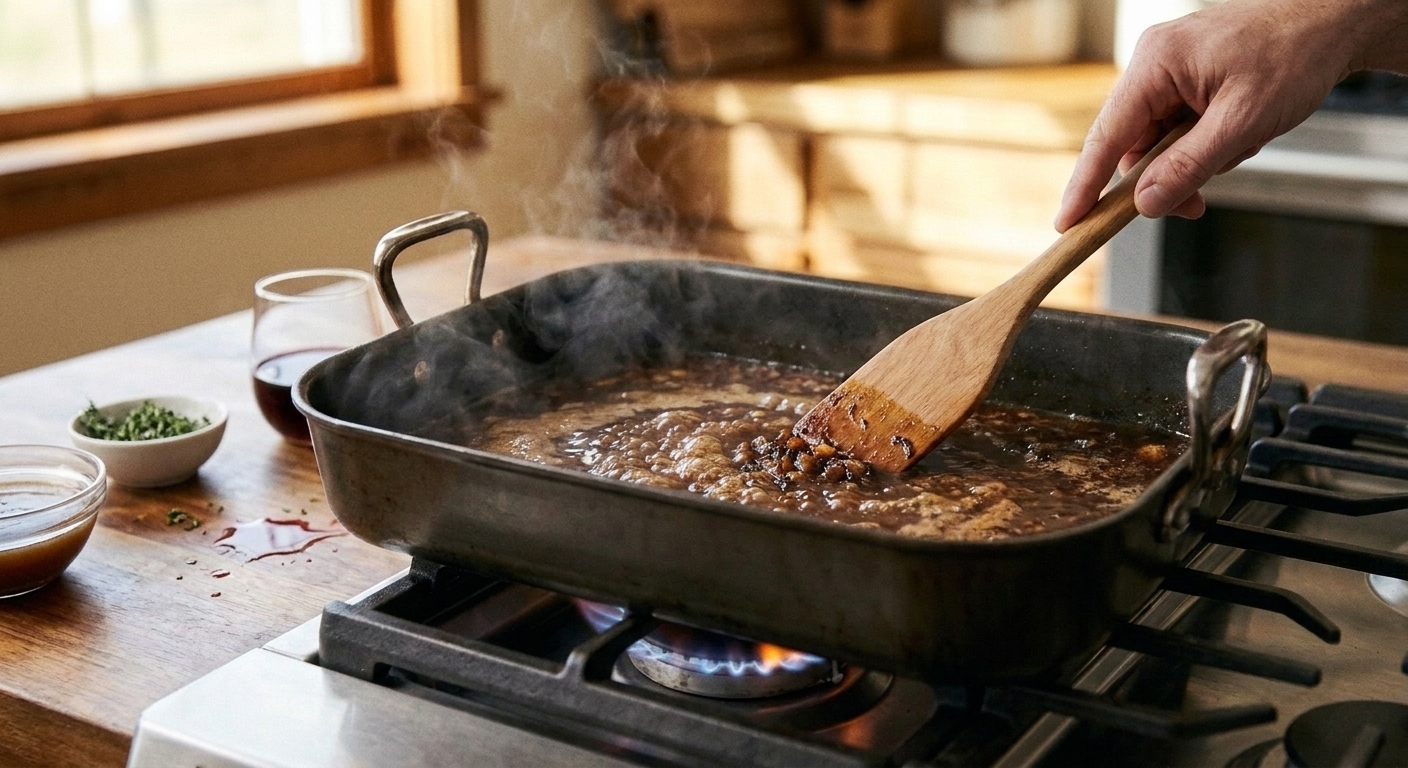
- Pour off all but 2 to 3 tablespoons of fat from the roasting pan. Keep the browned bits.
- Set the pan over medium heat on the stovetop.
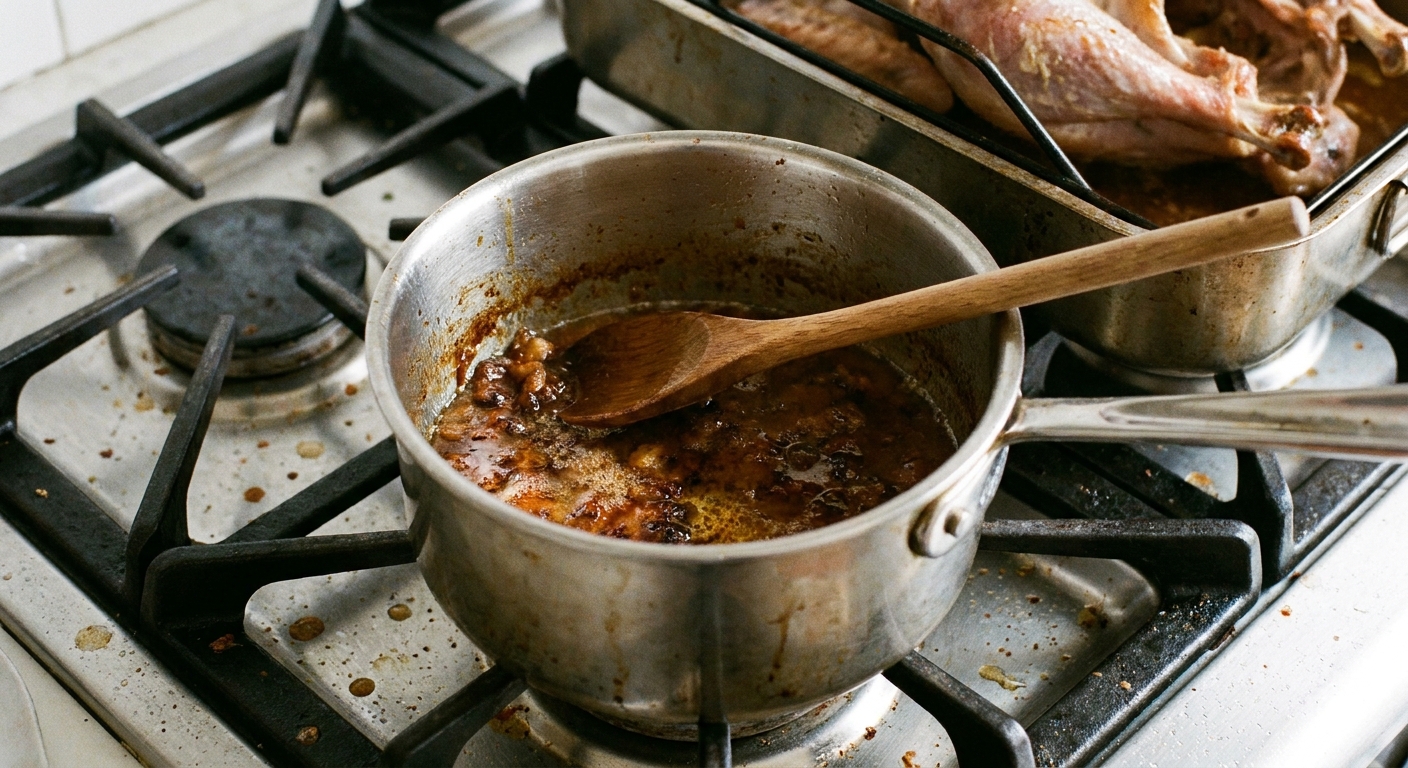
- Add 1 to 2 cups beef broth (low sodium is best). Scrape up the browned bits with a wooden spoon.
- Simmer 3 to 6 minutes until it tastes rich.
- Finish with 1 teaspoon Worcestershire (optional) and black pepper. Taste before adding salt, since drippings can be salty.
- Strain for a smooth jus, or serve as-is if your family loves the rustic bits like mine does.
Make-ahead note: Jus is best fresh, but you can simmer it earlier and gently rewarm right before dinner.
Dinner timing I use
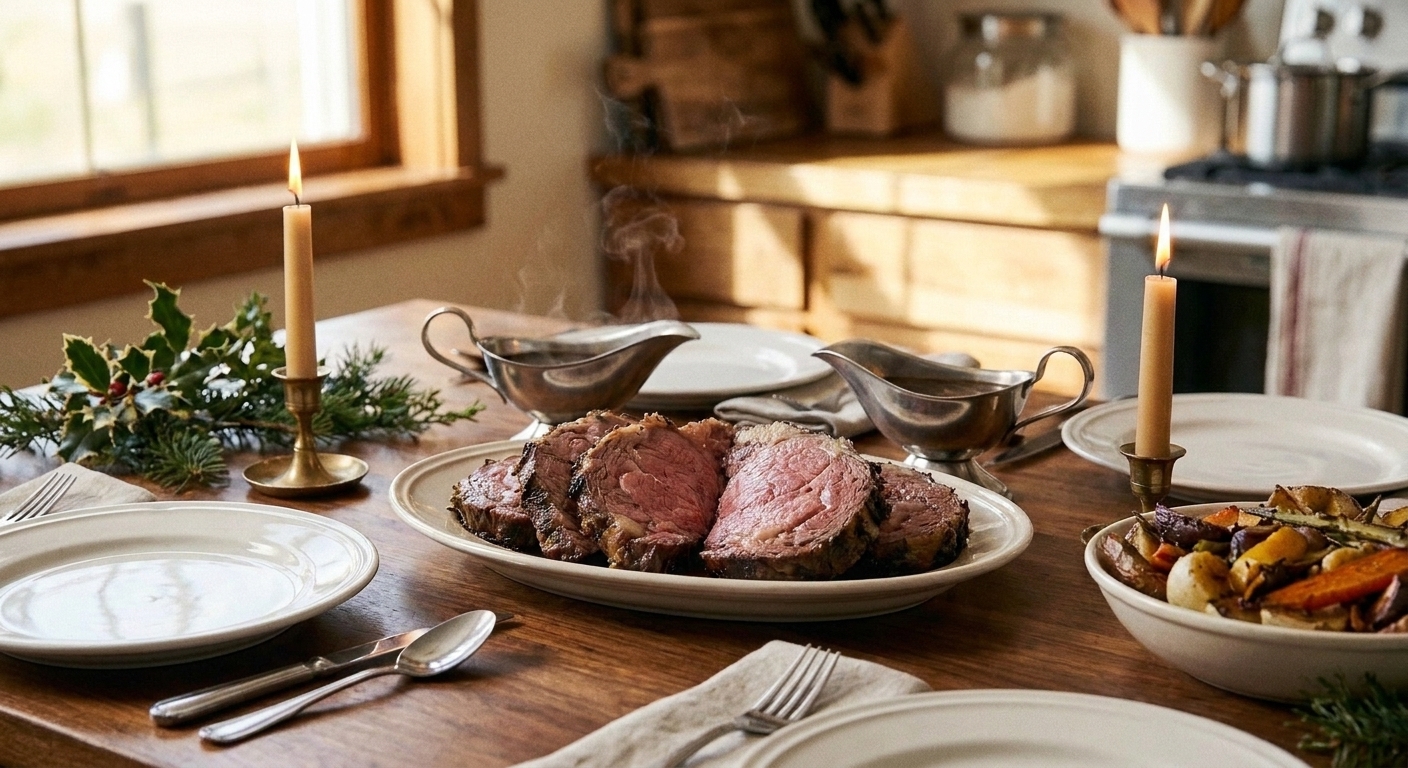
If dinner is at 6:00 PM and you want calm energy in the kitchen, this is a sane rhythm. This timing assumes a roughly 4 to 6 pound roast, and it can easily run earlier or later depending on your oven and your meat, so build in cushion.
- Day before: dry brine (salt and refrigerate uncovered)
- 2:00 PM: set roast out to take the chill off
- 3:00 PM: roast goes in at 250°F (starting earlier is never a regret)
- 5:00 PM-ish: pull in the 118 to 125°F range, rest while oven heats to 450°F
- 5:30 PM-ish: quick high-heat crust
- 5:40 PM to 6:15 PM: full rest (make jus, set the table, breathe)
- 6:15 PM: carve and serve
I know that looks like a lot of resting, but that is the point. The roast is doing the work while you get to be present with your people.
Troubleshooting
My roast is browning too fast
At 250°F, it usually will not. If you are doing 325°F and it is getting too dark, loosely tent with foil and keep going until the internal temp is right.
My roast is done early
This happens. If you pull at the right temperature, you can rest it longer, up to about 60 to 75 minutes, especially for a larger roast. Keep it in a warm spot and tent loosely. Slice right before serving.
I do not have a rack
Use thick onion slices or halved carrots under the roast to lift it. It will still be delicious.
Why is my center not pink?
The usual culprits are thermometer placement (too close to bone) or cooking past the pull temp “just to be safe.” If you want pink, trust the thermometer and the rest.
FAQ
What internal temperature gives a pink center?
For a classic pink center (medium-rare), pull the roast at 118 to 125°F, then rest fully. It will usually rise into the 125 to 135°F range, sometimes a touch higher if the roast is large or your high-heat finish runs long.
How long should prime rib rest before carving?
At least 30 minutes. For a larger roast, 45 minutes is even better. This is where juiciness and that rosy center get locked in.
Do I need to sear prime rib before roasting?
Not with the low-then-high method. The high-heat finish gives you the crust without overcooking the interior.
Can I season with butter and herbs?
Yes. Just keep the salt plan in mind. If you dry brined overnight, you likely need less additional salt the day of roasting.
Is it safe to serve prime rib medium-rare?
A whole, intact roast is different from ground beef. Many people serve prime rib medium-rare, especially when it has been handled and stored properly. If you are cooking for someone who is pregnant, elderly, immunocompromised, or otherwise needs stricter food safety rules, you may prefer cooking closer to medium.