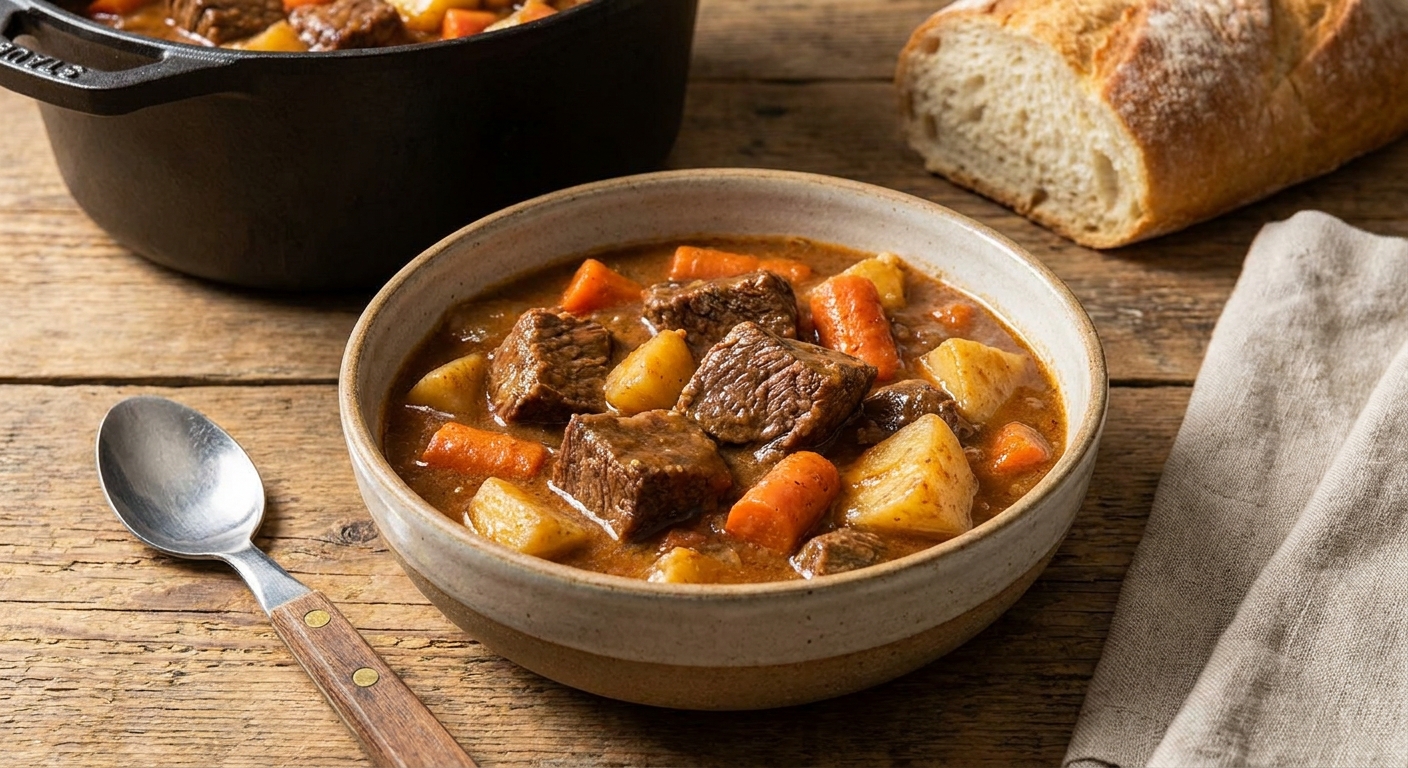
A rigorously tested Dutch oven beef stew with browned chuck roast, tender vegetables that hold their shape, and a rich, thick gravy. Step-by-step times plus ...
Recipe Homely
November 15, 2026
How to Store, Freeze, and Reheat Beef Stew

Sarah Jenkins
Sarah Jenkins is a passionate home cook and the voice behind Recipe Homely, dedicated to making everyday meals stress-free and delicious. With over a decade of experience feeding a busy family, she specializes in rigorously tested, approachable recipes for dinners, desserts, and everything in between. When she isn't developing new dishes, Sarah can be found browsing local farmers' markets or baking with her two children.
Beef stew is one of those dinners that feels like a gift to your future self. I usually make a big Dutch oven (my kids call it “the cozy dinner”), and the next day it somehow tastes even better. The only catch is storing it the right way so it stays safe, the beef stays tender, and the gravy does not turn grainy or separate.
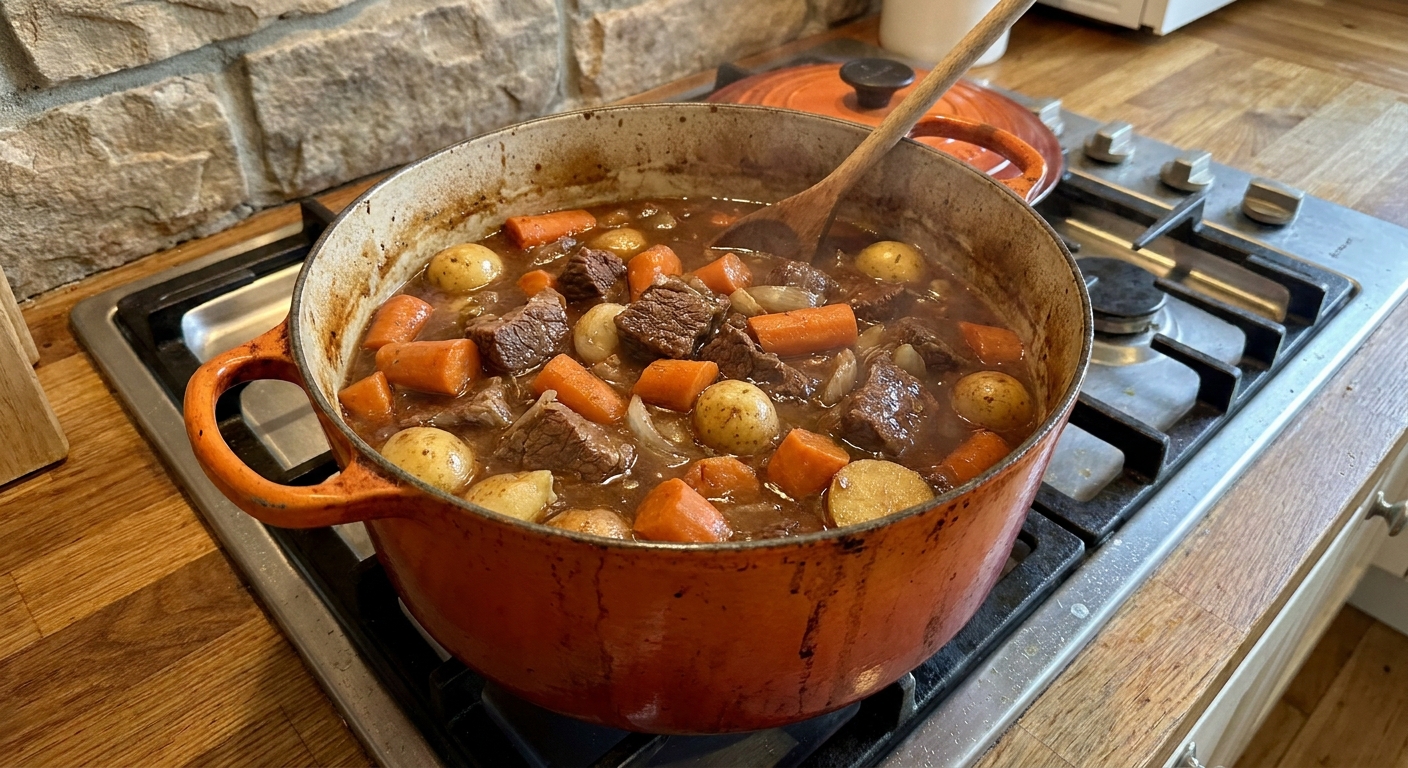
This guide is all about what to do after your stew is cooked: cooling, refrigerating, freezing, thawing, and reheating.
How long beef stew lasts
- Refrigerator: 3 to 4 days in a covered container.
- Freezer (best quality): about 3 months.
- Freezer (food safety): if kept at 0°F (-18°C) and continuously frozen, it stays safe indefinitely, but quality drops over time (freezer burn, softer vegetables, duller flavor).
If your stew contains seafood or dairy added at the end, the storage timeline does not get longer. I still use the same general timeline, but I am extra strict about fast cooling and airtight containers, and I expect seafood texture to go downhill sooner.
Cooling a big pot safely
Cooling is where most leftovers go wrong, especially with a full Dutch oven. A big pot holds heat for a long time, and you want it cooled and refrigerated promptly.
Food-safety cue: If your stew has been sitting out at room temperature for more than 2 hours (or more than 1 hour if it is a very hot day or your kitchen is warm), it is safest to discard it. Reheating does not make food that sat out too long safe again.
If you like a clear target: The classic cooling guideline is to cool cooked foods from 135°F to 70°F within 2 hours, then from 70°F to 41°F within 4 more hours. At home, the easiest way to hit this is portioning into shallow containers and getting it into the fridge quickly.
My fastest, no-fuss method
- Turn off the heat and let the stew sit 10 to 15 minutes so the bubbling calms down.
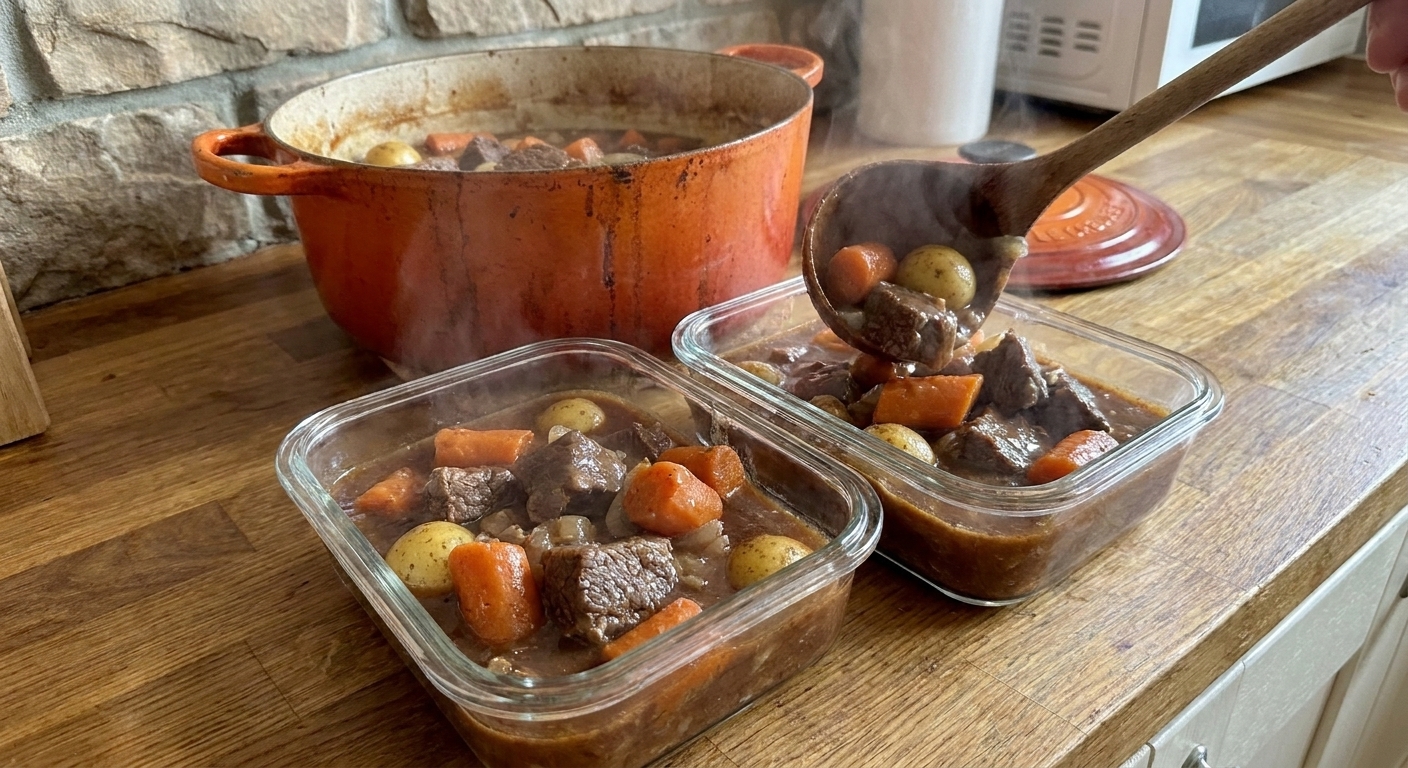
- Portion it into shallow containers (this is key). Aim for about 2 inches deep so it cools quickly.
- Leave lids slightly cracked until the steam slows, then cover tightly and refrigerate.
If you made a huge batch
- Ice bath boost: Place the pot (or your containers) in a clean sink or large basin filled with ice water. Stir the stew every few minutes to release heat faster. Keep water below the rim so it cannot splash in.
- Stir to cool: Stirring helps heat escape, especially with thick gravy.
- Do not refrigerate the whole hot Dutch oven: It cools too slowly in the center, and it can warm up your fridge.
Best containers for stew
Beef stew stores best when it is airtight and portioned. I like to divide it into a few meal-sized containers so we can reheat only what we need.
- Glass containers with locking lids: Great for avoiding stains and odors, and they reheat nicely.
- Heavy-duty freezer-safe plastic: Lightweight and family friendly if you are packing lunches.
- Freezer bags (space saver): Perfect if freezer space is tight. Freeze flat on a baking sheet, then stand them up like books.
Headspace tip: Leave a little room at the top because stew expands as it freezes. This prevents cracked containers and popped lids.
Label it: I date the container (and note “beef stew”) before it goes into the fridge or freezer. It keeps me honest on day 4, and it saves mystery-meal stress later.
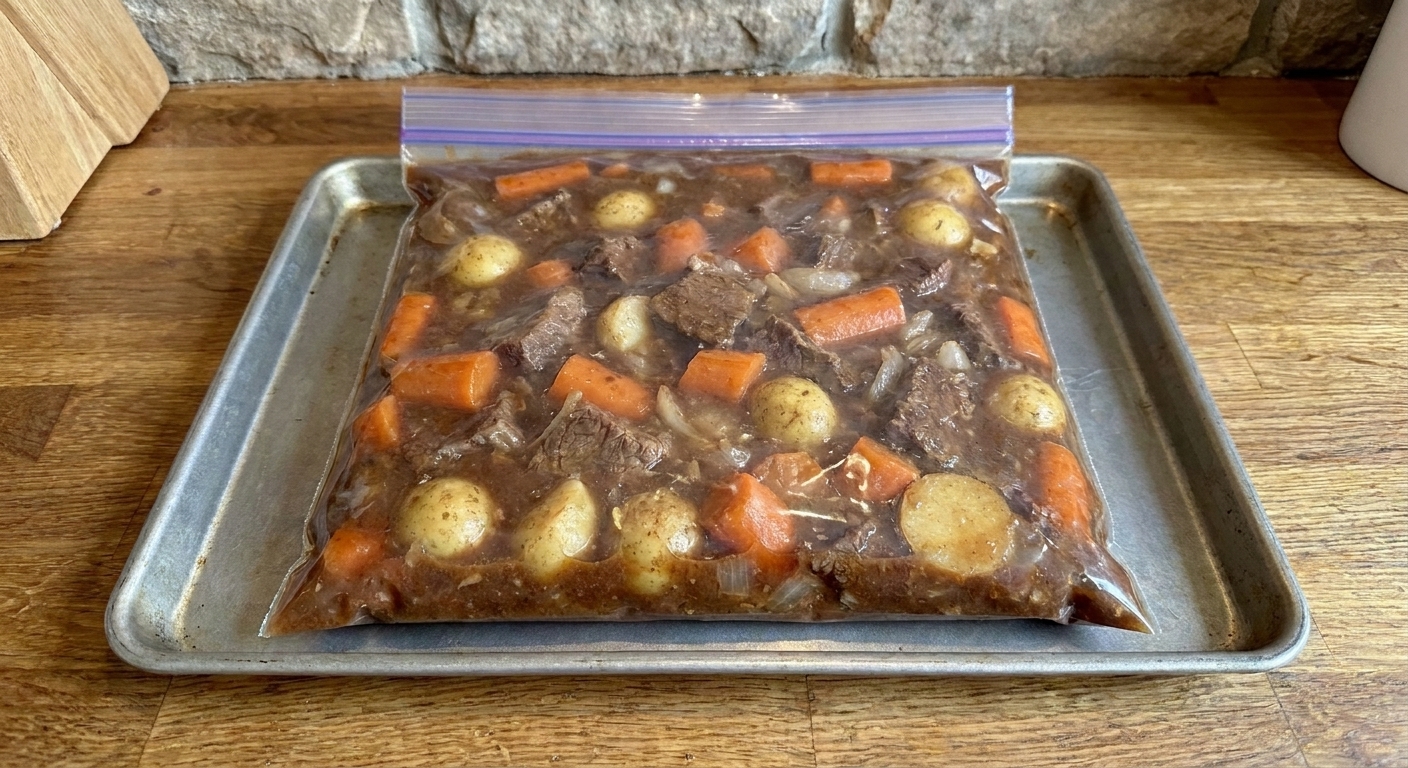
How to freeze beef stew
The goal is to protect flavor and texture. Stew freezes well, but potatoes and some vegetables can soften after thawing. It is not dangerous, just a texture change.
Freezing steps I use
- Cool completely using the shallow-container method above.
- Choose portions (single servings, family-size, or both).
- Pack it airtight with a little headspace. For bags, press out extra air.
- Freeze quickly by placing containers in the coldest part of the freezer (ideally kept at 0°F (-18°C)).
Texture notes
- Beef: Usually stays great, especially if it is well-braised and surrounded by gravy.
- Potatoes: Can turn a bit grainy or soft. Waxy potatoes tend to hold up better than very starchy ones.
- Carrots and celery: Usually fine, slightly softer.
- Thickened gravy: Can look separated after thawing, but it often comes back together while reheating with gentle heat and stirring.
How to thaw beef stew
Thawing gently helps the gravy stay smooth and helps the beef reheat without drying out.
Best option: fridge thaw
- Move the frozen container to the fridge and thaw overnight (or up to 24 hours for larger portions).
- Set it on a plate or rimmed dish in case of drips.
Faster options
- Cold-water thaw: For sealed bags, submerge in cold water and change the water every 30 minutes. Reheat right away once thawed.
- Microwave defrost: Use only if you plan to reheat and eat immediately. Microwaves create hot spots that can start cooking the edges.
Avoid: Thawing stew on the counter. It is a thick food that warms unevenly and can sit too long in the temperature danger zone.
How to reheat beef stew
Two things keep stew delicious on day 2 or day 20 in the freezer: gentle heat and a little patience. High heat for too long is what tends to toughen beef and can make gravy look separated.
Safety benchmark: Reheat leftovers until they reach 165°F (74°C) in the center. A quick-read thermometer is especially helpful for big batches.
Stovetop (my favorite)
- Pour stew into a saucepan or pot.
- Add a small splash of beef broth or water if it looks very thick. Start with 1 to 3 tablespoons per serving.
- Warm over medium-low heat, stirring occasionally, until hot all the way through (and at 165°F if you are checking).
- If you see any separation, lower the heat and stir gently until the gravy smooths out.
Tip for moist beef: Stop heating as soon as it is hot. Overcooking leftovers is what makes the meat feel dry, even when it is sitting in sauce.
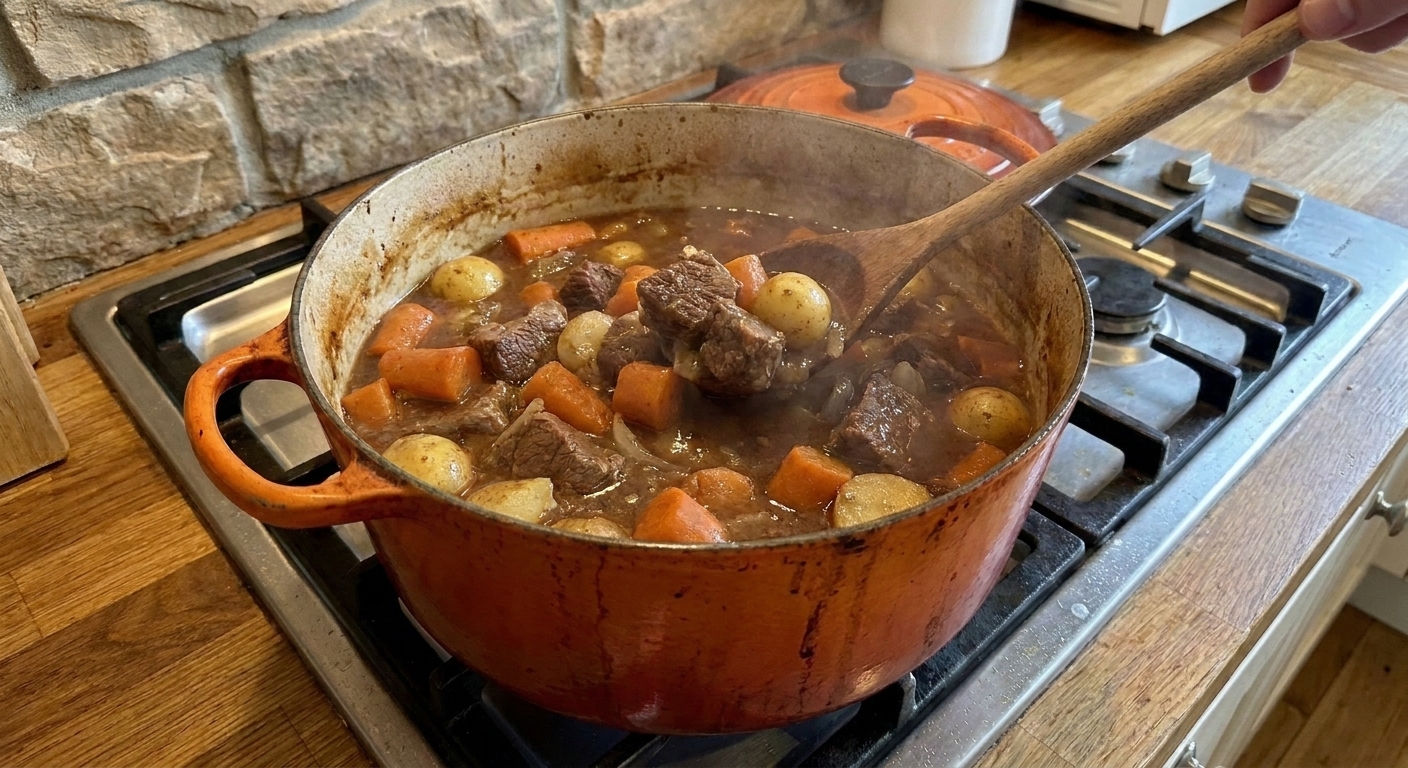
Oven (best for big batches)
- Place stew in a covered oven-safe dish or Dutch oven.
- Reheat at 325°F until bubbling at the edges and hot in the center (165°F is a good target).
- Stir once or twice during reheating for even heat.
This is a great option if you are reheating a family-sized portion and want hands-off time.
Microwave (best for lunch portions)
- Use a microwave-safe bowl and cover loosely.
- Heat at 50 to 70% power in 1-minute bursts, stirring between bursts.
- Add a splash of broth if needed to loosen the gravy.
Microwave trick: Stirring is non-negotiable for stew. It keeps the center from staying cold while the edges overcook.
Keep the gravy smooth
Stew gravy can look a little “broken” after chilling or freezing, meaning you see separation or a slightly grainy look. Most of the time it is fixable.
- Reheat gently: Keep it at a simmer, not a rolling boil.
- Stir, then stir again: Slow stirring as it warms often brings it back together.
- Add liquid slowly: If it is too thick, add broth a tablespoon at a time.
- If it is thin after reheating: Simmer uncovered a few minutes to reduce, stirring so the bottom does not scorch.
If your stew was thickened with flour or cornstarch, it generally holds up well. If it was thickened by pureed potatoes or vegetables, you might notice more texture change after freezing, but it will still be tasty.
Quick leftover rules
- Cool quickly in shallow containers.
- Refrigerate within 2 hours (1 hour in a hot kitchen).
- If you can, follow the cooling targets: 135°F to 70°F within 2 hours, then 70°F to 41°F within 4 more hours.
- Eat refrigerated stew within 3 to 4 days.
- Freeze for best quality up to 3 months (safe indefinitely at 0°F).
- Label and date containers.
- Thaw in the fridge when you can.
- Reheat gently and heat to 165°F, then stop.
FAQ
Can I freeze beef stew with potatoes?
Yes. The potatoes may soften or get slightly grainy after thawing, but it is still perfectly fine to eat. If potato texture bothers your family, you can freeze the stew anyway and just serve it over mashed potatoes, rice, or buttered noodles after reheating.
Can I refreeze beef stew after thawing?
If you thawed it in the refrigerator and it stayed cold the whole time, it can be refrozen, but quality will drop each cycle. If it was thawed using cold water or the microwave, I do not refreeze it. Reheat and eat instead.
Why does my stew get so thick in the fridge?
That is normal. As it cools, the gelatin from the beef and any starch thickener set up. When reheating, add a small splash of broth or water and warm it slowly until it loosens back into a glossy gravy.
What are signs I should throw it out?
If it sat out too long (over 2 hours, or over 1 hour in warm conditions), discard it. Also discard stew with an off smell, visible mold, unusual bubbling, or a slimy texture. When in doubt, I always choose safety over saving leftovers.