A reliable whole-turkey roast for a home oven: oven temp, minutes per pound (unstuffed), breast and thigh internal temps, rest time, and the key checks that ...
Recipe Homely
November 14, 2026
Classic Bread Stuffing (Baked in a Dish)

Sarah Jenkins
Sarah Jenkins is a passionate home cook and the voice behind Recipe Homely, dedicated to making everyday meals stress-free and delicious. With over a decade of experience feeding a busy family, she specializes in rigorously tested, approachable recipes for dinners, desserts, and everything in between. When she isn't developing new dishes, Sarah can be found browsing local farmers' markets or baking with her two children.
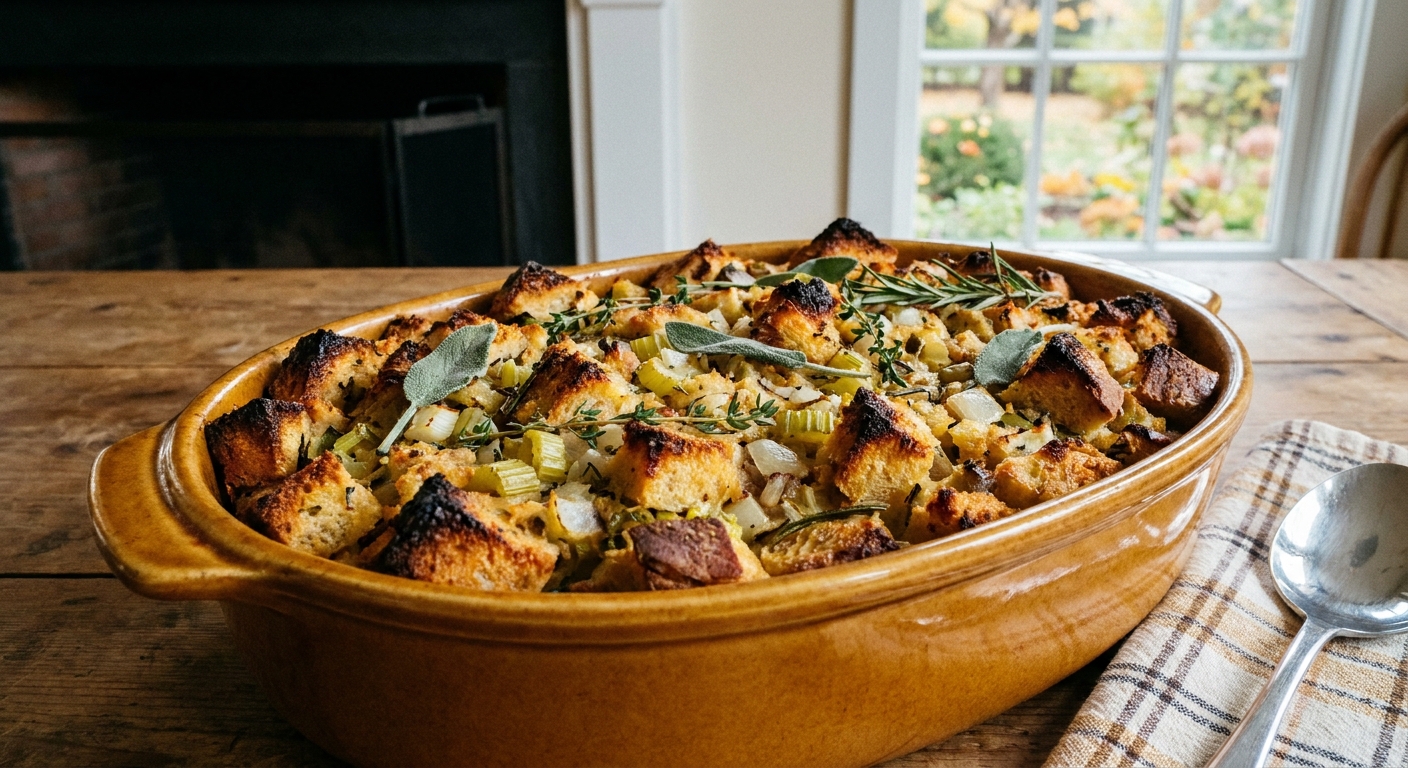
Stuffing is one of those dishes that can make a holiday table feel instantly cozy. In my loud, food-loving family growing up, someone was always sneaking a forkful from the pan before dinner even started. Now that I am the working mom trying to get everything on the table on time, I make my stuffing the reliable way: baked in a separate casserole dish alongside the turkey. You still get that savory, herby goodness, but with a crispy top and zero worries about undercooked stuffing inside the bird.
Classic Bread Stuffing Recipe
This is the traditional, no-fuss version with dried bread cubes, a buttery celery and onion base, plenty of sage, and enough broth to keep it moist but not soggy.
Yield: Makes one 9x13-inch pan, about 10 to 12 cups of stuffing (typically serves 8 to 10 as a side).
Ingredients
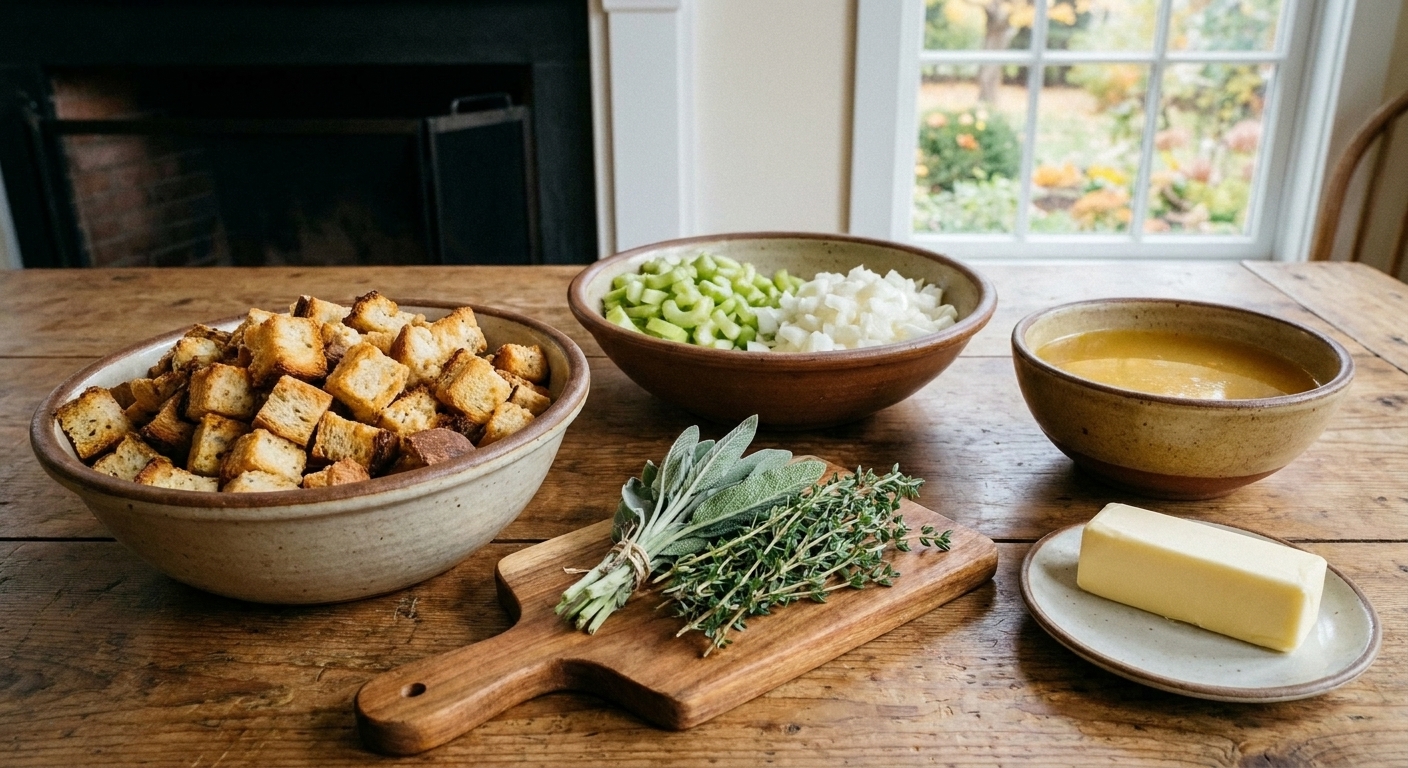
- Bread: 1 pound sturdy bread (about 12 to 14 cups of 3/4-inch cubes, depending on the bread). Use a mix of white sandwich bread, French bread, or challah for the best texture.
- Butter: 1/2 cup (1 stick)
- Onion: 1 large yellow onion, finely diced (about 2 cups)
- Celery: 4 to 5 ribs celery, diced (about 2 cups)
- Garlic: 2 cloves, minced (optional but delicious)
- Herbs: 1 tablespoon chopped fresh sage (or 1 1/2 teaspoons dried), 1 tablespoon chopped fresh thyme (or 1 teaspoon dried), plus 2 tablespoons chopped fresh parsley
- Seasonings: 1 1/2 teaspoons kosher salt (reduce to 1 teaspoon if using salted broth), 1/2 teaspoon black pepper
- Broth: 2 1/2 to 3 cups warm turkey or chicken broth (more guidance below)
- Eggs: 2 large eggs, lightly beaten
Equipment
- 9x13-inch baking dish (or a deep 3-quart casserole)
- Large skillet
- Very large mixing bowl
Step-by-step instructions
-
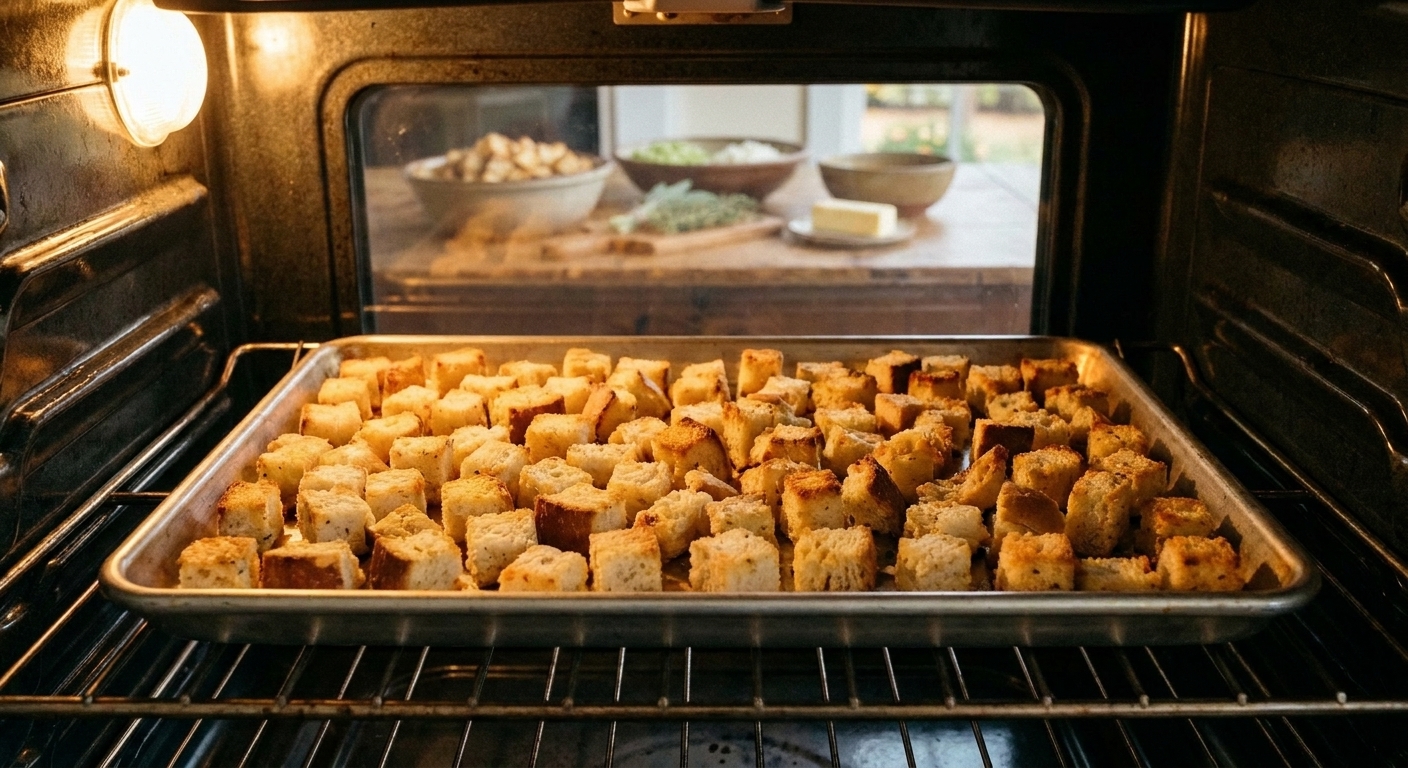
Dry the bread cubes.
Preheat the oven to 300°F. Spread bread cubes on two large sheet pans in an even layer. Bake for 35 to 45 minutes, stirring every 15 minutes, until the cubes feel dry on the outside and lightly toasted but not deeply browned.
Time-saver: You can also cube the bread and leave it out uncovered overnight in a single layer. I do this when the counter space is available.
Quick note: Enriched breads like challah can brown faster, so keep an eye on them toward the end.
-
Prep the baking dish.
Increase oven temperature to 350°F. Butter a 9x13-inch baking dish.
-
Cook the celery-onion base.
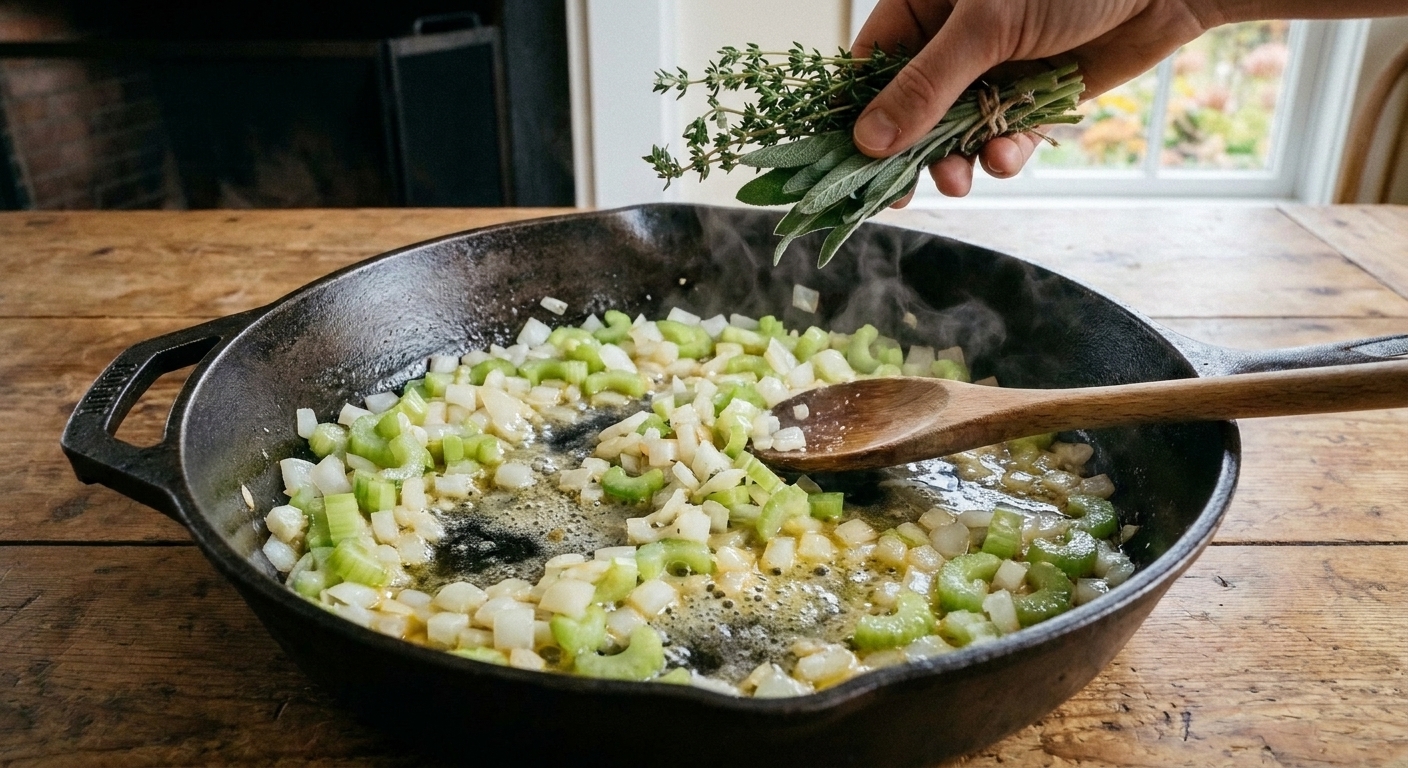
In a large skillet over medium heat, melt the butter. Add onion and celery and cook for 8 to 10 minutes, stirring often, until softened and glossy. Stir in garlic (if using) for 30 seconds.
Add sage, thyme, salt, and pepper. Cook for 30 seconds to bloom the herbs, then remove from heat.
-
Combine.
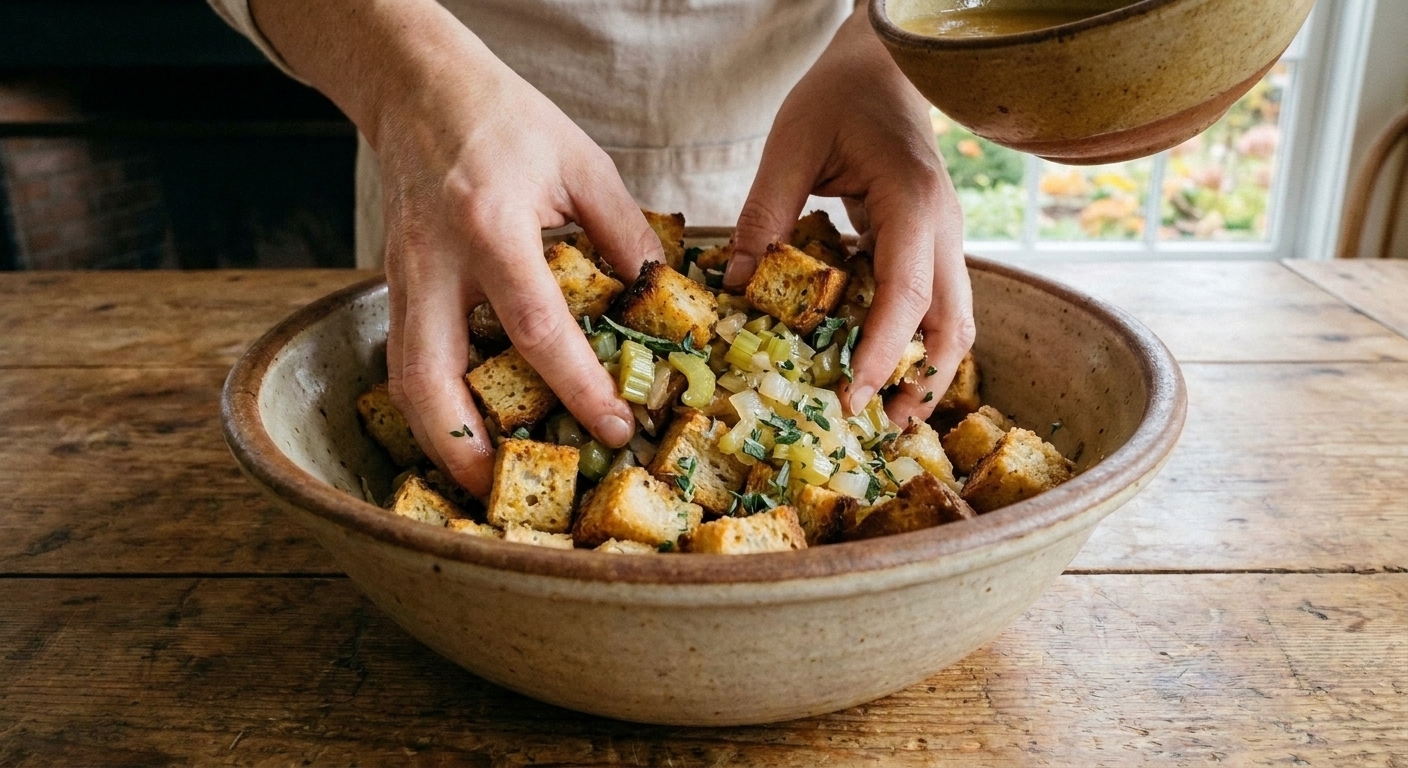
Put dried bread cubes in a very large bowl. Pour the warm buttery veggie-herb mixture over the bread and toss well.
-
Add broth, then eggs.
Start with 2 1/2 cups warm broth, pouring gradually while tossing. The goal is bread that feels evenly moistened but still has structure.
Seasoning check: If you want to adjust salt and pepper, this is the easiest point to do it. Taste a spoonful of the moistened mixture before the eggs go in (or taste your broth and veggie base) and tweak if needed.
Then fold in the beaten eggs until everything is coated.
If the mixture still looks dry with lots of hard corners, add more broth 1/4 cup at a time up to 3 cups total.
-
Bake for a golden top.
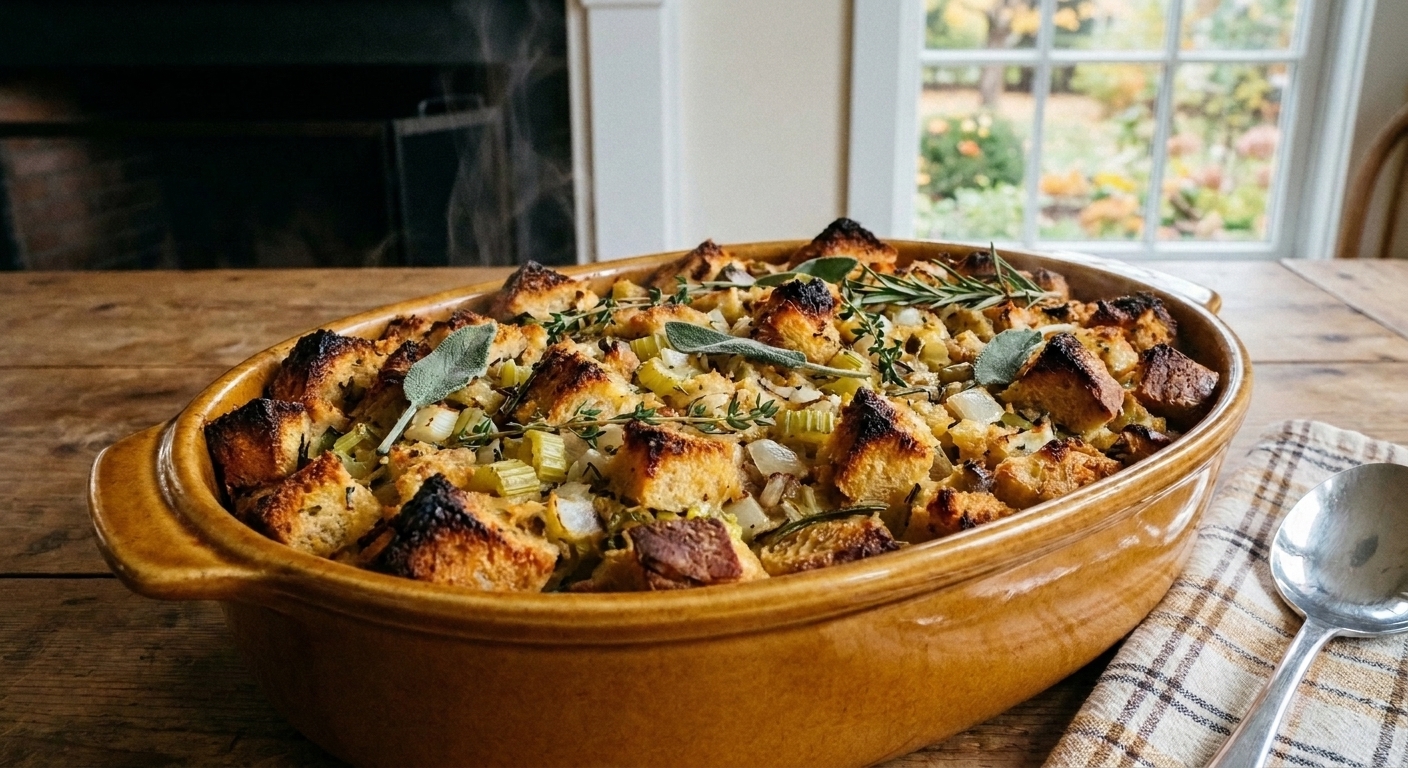
Spoon stuffing into the prepared baking dish and spread it out gently without packing it down. Cover tightly with foil and bake at 350°F for 30 minutes. Uncover and bake 15 to 25 minutes more, until the top is golden and crisp and the center is hot.
If the top browns too fast: Loosely tent with foil for the last 10 minutes, especially if you used challah or another enriched bread.
Extra-crispy top: For the last 2 to 3 minutes you can switch to broil, but stay right there because it can go from perfect to too dark quickly.
How much broth makes stuffing moist
For a classic casserole-style stuffing, I consistently land in the 2 1/2 to 3 cups broth per 1 pound of bread range. The exact amount depends on your bread type and how dry you got it.
- Use 2 1/2 cups if your bread is softer (sandwich bread) or you prefer a firmer, drier stuffing.
- Use closer to 3 cups if your bread is very crusty (French bread) or you like a custardy, moist interior.
- Look for this cue: when you squeeze a handful, it should hold together, but not drip liquid.
Day-ahead option
If your oven is going to be packed on the holiday, you can absolutely do most of this ahead. This is how I keep my evenings calm and my timing realistic.
Assemble ahead
- Dry the bread cubes and cook the celery-onion-herb mixture.
- Combine bread + veggies + seasonings.
- Stop before adding broth and eggs, cover, and refrigerate up to 24 hours.
- The next day, add warm broth and eggs, then bake as directed.
Fully assemble ahead
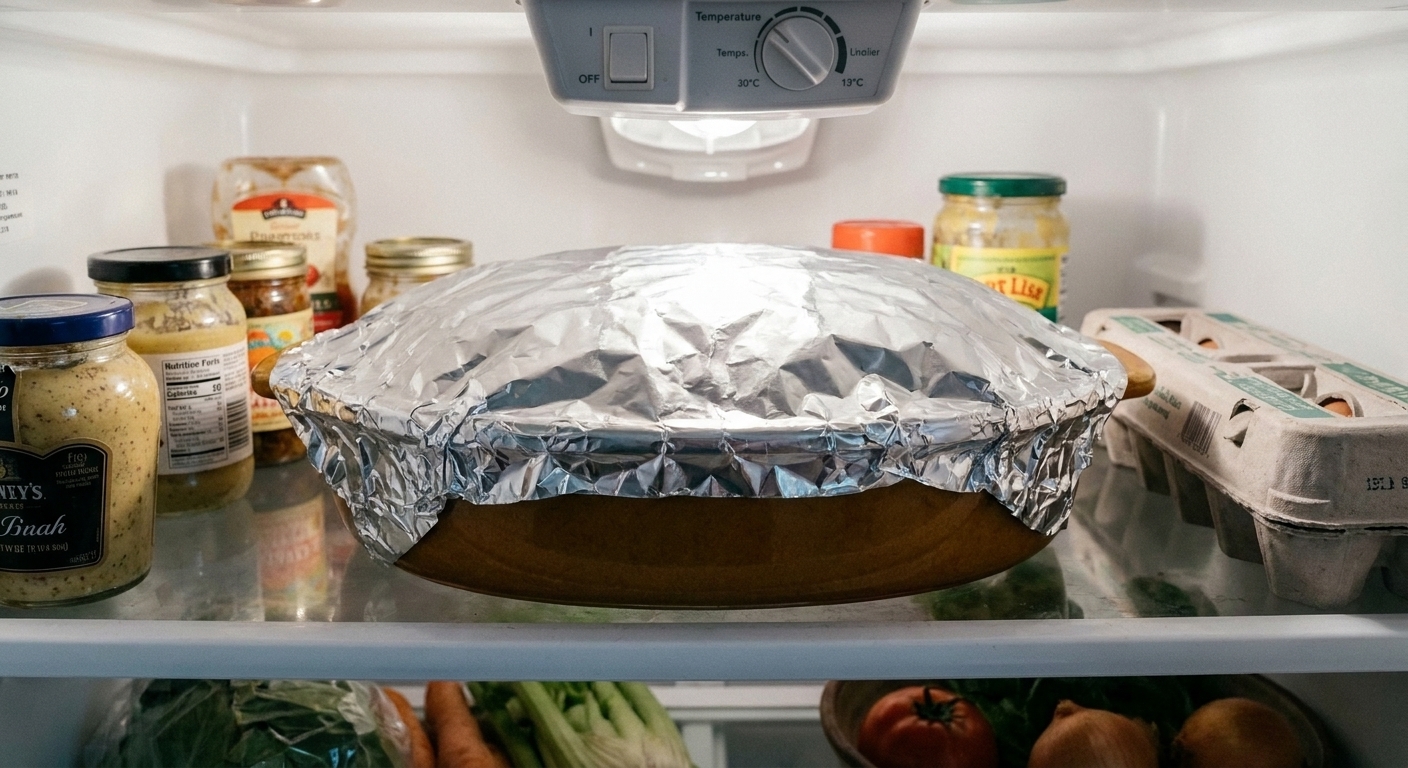
- Mix everything including broth and eggs, transfer to the buttered baking dish, cover tightly, and refrigerate up to 24 hours.
- Food-safety cue: Keep it well chilled (at or below 40°F), and bake within 24 hours.
- Before baking, let the dish sit at room temp for 30 to 45 minutes while the oven preheats.
- Bake covered a little longer: plan on 35 to 40 minutes covered, then uncover and bake until golden.
Tips for great stuffing
- Warm broth mixes in more evenly. Cold broth can leave you with wet patches and dry patches.
- Do not compress the stuffing in the pan. Lightly spread it so heat can circulate and the top can crisp.
- Salt depends on your broth. If you use boxed broth, taste it first. Some brands are very salty.
- Herb swap: No fresh sage? Dried sage is classic in stuffing and works beautifully here.
- Vegetarian option: Use vegetable broth. If you are used to turkey broth flavor, I find an extra tablespoon or two of butter makes the finished stuffing taste a little richer.
Variations
- Sausage stuffing: Brown 1 pound breakfast sausage, remove to a bowl, then sauté onion and celery in the drippings plus butter. Fold sausage in before adding broth.
- Apple and walnut: Add 1 peeled, diced apple and 1/2 cup chopped walnuts. This is a favorite when my kids want a tiny bit of sweetness.
- More veggies: Add 8 ounces sliced mushrooms and cook them with the celery and onion until their moisture cooks off.
Make-ahead, storage, and reheating
- Store: Cool leftovers, then refrigerate in an airtight container up to 4 days.
- Freeze: Freeze baked stuffing tightly wrapped up to 2 months. Thaw overnight in the fridge.
- Reheat: Cover with foil and warm at 325°F until hot (usually 20 to 30 minutes). Uncover for the last few minutes to re-crisp the top.
FAQ
Can I bake stuffing at the same time as the turkey?
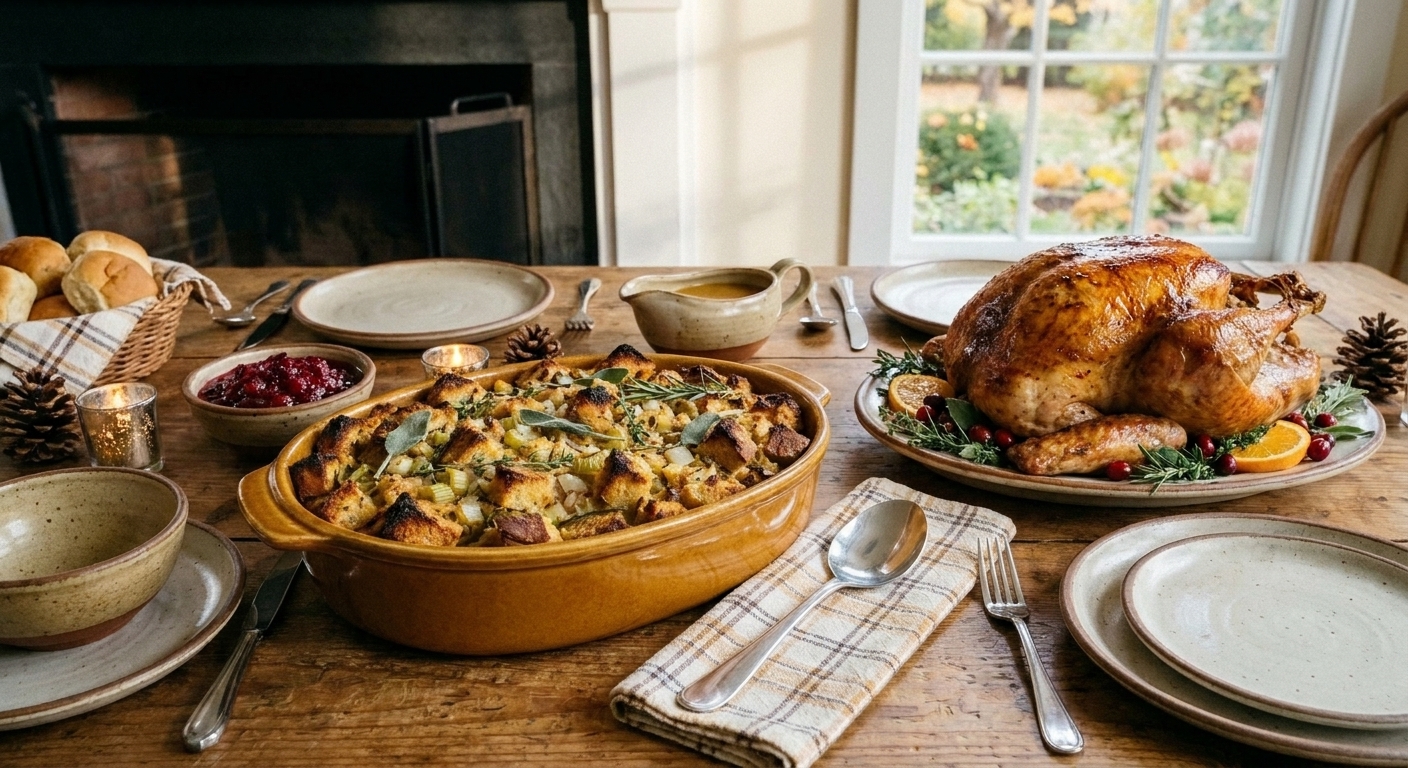
Yes. Stuffing is very flexible. If your turkey is roasting at 325°F, bake the stuffing at 325°F too and expect it to take a bit longer. If the turkey is at 350°F, you are right on target. Just keep it covered for the first part so it stays moist.
Why add eggs?
Eggs help bind the stuffing so it slices and scoops nicely, and they give you that classic tender, custardy center without turning mushy.
How do I know it is done?
The top should be golden with crisp spots, and the center should be steaming hot. If you use an instant-read thermometer, aim for about 165°F in the middle.